Ai

See change, A.I. ghouls & long live the long lunch!

From our UK edition

38 min listen

This week: the many crises awaiting the next pope‘Francis was a charismatic pope loved by most of the world’s 1.4 billion Catholics’ writes Damian Thompson in the cover article this week. But few of them ‘grasp the scale of the crisis in the Church… The next Vicar of Christ, liberal or conservative’ faces ‘challenges that dwarf those that confronted any incoming pope in living memory’.   Ahead of Pope Francis’s funeral this weekend, Damian joined the podcast alongside the Catholic theologian Fr Alexander Lucie-Smith to unpack all the political intrigue underpinning the upcoming papal conclave. They say that he who enters the conclave as a pope, leaves as a cardinal – do we have any clues to who could emerge as Francis’s successor?

Could this be the last time I ever have to pay my taxes? 

Another Tax Day has come and gone. Here I sit, all broken-hearted. The tax-industrial complex has once again swallowed up thousands of dollars that used to be mine. But this year, I found myself legitimately wondering: could this be the last time I ever have to pay my taxes?  One of the major pillars of President Trump’s economic platform is the abolition of income tax for all Americans who make less than $150,000 a year. This sounds like a fantasy, an empty chicken-in-every-pot promise, like a student council candidate winking after saying, “If you elect me, I’ll make sure we have soda in the drinking fountains.” But if Trump 2.0 has shown anything this year, it’s a willingness to set into motion seemingly impossible plans.

tax

Black Mirror season seven offers a welcome return to form

Charlie Brooker’s cautionary technological tales have now been running for well over a decade, and they are almost in danger of seeming old-fashioned. When Black Mirror began in 2011, Instagram was only a few months old, the iPhone was a new novelty just coming into the mainstream, and Elon Musk was best known for being CEO of Tesla. Now, virtually everything in the world has changed, and Big Tech plays roles in our lives that the ever-cynical Brooker could barely have imagined. There is, naturally, a residual irony that in order to afford the budgets – and starry casts – that the show continues to demand, it long since left its original home on Britain’s Channel 4 for the deeper-pocketed Netflix, which still funds it into its seventh series.

black mirror

Absorbingly repellent: Ed Atkins, at Tate Britain, reviewed

From our UK edition

In the old days, you’d have to go to a lot of trouble to inhabit another person’s skin. Today you can simply buy a customisable 3D avatar from Turbosquid.com, animate it with your own movements by wearing a sensor-filled motion-capture bodysuit, and presto! Lifelike but eerily soulless, Ed Atkins’s video portraits occupy a strange visual hinterland between computer-game graphics and deepfake realism. The close-ups elicit a tingling revulsion: this seems to be a human being, but something is off A man tosses and turns in bed before his home is violently swallowed up by a sinkhole; a besuited talkshow host puffs away on Silk Cuts while conversing with the disembodied voice of a woman (Atkins’s mother) about her struggles with depression. In both videos, the artist is incognito.

ai chatgpt

ChatGPT is destroying creativity

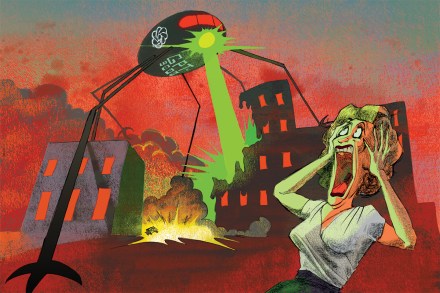
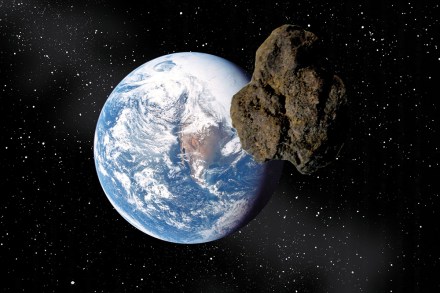
There are two accounts of the negative effects on humanity of the explosion of generative AI: one minatory, one trivial. The minatory – the existential – version is that AI will poison the information ecosystems on which our democracies depend, crash our economies by doing a very large number of us out of a job, give every lunatic and terrorist the means to engineer novel pathogens at home and administer the coup de grâce by sending terminators into our recent pasts and/or overstocking the cosmic stationery cupboard by turning all of us into paperclips. None of these scenarios shows any signs of imminently coming to pass, though, since experts in the field take them seriously, we should, too. But what we’re dealing with now is not the existential, but the trivial.

Recession? What recession?

The stock market, traditionally a leading indicator, entered correction territory last week. But does that indicate that a recession is coming? Well, it’s an old saying on Wall Street that the market has predicted ten of the last three recessions. Markets hate uncertainty, and no one knows how President Trump’s efforts to use American tariffs to force our trading partners to lower theirs will turn out. But foreign trade is increasingly important to all countries, so it’s likely that, after some political Sturm und Drang, deals will be struck and international trade will continue the strongly upward path it has been on since the end of World War Two. By definition, a recession is two consecutive quarters of contraction.

shares

The vagaries of laboratory experiments

From our UK edition

One usually likes to think that scientists know what they’re doing. Here’s something that might shake your confidence. In bio-medical research, scientists often use cell lines. These are in vitro cells, originally taken from a human or animal donor, which can be experimented on to help develop new drugs or treatments. The problem is that, according to one review, in ‘at least 5 per cent’ of studies, the scientists have totally mixed up where the cells came from. This means that in at least one in 20 studies that were sent off for peer review the scientists were completely confused about the most basic element of their research. They thought, for instance, they were doing research on lung cells when they actually had pancreatic ones.

Real artists have nothing to fear from AI

From our UK edition

Christie’s is making digital-art history again – or at least trying to. Between 20 February and 5 March, it is hosting Augmented Intelligence, the first major auction dedicated solely to AI-generated art. This follows a series of headline-grabbing stunts, including the first major sale of an AI-generated artwork in 2018 – ‘Portrait of Edmond de Belamy’ ($432,500) by the Paris-based collective Obvious – and the first NFT sale by a major auction house,  Beeple’s ‘Everydays: The First 5,000 Days’, which shattered expectations (and good taste) by selling for $69 million in 2021.

Have America’s chips controls backfired?

From our UK edition

57 min listen

Beginning in the first Trump presidency and expanded under Joe Biden, the US has taken a strategy of technologically containing China through restricting its access to cutting edge semiconductors. As Chinese Whispers has looked at before, these chips form the backbone of rapid advances in AI, telecoms, smartphones, weaponry and more. Washington’s aim was clear: to widen the technological gap between the two powers But has this strategy worked? Lately this has become a hot topic of debate as Chinese tech companies such as Huawei and DeepSeek have nevertheless made technical strides. Some even argue that the export controls have spurred on Chinese innovation and self-reliance. In this episode of Chinese Whispers, two very informed and smart guests debate this issue.

Is AI the new arms race?

From our UK edition

22 min listen

This week, a Chinese-made AI model called DeepSeek shot to the top of the Apple Store downloads – it stunned investors and sunk some tech stock. DeepSeek claims it was built at a fraction of the cost of American leading models. Chip-making giant Nvidia shed almost £482bn of its market value as a result.  What is DeepSeek, and what does it have to do with US-China relations? Freddy Gray is joined by Joe Weisenthal to explain exactly what’s happened with the AI platform DeepSeek, why it has sparked chaos in the US markets, and how it raises questions about the future of AI globally.

Doomers looks at what AI means for the future

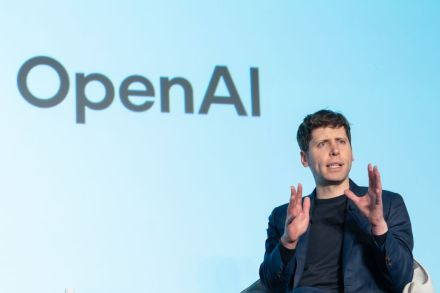
I wrote my play Doomers partly because, the night Sam Altman was fired, I was performing in a play called Zoomers. Someone — I forget who — suggested the idea of Doomers as a joke, and I thought it was a good one. My method for some, if not all, of my plays over the past few years has been to take some kind of mimetic material — downtown, Gen Z, polyamory — and to find what is surprising or human inside the meme. I try to locate a universal story in what might otherwise seem like a surface-level idea that feels niche, obnoxious or both. Sam Altman and the autistic tech world, in particular, represent opaque surfaces that I believe conceal something deeper.

Doomers

Michael Gove, Mary Wakefield, Mitchell Reiss, Max Jeffery and Nicholas Farrell

From our UK edition

32 min listen

On this week’s Spectator Out Loud: Michael Gove offers up some advice to Keir Starmer (1:33); Mary Wakefield examines the rise of the ‘divorce party’ (7:28); Mitchell Reiss looks at the promise and peril of AI as he reviews Genesis: Artificial Intelligence, Hope and the Human Spirit, a collaboration between the former CEO of Google Eric Schmidt, the former chief research and strategy officer at Microsoft Craig Mundie, and the late US Secretary of State Henry Kissinger (13:52); Max Jeffery listens to The Armie HammerTime Podcast as the actor attempts to reverse his spectacular downfall (20:45); and, Nicholas Farrell reveals the time he got drunk with the ghost of Mussolini (25:24).  Produced and presented by Patrick Gibbons.

Can an AI friend solve the loneliness epidemic?

Avi Schiffmann wants to create what he calls an “Ozempic for loneliness.” He believes Friend — his AI-powered chatbot and forthcoming wearable pendant — can address the loneliness epidemic. “I’m definitely motivated by curiosity more than anything,” he explains, “but also by how controversial the topic is. It’s just so culturally relevant.”  He wants to fill a void people feel they can’t fill elsewhere, and he wants to do it now, not years from now. AI companions are, in his words, a “very effective way” to counter isolation, a salve against the atomization we’ve lamented since the dawn of urbanization. Schiffmann reached out to me after I posted a negative review of Friend’s chatbot on my blog.

friend ai

Matthew Parris, Joanna Bell, Peter Frankopan, Mary Wakefield and Flora Watkins

From our UK edition

38 min listen

On this week’s Spectator Out Loud: pondering AI, Matthew Parris wonders if he is alone in thinking (1:10); Joanna Bell meets the leader of the Independent Ireland party, Michael Collins, ahead of the Irish general election later this month (8:41); Professor Peter Frankopan argues that the world is facing a new race to rule the seas (17:31); Mary Wakefield reviews Rod Dreher’s new book Living in wonder: finding mystery and meaning in a secular age (28:47); and, Flora Watkins looks at the Christmas comeback of Babycham (34:10).  Produced and presented by Patrick Gibbons.

The Spectator’s 2024 Holiday Gift Guide

Matt McDonald, managing editor As we grow older, the idea is that we become wiser. I’ve decided to buck that trend by making progressively dumber decisions that put me further from my goals of attaining professional success, home ownership, emotional stability and nirvana. The most recent of these is increasing the distances I’ve been running; I will be attempting a half-marathon back home on the south coast of England the week before Christmas, with a view to running my first marathon in Berlin next fall. It’s unclear why we as a species decided to adopt the practice of doing marathons a couple of millennia ago — the first man to do it did die at the end, after all.

gift

Playing Monopoly is not such a trivial pursuit

From our UK edition

Which came first to the designers of chess: the rules or the metaphor? It feels impossible to prise the system from the story: a military battle between two monarchs, each with perfectly symmetrical assets and equally balanced capabilities. Yet there have been dozens of ‘reskins’ of chess, swapping the kings and their minions for characters from, say, Lord of the Rings, or The Simpsons, or even, bewilderingly, M&M chocolates. Play is the primary way in which every human first tests and explores the world  Sometimes the new metaphor imbues the game with a socio-political frisson. A recent example pitches rockers – white men in leathers holding screaming guitars – against jazz musicians – black men in white suits nursing saxophones.

Nick Cave’s right-hand man Warren Ellis on AI, Gorecki and staying young

From our UK edition

In the next few days Nick Cave and the Bad Seeds play Leeds, Glasgow, Manchester and London. There are still some tickets left. The price is reasonable but the price doesn’t matter when the band are unequivocally one of the finest of live acts. By whatever means you can, go. When you get there, enjoy Nick Cave himself, of course. Prepare to be awed by ‘Tupelo’, converted by ‘Into My Arms’. Prepare to cry to ‘Girl in Amber’ and dance to ‘Stagger Lee’. Get ready to experience an assault on every one of your orifices by the impossibly loud and dark ‘Jubilee Street’. ‘I think you feel like you’re a young person until you accept that you’re old. And I don’t want to do that’ But also watch Warren Ellis.

Cambridge in crisis, Trump’s wicked humour & the beauty of AI ceramics

From our UK edition

53 min listen

This week: Decline and Fall – how our greatest universities are betraying students.Our greatest universities are betraying students, writes David Butterfield, who has just resigned from teaching Classics at Cambridge after 21 years. What went wrong? First, class lists of exam results became private, under alleged grounds of ‘data protection’, which snuffed out much of the competitive spirit of the university. Now even the fate of examinations hangs in the balance. Grade inflation is rampant, and it is now unheard of for students to be sent down for insufficient academic performance. For students, the risks have never been lower.

Could AI lead to a revival of decorative beauty?

From our UK edition

In front of me is what appears to be an authentic Delft tile. The surface of the tile is mottled, and painted on to it is a picture of a man. The blue tones blur and fade into the edges. Delicate brush strokes are visible if you peer closely. It looks as though it were made many years ago. Except it wasn’t. It was designed this morning by artificial intelligence and created in a small factory near Stoke-on-Trent, using some of the most advanced printing technology available. ‘Josiah Wedgwood would have loved what we are doing… I suspect William Morris would have hated it,’ says Adam Davies, the co-founder of the company creating these tiles.

The triumph of surrealism

From our UK edition

When Max Ernst was asked by an American artist to define surrealism at a New York gathering of exiles in the early 1940s, he pointed across the room at André Breton and said: ‘That is surrealism.’ Even today it can seem as if no other answer is available, so tenacious was his grip. A former student of neurology and psychiatry, with no qualifications other than an instinct for the coming thing (‘an astute detector of the unwonted in all its forms’, as he later described his fellow conspirator Louis Aragon), Breton encountered the early writings of Freud as a medical orderly on a trauma ward, during the first world war, and immediately recognised the significance of his work.