1970s

The only drink missing from The Spectator’s summer party

Last week the great and some not-so-good crammed into the gardens in Old Queen Street to gossip and carouse, sipping on seemingly endless reserves of Pol Roger and Whispering Angel. As I surveyed this magnificent scene, it occurred to me just one thing was missing from The Spectator’s summer party: a glass of chilled red wine. For that is the drink of the moment – at least according to Ocado, which has reported a 1,020 per cent year-on-year increase in searches for ‘chilled red wine’. What’s even more encouraging for those of us who have concern to spare for the puritanism of the young is that this interest comes predominantly from young drinkers. Ocado’s research suggests that 56 per cent of Gen Z and younger millennials have enjoyed chilled red recently.

The radical networks that hijacked the 1970s

From our US edition

Airplane hijacking, like the mode of transport itself, became common in the 1960s. A practice largely confined to the United States, it was invariably a means for ordinary criminals to extort ransom money or flee to Cuba. In 1968, the hijacking of an El Al flight by the left-wing Popular Front for the Liberation of Palestine revealed the political utility of the act: in exchange for the safe return of its plane and passengers, Israel released 16 Arabs from its prisons. Encouraged by this outcome, the PFLP launched a spate of similar operations. One such mission, the hijacking of a TWA flight in 1969, revealed that prisoner exchanges and ransoms weren’t the only upside of this new tactic.

The greatest decade for British painting since Turner and Constable? The 1970s

Slowly the canvas was unfurled across the concrete floor of a warehouse on an industrial estate in Suffolk. On and on it went, a flurry of paint marks and brush strokes, yellow, green and occasionally blue, like a cornfield at harvest time. By the time we got to the end some seven metres of it lay stretched out at our feet. It was the first time anyone had seen this unknown magnum opus by Gillian Ayres since it was rolled up in 1974 – and it looked sensational. Recently I’ve been reflecting on the 1970s for a couple of reasons. One is that I’m working on a book about art in London at that time, the other is that I’ve been helping to organise an exhibition of Ayres’s work from that era at the Heong Gallery, Downing College, Cambridge. Of course, as L.P.

How Berlin nearly broke Bowie

This week’s Archive on 4 is a treat for David Bowie fans. Francis Whately, the producer behind several of the BBC’s Bowie films, including The Last Five Years, has patched together old recordings and new interviews with Bowie’s lovers and friends to examine his life in West Berlin between 1976 and 1978. It was a fraught, make-or-break time. Out of pocket, addicted and depressed, Bowie had grown ‘very, very worried’ for his life. It isn’t entirely clear why he chose Berlin as a place for recovery, other than that it was unstarry, cheap and a good distance from LA, where his troubles had spiralled. Unfortunately, it was also ‘the smack capital of Europe’, and Bowie was about to move in with Iggy Pop.

Ambitious, bold and confusing: BBC4’s Corridors of Power – Should America Police the World? reviewed

Narrated by Meryl Streep, Corridors of Power: Should America Police the World? announced the scale of its ambition straight away. Before the opening titles, we’d already heard from Hillary Clinton, Colin Powell, Madeleine Albright and the late Henry Kissinger. We’d also seen the lines drawn up as to how its bold subtitle might be answered. It is an authentically confusing programme, where any firm moral position doesn’t stay firm for long As Clinton put it, in 1945 a question emerged whose implications would dominate post-war US foreign policy: ‘Why didn’t we do more to try to prevent the transport of the Jews?’ The immediate response was the heartfelt yet potentially glib declaration: ‘Never again.’ But what would that actually mean in practice?

Four vectors of danger for America and the West

From our US edition

Fifty years ago, everything seemed to be breaking down, kind of like it is now. In fact, it can feel like the 1970s redux. Searing issues of war, ecology, race, and “malaise” have never really disappeared. A silent majority, political schism, limits to growth, and price inflation — all are here. Yet there are new uncertainties too. Even to optimists, debt-induced fragility clouds the economic horizon. Investor Charles Munger notes that bitcoin actively undermines the Federal Reserve System; any gain comes from trading, not from creating products, crops or rents. As fantastic as non-binary sexuality, cryptocurrency points to additional contemporary follies.

Inflation is the great destroyer

From our US edition

In the summer of 1981, the American air traffic controllers’ union PATCO rejected a salary and benefits deal that had been put forth by the Reagan administration. What happened next lives on in the annals of Republican lore and in labor movement horror stories: PATCO opted for an illegal strike. More than 12,000 air traffic controllers walked off the job, and in one of the most successful union-busts in history, Reagan fired almost all of them. That’s the official account anyway. But there’s much more about the strike that’s less known, or at least misunderstood. For example, did you know that PATCO had actually endorsed Reagan for president in 1980, finding Jimmy Carter too intransigent?

Biden’s problem isn’t his age, it’s his eyesight

From our US edition

My brothers, my sisters, hold it right there. Thank you. We’re missing a major point, howsoever understandably. All this media chitchat coupling Joe Biden’s political incapacities to his undoubtedly advanced age and slowing gait requires, in my estimation, some context. Nor do I suggest the president’s recently acquired case of Covid — from which we all pray he recovers speedily and fully — lends point and pith to the discussion. I suggest that the problem with Joe Biden isn’t age as such, nor the infirmities that go with having lived back when Cokes cost a nickel and Ed Sullivan was king of TV.

Is swinging back?

From our US edition

In 1974 I was living in San Francisco when I got a phone call from a man who said, “I’m having a few people over to have sex with my wife, would you care to join us?” Back in the 1970s, people like this were called swingers. I politely declined. To my amazement I was recently invited by a couple in their sixties to go to one of London’s secret swinging parties with them. This one, they assured me, was for the “older swinger.” (I didn’t think there were any still alive!) To swing or not to swing? That is the question I never thought I’d ever face again. It was a kind offer, but frankly I’m too old for those sorts of sexual shenanigans.

swinging

Everyone hates Nancy Pelosi’s gas bill

From our US edition

Congress on Thursday approved a bill that gives the White House power to enact price controls on gasoline. The Consumer Fuel Price Gouging Prevention Act lets the Federal Trade Commission treat so-called price gouging as a deceptive trade practice. Congress specifically directs the FTC to prioritize cases “concerning companies with total United States wholesale or retail sales of consumer fuels in excess of $500,000,000 per year.” In other words, all the major suppliers of oil and gas to the United States. “This is a major exploitation of the consumer, because this is a product the consumer must have,” droned House Speaker Nancy Pelosi, whose love of fuel price gouging legislation dates to 2005.

No one should be doing indie rock at 43: Band of Horses’s Things Are Great reviewed

Grade: B That thing, ‘indie rock’, is so well played and produced these days, so pristine and flawless, that it has become almost the antithesis of what it was back at the end of the 1970s, when the term was invented. Then it referred to bands who released stuff on small independent labels because the big labels wouldn’t take them on. Shouty, angsty and angular, or just weird and beloved by the befringed dolorous yoof, in their anoraks or donkey jackets, the whole thing had a pleasing DIY feel to it, even if it sometimes grated. These days ‘indie’ just tends to mean anodyne power pop played by whining blokes who haven’t had a shag for ages. So it is, I think, for Seattle’s Band of Horses.

Enough with the 1970s comparisons

From our US edition

The media are abuzz these days about a purported “return to the 1970s.” Generally speaking, such chatter is not intended kindly, for many today would likely agree with the sardonic assessment of the Seventies made by the editors of New West magazine as that decade wound down: “It was the worst of times, it was the worst of times.” And not just because of the popularity of bell-bottom pants, platform shoes, and disco music. In the Seventies, we had problems far more troubling — more troubling even than the pop group ABBA. For starters, we saw a quadrupling of real oil prices between 1973 and 1979. We suffered high rates of both inflation and unemployment, which hitherto varied inversely, leading to the creation of the portmanteau “stagflation.

1970s

Oh dear, Abba’s new album is a bit of a dog: Voyage reviewed

I assume that somewhere on the guided ‘Piers and Queers’ walking tour of Brighton, the participants are enjoined to regard, in awe, the Dome — the venue at which Abba, on 6 April 1974, won the Eurovision Song Contest, thus both launching themselves as a wildly successful band and establishing the town (as it was then) as a mecca (probably the wrong choice of word there) for the UK’s swiftly growing gay community. Hitherto it had been a rather frowsy, Tory-voting seaside resort, best known for dirty weekends and petty villains. The Swedes won with ‘Waterloo’, of course, which may have provided our nation with some much-needed succour. A remembrance of good things past.

Apocalypse, Seventies-style: BritBox’s Survivors reviewed

When the apocalypse comes, I want it to be scripted by a 1970s screenwriter. That’s my conclusion after watching the first few episodes of Terry Nation’s landmark 1975 ‘cosy catastrophe’ series Survivors on BritBox. Everything was so much more innocent and charming back then, including the end of the world. Survivors establishes its MacGuffin in the opening credits: a montage which begins with a masked, enigmatic oriental man in a laboratory where he accidentally smashes a vial; we then see clips of him in a suit travelling through various airports, with passport stamps (New York, London, etc) taunting us from the past with just how easy it was back then to be a jet-setting international traveller.

A very watchable doc cashing in on Line of Duty: BBC2’s Bent Coppers reviewed

If you’re after an exciting, twisty programme about police corruption that doesn’t also feel a bit like sitting an exam in Line of Duty studies, then Bent Coppers: Crossing the Line of Duty could well hit the spot. As both the timing and subtitle not so much suggest as bellow, this three-part documentary series is an obvious attempt to cash in on its fictional counterpart. Happily, though, it’s a successful one. In Wednesday’s second episode the focus was on 1970s Soho, where the most reliable way to make a fortune was by opening what the narrator Philip Glenister called, in suitably 1970s argot, ‘dirty bookshops’. Of course, there were certain overheads involved, like rent and huge bribes to the police.

‘You can’t have opinions any more’: Rick Wakeman interviewed

‘Classic rock’ is a rather fusty old oxymoron, but then the term ‘classic’ is applied these days to chocolate bars and that most in-demand of consumer undurable, lavatory paper, so I suppose one shouldn’t complain. Covid-19 will probably be remembered as a ‘classic virus’ one day not too soon, when there are other more baleful new-wave viruses with spiky hair pogoing around. ‘Classic rock’, meanwhile, is a term applied to the sort of chest-beating rawk that people of my generation admire: the Who, Bad Company, Blue Oyster Cult insisting, in timely fashion, that we should embrace death, and Lynyrd Skynyrd informing us, with unforeseen irony, that they can fly, free as a bird.

I could have directed it better: Steve McQueen’s Small Axe reviewed

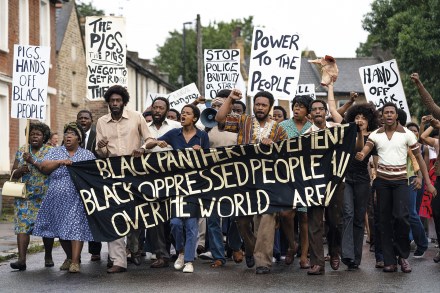
Unlike with every other BBC period drama series these days, I didn’t have to sit through Small Axe: Mangrove grumbling about the implausible and anachronistic diversity casting. Mangrove was the West Indian-owned restaurant in Notting Hill which, in 1970, became the subject for a landmark Old Bailey trial involving nine of its habitués on trumped-up charges of riot and affray. Though it gets much better once we’re actually in court, the first hour’s build-up is awfully slow. I fear writer/director Steve McQueen is to blame.

The artist who left no physical record of her work

While locked-down galleries compete to keep their artists in the public eye — or ear — by uploading interview podcasts, a treasure trove of earlier recordings is being overlooked. Artists’ Lives, part of the British Library’s oral history archive, is a collection of interviews with 370 artists, 200 of which are available on the British Library Sounds website. As an account of British art of the past century they are more comprehensive than Vasari’s Lives and more reliable, coming as they do from the horse’s mouth. They are also exhaustive. But for those who haven’t got all day to follow the fascinating career of Guyanese-born Frank Bowling RA through 17 hours of recordings, edited extracts are now available as Voices of art.

The empress of art

Somewhere in the bowels of the Tehran Museum of Contemporary Art is a portrait from a lost world. Its subject is a beautiful young woman: Her Imperial Majesty, Empress Farah Pahlavi of Iran. The condition of the work, however, a luminous print by Andy Warhol from 1977, is so bad that it could be a metaphor for Iran itself. Fundamentalist vandals have slashed at it with knives. The Empress — forced into exile when the Iranian Revolution overthrew her husband, the Shah, two years after the portrait was completed — discovered this upsetting news while watching French TV in her Paris apartment. ‘Seeing that, I said, “They are stupid”,’ she tells me. ‘Instead of tearing it they could have sold it!’ One day, she hopes to see it on display again.

The 1975: A Brief Inquiry Into Online Relationships

Grade: C A derided year in pop music, 1975 — and yet a great one. The mainstream was horrible, but we had Neil Young’s Tonight’s The Night, Patti Smith’s Horses, Guy Clarke’s Old No. 1 and Television just beginning to break through. It is in the lacunae, before the next big wave, that we hear the most inventive music, which is why ’75 — with Queen and disco hogging the charts and the blind alleys of prog and metal as your only alternative — was so good. But I suppose you want to hear about the band, The 1975 — one of Britain’s biggest. Oh, Britain. The 1975 are a bunch of middle-class Mancs led by a gobby SJW junkie — hell, what’s not to like.