Issue 04 / Winter 2026

Mr. Smith goes to Madison

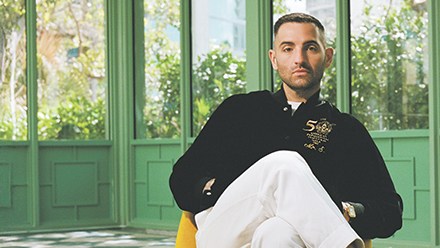
My first proper job when I graduated was with Paul Smith. I had met him while working in his shop in London in the holidays, and when it came time to enter the real world, he kindly took me on in a role that we made up together. I remember him saying he wasn’t sure what I was going to do, but he was expanding and he needed people. It was 1986 and I became what Smith called his “projects manager.” At that stage, Paul Smith was a company on the move, having been founded by the designer in 1970 when he opened a tiny, windowless, second-floor store in Nottingham, open only on Fridays and Saturdays. He called it Paul Smith Vêtements Pour Homme. By the mid ’80s Smith had two shops in London, one in Nottingham, and a burgeoning wholesale business around the world.


The noise of art

The British customs officer was stumped. The label on the crate said “Sculpture for the Blind” by Constantin Brâncuși, but in his view, it was a lump of stone. It was part of a shipment of sculptures that Peggy Guggenheim, the American heiress, had asked the artist Marcel Duchamp to send from Paris for an exhibition at her gallery, Guggenheim Jeune. But the Brâncuși was proving a problem. Was it liable for a 10 or 20 percent tariff, brought in to protect British stone carvers? Or could it possibly be exempt from all duty as a “work of art?” There was nothing for it but to call upon James Manson, the director of the Tate Gallery, to decide whether the piece was art, craft, or, as sus­pected, “raw building material.” His answer left no room for doubt.

Flight of fancy

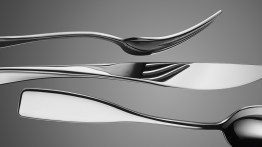
If you ask industrial designer Johnny Lim why he named his flatware design “Concorde,” he’ll likely start by saying that it comes from the Latin concordia, which means balance, harmony (the opposite of discordia), and is specifically a homage to the goddess of that name. It speaks to a designer who understands the importance of balance and proportion. You don’t have to be a design expert to see an echo of this silhouette in the Concorde collection However, there is an elephant in this particular room, which when pressed, Lim will acknowledge with a smile. Because Concorde is also the name of a rather famous supersonic passenger jet that operated from 1976 to 2003.

Race for time

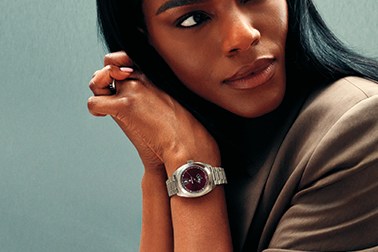
When talk turns to which chronograph to wear behind the wheel, the triumvirate of the Rolex Cosmograph Daytona, Omega Speedmaster, and TAG Heuer Carrera are invariably mentioned as the “three kings” of car watches. The most historic is the Speedmaster, which debuted in 1957 with an advertisement that promoted the usefulness of its “tacho-productometer” scale (tachymeter bezel) to sports car drivers. The Cosmograph, meanwhile, arrived in 1963, and was swiftly renamed the Daytona in recognition of Rolex as the official timekeeper of the Daytona International Speedway.

Get your kicks

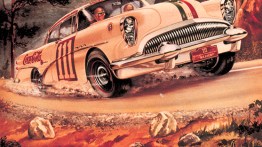
It’s golden hour on Route 66. Diners, motels, and gas stations line the asphalt running through western Arizona. Seligman is one of the last truly intact sections of the road, with original buildings from the 1920s to the ’60s still hosting travelers and passersby as they roll through or stop for the night. From my diner-counter perch, I nurse an ice-cold lemonade and watch a small group of bikers fuel up at the gas station across the street, while families spill out of dusty trucks at the next-door motel. These scenes are largely unchanged from the Route’s mid-century heyday, the same you’ve likely seen countless times on film and TV.

The haus Montblanc built

There is a room in the Montblanc factory in Hamburg that is soundproof and almost entirely silent. All you can hear is the sound of nib on paper, and the people who sit there, visible through glass windows to their coworkers, have one task. To test each and every new Montblanc pen nib to see if it comes up to scratch, so to speak. They are not only feeling the flow of the ink and how the metal moves as they apply pressure to it, but listening for the sound it makes. A well-fashioned nib will perform in a certain way, while one that needs adjustment will alert the writer through feel as well as through auditory cues.

As long as it’s black (and white)

In 1966 Truman Capote was on a roll. The diminutive author was still a much in-demand dinner guest in the townhouses and grand country estates, and on the luxury yachts of the rich and famous, notably those of his coterie of wealthy, well-bred female “swans.” This was due to his ability to spin a riveting, gossipy, and usually risqué story, told in his trademark high-pitched southern lilt. But at the age of 42 he had also finally found significant literary success – eclipsing even Breakfast at Tiffany’s – with his “non-fiction novel” In Cold Blood. That summer, it was impossible to open a paper or magazine without finding a gushing profile of the man.

Taking the plunge

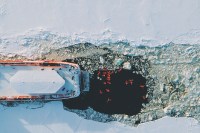
An hour’s drive from my womblike wilderness lodge, I board the 2,200-ton Polar Explorer at Båtskärsnäs, 60 miles below the Arctic Circle near the Swedish port of Kalix. In the murky, 9a.m. twilight and brittle -10°C [14°F] air, we grind out into the bay, the ship’s rounded, sloping scarlet prow rising above, then crushing down onto rock-hard sea ice dusted with fresh, powdered-sugar snow. I’ll never forget the sound: a loud, deeply satisfying crunch as if an enormous dessert spoon were cracking into a giant crème brûlée. At regular intervals, it’s accompanied by the percussive clunk of shattered ice bumping against our ship’s reinforced steel hull. Around us the rising sun reveals a Scandinavian Narnia.

Ripe for the picking

The bar world has gone completely bananas. By that, I mean the yellow-peeled fruit has become the flavor du jour for drinks. It’s showing up in the usual places – tropical drinks, daiquiris – and lots of unexpected tipples, too, from espresso martinis (banana works a treat with coffee) to playful banana boulevardiers (make that, “banana-vardiers”). What’s going on here? “It’s about nostalgia,” says Patrick Jennings, lead bartender at Andra Hem in Philadelphia’s Rittenhouse neighborhood, where the Gucci Breakfast (yogurt-washed gin, strawberry purée, Massenez crème de banane liqueur, amaro) was inspired by a mix of Tropicana fruit juices bartender Kevin Lopez’s father swirled for him as a child.

One for the road

Picture a European road trip and you likely think of sun-kissed coastal roads in the south of France, or perhaps the frosty mountain passes of the Alps. Norway likely doesn’t spring to mind. But it’s where I find myself for a guided driving tour as part of Morgan’s new Explores program. Designed for existing and potential clients, it’s one of a series of such trips, which have also taken in the more typical locations of Scotland, the Pyrenees, and the Dolomites. Norway, new for this year, is the program’s most adventurous offering: 866km across four days, with dramatic fjord landscapes, mountain passes topped with glaciers, 37 tunnels, and four ferry crossings. I’m behind the wheel of the Plus Four.

Centuries in the making

Words such as “craft,” “provenance,” and “heritage” have become fairly hackneyed in commentary on premium commodities: their currency tarnished by overuse in marketing fluff. So it’s refreshing when a house such as Swaine London steps up and restores their luster by earning, rather than merely asserting, them. Established in London in 1750, Swaine began life making whips and saddlery and secured a royal appointment from King George III as a supplier of the former in 1778. Like many luxury brands today – Dunhill, Hermès, and Louis Vuitton all spring to mind – it thrived in past centuries by adapting to technological changes in transportation.

Behind the music

The Hard Rock chain’s “80,000 pieces of rare music memorabilia” (kicked off, apparently, by a gift from Eric Clapton) has wildly skewed perceptions of modern instrument collecting as just another boomer fetish, with scarred Fenders tokenizing a mythical youth, decades gone. Obviously enough, pop culture sells and to a certain extent, the instruments here are relics whose provenance and iconography matter more than intrinsic value. This is where a smashed Kurt Cobain Fender is worth as much as (if not more than) a still-playable example, and while it’s natural that the Les Paul that Mark Knopfler played is worth more than a regular example, the celebrity element of the value is pure bubble.

The new Mad Men

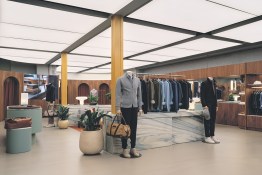
Jay Gatsby, perhaps the ultimate flâneur example of American formal tailoring, certainly knew the power of a good suit, raising eyebrows among the old-school blue-bloods of West Egg, the fictional peninsula of Long Island. Pity, then, that he didn’t have one of Britain’s biggest tailoring success stories to hand back in NYC; Thom Whiddett and Luke Sweeney would know how to navigate the event season in style. Happily for the latter-day Gatsbys, as well as the city’s tech bro and finance contingent, their Italian-inflected tailoring is now taking up a prime piece of real estate in the midst of Manhattan. “Moving to the States was a natural move for us. Like most of the British tailoring industry, we were doing successful trunk shows for years,” says Sweeney.

Christine Jones distills the essence of her creative process

A guiding principle in my work has been establishing an intimacy between audience and performance or performer. Whether that’s looking at something spatially and distilling that relationship down to its most in essential components, like Theatre For One, or distilling a text like Hamlet down to the core emotional story at the heart of the piece. Whether I’m designing or directing, I always start with a deep investigation into the text, turning the play or opera into a poem in a way, and it gives me something very crystallized to work with. One of my favorite writers is Tamar Adler. She writes about food, and says that with really good olive oil, really good salt, and really good eggs, you can bring out the flavor and the meaning of almost any group of ingredients.

Take 50 classic cars, add one frozen lake and a dash of alpine glamour, then serve over two days at The I.C.E. St. Moritz

I’m in St. Moritz, Switzerland, standing in the living room of Lord Norman Foster’s extraordinary home. Affectionately known as the Space-Age Peanut, its huge, curved form provides a striking contrast to the more typical alpine buildings of the town. But this is what you would expect of one of the world’s most renowned modern architects. Foster is, of course, a connoisseur of design, and one of his passions is cars. He has quite the collection, so when a group in St. Moritz decided to create a classic car event to be hosted in the town, it was natural that they would involve him. Now, on the eve of The I.C.E.

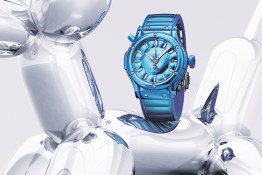
Jeff Koons pumps up the volume at Hublot with a shiny new limited edition

Swiss watchmaker Hublot has a history of partnering with artists and creatives whose work challenges perception. Now, the brand has teamed up with one of contemporary art’s most commercially successful and polarizing figures, Jeff Koons. For more than four decades Koons has taken everyday objects and transformed them into sculpture, like “Balloon Dog,” “Rabbit,” and “Puppy” – simple forms elevated through scale and craftsmanship. While it may look simple, the work is structurally complex, its spontaneity highly constructed.

Luca Faloni understands America’s attraction to the polished yet relaxed appeal of fine Italian menswear

Italians do it better,” reads Madonna’s cropped black T-shirt in the 1986 music video for “Papa Don’t Preach.” The slogan not only nodded to her dual heritage – her grandparents emigrated to the States from a small village in central Italy – but also summed up America’s enduring fascination with “the beautiful country,” as Dante dubbed it in his Divina Commedia. Amid the economic boom that followed World War Two, Italy successfully seduced the American market with its finest fashion, design, and gastronomy. But beyond the goods themselves, customers sought to buy into a sun-drenched lifestyle rooted in good taste and artisanal savoir faire.

A trio of punk-rock shades from Cutler and Gross and the queen of new wave

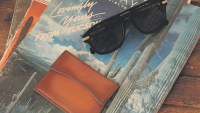
Deborah Harry was born in Miami in the summer of 1945 and adopted as a baby. She grew up a brunette in New Jersey. In 1968, when she went to work as a Bunny in New York City’s Playboy Club, her locks were still brown. Five years later, she’d switched her image up – hair platinum blonde, eye-shadow blue, leather jacket tight – and formed the new wave band Blondie. Their eponymous debut album was released in 1976 and Plastic Letters in 1978. Everything changed with the release of Parallel Lines, later that same year: hit singles from the third studio album include “Picture This,” “Hanging On The Telephone,” “Heart Of Glass,” and “Sunday Girl.” Harry became a disco queen, a pop sensation, a punk pin-up, and a fashion icon all at once.