
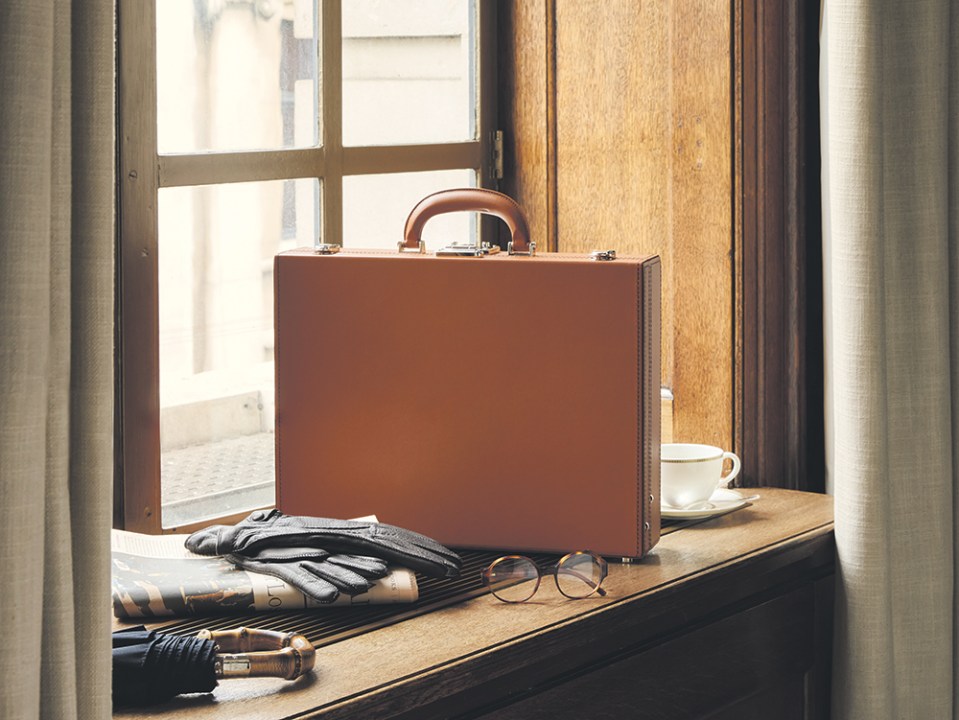
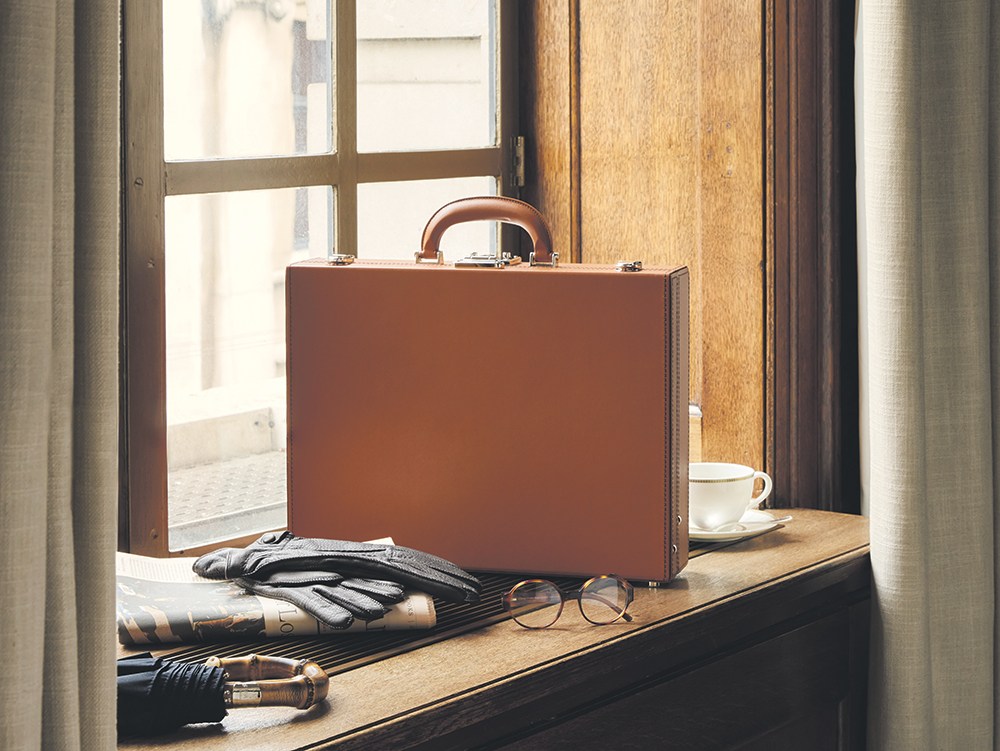
Words such as “craft,” “provenance,” and “heritage” have become fairly hackneyed in commentary on premium commodities: their currency tarnished by overuse in marketing fluff. So it’s refreshing when a house such as Swaine London steps up and restores their luster by earning, rather than merely asserting, them.
Established in London in 1750, Swaine began life making whips and saddlery and secured a royal appointment from King George III as a supplier of the former in 1778. Like many luxury brands today – Dunhill, Hermès, and Louis Vuitton all spring to mind – it thrived in past centuries by adapting to technological changes in transportation. As the railway displaced the carriage, its leatherworking expertise found a new outlet in trunks and luggage for first-class passengers; similarly, in the early days of motoring, it produced automobile-friendly travel sets for the kind of rakish Edwardian gents upon whom Kenneth Grahame based Mr. Toad.
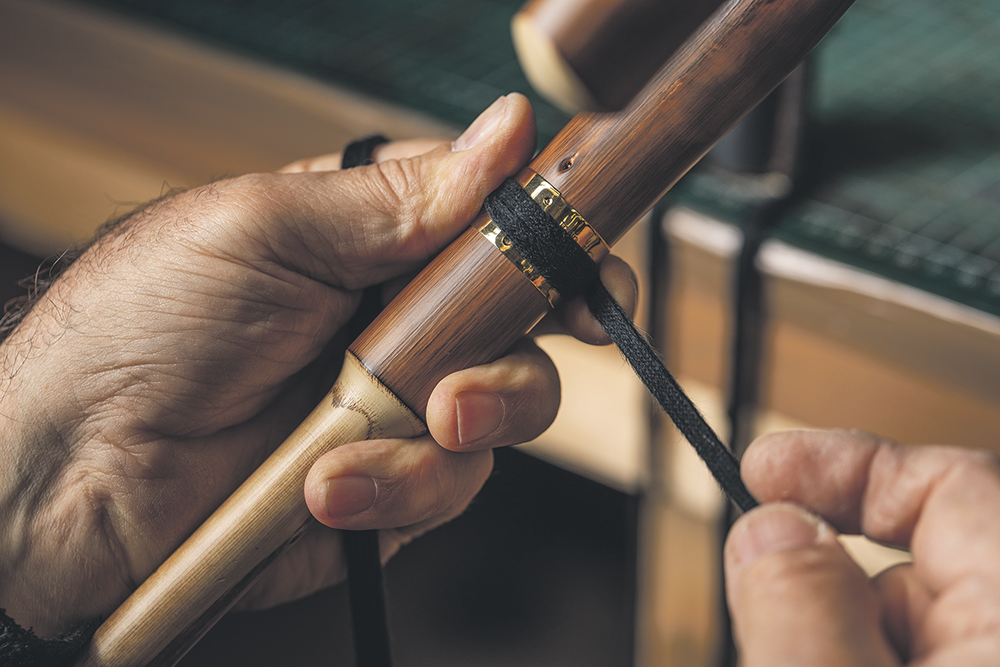
The house has always been equally responsive to societal change: as London’s streets filled with lawyers, financiers, and other denizens of the burgeoning professional classes in the Victorian era, the briefcase became part of its repertoire, followed by handbags and document cases as the sartorial codes of working life continued to change.
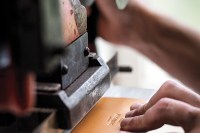
Its willingness to adapt with the times, though, has existed in tandem with a dogged adherence to the basic principles of how desirable commodities ought to be made. “Our craftsmanship is rooted in techniques refined over generations,” says Monty Lowry Corry, brand director at Swaine. “Our heritage leather goods are still made by hand in our Mayfair workshop, from the careful selection and cutting of the leather to traditional saddlery hand-stitching and the finishing of each piece.”
‘Our products are meant to be timeless and are designed to be repaired, restored, and carried for decades’
The labor involved is startling: a single attaché-case handle may occupy a maker for more than seven hours; completing the case to which it will be attached, a further 23. Durability, Lowry Corry says, is the ultimate goal: “The appeal lies in the character and longevity these methods bring to each piece. Traditional construction methods allow us to pay close attention to every detail, while the natural materials we use – including English bridle leather, which takes on its own patina over time – develop character with age and use.
“Our products are meant to be timeless and are designed to be repaired, restored, and carried for decades,” the brand director says. Indeed, the house’s product maintenance services help ensure that prized artifacts become “yours,” in a more profound sense of that word, over the decades: life companions rather than simply possessions.
Design, too, is guided by perennity. Rather than being conceived around the whims of a seasonal collection, Swaine’s pieces – from their proportions to their practical details – are considered in relation to how they will be carried and used: an ethos which comes across clearly, even in collaborations (the latest of which saw Swaine team up with British Airways to create a new amenity kit for customers traveling in the airline’s First cabin, inspired by the suitcases used at the dawn of commercial aviation).
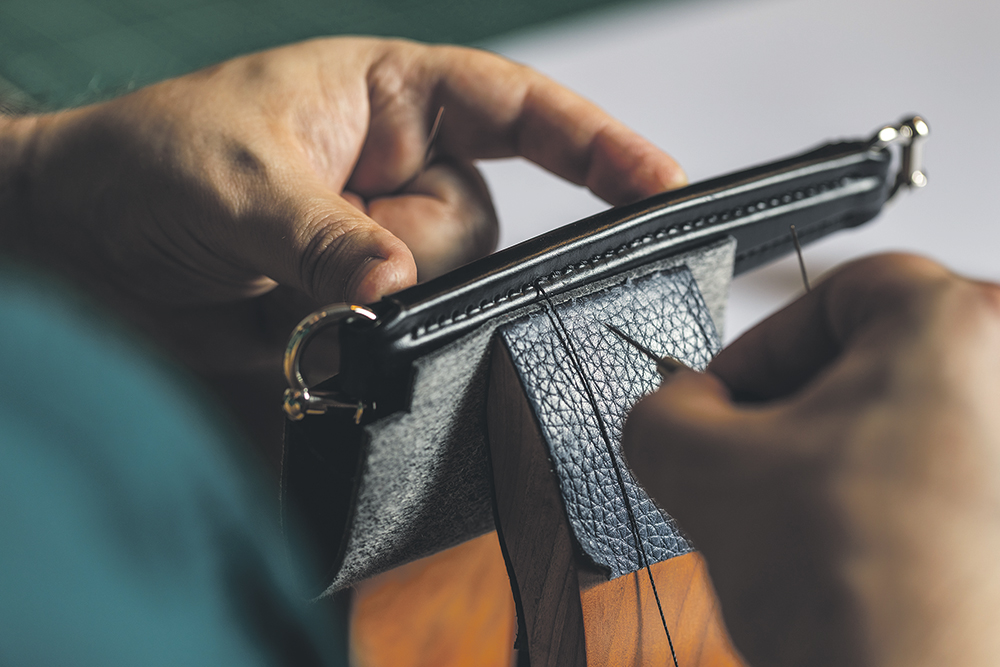
The Salisbury II, meanwhile – a modernized evolution of Swaine’s classic briefcase, launched in early 2026 – typifies the house’s impetus to refine rather than reinvent: its added gusset accommodates a laptop, while a repositioned lock and reinforced handle improve functionality without compromising the original’s formal elegance.
And, for clients seeking something more individual, Swaine offers bespoke commissions across leather goods, hats, and umbrellas. Elements including materials, finishes, and design can all be discussed with the team, allowing a piece to emerge from a dialogue rather than a catalog.
Inevitably, Swaine’s uniquely British modus operandi holds sway overseas: the notion of fine leather goods being created by hand in the heart of London’s most prestigious district, preserving traditional skills and techniques passed down through generations, Lowry Corry says, is an evocative one.
Perhaps the house’s greatest achievement, though, is to reconcile its rich craftsmanship heritage with the contemporary appetite for enduring quality over fleeting novelty. It’s difficult to think of another brand which militates against the banality of today’s fast fashion with such gusto.





Comments