
There is a room in the Montblanc factory in Hamburg that is soundproof and almost entirely silent. All you can hear is the sound of nib on paper, and the people who sit there, visible through glass windows to their coworkers, have one task. To test each and every new Montblanc pen nib to see if it comes up to scratch, so to speak. They are not only feeling the flow of the ink and how the metal moves as they apply pressure to it, but listening for the sound it makes. A well-fashioned nib will perform in a certain way, while one that needs adjustment will alert the writer through feel as well as through auditory cues.
On the rare occasions that a nib requires attention, the tester will take it out of the sealed room to a fine-grinding machine, where a colleague will ensure it is filed to perfection, before it reenters the quiet place for a second time.
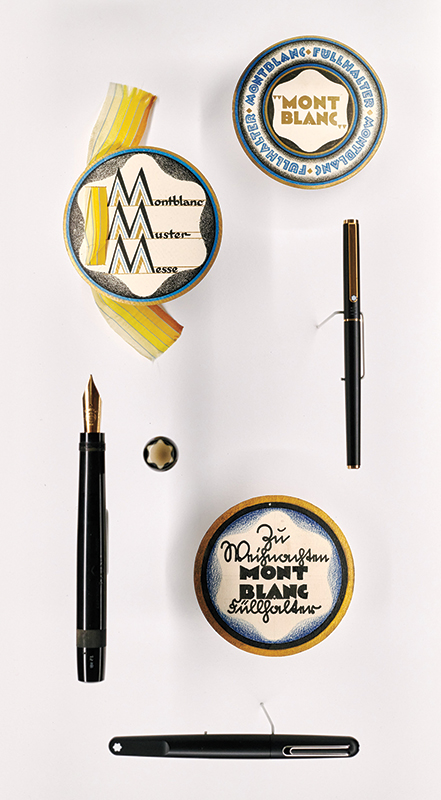
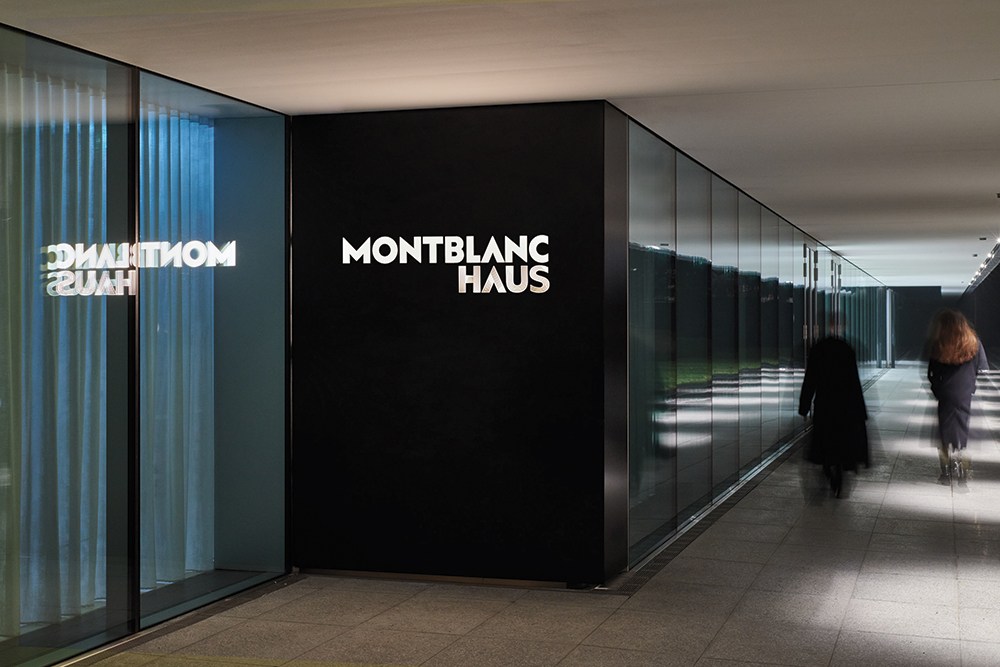
This was one of many surprises when I visited Montblanc Haus in Hamburg for a tour of the facility. In fact, this is the second Montblanc Haus in the firm’s history – the first, also in Hamburg, stood in the center of town from the 1930s to the late 1980s. This new, modern space opened in 2022 and here, there is not only a factory in which every single Montblanc writing instrument is manufactured, but also a museum and an archive.
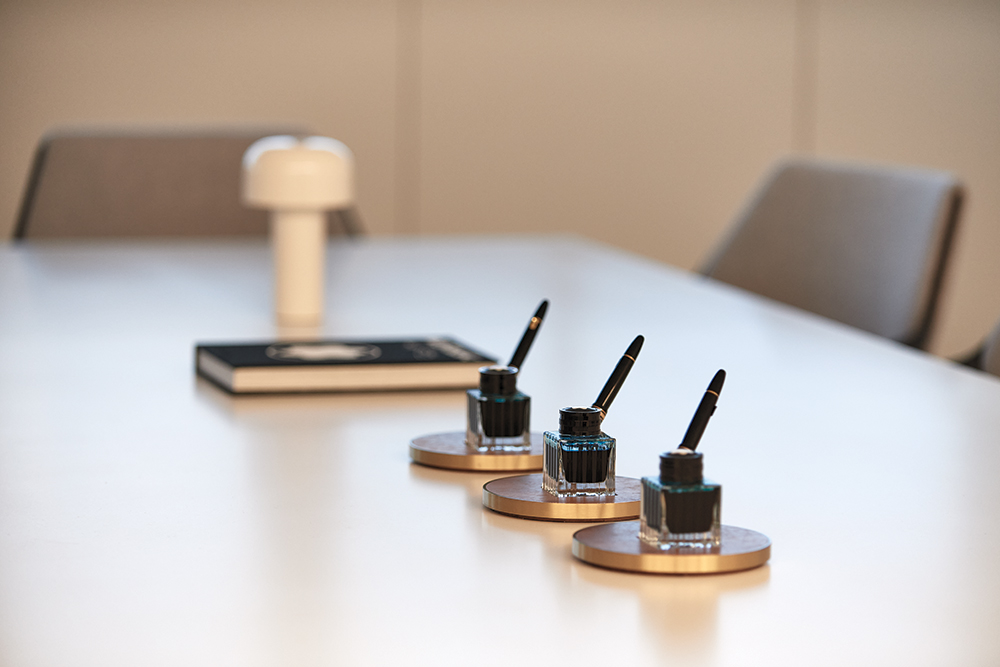
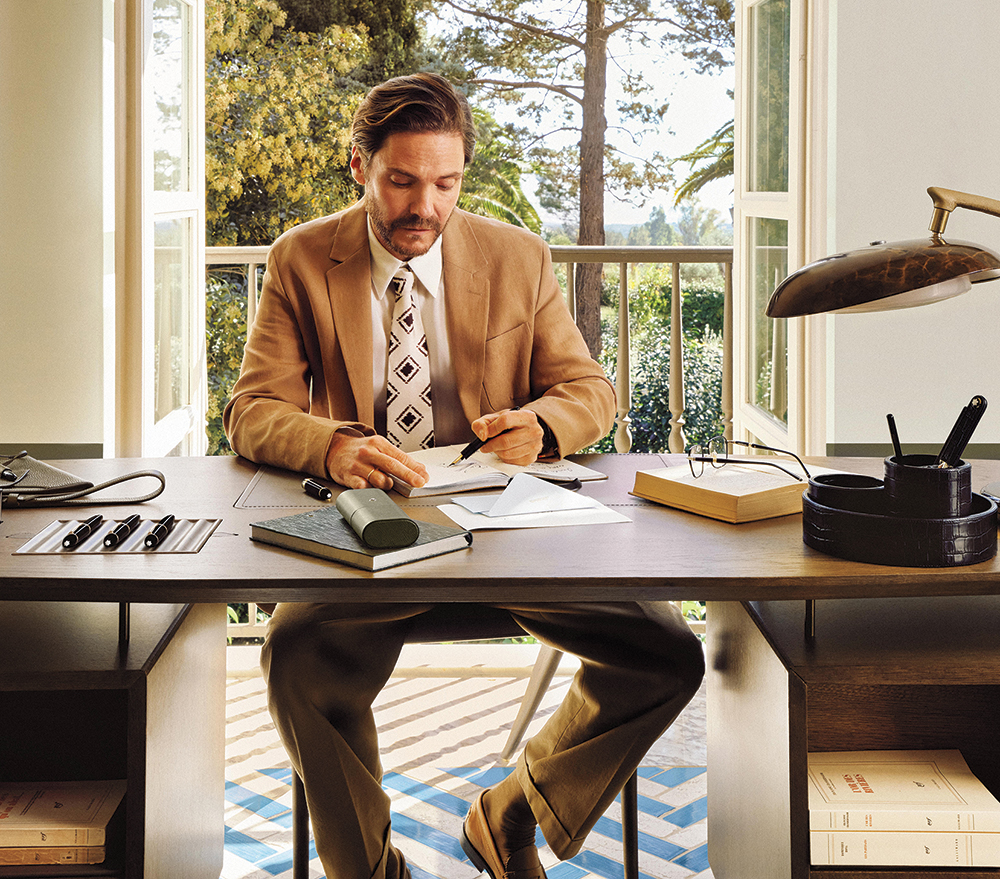
In the entrance hall stands a desk, designed by Montblanc’s creative director Marco Tomasetta, kitted out with all the writing accoutrements that Montblanc now makes – leather pen holders and boxes, a leather pad on which to write, ink bottles and notebooks and the like. I sit at it and write something using one of the firm’s famous Meisterstück fountain pens and it reminds me of a recent conversation I had with German actor Daniel Brühl, who is a Montblanc fan and ambassador.
“When I was a child, I started collecting pens. I had a collection of pens when I was 10, maybe,” he told me. “Writing with pens was something that I always enjoyed, and for me to have a Montblanc, and to then have a Meisterstück, was the ultimate goal – that was the most precious piece that I could think of. I was a teenager when I finally got one.”
The liquid resin is heated to around 536°F with a pressure equivalent to that of 1,000 car tires
There’s a picture of Brühl sitting at this very desk, writing. Like so many Montblanc fans, it’s what he calls the “timeless elegance” of these writing instruments that he likes. But he also enjoys the act of writing and, furthermore, finds it useful. “I do [write by hand]. It’s the best way for me to not forget what I thought, because so much disappears in that digital abyss; you write so many emails and stuff, and it’s nothing that I can go back to, so I have my notebooks,” he explained. “Constantly, whenever I have an idea, I just want to write it down in my notebook with a pen, and then you can go back to it, and you remember it.”
The museum is full of stories and imagery that speak of those who, like Brühl, have reached for a Montblanc when they needed to make their mark. Former president of the Soviet Union Mikhail Gorbachev signed his resignation with a Meisterstück, while John F. Kennedy, Barack Obama, Queen Elizabeth II, and Angela Merkel also used this model. Here you can see the handwriting of the likes of Frida Kahlo, Ernest Hemingway, and Jackie Chan and view more than 410 Montblanc writing instruments that run the gamut from historical examples to the most recent innovations.
The marketing stunts that the brand employed in the early days to get noticed are quite astonishing as well. From branded planes and a car bearing an enormous model fountain pen, to giant, building-sized posters.
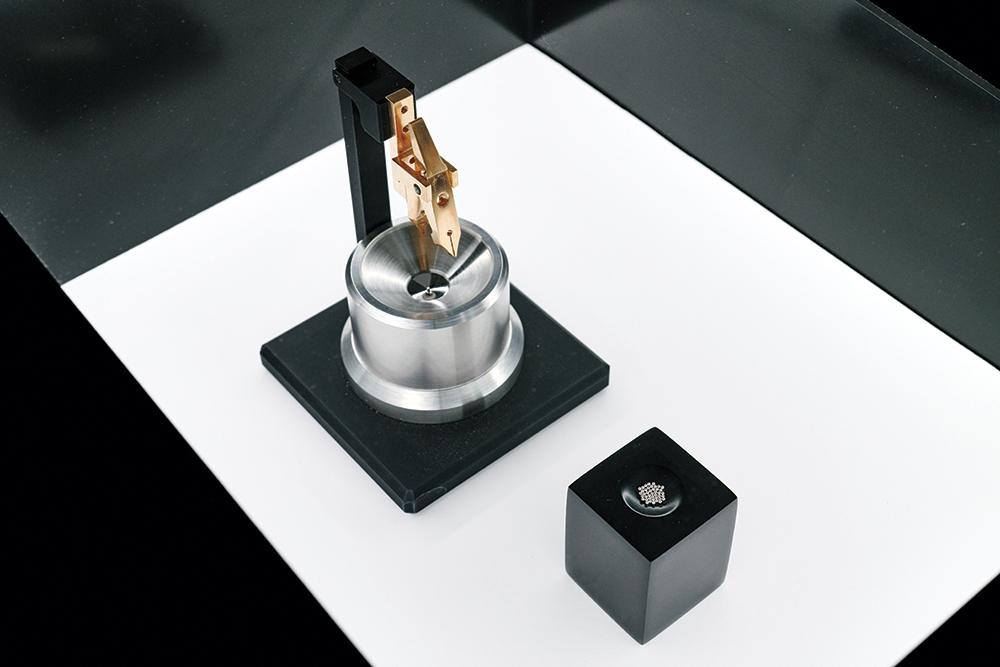
But beyond this celebration of the brand’s history – founded in 1906, it marks its 120th anniversary this year – and cultural resonance, Montblanc Haus is also the place where its products are developed and made. A tour of the facility’s various departments reveals the precision engineering that goes into making these pieces. The body of a Montblanc is made from resin, and this is formed in molds that can only be used a finite number of times before they need to be replaced, in order to achieve exactly the correct width of the material. The liquid resin is heated to approximately 536°F with a pressure equivalent to that of 1,000 car tires – over 2,000 bar. The glass-like shine of the finished piece is achieved by polishing it for six hours with diamond paste and wooden sticks.
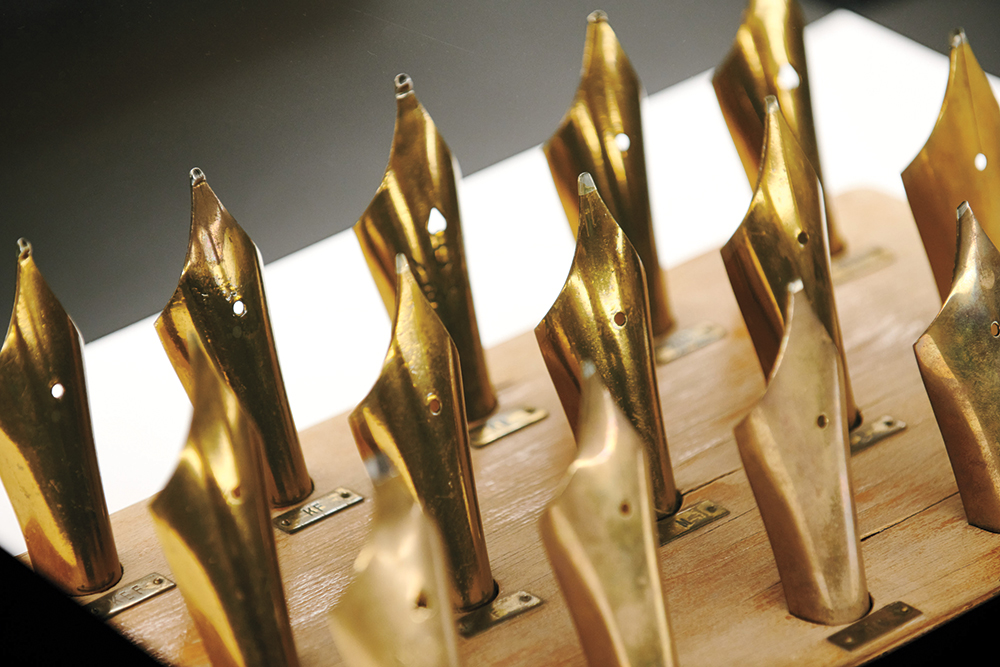
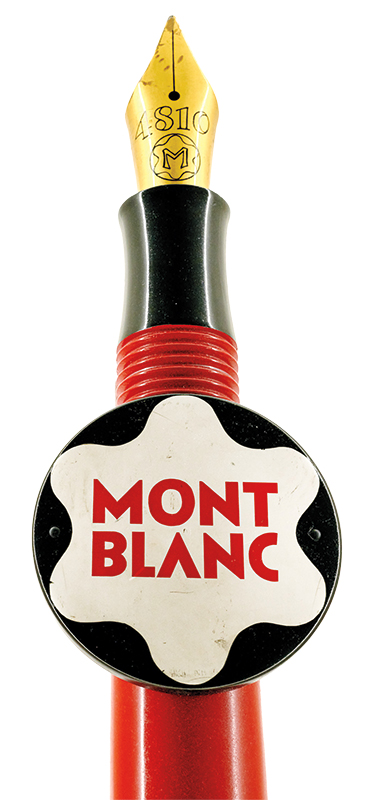
The heart of each pen is, of course, the nib. These are made from pure 14 or 18k gold, with some incorporating silver plating for decoration. These are pressed and shaped individually and engraved with the number 4810 (the height of Mont Blanc’s summit in meters). The white star-shaped cap detail and gold rings fit neatly into the spaces left for them.
Meanwhile in the bespoke department, the house’s artisans work on creating the special editions. Many of these are themed around artists, writers, cultural icons, and even fictional characters. These limited-edition pieces are made using special materials, and celebrate the likes of Mahatma Gandhi, the Beatles, and Henri Matisse. The most recent are dedicated to the writer of Dracula, Bram Stoker, and martial arts legend Bruce Lee. In many ways, these highly decorated works could not be further from the understated Meisterstück, whose torpedo-like shape and streamlined aesthetic were established in 1952 and have changed little since. But their purpose is clear – to show that Montblanc Haus employs human skills and imagination on a daily basis.
And should you wish to hone your own human skills, Montblanc Haus also runs a series of creative writing, penmanship, and calligraphy workshops, both on-site and online.






Comments