Books and Arts

There will be blood – the vital work of field transfusion units

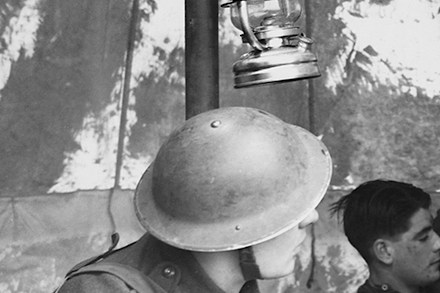
Most conventional World War Two military histories focus on weapons, materiel and even the manpower needed for a decisive victory over Hitler and the Axis powers. Little has been written about blood as a strategic resource. However, a pioneering service of specially trained medics who worked dangerously close to the front lines, pumping blood into the veins of battle casualties, not only saved lives but contributed significantly to winning the war. They did this by returning men to the front line and boosting morale by persuading them that, if wounded, they had the maximum chance of life.
blood

Toy Story 5 contains delicious touches

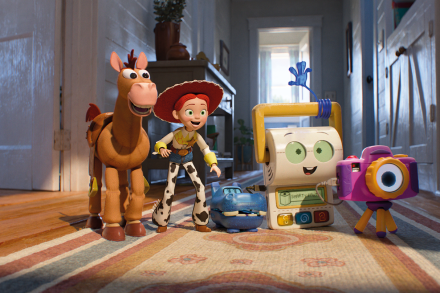
Toy Story 5 – do we need it? One worries for the narrative integrity of characters when an IP is thrashed to death like this. The latest ​installment, however, does address one of the most pressing dilemmas of modern childhood (screen time) and whether it will be the end of toys. (‘Extinction… Not again!’ cries Rex, the dinosaur.) It is timely, with some delicious touches – Woody now has a bald spot So it is timely, with some delicious touches – Woody now has a bald spot. And while it isn’t as entertaining as the first three and stumbles at the finishing line, it may be better than the fourth, with its horrible doll Gabby Gabby.

toy story 5

A trove of avian lore and history

I finished reading The Book of Birds by Robert Macfarlane and Jackie Morris, and leaned out of my attic window to smoke and think about it, when there among the tumbling spires of the apple trees was a spasm of fluttering and a flurry of notes: two spotted flycatchers! One held the air for a moment, hovering and looking me in the eye, and then darted back to its perch while the other called. It has been years since we have seen them, and straight to my bird books I went. The Book of Birds was no help because it does not include the spotted flycatcher and is not designed as a recognition guide. Instead, Macfarlane writes: "Ours is a field guide with a difference... It asks not 'What is that bird?' but 'Who is that bird?' The aim is to help readers identify with them.

birds

Why are there no good films about Independence Day?

This month marks 30 years since the release of Roland Emmerich’s Independence Day, a science-fiction blockbuster best viewed as the anti-Close Encounters of the Third Kind. Spielberg’s 1977 film suggested we would be better off finding common ground with extraterrestrial visitors; Emmerich’s more bombastic picture stuck to the (surprisingly Trumpian) idea that aliens were evil, wished to destroy our planet and must be resisted at all costs, preferably with nuclear weapons. It is not a subtle film, with the most fondly remembered moment coming in the famous shot when the White House is destroyed by an alien spacecraft.

The making of America

The story of the United States was determined from the start by the manner of its birth. The original 13 English colonies may seem lost in the distant past. Yet it was their diversity that was the key to their union. The creation of the US reflected the tensions of 17th-century England, pitting the Puritan republicans of Massachusetts against the landed gentry of Virginia, Quaker New Jersey against Catholic Maryland. The Founding Fathers resolved these tensions by instituting the concept of states’ rights. Their Constitution was a tissue of compromise, yet it was robust. What served to unite 13 colonies still holds together the mightiest nation on Earth.

America

None of McCartney’s new songs will trouble his setlist for long

On May 30, 1966, the Beatles released “Paperback Writer” – a fortnight after “Paint It Black” by the Rolling Stones and only days before Bob Dylan released “I Want You” as a single. Paul Simon wrote and recorded (with Art Garfunkel) “A Hazy Shade of Winter” not long after. Yes, yes, what bliss it was in that dawn etc. But anyone predicting back then that, 60 years later, all four artists would still be releasing new music and touring to large and appreciative audiences would have been laughed clean out of the Bag O’Nails. Even when glossy monthly music magazines such as Q started appearing in the 1980s, 40 was regarded as the dark side of the moon for the foundational pop stars of the 1960s.

paul mccartney

The importance of fairy tales in testing times

In the realm of magic and imagination, human nature can be better understood than in the world of our everyday lives: “The best of our tales do not lie or die.” It is a bold claim, which the folklorist Jack Zipes explores across continents and class in a series of essays. He guides the reader from the origin of oral storytelling, through medieval writings, to 17th-century literary salons and finally to today’s cinema screens. In the course of this journey, he focuses on the specific genre of the “wonder tale,” in which “those who are naive and simple are able to succeed because they are untainted and can recognize the wondrous signs... They have not been spoiled by conventionalism, power or rationalism.

fairy tales

Bond makes a great video game

Grade: A– He may not know how to make a drinkable martini, but James Bond makes a great videogame. GoldenEye on the Nintendo 64 was the first, but there’s always been potential there for more. After all, the character has all the stuff that the medium excels at. He has car chases, he fights, he shoots people, he blows things up and he appeals strongly to adolescent boys. In 007: First Light, he gets ample opportunity to do all those things, sometimes in very quick succession. Our man here is not yet a wintry Daniel Craig, a suave Sean Connery or a campy Roger Moore: when we first encounter him in the mandatory pre-credits sequence he’s not even a spy.

bertolt brecht michelle terry

Michelle Terry is ferocious in Brecht’s simplistic tutorial

Bertolt Brecht’s classic, Mother Courage, is about a female war profiteer who drags a wagon of supplies through no man’s land and sells them to bedraggled soldiers. During the story, she loses both her children and she discovers that war is not as marvelous as she previously thought. This spiritual journey evidently mattered to Brecht, who was born in 1898 in Augsburg, and who greeted the outbreak of World War One with enthusiasm only to become disillusioned by the mechanized slaughter of the trenches. His play is aimed at wrong-headed militaristic numbskulls who believe that war is good rather than bad. If you already hold pacifist views, you may find his tutorial a little simplistic.

The art of resurrecting forgotten artists

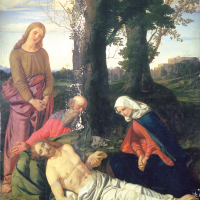
A retired priest in North Wales once told me that after the war he had been asked by Billy Butlin to buy 19th-century paintings for the holiday-camp chapels, because they were going cheap. One he bought, for 49 guineas in 1947, was William Dyce’s 1835 “Lamentation of the Dead Christ.” In 1983, after the Butlin’s chapels had closed, it made a handy £125,000 at auction, when it was bought by Aberdeen Art Gallery. As late as 1962, Lord Leighton’s great “Flaming June” (1895) was sold for £50. Today? Millions. Talk about “the bubble reputation.” The pattern of artistic fame followed by subsequent obscurity has been repeated through the centuries.

Robots

Will robots simply bore us to extinction?

A few years ago, when ChatGPT and Claude were beginning to take off, some tech leaders seemed to develop a curious interest in oceanography. Consider, for instance, Microsoft CEO Satya Nadella’s suggestion in 2023 that AI ought to be compared to a “tidal wave”; or Mustafa Suleyman’s book on AI, The Coming Wave (2024), in which the DeepMind cofounder talks urgently about an “impending deluge” (while repeatedly warning us that the “wave is coming,” and, even more alarmingly, “the coming wave really is coming.”) It didn’t take long for the analogy to spread. The IMF’s Kristalina Georgieva would liken the technology to a “tsunami hitting the labor market.

Wham! How George Michael shot to stardom straight from school

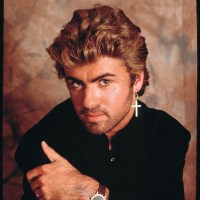
It turns out that the writer Sathnam Sanghera, “the boy with the topknot,” has been a besotted George Michael fan since the age of eight, when he started listening to his older sisters’ Wham! records. This was an unusual thing to be as a Sikh growing up in Wolverhampton and it got him teased at school. But he stuck with it. So when a friend suggested that he write something fun to compensate for the years of heavy historical research he’d put into his excellent book Empireland, he decided to set off on a sort of pilgrimage in search of his dead hero. First stop was Mondial Cars, a showroom in Northwood, north London, which used to be the Bel Air restaurant, where the teenage Michael worked as a DJ.

Not all portrayals of Sherlock Holmes hit the mark

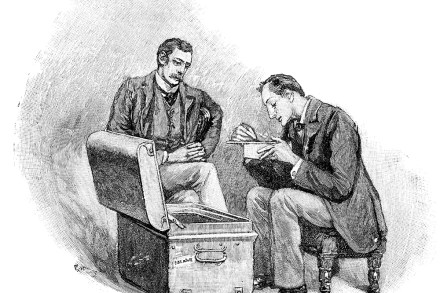
A great literary character, like a gemstone, has many facets. Sherlock Holmes looks different depending on where the light hits him: reasoning machine or bohemian creative, misogynist or white knight, disciplined professional or (in Dr. Watson’s words) “self-poisoner by cocaine and tobacco.” Film adaptations, of which there are no end, pick and choose their angles. Purists rush to tell us which onscreen Holmeses are valid and which travesty Arthur Conan Doyle’s creation. Occasionally the purists themselves betray Holmes, who had more going on than they recall. As for me, I’m purer than the purists. But when it comes to onscreen Sherlocks, I’m one big soft spot. Even by my liberal standards, Amazon’s recent streaming series Young Sherlock fails.

sherlock holmes

The Sun Also Rises is still a great American novel

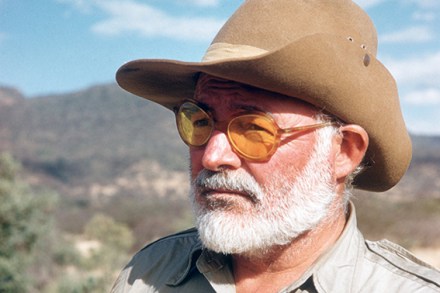
To pinpoint the precise moment Ernest Hemingway came up with the idea for his first novel, The Sun Also Rises, which is celebrating its centenary this year, is not difficult. All we have to do is follow the trail back to Pamplona. In 1925, after a cold winter in Paris, a 25-year-old Hemingway was keen to return to the San Fermín bullfighting festival in the Basque town of Pamplona, near the northern coast of Spain. He had yet to make his mark as a writer, although he was surrounded by some of the heavyweights of expatriate literature: Ezra Pound, F. Scott Fitzgerald, Gertrude Stein and Ford Madox Ford, all of whom believed Hem had a future as a novelist.

The Arts Council’s awful vision for the future of opera

English National Opera’s first production created in Manchester is Angel’s Bone, a one-act opera by Du Yun and the librettist Royce Vavrek. It was premiered in 2016 in New York and subsequently won the Pulitzer Prize, but we shouldn’t hold that against it. Musically, at least, it’s certainly more interesting than recent US imports like Jeanine Tesori’s Blue – worthy, subminimalist Yankslop addressing the fashionable issues of the day. (It’s funny how the classical music world imagines that the way to reach British audiences in 2026 is to program stuff that was relevant to Americans in 2016.) It was a pretty horrible experience nonetheless. Daytime TV-fixated suburbanites Mr. and Mrs. X.E.

opera
gambling

How Rupert Murdoch destroyed the innocent enjoyment of watching sport in Britain

In July 2000, Rupert Murdoch’s Sky acquired an obscure online gambling brand called Surrey Sports. It was little remarked upon at the time but this deal would change association football forever. Two years later, Surrey Sports had become Sky Bet and, by 2004, people watching football on Sky Sports could bet on the game via their remote. And why not? After all, as the Sky Bet tagline reminded viewers: “It matters more when there’s money on it.” For football fans, nothing was ever quite the same again. “It’s difficult to overstate what the slogan did for the normalization of gambling in football,” writes Darragh McGee in his impressive study of how our national sport, seduced by profit, surrendered to the gambling industry.

Garibaldi

A weary trek in the steps of Garibaldi and his Redshirts

By the time he died in 1882 at the age of 74, Giuseppe Garibaldi had freed the Italian peninsula from its abhorred Habsburg and Bourbon rulers and united all Italy under the liberally inclined House of Savoy. With his whiskery good looks and wardrobe of red blouses, he was the ideal vehicle for romantic notions of free nationality. When he visited London in 1864, crowds flocked to greet the Risorgimento liberator as he got off the train at Nine Elms. A new football club, Nottingham Forest, adopted Garibaldi red as its color and a “squashed fly” biscuit was named after him. In Queen Victoria’s estimation, though, Garibaldi was an outlaw figure who threatened to subvert the established order. “Garibaldi – thank God – is gone!” she declared on his departure.

arthur miller

Why Arthur Miller is back in the limelight

Arthur Miller may have died two decades ago, but America’s answer to Euripides and Sophocles is having a moment. The great tragedian’s plays have been revived, and revived again, ever since he first broke through in 1947 with All My Sons, but even by his standards, the new productions just keep on coming. His most famous play, Death of a Salesman, has opened on Broadway to rave reviews and Tony nominations galore, with a cast-against-type Nathan Lane as the doomed Willy Loman and Laurie Metcalf as his loyal wife Linda. Across the pond, Bryan Cranston has recently finished an equally acclaimed run as Joe Keller in All My Sons.