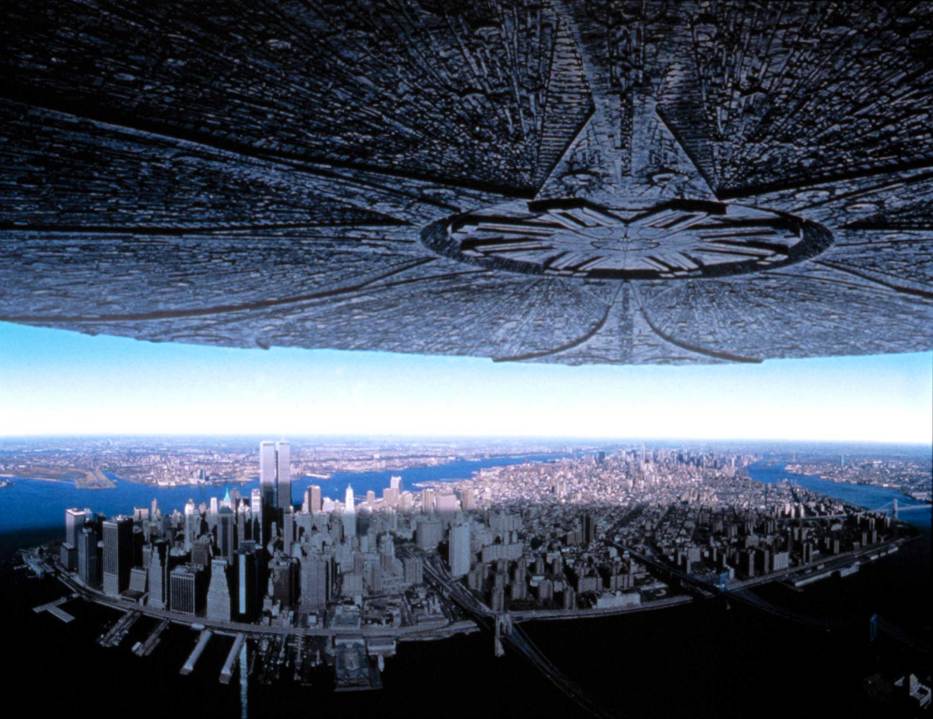
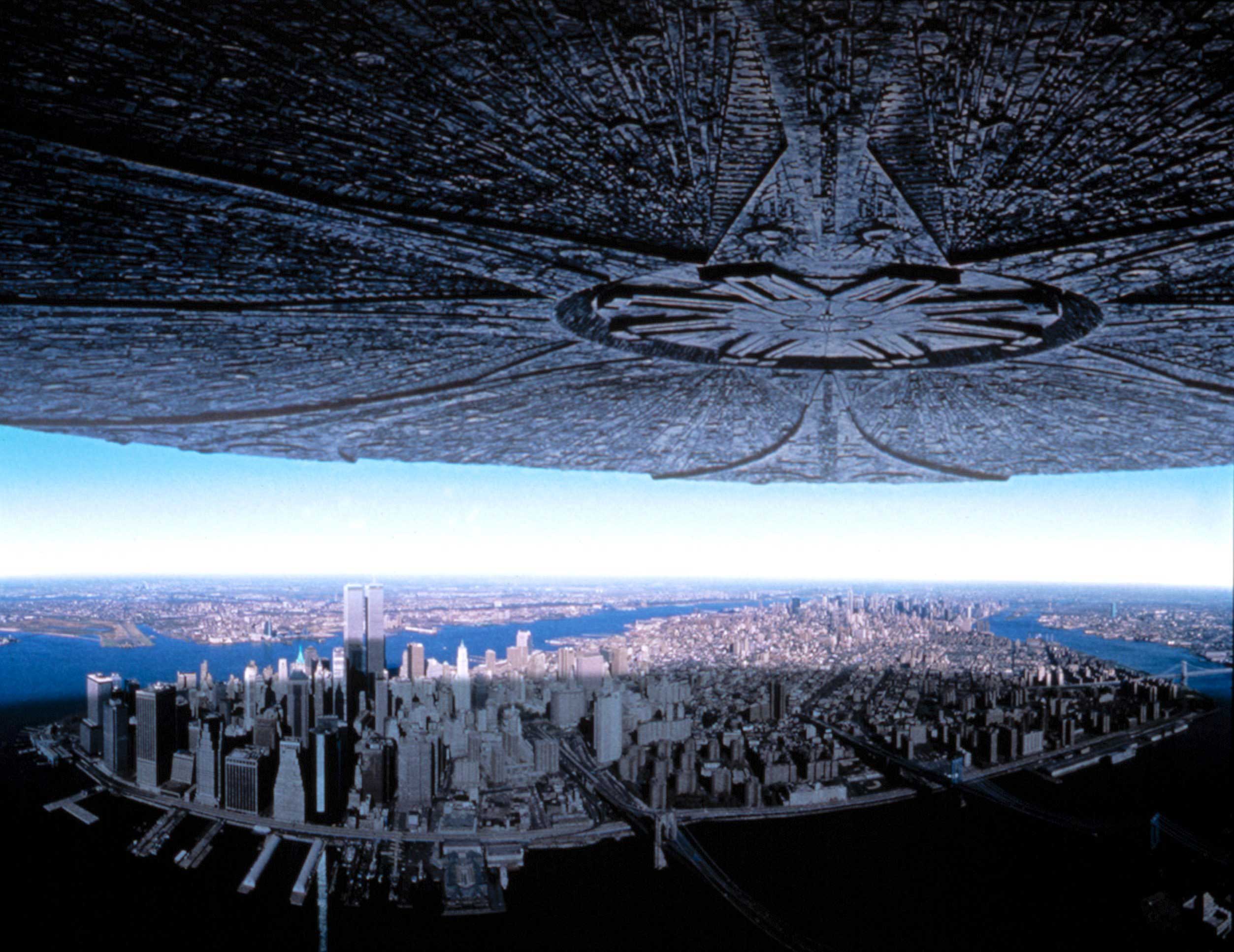
This month marks 30 years since the release of Roland Emmerich’s Independence Day, a science-fiction blockbuster best viewed as the anti-Close Encounters of the Third Kind. Spielberg’s 1977 film suggested we would be better off finding common ground with extraterrestrial visitors; Emmerich’s more bombastic picture stuck to the (surprisingly Trumpian) idea that aliens were evil, wished to destroy our planet and must be resisted at all costs, preferably with nuclear weapons.
It is not a subtle film, with the most fondly remembered moment coming in the famous shot when the White House is destroyed by an alien spacecraft. But the dramatic highlight comes shortly before the final battle, when Bill Pullman’s president – a Hollywood-ordained cross between Eisenhower and Clinton – delivers a rousing speech to the assembled coalition of nations gathered to destroy their mutual enemy.
The Patriot was only a modest box office hit, perhaps because audiences were put off by the downbeat tone
At its climax, Pullman declares, “Should we win the day, the Fourth of July will no longer be known as an American holiday, but as the day the world declared in one voice: ‘We will not go quietly into the night! We will not vanish without a fight! We’re going to live on! We’re going to survive!’ Today we celebrate our Independence Day!” Cue cheers, mass destruction and the unlikely spectacle of Randy Quaid anally penetrating an alien spacecraft in a biplane. Well, it was another time.
Two and a half centuries on from the first Independence Day, it is striking to see how few feature filmmakers have attempted to engage with the events of 1776, and their legacy, in any meaningful or memorable way. Documentarians have consistently made striking and interesting series – look at Ken Burns’s The American Revolution, a comprehensive 12-hour documentary from last year – but when it comes to fictionalized accounts, there is a distinct dearth.
The film that most Spectator readers might have seen is another Emmerich picture, 2000’s The Patriot, which features Mel Gibson (when he was still an A-list movie star) as a veteran of the French and Indian War who is reluctantly swept into the American Revolutionary War when his hot-headed son (Heath Ledger, no less) signs up to fight against the evil British colonialists.
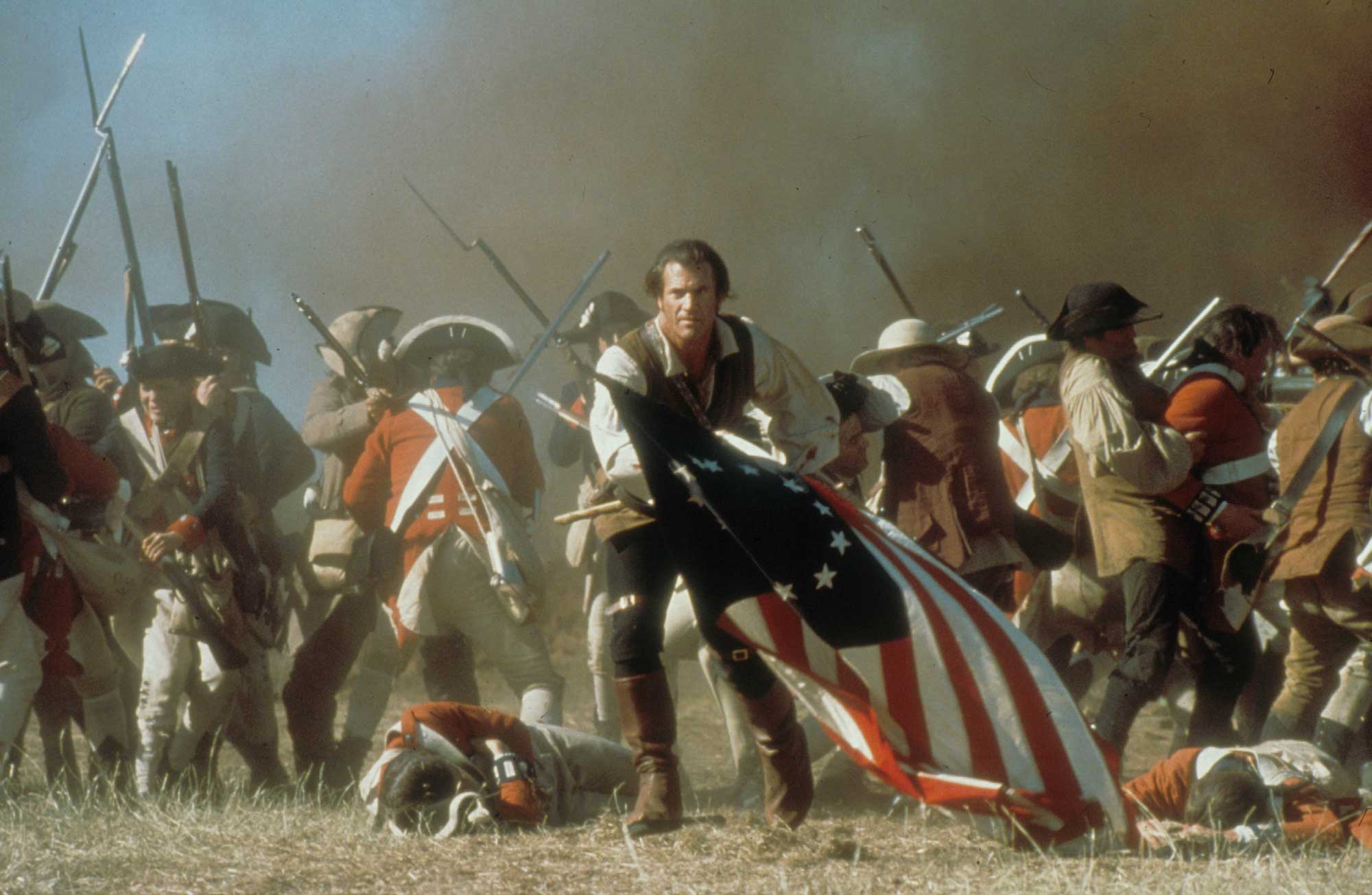
The picture has stirring battle scenes and a would-be epic sweep, but it attracted opprobrium on both sides of the Atlantic when it was originally released for an attitude toward historical accuracy that lay somewhere between cavalier and hilariously misleading. While the film’s screenwriter Robert Rodat – who also wrote Saving Private Ryan – claimed he consulted letters and diaries written by colonists in order to give an authentic flavor for the period, the approach toward characters and military action in the Revolutionary War verges on the fantastical. Gibson’s character Benjamin Martin, aka “the Ghost,” is a fictionalized version of a South Carolina militia leader named Francis Marion, nicknamed “the Swamp Fox,” who popularized the use of guerrilla warfare against the British.

He was also a slave trader who tortured and raped his female slaves and took delight in inflicting atrocities upon his Native American adversaries, something of a difficult character to render as a sympathetic protagonist. But this is a picture in which Martin cannot be a slave owner, so, ludicrously, he has to be a caring and concerned employer of freemen – who, of course, are all too happy first to work, and then to fight alongside, their benefactor.
The Patriot vaguely nods toward the idea of Martin’s violent past – he has a monologue in which he recounts a massacre he committed at Fort Wilderness in revenge for French barbarity, with the line, “We took our time… we cut them apart, piece by piece” – but it’s Gibson, so even if the film toys with the idea of making its hero morally compromised, the villains must be much worse.
Few would pretend that British actions during the Revolutionary War were particularly commendable, but nonetheless Emmerich and Rodat present a caricatured group of sneering baddies who are either prancing and effete (Tom Wilkinson plays General Cornwallis, whose surrender at Yorktown to George Washington in 1781 basically ended the war) or essentially proto-Nazis. Jason Isaacs plays the picture’s primary villain, Colonel William Tavington, a Hollywood version of the British Legion leader Banastre Tarleton.
By all accounts, Tarleton was a highly regarded career soldier who was almost unique among his contemporaries in that when he returned to Britain, he received praise, not censure, for his actions in America. Tavington, however, is a sneering, nefarious figure who not only kills two of Martin’s sons and his daughter-in-law during the course of the film, but commits atrocities that might have made the Nazis blanch, including rounding up an entire town, herding them into a church and then burning it to the ground.
‘I expected they would have worked on that film, but they just let it go.They put half a film out’
The Patriot was only a modest box office success when it was released, perhaps because audiences were put off by its strong levels of violence and downbeat tone: America gains its independence, but at extraordinary cost. Gibson later acknowledged its factual flaws when he said, “If one were to adhere to historical accuracy all the way, you’d have the most boring two hours on Earth.”
Still, it was a hit compared to the other cinematic attempt to tackle the events of 1776: Hugh Hudson’s notorious 1985 flop Revolution. It should have been a potential Oscar-winner. Hudson was still riding high from the success of Chariots of Fire, and the veteran producer Irwin Winkler had worked on the likes of Rocky and Raging Bull. And, in the lead role of Tom Dobb, a pacifist fur trapper reluctantly corralled into the Revolutionary War, Al Pacino, perhaps the greatest actor of his generation, was cast.
However, everything that could have gone wrong with the picture, did. It was filmed not in America, but in the British town of King’s Lynn, in dreadful conditions. Pacino contracted pneumonia during shooting, and the filmmakers were only given a few months to edit it into any kind of coherence. By all accounts, they failed on two separate levels: first because the film was awkwardly torn between the demands of a rousing, audience-pleasing account of the Revolutionary War and something more downbeat and introspective; and second because production had been chaotic from start to finish. As Winkler reflected later, “Usually on a location like this there is quite a lot of flirting and some passionate love affairs and some drunken fights. We had the heavy drinking and a couple of fights but not much love.”
When it came out, it received the worst reviews of any American film since Heaven’s Gate (1980). Unlike The Patriot, it was not criticized for historical inaccuracy, but that was because nobody could tell what on Earth was going on. Pauline Kael wrote in the New Yorker: “Everything in this picture, which goes from the beginning of the American War of Independence in 1776 to the end of combat in 1783, seems dissociated. The director, Hugh Hudson, plunges us into gritty, muddy restagings of famous campaigns, but we don’t find out what’s going on in these campaigns, or what their importance is in the course of the war.” She concluded: “This is a certifiably loony picture; it’s so bad it puts you in a state of shock.”
What nobody anticipated at the time of its release was that the whole experience was so traumatic for Pacino that he temporarily retired from acting and would not make another film for years; he later said: “Revolution was one of those things that happen in a career, where you learn so much from it because it was such a disorienting experience. I expected they would have worked on that film, but they just let it go. They put half a film out. I was appalled and shocked by that. I didn’t know what to do. It was that single film that took the rug out from under me. I lost interest for a while.”
‘This is a certifiably loony picture; it’s so bad it puts you in a state of shock’
A later version of the picture, Revolution: Revisited, was released in 2009, but although some critical response was kinder, it has failed to convince anyone that the unhappy picture was ever a seen as a cinematic masterpiece.
There is no reason why a film about the Revolutionary War, and the events of July 4, 1776 and beyond, should not be highly successful. All the ingredients of a blockbuster film are there: an epic sweep, political conniving and, for the American side at least, a happy ending. But to date, all attempts to depict it cinematically have not done this fascinating and complex story justice.
Emmerich’s 1996 film might implore us not to go quietly into the night (words ripped off from the decidedly un-American Dylan Thomas, for what it’s worth), but the chances of audiences finding a picture that exhorts us to celebrate the original Independence Day are slim and show no signs of growing.




Comments