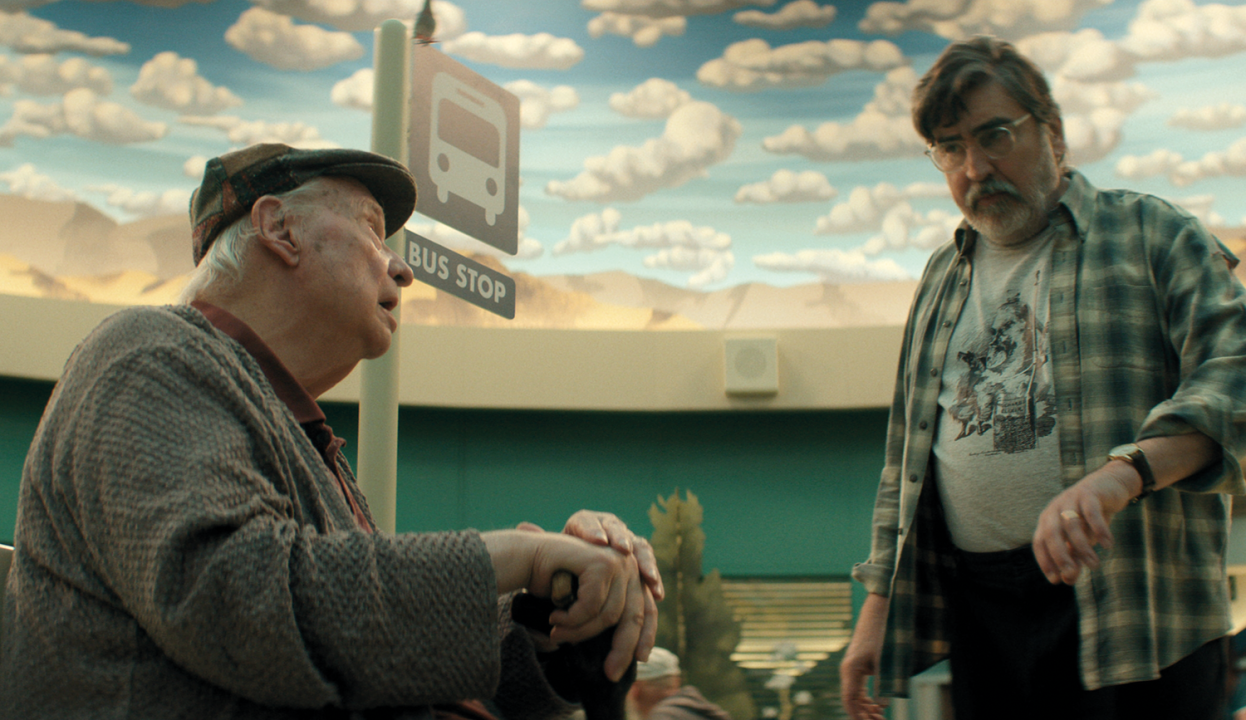

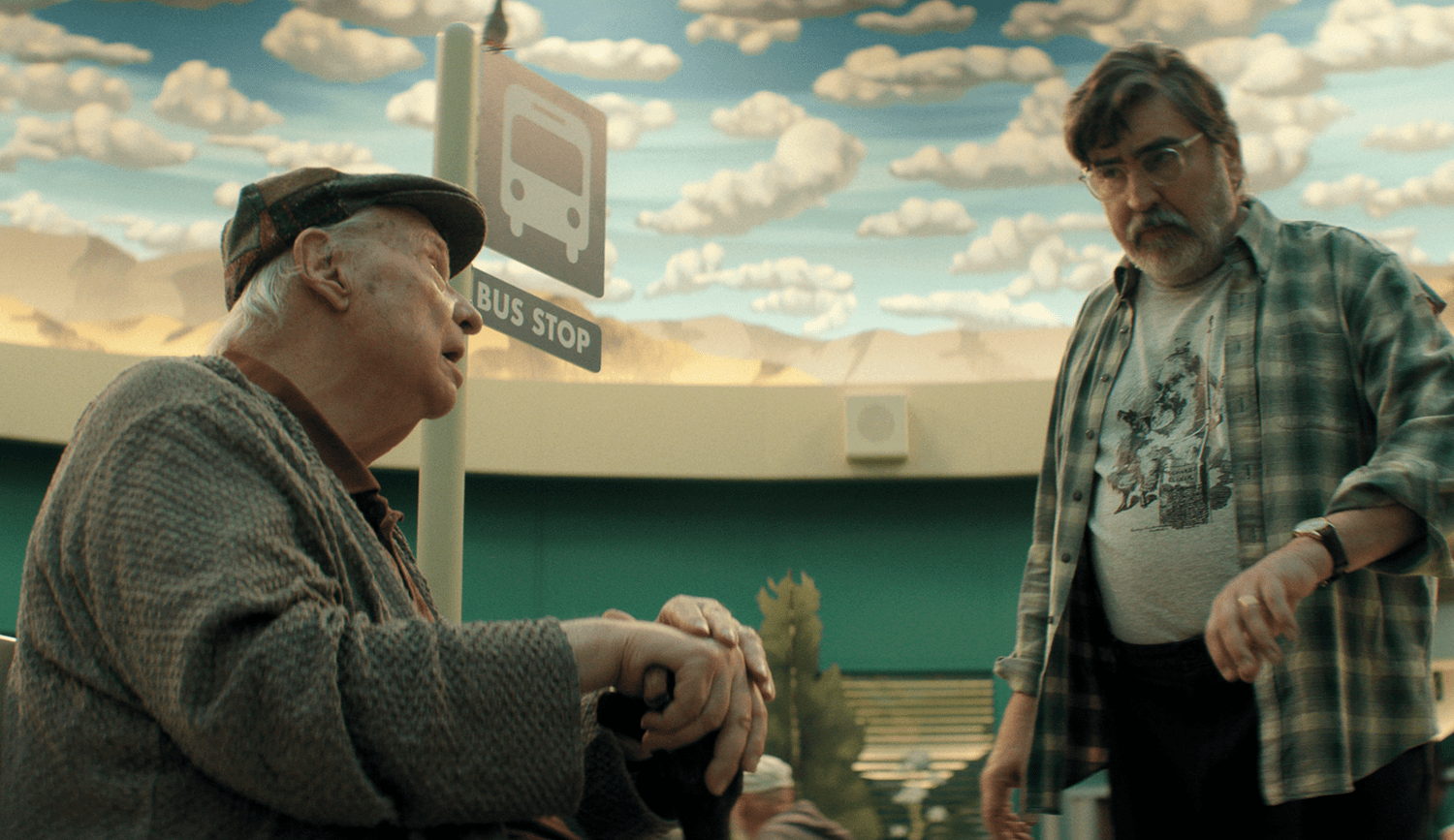
You know you’re getting old when you see Geena Davis from Thelma & Louise cast as a granny sex symbol and Alfred Molina as a character so elderly you’re supposed to believe that he could drop at any time. This is one of the running gags of The Boroughs, a sci-fi/monster series set in an upmarket, Stepford Wives-esque desert retirement village, and clearly aimed at aging farts like I very nearly am who imagine themselves to be much younger and groovier than they now are.
“Don’t worry, wrinkly kids,” the series reassures us. “By the time you hit your seventies you’ll be taking more drugs and having more sex – even crazy, orgy sex [note to squeamish viewers: this scene takes place off camera] – than ever before. Plus you’ll make lots of amazing new pals and form Scooby Doo-style gangs, where you get to solve mysteries involving all sorts of hairbreadth scapes and deadly intrigue, which your pesky kids just won’t understand.”
One of the most pleasantly undemanding and entertaining series I’ve binged in ages
Well, it’s a charming conceit, anyway. And though the convoluted plotting doesn’t bear too much close scrutiny, and though, being American and about old age, it can’t resist being schmaltzy in places, overall it’s a delight. Definitely one of the most pleasantly undemanding and reliably entertaining series I’ve binged on in ages.
The Boroughs was produced by the Duffer Brothers and, like Stranger Things (which of course they also did) in reverse, it’s about oldies who discover scary creatures that their children refuse to believe exist. The monsters, which have “too many legs,” creep about at night through tunnels and emerge through ducts to feed on their elderly victims by sucking out their cerebrospinal fluid, making them gradually more weak and senile till they die. This has been going on for years, without any suspicions being raised, because old people croak all the time and because if they’re reporting monsters it’s obviously just dementia.
But our gang, led by grumpy retired engineer Sam Cooper (Molina), is not going to go down without a fight. Each brings a special skill to the party. Renee (Davis) is an ex-rock manager sufficiently desirable to attract the toy-boy lover Paz (Carlos Miranda) they need for their youth fire support; Judy (Alfre Woodard) has the investigative tenacity that journalists supposedly have in abundance; her hippie-era husband Art (Clarke Peters) smokes epic quantities of strong weed, enabling him to have just the mystical desert experiences required to fill various gaping plot holes; Wally (Denis O’Hare) is a doctor, and so skilled at stuff such as impromptu postmortems.

I mention all these characters because this is, above all, a character-driven project. You’re meant to so enjoy being in the company of this all-star cast of lovable eccentrics that you’re really not bothered when the action slows to a Zimmer-frame pace or when the plotting performs a bizarre U-turn and decides it’s not after all a sci-fi horror but more cute-creature rescue caper in the manner of E.T. or One Hundred And One Dalmatians. And mostly you are indeed not bothered because everyone is likable (even the baddies, in their way) and well delineated and because, unlike so much other stuff on TV these days, the series exists to enchant you rather than traumatize you.
As with Stranger Things, it has a nostalgic quality redolent of how you think you remember feeling when you first saw early Spielberg classics such as Raiders of the Lost Ark. Probably, every scene is a cliché and you’re being quite shamelessly manipulated with some of the most obvious tricks in the book. But while you’re watching, as opposed to picking it apart afterward, it just feels like good old-fashioned entertainment.
I’m not going to spoil the ending except to warn that you might find it a bit twee (and far too reliant on the ludicrous notion that you might be in any way sympathetic to the works of Bruce Springsteen). But then, if you think about it, with the horror/sci-fi genre you’ve really only got two potential options: the nihilistic despair one, à la Invasion of the Body Snatchers, where your final hope of redemption is ruthlessly snatched away from you at the last second and you are left to wallow in existential despair, and the one where E.T. finally gets to go home. When I was younger, I much preferred the former because it seemed more artistically satisfying and echt and reflective of the world as it really is. These days, though, I find myself far more drawn to the delusional optimism.






Comments