Books and Arts

Stacking up

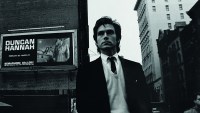
"It feels almost like there is money in writing again.” So the historian and New York Times bestselling author Dan Jones tells me. Is he referring to increased book sales, or lucrative adaptation deals? Not this time. Instead, he’s discussing Substack, which launched in 2017. It has now become the platform of choice for writers to develop their careers on their own terms, without having to give substantial percentages away to agents, publishers and lawyers. For years, authors have felt that they have been little more than galley slaves, flogging themselves and their wares for the profit of multinational corporations. Now, finally, they have been given an opportunity to take back control of their own careers and destinies. The format is a simple one.

substack

Kandinsky’s colors

The paintings of Vasily Kandinsky (1866-1944) have never looked quite as good as they do, right now, at the Solomon R. Guggenheim Museum in New York City. It’s worth mulling why that is. I mean, Kandinsky is old news, right? He’s a mainstay in the common consciousness of those who make art their livelihood, and the paintings remain on view at any institution that presumes to untangle the story of Modern art. Given the current vogue for politics and inclusivity, Kandinsky seems an unlikely figure for reappraisal: he’s a tough nut to enlist for this or that cause. As for excluding him from the canon — forget it. Dead white male though he may be, Kandinsky is immovable. Granted, his status as the first abstract painter has been called into question.

kandinsky

Wynton’s works

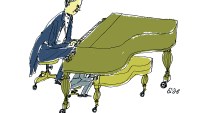
Jazz has periodically seen the rise of so-called “young lions.” The phrase was first used in 1961 as the title of a Lee Morgan LP put out by Vee-Jay Records, a black-owned company, with cover art that sports a photo of four lions lounging on a stone ledge. Then, in 1983, Elektra Records released an LP that was also titled The Young Lions, featuring Wynton Marsalis, Bobby McFerrin and a number of other young musicians who were focused on reclaiming the bebop tradition. Now, in late November, as Marsalis celebrated his sixtieth birthday with the Jazz at Lincoln Center Orchestra at the Rose Theater, his baritone saxophone player Paul Nedzela (as the New York Times reported) called out during a rehearsal, “It’s the Young Lions!

Marsalis

How did Walt Disney learn from Ancien Régime decoration?

"Make it pink! Make it pink!” says the chubby fairy Flora, aiming her wand at Princess Aurora’s new ball gown in Walt Disney’s Sleeping Beauty (1959). A few magic sparks must have fallen on the walls of Disneyland’s Sleeping Beauty Castle in Anaheim, California, which have been painted (and repainted) in several shades of cotton-candy pink since the faux fortress opened in the summer of 1955, well before the film itself was completed. Two centuries earlier, in 1757, Jean Hellot, the general inspector of the porcelain factory at Sèvres, invented the slightly deeper “rose Pompadour,” a ground color named in honor of Louis XV’s chief mistress and the factory’s most important patron. This pink appears on the scallop-patterned lids of two large Sèvres vases (c.

disney
guilty

Jake Gyllenhaal is guilty

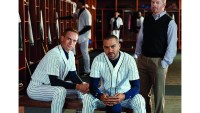
Jake Gyllenhaal is losing it. As with so many of his films — Demolition, Southpaw and Nightcrawler, to name a few — the actor’s latest, the unconventional crime thriller The Guilty, finds him yet again portraying a troubled man, beaten down and about to crack up. Joe Baylor is an LAPD cop relegated to working at the 911 call center as the result of misconduct some eight months before. Surly and apathetic, Joe answers the nightshift calls, ranging from drunken mishaps to carjackings, with a disgust he doesn’t care to contain. He longs to return to the streets. The night turns, however, when Joe fields a call from a woman (voiced by Riley Keough) who’s been abducted and is being held in a white van.

lester

Richard Lester at ninety

No matter how many years have passed since they first hit American airwaves, or how many of its members have died, or how aged its surviving members have become, the Beatles will always be, in our minds, forever young. To a large extent, the public perception of John, Paul, George and Ringo as personifications of youth, zest and zeal was a byproduct of their classic faux-documentary musical comedy, A Hard Day’s Night, released in the summer of 1964, just months after their appearance on The Ed Sullivan Show. It comes, then, as something of a shock to note the ninetieth birthday this month of the film’s prodigious and gifted director, Richard Lester. The maker of the Beatles movies (he also directed 1965’s Help!) a nonagenarian? It can’t be! But so it is.

health weight

Carry that weight

You feel a weird twinge, and your doctor doesn’t have an opening for four months, so it’s almost inevitable you’ll go looking for more information on the internet. You know it’s not a good idea, that it can’t possibly end anywhere good, and yet you feel compelled. The result is usually the same: WebMD and Yahoo Answers will tell you it’s cancer, YouTube will tell you your bowels need flushing, some guy calling himself a fitness guru with very white teeth will try to sell you capsules of some exotic sounding herb for $125, and soon your Google ads are filled with prescription medication designed to fight Alzheimer’s or lymphoma.

Books of the Year 2021

Matt Labash I read a lot of books. Probably well over sixty in the last year. I’m not saying that in some little-kid braggadocious way. After all, I’m fifty-one years old. Though some have said I read on a fifty-two-year-old level. In addition to the couple of books I have open at any time, a good deal of my book consumption comes via audio: I have an audiobook going in my car or on my MP3 player at all times. And at my advanced age, if I don’t dog-ear and underline a book, it’s lost down the memory hole forever, no matter how much I liked it. But one I do remember liking so much that it bears mentioning, is John Green’s The Anthropocene Reviewed: Essays on a Human-Centered Planet (Penguin, $28).

books

Aleksandr Solzhenitsyn’s masterpiece is finally appearing

In the mid-1970s, exiled from the Soviet Union for exposing its vast crimes against humanity, and having won the Nobel Prize in Literature for that endeavor, Aleksandr Solzhenitsyn turned his back on the lionization that awaited him in New York and other cultural capitals of the West and instead settled with his family in the woods of Vermont. Avoiding visitors for the better part of the next two decades, he churned out half a dozen or so books, averaging roughly 750 pages each, that together tell the story of the Russian Revolution and its antecedents. This act of sheer energy, self-discipline and renunciation of the conventional worldly pleasures bestowed by the literary elite was in the spirit of Russia’s own eastern monasticism.

Solzhenitsyn

The Road Not Traveled

Meredith Swann is driving in her new car under the M40 flyover, checking on her GPS system to see if she’s following the flowing arrows correctly. She has switched off the woman’s voice — “Turn left in 200 yards” — because it reminds her uncannily of her mother, all calm, quiet advice with a subtext of disapproval. She turns and turns again. Now she is on a road of towering glass office blocks. Is she lost? No, there it is — Sainsbury’s Homebase. She parks, steps out of her car and pulls down her T-shirt to cover the neat dome of her pregnant belly. The car magically locks itself as she walks away, its lights giving her a knowing wink of acknowledgment. In the vast Homebase she is daunted and diminished by the size of the place.

road traveled meredith

A brush with Joan Mitchell

“I am not a member of the make-it-ugly school,” Joan Mitchell told Irving Sandler for an ARTnews article in 1957. No argument there. As the major retrospective of more than eighty significant paintings by the second-generation Abstract Expressionist (1925-92), now on at the San Francisco Museum of Modern Art, reminds us, Mitchell’s artistic life was an unabashed pursuit of the beautiful. Her paintings, derived from nature but fired in the kiln of memory and intuition, are testaments to that pursuit, showing us at once just how devilishly out-of-reach true beauty can be, and just how important it is to stretch one’s arms and go for it.

mitchell
six

Broadway’s back(side)

Six, a British musical about the wives of Henry VIII, is a scrupulously specious masterclass in frivolity. These onetime queens, blinged and bedazzled as fabulous pop-diva Kweens, undertake a six-way singing competition to decide who had “the biggest, the firmest, the fullest... load of B.S. to deal with” from their kingly husband. Backed by a live band, the sextet’s set amounts to the love child of RuPaul’s Drag Race and the Super Bowl halftime show. Those hoping for revisionist revenge fantasy will leave disappointed. Those seeking dramatic tension, character development, tragedy — anything having to do with the second half of the phrase “musical theater” — won’t find it here.

dress

A dream of a dress

In America: A Lexicon of Fashion, now at the Metropolitan Museum’s Costume Institute, leads with a quote from Jesse Jackson: “America is... like a quilt — many patches, many pieces, many colors, many sizes, all woven and held together by a common thread.” Odd, then, that framed above the first wall panel is a drab, blank-faced suggestion of an American flag constructed from just two rectangular pieces of faded denim. Created by Sterling Ruby as a mourning garment — a model huddles under a wearable version in the exhibition poster — “Veil Flag” (2020) sits awkwardly next to the bright patchwork skirts, dresses, trousers and jackets also on display in the first room. Yet it’s the right way to open a fashion exhibition that makes you think, not swoon.

hargrove

Roy Hargrove doubles up

There is a long tradition in jazz of duets between trumpeters and pianists. It’s a mercilessly revealing format, one that allows for no hiding on the part of either performer. But the payoff can be big. Consider the recording of the song “Weather Bird” by Louis Armstrong and Earl Hines in December 1928. Part of the epochal Hot Five and Hot Seven sessions that announced a new era in jazz, it featured Armstrong ripping up the old New Orleans playbook. Armstrong’s remarkable rhythmic innovations sometimes seem like the musical equivalent of a running back stutter-stepping to fake out his opponent before exploding downfield. He helped ensure that the Roaring Twenties really roared.

christmas

Sounds of Christmas past

Remember when you were so nonchalant about the inevitability of Christmas privilege? Time off work for the holiday season, a few messy coke sessions with colleagues, maybe a boozy catch up with an old friend? Going out and about, buying your bourgeois real (dead) Christmas tree? Remember how you hated all that cornball Christmas muzak piped into the department stores: Slade, Wizard, Macca’s “Wonderful Christmastime,” The Waitresses’ “Christmas Wrapping,” Nat King Cole’s “Christmas Song”? Then along came Covid and Christmas was gone. You, my friend, were in lockdown. As each post-2020 festive season rolls into town, so will the new variants of Covid. The smart set decrees that it’s best we all hole up for the holidays and hide from disease and death.

fashion

Fashion, fairies and folklore

In blows the dark of winter, bringing with it partially estranged family members, seemingly endless nights and all those television movies about a big boss lady who gets stranded in a small town for the holidays and learns the true meaning of Christmas by falling in love with a lumberjack. It is not a great time of year. But as every sullen teenager knows, headphones are a great way to escape the gathering and retreat inward. There is an abundance of podcasts about how great the holiday season is — how festive, how rich with tradition and meaning. I get through the holidays with day-drinking and bingeing French television shows while shoving cheese into my face, so these don’t really speak to me.

All Greek to us

We are traveling through a shower of Greek anniversaries, triumphant and calamitous. Last year marked the 25th centenary of the Battle of Salamis in 480 BC, when 300 Greek warships defeated a Persian armada four times larger and ended the Persian empire’s expansion into Europe. This year marks the bicentenary of the beginning of the Greek War of Independence from the Ottoman empire in 1821, which resulted in the first European nation-state to be founded on the Enlightenment values of the American Constitution. Next year will mark the centenary of Greece’s defeat in Asia Minor in 1922, which ended the modern Greek state’s aspirations to absorb all the lands where Greeks lived and had lived since antiquity, an event still referred to as ‘the catastrophe’.

greek
art women

Why should art have ever been considered a male preserve?

I’m a lady, I kept thinking, reading these two books. More: I’m a lady art historian. Oughtn’t I to like books by other lady art historians about lady artists and ladies in art? Why don’t I? Why so out of sync with the sisterhood? Start with the positive. Jennifer Higgie’s The Mirror and the Palette follows an interesting, original line: ‘If she had access to a mirror, a palette, an easel and paint, a woman could endlessly reflect on her face and, by extension, her place in the world.’ Higgie, editor-at-large at frieze magazine and the host of the (excellent) art history podcast Bow Down, considers the lives and ambitions of a series of women artists in the light of the self-portraits they painted.