Books and Arts

A private life

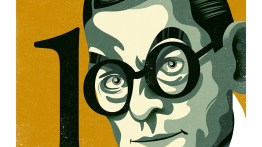
When Ludwig Wittgenstein died in 1951, he had only published one book — the Tractatus Logico-Philosophicus, which was first translated into English in 1922 (with an introduction by Wittgenstein’s former professor and mentor Bertrand Russell, to which Wittgenstein strongly objected). Philosophical Investigations, which Wittgenstein was working on at the time of his death, was published in 1953. His wartime notebooks, which he kept between 1914 and 1916, appeared in 1961. These are important. The Tractatus is famously dense, being composed of a series of statements on the relationship between words and objects and the nature of knowledge. The notebooks provide a clearer sense of the problem Wittgenstein was trying to solve and the progression of his thought.

wittgenstein

Beautiful and damned

Natalie Standiford’s latest novel, Astrid Sees All, captures the bohemian world of New York in the late 1970s and early 1980s in acutely elegant prose. It charts the fortunes of a young suburban girl, Phoebe Hayes, in elegiac but unsentimental fashion. Phoebe longs to live in the “golden world,” as she sees it, of parties and socialites, where John-John Kennedy rubs monied shoulders with the Shah of Iran’s niece, and cocktails, champagne and cocaine flow undimmed until morning. There are hints of Gilbert Adair’s Parisian youths in The Dreamers and Jonathan Dee’s novel about the effects of great generational wealth, The Privileges.

astrid

Dirty realists

I recently finished yet another predictable novel about Brooklyn neurotics and needed a gritty palate cleanser. Raymond Carver’s Where I’m Calling From: Selected Stories seemed ideal. Carver, a master of the short-story form, has long been one of my go-to writers, but, in recent years, he has increasingly lost literary relevance. Twenty years ago, Carver’s terse, minimalistic style was all the rage. Like Hemingway and Bukowski, Carver birthed a sea of mediocre imitators onto the American literary scene. In most US short-story collections published in the Eighties or Nineties, Carver’s stylistic and thematic influence is evident from the first page.

realists

Holbein at the Morgan

There’s a moment in portraiture when people started having a mind of their own. All of a sudden you see it in the faces: the eyes, the brow, the lip. We are no longer looking at a figure for all time — or even a sitter in a moment in time — but at something more like “me time.” The focus is not on outward appearances but inward looking. These people are lost in thought. That’s just where Hans Holbein the Younger, the great portraitist of the early sixteenth century, found them. The German artist, born into a family of painters around 1497, could conjure the smallest details at his fingertips. He quickly became the most sought-after portraitist in Europe and, by 1536, the court painter of Henry VIII (at a time when Henry himself was courting).

Holbein
Jackson

Michael Jackson on Broadway

Michael Jackson has a claim to being the most famous man in history. He is certainly the most widely seen and heard. His career straddled five decades and the heydays of radio and television. His Thriller is the best-selling album of all time. He went from playing nightclubs and The Ed Sullivan Show with the Jackson 5 to solo tours that each attracted more than four million fans. For musical celebrity, there is no comparison. The Beatles? MJ owned them, literally: he bought their entire catalogue in 1985. Elvis Presley? Lisa Marie was the King of Rock and Roll’s only daughter, but it took marrying the King of Pop to make her a star.

Belfast

Troubles in paradise

As Van Morrison’s lovely, Oscar-nominated “Down to Joy” plays over the opening credits of Belfast, I immediately accepted that I was being primed for the tears that would surely be flowing in an hour and a half. It’s obvious from the outset that Belfast, Kenneth Branagh’s touching Troubles-set coming-of-age story, is pure Oscar-bait, a film engineered to produce both weepy breakdowns and awards. The ingredients are all there. It documents a historical sectarian conflict, one pitting Protestants against Catholics. A beautiful young family, struggling financially, must navigate the chaos that has descended upon them.

keaton

Buster’s land stand

When Shakespeare wrote that “some men are born great, some achieve greatness and some have greatness thrust upon them,” the Bard could not have been thinking of Buster Keaton, who was born nearly three centuries after his death. Yet the idea expressed in that famous line from Twelfth Night — that some men guide their fate while others are controlled by it — carries a curious resonance for fans of the legendary silent performer known for his notably impassive, even indifferent comic persona in masterpieces including The Navigator (1924) and The General (1926). If ever there was a man on whom life, if not greatness, was thrust, it was the one they called the “Great Stone Face.

power

Power couple

By now we know that there are creeps and abusers in pretty much any industry that exists today. In the world of podcasts, the question appears to be: are we really going to create an investigatory series detailing the horrors lurking within every single one? Yes — of course — seems like the resounding answer. New York magazine has launched a new podcast, Cover Story: Power Trip, and its first season is devoted to rooting out the predators and boundary-crossers of one extremely minor occupational field: the psychedelic therapeutic community.

A gay fandango

Usually, it’s poets who chance their arm with a novel. Rare is the established novelist who switches to verse. This could be because, while poetry is technically daunting with its rhyme and meter, the novel is apparently the easiest of all forms, without even the conventions and directions of the most basic screenplay. In the nineteenth century, Thomas Love Peacock was the most successful poet to turn to fiction, but in our own times poet-novelists rank among the most talented: Sylvia Plath, Ben Lerner, Vikram Seth, Craig Raine, Grace Nichols. Now, after half a century of writing superb novels, the English author Paul Bailey, well into his eighties, is publishing his second book of poems.

Bailey

Fall and decline

In December 1921, a twenty-two-year-old Ernest Hemingway, then the European correspondent for the Toronto Star, came across the oddest group of immigrants in history — the White Russians who had fled the Bolshevik Revolution. “Paris is full of Russians,” Hemingway told his readers. “They are drifting along in Paris in a childish sort of hopefulness that things will somehow be all right, which is quite charming when you first encounter it and rather maddening after a few months. No one knows just how they live, except by selling off jewels and gold ornaments and family heirlooms that they brought with them to France.” Hemingway neatly summarized the meat of this gripping latest book by Helen Rappaport, the author of The Romanov Sisters and Caught in the Revolution.

russian

Our enemy’s enemy

After Nazi Germany attacked the USSR, Winston Churchill had no qualms about entering into an alliance with Stalin, whose regime he understood all too well: “If Hitler invaded Hell, I would make at least a favorable reference to the Devil in the House of Commons.” Similar thinking does much to explain the enlistment of former (and not so former) Nazis by the Western allies in intelligence work against the Soviets after 1945. With the Red Army in the heart of Europe, co-opting suitably qualified veterans of the fallen Reich — some of whom had very dirty hands indeed — made some sense, according to that Churchillian logic, but mainly when those selected were anti-Communist and now aligned with a democratic Germany.

fugitives

For whom the bell tolls

Close your eyes and imagine you’re married to Ernest Hemingway. Now, imagine it twice as bad, and you’ll be approaching the life story of Mary Welsh Hemingway. Hemingway was married four times: to Hadley Richardson in 1921, to Pauline Pfeiffer in 1927, to Martha Gellhorn in 1940 and to Mary Welsh in 1946. In every swap, he divorced his current wife for her successor. Mary wrote her own memoir, How It Was, after Hemingway’s death in 1961. Now Timothy Christian has written a well-researched and intensely detailed look at the life of a fascinating woman who became the steward of Hemingway’s literary estate and reputation long before he died. Mary Welsh was born in 1908 and raised in rural Minnesota.

hemingway
Sibelius

Sibelius speaks

When it comes to music in the classical era, central Europe — or, to put it is where most of the action has taken place. Haydn, Mozart, Beethoven, Schubert and Brahms are, in a sense, the Big Five, commanding the limelight, with the likes of Mendelssohn and Mahler bringing up the rear. But if geography has somehow played a key role in the development of modern classical music, then another region has been gradually nudging its way into view. Names from northern Europe such as Kalevi Aho, Leif Segerstam, Per Nørgård and Vagn Holmboe must figure prominently in any tally of leading composers who have expanded the boundaries of musical expression.Take Holmboe’s brilliantly imaginative Concerto No. 11 for trumpet and orchestra.

Avery

Precarious and thrilling

"Those trees are blue — I never saw a blue tree in Vermont,” a collector once argued to Milton Avery when looking at one of his New England forest scenes from 1945. The reticent artist parried: “That one was done in New Hampshire.” “Blue Trees,” the painting in question, is classic Avery (1885-1965): logically nonsensical but improbably believable, forcing us to re-question language’s tenuous hold on the slippery wonders of color. It’s also one of the standout examples included in a new retrospective of the American painter, set to open at the Wadsworth Atheneum Museum of Art (Hartford, Connecticut) on March 5, the middle leg of a three-venue tour.

Carnegie

Carnegie plus one

"A cable channel... but for classical music! It could be called ‘The Carnegie Hall Channel.’” I was on a beam reach to Eatons Neck about a quarter-century ago when a young man named Lawrence Perelman made this blustery pronouncement. We were Bill Buckley’s guests for an overnight sail across Long Island Sound. My first thought was: good luck with that. My second thought was no one wants to watch classical music on television. PBS’s Great Performances? More like lesser performances. With pixels the size of Cheez-Its and tin-can soundtracks, the experience was nothing like the real thing. But Perelman, an impresario who became an advisor to classical artists and institutions, as well as a friend, kept waving his baton long after we returned to Stamford.

Boston

Going Greco-Roman in Boston

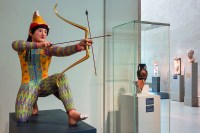
In a way it felt like a walk around campus on graduation day: one last stroll through the Museum of Fine Arts, Boston before the mayor’s medically nonsensical, legally dubious, morally atrocious mandates force museums, restaurants, gyms and more to oblige entrants to prove that they’re vaccinated against Covid-19. I could comply, but I will not. “There’s nothing more American than coming together to ensure we’re taking care of each other,” said our unctuous new mayor in her typical passive-aggressive fashion. Perhaps, but there’s nothing less American than commanding such sentiments from City Hall and punishing us who see through the ruses of power. The commencement, then, was that of a new relationship between your reporter and his adopted city’s art holdings.

company

Swing for me

Lots of folks go to swingers’ parties; fewer go by accident. I achieved this distinction, once — and in my defense, I will plead only that my ignorance of the situation was so extreme, my credulity so extensive, that it took my asking one couple, in complete earnest, the most hilarious and incidentally incisive questions a person in my situation could ask — “How did you two meet?” and “How do you know the host?” — in order to set the record straight. To the first, the one said that the other’s husband had introduced them. The answer to the second was the old chestnut about “college roommates,” et voilà! At parties nowadays, I just ask people what they do for work.

hand of god

Naples and nurture

The climactic scene in the Italian director Paolo Sorrentino’s latest film, The Hand of God, finds the teenaged Sorrentino stand-in, Fabietto, being verbally attacked by an aging director named Capuano, the seaside at their backs. At this point in the film, the young Fabietto (Filippo Scotti), a sullen mama’s boy searching for meaning, has suffered an immense tragedy and is looking for answers. Enter the wise man. The scene, like many in The Hand of God, is on the nose and borders on the melodramatic, but when Capuano (Ciro Capano) yells “how does this city not inspire you?” at Fabietto, he reveals the film’s emotional core. The Hand of God, like Sorrentino’s previous work, is highly stylized and aesthetically beautiful — a true visual feast.