Books and Arts

The rise of gay Washington

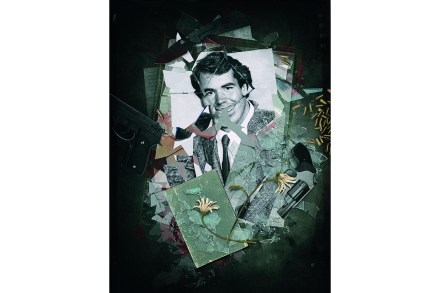
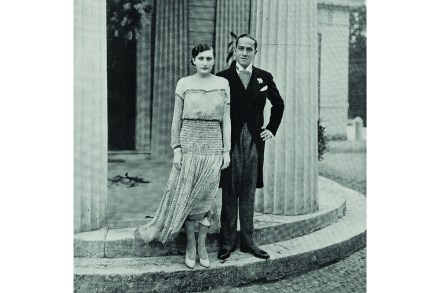
Anyone under fifty may be unaware of how largely invisible gay Americans were until at least the 1980s. James Kirchick’s incredibly rich and impressively thorough Secret City does not mention Bowers v. Hardwick, the notorious 1986 Supreme Court ruling that upheld the criminalization of gay sexuality, but only post-Bowers did the push for gay equality, and eventually same-sex marriage, rapidly become what he rightly calls “the most successful social movement in American history.” In 1992, a Gallup poll indicated that 43 percent of Americans said they knew a gay person — double the figure from just seven years earlier — and across all of America it was that growing knowledge of the presence of gay people that allowed such a dramatic political transformation to take place.

gay

The circus that was 80s literary Britain

Many years ago, when I mistakenly thought that I stood a chance of embarking on a career in publishing, I went for an interview at an independent publisher to be editorial assistant and all-around dogsbody. I remember the interview well, because it was the shortest I ever had. The first question was, “How do you like to be managed?” I replied, “sternly, with a large whip.” The second was “What would your ideal role in publishing be?” and I answered, “running Jonathan Cape in the Eighties.” It became clear that our paths were not to join, and I left the room with thanks and smiles. I don’t believe that I was ever actually rejected for the job.

Walsh

How not to live a life

When Thomas de Quincey wrote Confessions of an English Opium-Eater in 1821, he could not possibly have guessed what he would set in motion. Over two hundred years later, the addiction memoir looks different: less subversive, more sentimental, undeniably more commercial. Since the advent of Alcoholics Anonymous in Akron, Ohio, in 1935, the formula of the recovery memoir now yokes the moral to the medical: alcoholism may be a moral disorder, but it is underwritten by a chemical condition marked by incessant craving — in recovery parlance, an “allergy,” a state of “dis-ease.” For Matt Rowland Hill, the two are inextricably combined. Original Sins is the debut memoir from a writer whose two great loves, “Jesus and heroin,” never quite slip out of one another’s grasp.

original sins

NIMBYs to the left of me, YIMBYs to the left

First disclosure: I do not appear in this book. I say that only because — second disclosure — I consider myself a YIMBY, and I am familiar, at least online, with many of the characters and figures quoted or interviewed. However, I learned a lot about this loose movement and found it fascinating to read a book on a phenomenon that I would have trouble viewing with a detached, scholarly distance. Yes to the City, by the cultural sociologist and urban policy scholar Max Holleran, must have been a difficult book to write, not least because YIMBY (“Yes in my backyard”) is as much a rallying cry or a slogan as it is a movement, let alone an organization. The YIMBY nemesis, NIMBY (“Not in my backyard”), is equally amorphous.

yimby
translation

Lost in translation

Picture the scene: a twenty-something college student, desperately trying to impress a girl he’s met for a date. He's early, but that isn’t a problem as it gives him a chance to sit nonchalantly with his ever-so-artfully-battered paperback. It’s Rimbaud’s Collected Poems: intellectual, sensual, rebellious — everything he wants to be perceived as. He props the book up so that the poet’s name is visible and waits for his delicate intellectualism to be applauded. The only thing missing from this tableau is the name of the poems’ translator, assuming that the student isn’t pretentious enough to be carrying around the original French. A smaller name on the fragile paperback, the translator is generally unmentioned, forgotten, and obscured.

matisse

The one-note wonder

Art museums normally organize career surveys or thematic exhibitions, but this spring the Museum of Modern Art has departed from this practice to focus on a single work. Matisse: The Red Studio examines the pivotal painting of the same name that Henri Matisse (1869-1954) created in 1911. Exhibitions are normally years in the making, so while this one was in the works long before the Covid-induced lockdown, it offers a model for institutions struggling in the wake of the pandemic. Rather than expending scarce resources on an expensive blockbuster loan show, do a deep dive into something in your own collection. And what a dive this is.

cezanne

Playing the long game

Back in the fall of 1995, on the centennial of Paul Cezanne’s breakout late-career exhibition at Ambroise Vollard’s avant-garde art gallery, a retrospective opened at the Grand Palais in Paris, titled simply “Cézanne.” That show traveled to the Tate in London in 1996 and then to the Philadelphia Museum of Art. Now, more than a quarter century later, another retrospective with a similarly spartan title has opened in the Windy City: a joint venture between the Art Institute of Chicago and Tate Modern.

Schächter

A concert begun in darkness

It was all glitter at Blues Alley in Washington, DC when the trumpeter Terence Blanchard, who is the composer of a widely hailed opera called Fire Shut Up in My Bones that was recently performed at the Met, appeared in March with his E-Collective band as well as the Turtle Island Quartet to play several sets. Blanchard wore iridescent tennis shoes and played a miked trumpet with extra reverb that almost looked as though it was glowing in the dark. Periodically, he would tap his right foot onto an electronic device on the floor that manipulated his tones to extend them into the ether. Indeed, his audacious high notes lingered on long after he had stopped blowing. The collective is Blanchard’s foray into the world of deep funk. It definitely makes an impact.

Soylent

How green is your Soylent?

In 1966, when Harry Harrison penned his dystopian thriller Make Room! Make Room!, which began life as a serial in Impulse magazine, he predicted that by 1999, there would be more than 7 billion people on earth, and a robust 35 million in New York City alone. The 1973 film adaptation of Harrison’s novel, Soylent Green, altered several aspects of Harrison’s novel, including the year in which the thriller is set: 2022. Now that we’re there (and decades past 1999), it’s worth asking: did Soylent Green director Richard Fleischer and his writer, Stanley R. Greenberg, get things right?

northman

Why did no one see The Northman?

The American director Robert Eggers has had an auspicious early career. His first two movies were smash hits in the arthouse world: 2015’s The Witch, which launched the career of Anya Taylor-Joy, and 2019’s The Lighthouse, which starred Robert Pattinson and Willem Dafoe. Both films were produced on small budgets by indie powerhouse A24, and both have already achieved a kind of cult status among horror buffs and cinephiles alike. So when news broke that New Regency was offering the auteur director a budget of around $70 million for his third film — a Viking revenge epic starring Alexander Skarsgård, Taylor-Joy, Ethan Hawke and Nicole Kidman — movie geeks went wild. Just not quite wild enough to buy actual tickets, apparently.

Macbeth

Macbeth on Broadway: a Very Modern Scottish play

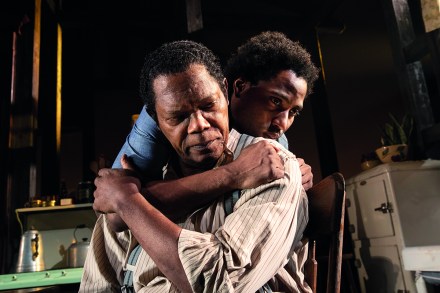
The new Macbeth on Broadway starring Daniel Craig ends up about where you’d expect: a Macbond unhinged and raving about Birnam Wood come to Dunsinane, splattering the castle walls with the gore of his enemies and pummeling Macduff mercilessly until the showstopping reveal that the latter was “of no woman born” but, in fact, “from his mother’s womb/ untimely ripped.” Omit the full-cast kumbaya circle at the end (a too-sweet cherry atop a bloody sundae), and the denouement essentially gives you Shakespearean drama at its most unimaginative — as a Hollywood action blockbuster. This isn’t to say that Shakespeare cries out for bold reimagining. Nor is there anything wrong with giving people what they came to see. It is Daniel Craig, after all.

A royal affair

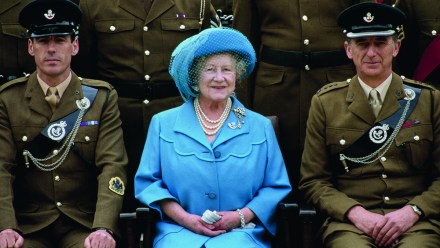
The cover blurb, from “Lady Anne Glenconner” on this huge book proclaims: “Brilliant. Tina Brown has inside knowledge and writes so well.” The credit for the author of the 2019 bestseller, Lady in Waiting: My Extraordinary Life in the Shadow of the Crown should in fact be “Lady Glenconner”. You might not think it matters much these days that, over and over again, Tina Brown gets the titles wrong in this book. But this is supposedly the ultimate insider’s look at the royal family over the last forty years or so. And titles are at the heart of the Firm — think of the agony of Prince Harry and Prince Andrew at no longer being able to use their HRH titles and having to give up their honorary military roles.

royal brown

Falling in line with Sinclair Lewis

In 1920 Warren G. Harding was elected president of the United States, after campaigning on a promise to the American electorate to return the country to what he called “normalcy.” Exactly one hundred years later, Joe Biden assumed the same office having offered the same thing, in different language. In July 1922 Sinclair Lewis published Babbitt, a bestselling novel about a normal middle-class American businessman living in a normal small-sized Midwestern city: the quintessential personification of “normalcy.” Around the middle of the same decade, H.L. Mencken, a good (if necessarily patient) friend of Lewis’s, predicted that America would “blow up” in a hundred years. 2022 is Babbitt’s centennial year.

babbitt

Faces off

Humankind’s ability to destroy itself has always outweighed its desire to fix the broken pieces. Conflict and war create great suffering, anguish and death, but they also lead to discoveries in technology, industrialization and, we learn from Lindsey Fitzharris’s The Facemaker, the invention of cosmetic and reconstructive surgery. At the dawn of the Great War, it became painfully evident to those in the trenches that contemporary developments in warfare had far exceeded those in the world of medicine. These ghastly developments are illustrated in great detail in Fitzharris’s book, which tracks the military career and early life of Harold Gillies, the man who is largely credited as the father of modern plastic surgery as well as with having performed the first phalloplasty.

facemaker fitzharris

Forever young

Long before publishing dreamt up the category of Young Adult fiction to try to persuade adult children and childish adults to keep reading, there were novels that described what it felt like to be young. Catcher in the Rye was one such, as were The Bell Jar and Bonjour Tristesse; these books coincided with the invention of the teenager circa 1950 and have enjoyed lasting critical and commercial success. Though British writers reign supreme in the field of children’s literature, American authors have always written outstandingly about teenagers. But the changeover from fiction describing the condition of being young to the YA genre, with its accounts of first love, high-school hell and so on, has not necessarily served every reader well.

friends
herzog

Carry on regardless

The director Werner Herzog’s first novel, The Twilight World, occupies quintessential Herzogian territory. Those familiar with his films will recognize the themes: man’s insignificance in the face of a totally implacable nature and his overweening ambitions to surmount this failure. Futility and pride are locked together in hallucinatory, self-destructive cycles. His film Fitzcarraldo, for example, demonstrated the real-life attempts of a rubber baron to transport a steamship over a mountain in Peru. Grizzly Man, meanwhile, documented the sad life of a man who had made his home among bears. It doesn’t end well. (Those readers who haven’t the time to get to know his work may wish to find “Werner Herzog” reading Curious George on YouTube — a delightful parody of his style.

dyer

A grand slam

The majority of us who aren’t touched by genius come to terms with our mediocrity in late adolescence, once our dreams of sports superstardom are dashed or that bumbling first attempt at a novel sets us straight. You won’t be the next Jordan or Hemingway, after all. Getting over the initial shock of one’s dreams being dashed without suffering some kind of crack-up is the mark of high character and perhaps the first sign a man will settle solemnly — but not joylessly — for a well-adjusted life of invisible, middling victories. The best-adjusted man will embrace the comfort of mediocrity and live vicariously through the great men he admires, which is to say that he’ll become a fan.

winslow homer

Deep water Winslow

The advance buzz on Winslow Homer: Crosscurrents wasn’t good. “Woke Winslow” — that’s how observers, online and through the grapevine, pegged the Metropolitan Museum of Art’s new exhibition of paintings and watercolors by Winslow Homer (1836-1910). The stalwart purveyor of maritime adventure and manly pursuits, woke? One glance at the enlarged black-and-white photo displayed at the front end of Crosscurrents — a blurred portrait of Homer in his Maine studio — makes clear that the fusty man with the impatient glare is no one’s idea of a social-justice warrior. Looks aren’t everything, of course. Truth to tell, Homer’s art does touch upon important aspects of American history.