Books and Arts

Greg Lansky: the artist with a scandalous past

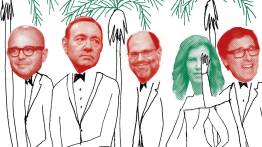
St. Paul points out that “all have sinned and fall short of the glory of God.” Despite that inclusive “all,” human nature inclines toward exclusion of the “other,” which is a very difficult thing for many of us to overcome — me included. Enter Greg Lansky, pornographic-film producer. Perhaps no one in recent memory has made a greater profit from the highly lucrative commerce paradoxically known as “adult entertainment” than Parisian-born entrepreneur Lansky. Within the span of about fifteen years, he went from dropping out of school and having few realistic prospects to making fortunes from adult media, partying with celebrities and receiving glowing profiles in magazines such as Forbes, GQ and Rolling Stone.

greg lansky
mary blair

Mary Blair, doyenne of Disneyland

On a cold day at Disneyland, I walk through sugarplum-scented air, past a midcentury-modern poster for Alice in Wonderland, and beneath a plaque that reads, “Here you leave today and enter the world of yesterday, tomorrow and fantasy.” Walt Disney — the controversial impresario of twentieth-century animation and escapism, not the corporation that bears his name — intended his magic kingdom as an escape, a real-life never-never land devoid of the politics and troubles of the everyday. But on this visit to the park, I encounter the here and now around every corner. Passersby notice that an empowered female pirate has replaced the bride-auction scene in the Pirates of the Caribbean ride. (“Did anyone really believe pirates were role models?” one visitor asks.

Juliet

& Juliet and Titanique: two newly minted cult classics

Fears that the new pop-parody musical & Juliet would be a vehicle for steamrolling Shakespeare are understandable but unfounded. It’s true that, on Broadway as in the rest of the arts, holding dead white males up for flagellation is now almost a cherished ritual — a recent example being last season’s Six, a glitzy feminist paean danced on the grave of Henry VIII. There’s a healthy dose of girl power in & Juliet, too, and I don’t doubt that a few heedless theatergoers came with tomatoes in hand, hoping to find the Bard pilloried. Let me tell you a secret: the theater world still adores Shakespeare, even in 2023. To renounce him is to swear off your mother’s milk.

Hoover damned

When J. Edgar Hoover died in May 1972 at seventy-seven, he had been director of the Federal Bureau of Investigation for forty-eight years, ever since progressive attorney general Harlan Fiske Stone had promoted the then-obscure twenty-nine-year-old Justice Department bureaucrat in 1924. With fewer than 400 agents, limited responsibilities, and a reputation badly tarnished under a corrupt previous attorney general, what was then called the Bureau of Investigation offered modest prospects. Still, the new boss set out to clean house, institute stringent hiring standards and impose a culture of science-based crime-fighting on his federal agents. One new hire in 1928 was Clyde A.

hoover

The art of the royal memoir

By the time you read this piece, Prince Harry’s autobiography Spare will have been published in the United States. The question of whether it’s any good will be decided swiftly by the newspaper and online literary critics, but we in the monthly magazine trade have, alas, been denied the opportunity to see it before our publication deadlines. Under normal circumstances, this would bode very badly indeed. As with films that are not screened for critics beforehand — “because we want the audience to discover the magic for themselves” — books that have very tight publication schedules and are embargoed to the hilt are usually seen as flops-in-prospect.

spare

From Russia with love

Most readers, myself included, are sick of “fan fiction,” depending as it does on hijacking classic literature for its own feebler energies, but Vesna Goldsworthy’s Iron Curtain is a shining exception. Having successfully recast The Great Gatsby as the exploits of a Russian oligarch in twenty-first century London (Gorsky), and imagined the afterlife of Anna Karenina’s son in postwar Britain (Monsieur Ka), her latest novel has as its model something far more sinister. Its narrator, Milena Urbanska, is the daughter of “the second most powerful man” in an unnamed Soviet satellite country, and a creature of privilege, “the only fully convertible global currency,” as she remarks.

iron curtain

Behind closed doors

Katy Hays’s involving, well-tuned debut novel takes its name from a real museum in New York, the Cloisters. Built by a Rockefeller, it resembles a medieval monastery and brims with glorious treasures. Ann, our provincial heroine (from Walla Walla, where she worked a menial job in order to fund college), would have preferred the Met, but when she’s serendipitously hired for a summer role, she finds herself swiftly pulled into the institution’s inner workings and the nefarious machinations of its well-heeled staff. The cutthroat nature of the museum is placed under the spotlight.

tarantino

Quentin Tarantino’s iconoclastic obsessions

Quentin Tarantino’s inevitable first volume of film writing presents a challenge: how can an established artist, especially one this famous, pivot to criticism? No matter how insightful his opinions, it runs the risk of merely illuminating what he values as a filmmaker. To his credit, Cinema Speculation doesn’t pretend it’s not taking you through a highly personal journey of one man’s cinematic obsessions. The tone isn’t too far off from the hundreds of interviews he’s given for thirty years. References to his own films are common, and unlike serious critics, he can pepper his criticism with quotes from sources he can call at any time — from critics (Elvis Mitchell) to filmmakers (Walter Hill) to miscellaneous others (Robert Wuhl).

ethel smyth women musicians

The struggle of the female musician

In July 2022, hundreds of elegant opera-goers gathered on the lawns of Glyndebourne Manor in Sussex to picnic in the interval of a rarely performed early twentieth century work, The Wreckers, by the suffragette composer Dame Ethel Smyth. This strikingly powerful piece of music, which tells the story of Cornish villagers who lure ships onto rocks in order to plunder them, was the first opera by a female composer to be staged at the prestigious British festival and was extremely well-received. The Times of London praised its “wild waves of passion.” Yet The Wreckers has had a difficult history.

some like it hot

The Some Like It Hot revival is cream-puff theater

The new Some Like It Hot on Broadway has bass player Jerry (J. Harrison Ghee), disguised among Big Sue’s Society Syncopators as “Daphne” to hide from the Chicago mob, decide to embrace the drag lifestyle and elope with his elderly suitor Osgood (Kevin Del Aguila) by the show’s end. (The 1959 film closes with Jerry straining to extract himself from Osgood’s clutches.) Many theatergoers will not expect this update, setting up a bit of dramatic irony too delicious to be unintentional. What’s a drag show, after all, without a few surprises? To my knowledge, this irony has gone entirely uncapitalized by headline-writers across the nation. Some Like a Hot Dog! Speakeasy, Don’t Tell! Billy, but Wilder! Jack’s Lemon!

movie star

The death of the movie star

Paul Newman and Joanne Woodward were not, as the title of a recent documentary would have us believe, the last movie stars. Nor are movie stars — as Jennifer Aniston suggests in a November Variety profile — extinct. As long as there are big screens, stars will occur, perhaps only accidentally. The reality, though, is that the business may no longer need them. Before Hollywood figured out how to sell you a movie you didn’t want to see, way back in the old studio days when advertising a movie was as easy-breezy as sticking up a poster and few lobby cards at your local theater, you didn’t need to be sold a movie to take an interest. You just needed to be told it was coming. Because if it had a star you liked, you’d go. That’s what a star was: a means to sell you a ticket.

paramore

Playing God with Paramore

From the moment Hayley Williams founded Paramore with three Christian boys in Nashville, she was consumed by Biblical levels of conflict. Williams signed as a solo artist with Atlantic on the heels of Avril Lavigne’s “Complicated.” Her male bandmates performed and recorded without a contract. To counteract the narrative that a major label had engineered Williams, Atlantic released Paramore’s 2005 debut album, All We Know Is Falling, through the “sub-label” Fueled by Ramen. Critics caught onto the ruse, with Gigwise writing, “The band are an A&R man’s fantasy.” But Williams connected with angsty teens partially because the critics seemed to be bullying her. The bullying continued when Paramore changed their lineup and released the 2007 sophomore album Riot!

immersive

In Claude Monet’s postmodern garden

There are few topics that rankle the art critic more than “immersive exhibitions.” They must be second only to “nonfungible tokens,” whatever those are. I speak of the immersive spectacles where images of famous artwork are flashed on the walls and floors of a large white room in which you sit. Certainly, this should be outside the remit of my union card, I might think. Until now, if you were looking for some opinion on this-or-that out-of-copyright projection venue slash tourist trap, I would simply say not my job. Maybe go see the real thing. Then we can talk. And yet, with art on the walls, real or imagined, judgment always comes calling. Suddenly we seem to be immersed in immersion. It can be a challenge just to keep your head above the digital waters.

The shock and awe-inspiring art of Iraq

The road from Erbil consists of one large, tarmacked lane, no separation marks, no shoulder, despite seemingly never-ending ascents and descents and a barrage of trucks carrying huge oil tanks. As soon as the mountains of the Iranian border appear, the cars form a bottleneck into Sulaymaniyah, the “cultural capital of Kurdistan.” It leads to a maze of circular streets, where finding anything — let alone an old tobacco factory turned arts center — becomes a challenge, even for two journalists armed with Google Maps and a local fixer. Yet after some circling, a phone call, a bit of translating and the opening of two twelve-foot, light-beige metal gates, the artist Tara Abdulla appears, smoking a cigarette.

The return of Bret Easton Ellis

The Shards is about 600 pages long. “Should anyone even publish a 600-page novel?” asks its author Bret Easton Ellis. “I happen to believe, yes, if it’s justified.” Such books are rarely justifiable, and often, novelists become buzzed-about simply for executing them, but not many can boast that every word, scene and sentence is necessary. This is how it feels to read The Shards: not a detail is to be missed. It contains the thematic elements that run through Ellis’ oeuvre: the social lives of the wealthy, or nearly wealthy, drugs, sexuality and desperation painted over with bursts of violence. The through line that connects his work isn’t that sex and violence are taboo.

ellis

Ebony and ivories

In the early going of The Piano Lesson (1987) there’s mention of a merchant buying up musical instruments in the black neighborhoods of 1930s Pittsburgh. When offers for the titular family piano are rejected by its current proprietor, Berniece, her brother Boy Willie, who has arrived from the south, hopes to sell it to him behind her back. It’s a coy reference to that great Broadway salesman of band equipment, Meredith Willson’s Music Man (1957), and the reversal gives you some idea of playwright August Wilson’s method. Where Meredith built a full musical around a musical zero (Harold Hill is tone-deaf), August composed a stage play from the music of the blues, which he called the “sacred book” of black literature.

piano

The publishing mega-merger that wasn’t

If you sit down and talk to an author for any length of time, you will hear gripes. (Writers will never be confused with the sunniest of people on this planet.) About the visibility of their books; about the size of their advances; about their sales, relative to their other titles and to their peers; about publicity campaigns; about cover designs. There will be a lot of gripes, and if you are cornered by an author in a bar, or at a party, you might be advised to make your excuses and flee. But if you have some sympathy for this much-maligned breed, it may occur to you that the basis of their complaints ultimately comes down to a simple lack of appreciation by their publishers: those all-powerful entities that have the power to make or break careers at the touch of a button.

publishing
le Carré

The spy who loved me

I started reading Suleika Dawson’s The Secret Heart at a London bar, intending simply to skim through as I finished my beer. Six hours and many more beers later I was still at the bar, and still reading. The book, an erotically charged, no-punches-pulled account of her multiple affairs with the author John le Carré (or David Cornwell, as she knew him), is also a fascinating and important portrait of the man himself. The pseudonymous author, with her winking nod at Max Beerbohm’s femme fatale, offers a degree of insight and honesty which le Carré’s official biography (let alone his own memoir) and recently released collection of letters do not, and a character study of a London long since lost.

locust

Stephen Amidon’s day of the locust

Stephen Amidon’s Locust Lane begins late at night, with a dog run over by an alcoholic fund manager. Patrick is well over the limit: “He didn’t need another item in the overladen shopping cart of guilt he was pushing around.” He vacillates, and then scarpers, setting up the novel’s themes of addiction, accident, power and privilege, and how far people will go to save themselves. Questions of nature and nurture abound: does monstrous behavior pass down the generations, or is it learned and acquired? And what lengths will communities go to in order to protect their own? Locust Lane is a street in the town of Emerson. It’s a tony neighborhood, whose vast, spotless houses contain apparently equally spotless WASP-y families, insulated by centuries of accumulated wealth.