Books and Arts

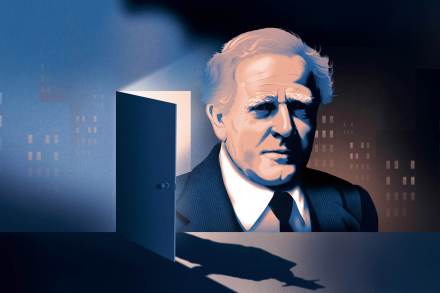
Adam Sisman’s new John le Carré biography entertains and disappoints

The fellow biographer for whom I always felt the most sympathy was James Atlas. Mr. Atlas, who has left an extensive account of his tribulations in The Shadow in the Garden: A Biographer’s Tale (2017), made the fatal mistake of writing a life of Saul Bellow while its subject was still alive. Bellow, you may not be surprised to learn, revealed himself to be a devious, shifty and manipulating old cuss. He interfered, blew hot and cold, disparaged his encomiast’s prose style, intelligence and research techniques and finally remarked, “I like you Atlas, but cut the crap.

le carré

How the CIA interfered in the Congo

As everybody knows, as soon as you start to talk to any historian of postwar life in any Latin American or African or Southeast Asian country, the discussion quickly turns to the role of the CIA in subverting democracy. From the Truman-era coups in Syria and Egypt, through regime change in Guatemala, assassination in the Dominican Republic, the fomenting of industrial unrest in Guyana, and both the military and covert US involvement in Vietnam, it seems overseas intrigue was the rule and long periods of benign neglect the exception.

congo

The gap between technotopia and dystopia are never far apart

Broken Arrow isn’t just the title of a mediocre 1996 film, but the term for a serious accident involving a nuclear weapon. Over the last seventy years, the United States has officially experienced thirty-two Broken Arrows, where a nuclear weapon has been in a crash or fire, accidentally been dropped — or just disappeared. Incredibly, six have been lost and never recovered. Artificial intelligence (AI) pioneer Mustafa Suleyman tells one such story in his new book, The Coming Wave: Technology, Power and the 21st Century’s Greatest Dilemma. In 1961, a B-52 bomber carrying two live hydrogen bombs broke up in the skies above Goldsboro, North Carolina. One bomb disintegrated when it plunged into a muddy field.

Suleyman

Two excellent books that offer new insight into The Iliad

The Iliad, Homer’s extraordinary epic poem, begins with Apollo, the god of light, zooming down from heaven “like night,” bringing plague to the Greek camp before Troy. Many days later, after the Trojan Hector’s funeral rites, the poem ends, at dawn. The light god brings darkness; dawn brings the doom of Troy. Such are the ironies that underpin the epic, revealing it as a work of supreme artistry, probably composed by one hand alone. For decades, I have lived in the light and shadow of The Iliad, reading it at first piecemeal in Greek, then in various translations, then all the way through in Greek (an experience both taxing and exhilarating). My Loeb edition, its prim English translation opposite the raw Greek, is never far from my side.

iliad
musicians

Age is catching up with our much-beloved musicians

On the Who’s 1965 single “My Generation,” the band’s twenty-one-year-old lead singer Roger Daltrey half-sang, half-sneered, “Hope I die before I get old.” The song, written by the then-twenty-year-old Peter Townshend, has remained a classic for nearly sixty years, boasting both a fantastic tune and unforgettable lyrics. Yet even as the Who continue to tour the world — often in the company of that invaluable accessory for any self-regarding rock band, a full orchestra — it is now with self-aware amusement that the seventy-nine-year-old Daltrey and seventy-eight-year-old Townshend perform it.

Harrison

George Harrison at eighty

All I got to do is to, to love youAll I got to be is, be happyAll it’s got to take is some warmth to make it blow away That’s the chorus of George Harrison’s bubbly 1979 single “Blow Away,” an update of sorts to his Beatles hit “Here Comes the Sun.” At the close of the 1970s, the respite from the “long, cold, lonely winter” had become less assured. There is a pleading tone in Harrison’s voice as he sings “be happy” that infuses “Blow Away” with pathos. That, plus his cavernous stare in the otherwise goofy video, indicates that summiting Mount Everest might have been easier than the chorus’s stated goal.

waters

John Waters, the pope of cliché

A decade or so ago, I was on the phone with the filmmaker John Waters, discussing Juggalos, Jesus and Justin Bieber, when I called someone “white trash.” The once-cult-now-mainstream director cut me off. I don’t remember exactly what he said — the transcript is long since deleted — but Waters berated me, called me racist, and rehashed some version of his 1994 statement that “talking trash about ‘white trash’ is ‘the last racist thing you can say and get away with.

museum

Understanding museum theft with best-selling author Kirk Wallace Johnson

The recent events at the British Museum in London will probably prove to be the museum scandal of the year, if not the decade. It was revealed over the summer that hundreds, perhaps thousands, of items had gone missing from its collections in storage, with suspicion directed toward a now-former member of staff. We still don’t know exactly what was stolen, and no one has been formally charged — authorities are still investigating. Nevertheless, the British Museum’s director has stepped down and the press has had a field day generating outrage, albeit with coverage based largely upon speculation and opinion. Amid all the finger-pointing, however, no one seems to be asking why someone would even consider taking property from a museum in the first place.

The lamentable rise of VFX in horror films

The Thing is not a monster movie. Sure, John Carpenter was remaking the 1951 The Thing from Another World, itself an adaptation of the 1938 pulp-sci-fi novella Who Goes There? — but it’s not a shlocky B-movie horror. It’s too vicious, cynical and psychological for that. Rather, it’s the ultimate paranoia thriller. For the unfamiliar, the 1982 flick is about a group of researchers, stuck in an Antarctic base, who discover a strange shape-shifting alien, which consumes its victims and then mirrors their look, smell, speech and manner. They’re all marooned together, being hunted down by an unearthly terror, and any of them — friend, stranger, dog — could be it, waiting to strike.

vfx horror films

Christopher Rufo’s new book is impressively erudite

When a new book by an author often characterized as a conservative polemicist earns a rave review in the staid Economist, independent thinkers take notice. Christopher Rufo’s articles on recent US radicalism for the Manhattan Institute’s City Journal have long attracted wide attention, and now America’s Cultural Revolution has been praised as “meticulous” and “cerebral” as well as “persuasive and well-written.” All true, for Rufo’s book is impressively erudite, reflecting a breadth and depth of familiarity with influential leftist writings that will shame any number of “woke” academics.

rufo

Taylor Lorenz is optimistic about the internet

“People,” wrote Dwight Macdonald, “feel a need to be related to other people.” Not a happy sentiment, not intentionally. This was how mass culture — “masscult,” he called it — created diversion out of artless entertainment. His example was John Barrymore, an icon of a great acting dynasty whose alcoholic decline brought out raucous crowds, “because it showed them he was no better than they were.” Macdonald’s old pessimism came back to me toward the end of Extremely Online, which is more than a history of the internet creator “revolution.” Taylor Lorenz, a Washington Post columnist with a vivid online life, is its John Reed, chronicling the influencers’ victories while cheering them on.

taylor lorenz

Emily Carroll’s new graphic novel plays on our deepest fears

Emily Carroll’s new graphic novel, A Guest in the House, is an involving, beautifully plotted study of the madness of isolation, steeped in the tropes of fairy tale and horror. And, as all good fairy tales do, it confidently deals in the imagery of the unconscious. Narrated via an innovative combination of text and cinematic, sweeping illustration, it concerns the boundaries of the imagination, and the dynamics of a small family as it threatens to fall apart. Abby is a young wife, listless and bored, who has married an older man (David, a normal kind of guy, with that most humdrum of jobs: dentistry). The setting, depicted with haunting precision in muted tones, is 1990s Canada.

carroll
taupin

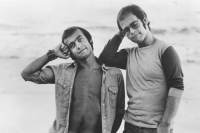
Bernie Taupin is more than just ‘Elton John’s lyricist’

It takes only a couple of hours by train from the southern reaches of rural Lincolnshire to central London. But for seventeen-year-old Bernie Taupin, leaving home in June 1967 to try his luck in the big city, the journey might as well have been to a distant planet, such was the gulf between his life as a casual farm-laborer and his ambitions to become an internationally acclaimed songwriter like his heroes Hank Snow or Merle Haggard.

astor

A diverting but unsurprising new history of the Astor clan

Mention “Astor” to most people and you immediately conjure up tales of fabulous wealth, the sort of Gilded Age beauty and excess expressed to perfection in the paintings of John Singer Sargent. The family name became synonymous at times with luxury and good taste, at others with greed, power and extreme snobbishness. The founder of the dynasty, John Jacob Astor, was a German immigrant and one-time fur trader who came to America in 1783 after the Revolutionary War. His descendants swiftly capitalized on his substantial achievements, creating a Manhattan property empire of unrivaled wealth. There was also plenty of Astor philanthropy and involvement in political and cultural life along the way but then, in the early twenty-first century, came a fall from grace as dramatic as the rise.

spears

Once Upon a One More Time is pat, prepackaged feminism

Britney Spears has always been mired in narrative, created by her managers, fans and the media as much as by herself. She has been, at different times, a virgin pop princess; a mega-stadium pop queen; a “cheating” girlfriend (on Justin Timberlake, no less — a falsehood drummed up by the tabloids); a girl gone off the rails; a mother; a “bad” mother suffering a mental health crisis. More recently, as interest in Spears has grown following her emergence from a thirteen-year legal conservatorship, the story is simpler: she was lost and now she is found. A victim and a hero. This summer another label got added to the list: feminist cultural icon with a legacy to protect.

art

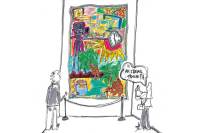
The value — and worthlessness — of contemporary art

“This is why I hate art.” “Why, because this is pants?” A friend and I were at a contemporary art show, standing before a mixed-media work featuring trite sayings, glittery flowers and a spaniel. A few days earlier I had suggested to her — once rather ominously described to me as an “art philistine” — that a visit to a few local galleries might provide an opportunity to acquire art for the new home that she and her fiancé recently purchased in the area. Somewhat to my surprise she agreed, so one evening we trundled along to some exhibition openings, to see what we might find. Our first venue, housing three exhibition under one roof, was quite crowded when we arrived. The works ran the gamut from installations and video art to painting, drawing and collage.

kevin spacey

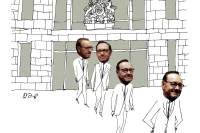
Is a Kevin Spacey comeback possible?

In late July, I had dinner in a London restaurant with Spectator World contributor Fergus Butler-Gallie. Behind us was sitting an American who clearly had a high opinion of himself, judging by the volume with which he spoke, the almost manic fashion he treated his dining guest — the theater director Trevor Nunn — to a series of impersonations and Shakespearean soliloquies, and the way he dominated the dining room. When Nunn left the table, I glanced over and was both amused and vaguely appalled to discover that the diner was none other than Kevin Spacey, fresh from being acquitted of charges of sexual assault, and now, presumably, set on rebuilding his career. We’d overheard snippets of conversation.

The roots of J.K. Rowling’s contrarianism

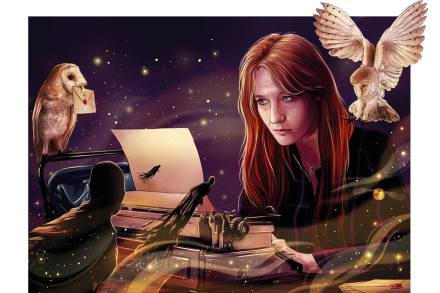
Like his creator J.K. Rowling, Harry Potter says unspeakable things. He teases his cousin Dudley, the prince of his aunt’s suburban kingdom. He calls the Dark Lord Voldemort by his name. He even speaks to snakes. In other words, if Potter were a real person, he’d likely write a Substack, present a podcast and empathize with his creator’s recent public controversies. You are probably familiar with Rowling’s protests against trans activists’ demands to use women’s restrooms.

Rowling