Books and Arts

Taking in Good Night, Oscar and New York, New York

Mental illness is horrifying and hilarious, like politics or killer clowns. And unlike those two subjects, it can be staged without tackiness or gimmicks. King Lear’s all the more tragic for losing his marbles and out-fooling the Fool. I was nevertheless surprised to see a show exploit the premise as heartily as Good Night, Oscar does, for laughs and gasps alike. The new play about the mid-century pianist, actor, comedian, and all-around firecracker Oscar Levant gets more mileage out of old-school “mental-health struggles” — alcoholism, drug addiction, schizophrenia, OCD, wifebeating, electroshock therapy — in a taut hundred minutes than Dr. Phil could in a whole season.

Oscar

What the Old Masters can teach us about contemporary life

The seventeenth-century Dutch painter Johannes Vermeer is certainly having a moment, thanks to the enormous popularity of the retrospective of his work that concluded at the Rijksmuseum in June. Demand to see the gathering-together of twenty-eight of the thirty-seven currently known paintings by the Old Master far outstripped supply; the show sold out within two days of opening, and scalpers were allegedly reselling tickets online for hundreds, even thousands, of dollars. It’s certainly not difficult to understand why people would flock to see Vermeer’s work, thanks to his beautiful brushwork and sensitively lit compositions.

old masters

The surreal life of Leonora Carrington

"It’s the belief that nothing is ordinary, that everything in life is extraordinary. And being old is no more, no less, extraordinary than being young.” When the artist and writer Leonora Carrington was asked in 2006 what “Surrealism” meant to her, this was her reply. It was a remarkably frank statement from an artist who had, at other points in her career, declared that she “was never a Surrealist,” even memorably asserting that the Surrealist link between women (the femme-enfant) and the muse was “bullshit.” Perhaps it owes its frankness to the interviewer: sitting across the kitchen in Carrington’s house in Mexico City was her cousin, the journalist and author Joanna Moorhead.

carrington

Heidi Swanson, the whole food revolutionary

Heidi Swanson started her vegetarian food blog, 101 Cookbooks, in 2003. At the time, the Atkins Diet was sweeping the nation, even as schoolchildren still learned the carb-heavy Food Pyramid. It would take another year for a landmark study to link high-fructose corn syrup to the obesity epidemic, and another fifteen for the FDA to ban trans fats. Back then, granola was for tree-huggers, like organic produce, Whole Foods Markets and the Pacific Northwest. Times have changed. These days, everyone outside the Lion Diet community agrees that a plant-based diet is best, preferably free of hormones and artificial sweeteners. 101 Cookbooks is still active and popular, if less countercultural than at its inception.

Swanson

The dauntless spirit of Richard Halliburton

A sailor; a conqueror of the most treacherous mountain peaks; a man who wades defiantly under the stars of the Far East sky; a dashing writer who pursues his mark as a hunter on safari; an explorer who rides elephants through the Alps. This is not a collection of young men, newly emancipated by the end of the Great War and a new era of global empires. It is the nearly improbable life of one man, Richard Halliburton, whose swashbuckling existence was inspired by everyone from Daniel Defoe and Rupert Brooke to Odysseus. Halliburton was the self-proclaimed protagonist of his own heroic epic. He decided in the days before his graduation from Princeton in spring 1921 that he would forgo a life of tedious expectations and “let those who wish have their respectability.

Halliburton

The king and queen who saved the British monarchy

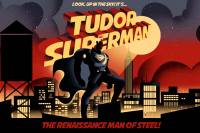
In some ways, the world of George VI and his consort Elizabeth, the future Queen Mother, from 1936-52 was very different from how we envision that of today’s British royal family; its rituals seem to belong to an era of Jurassic antiquity. In George’s day, Britain was still a global power, and its monarch ruled over both an empire and an elaborate court system with a “Page of the Backstairs” and a “Yeoman of the Pantry” — not to mention a fully staffed, oceangoing yacht — at his disposal. His coronation in May 1937 was as protracted as that of any maharajah. The Edwardian braid and sashes on display during more recent military pageantry look sadly Ruritanian by comparison. In other ways, their lives resonate more clearly with our own.

George queen

How refugees saved a town in upstate New York

Utica was once home to the American Nightmare. In the 1960s, the upstate New York city was a vibrant manufacturing hub, home to 100,000 people. Then the great unwinding began. General Electric pulled out in the early 1990s, and shortly after that the Air Force base closed. Entire streets burned as fleeing residents tried to claim insurance payouts. Families moved out as gangs from New York City moved in. Walking through the rubble in 1999, the mayor joked to an interviewer he had been having a nightmare of his own: “I dreamed I was the mayor of the city of Utica.

refugees

Inside the world of multilevel marketing

Emily Paulson felt lost. A young mother with several small children, she’d stepped away from the career ladder and found herself stuck juggling childcare alone when her husband traveled for his corporate job. She was trapped in a circuit of sweatpants and Spongebob. So when an old high school acquaintance invited her out for wine, she was thrilled at the chance to get dressed up, go somewhere swish and feel like herself again. It turned out to be a trap. Although she wasn’t swept into the back of a van by kidnappers, she was propelled into the world of Multilevel Marketing (MLM), also known as a pyramid scheme. The drinks invitation was a lure, first to be wowed by the fabulous cosmetics she could buy (at a discount!! And didn’t her friend’s skin look amazing?

multilevel marketing
authors

Where will the vogue for censoring our best-loved authors lead?

It was recently announced in the Daily Telegraph that the novels of P.G. Wodehouse — much beloved by millions, including me, for their combination of wit and soufflé-light evocation of an England that never really existed but which almost might have done — are the latest to fall foul of that new scourge of writers the world over, the “sensitivity reader.” New editions of Wodehouse’s masterly works Right Ho, Jeeves and Thank You, Jeeves have been reissued with the craven disclaimer “Please be aware that this book was published in the 1930s, and contains language, themes and characterizations which you may find outdated. In the present edition, we have sought to edit, minimally, words that we regard as unacceptable to present-day readers.

Lloyd webber

Bringing back Stephen Sondheim and enduring a new Andrew Lloyd Webber

On Sunday April 16, the curtain went down on Andrew Lloyd Webber’s Phantom of the Opera for the last of 13,981 performances on Broadway, a titanic thirty-five-year run grossing north of $1.3 billion. The end of an era? Not quite — dating back to the 1979 opening of Evita, Lloyd Webber musicals have run continuously on the Great White Way for forty-four years. That streak is now hitched to the fortunes of Bad Cinderella, which opened just weeks before Phantom closed. The show gets a lift from a lush score and some winning numbers, as well as sumptuous set design. The whole premise, however, turns out to be a pumpkin, and it may spell midnight for the composer’s magical run within the year.

madonna

How Madonna turned pop culture Catholic

Madonna Louise Veronica Ciccone is embarking on her first greatest-hits tour, but she has forgotten why she was great. In her announcement video for the Celebration Tour, celebrating the fortieth anniversary of Madonna’s self-titled debut, the queen of pop and a random assortment of B-list celebrities — Jack Black, Amy Schumer, Diplo and Meg Stalter, to name a few — reminisced about the queen of pop fellating an Evian bottle in her documentary Truth or Dare. A few days later, Madonna introduced Sam Smith’s and Kim Petras’s striptease at the Grammys. “Are you ready for a little controversy?” Madonna screamed at the crowd, holding a dominatrix cane in the air. The audience was too bored to respond.

Morisot

What makes Berthe Morisot’s nudes so unique?

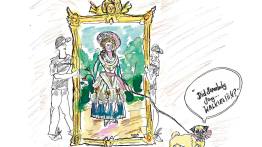
In the years before the French Revolution saw heads roll down the boulevards, revolutionaries murdered in the bath, and endless numbers of fluffy lap dogs forced to fend for themselves after their mamans met their untimely ends, one art critic made his name with his fearless criticism of Paris’s annual art exhibition, the “Salon.” The prominent style in mid- and late-eighteenth century France was Rococo — think impossibly ornate, gold-swirled furniture; paintings of pink, fluffy nymphs in gilt-edged, asymmetrical frames; and portraits of women in dresses so large, and so embellished, that they resemble iced wedding cakes more than human beings. In the face of endless walls of this style of art, the critic Denis Diderot was caustic.

museums

What museums can learn from contemporary technology

"I grew up wanting to be an astronaut,” Robert Stein, the National Gallery of Art’s recently appointed chief information officer, tells me. “I studied electrical engineering, and I got a job doing high-performance computing. And then one day, I did a project with an art museum, and I thought, ‘Wait a second, this is an area of the world that needs more technology in order to connect more people together.’ And the rest was kind of downhill from there.” The National Gallery of Art in Washington, DC — the NGA — is now ranked the most popular art museum in America.

Who was the real Martin Luther King, Jr.?

Jonathan Eig’s new King: A Life (KAL) is the first comprehensive biography of the black civil rights hero to appear in more than thirty years, and it will succeed my own Bearing the Cross (BTC), published in 1986, as the standard account. One normally does not review a book one’s blurbed — I’ve called it “a great leap forward in our biographical understanding” — nor where one’s actively aided the author’s research and read his manuscript multiple times. But comparisons between KAL and BTC will be legion, so highlighting the three most significant ways in which the two biographies differ will be a service both to the thousands of readers whom Eig’s volume should attract and to students of King’s life more generally.

king
sittenfeld

Curtis Sittenfeld is the great American observer

If a Martian landed on Earth and wanted a quick summary of the state of modern American life, I would point him toward the works of Curtis Sittenfeld. Sittenfeld (born 1975 in Ohio) is a novelist. Like all the great ones, her perceptions are more accurate about real life than most nonfiction writers’ could claim. In Prep (2005), she skewered American class in the story of a Massachusetts boarding school; Sittenfeld herself went to private school at Groton. In Rodham (2020), a novel about Hillary Clinton, she nailed today’s politics. And, in her best book to date, American Wife (2008), a thinly disguised novel about George and Laura Bush, she filleted the American approach to inherited money, and the swaggering confidence it produces.

grann

Madness and cannibalism with David Grann

David Grann is one of a very select club of writers: those whose books of history are so diverting that they almost seem implausible. Their narrative constructions are so effective, the dialogue so apposite, that jaded readers might think everything has been made up or twisted to give the books life, in novelistic fashion. And yet — as with the books of Erik Larson — that’s not true at all. It’s all there in the notes: everything between quotation marks was actually said or written. It’s a remarkable skill. This is a hell of a story, and I use that word appropriately. Those who shipped out from Portsmouth on HMS Wager in 1740 — part of George Anson’s circumnavigation of the globe — struggled through hell.

bob fosse

Broadway brings back Bob Fosse’s Dancin’

To kick off the new revival of Bob Fosse’s Dancin’, a lone performer comes onstage to inform us that, per the recommendation of the WHO, the CDC, the US Surgeon General and sundry others, the evening’s proceedings will not include any plot, message, or moral. I pinched myself. Wearing Fosse’s signature bowler hat, the speaker, played by Manuel Herrera, promises nothing but “dancing, some singing... and more dancing” — and for the most part, this dazzling two-and-a-half-hour musical revue lives up to that promise. Directed and staged by Wayne Cilento, who danced in the original production, the first revival of Dancin’ on Broadway is a treasure trove for Fosse fanatics, a smart introduction for the unfamiliar and a delight for everyone between.

Hilbert

Ernest Hilbert weathers the storms of life and fatherhood

Storm Swimmer, Ernest Hilbert’s fifth collection of poems and winner of the 2022 Vassar Miller Prize in Poetry, is obsessed with bodies of water, especially the ocean. Even before the book begins, Hilbert declares this preoccupation through three sea-based epigraphs, running a wide gamut from Apollonius of Rhodes to Rachel Carson and Iris Murdoch. Over the forty-four formally various and adept poems that comprise this ninety-page, seven-section text, Hilbert engages repeatedly with different aspects of the oceanic to dazzling effect. Often he effects our encounter with the sea through the experiences of the swimmer, who almost always is a struggling figure. Sometimes — as in the case of the title poem — he must contend with the weather: “Without the sun the sea is tangled steel.