Books and Arts

Finding the warmth in Alfred Hitchcock’s filmography

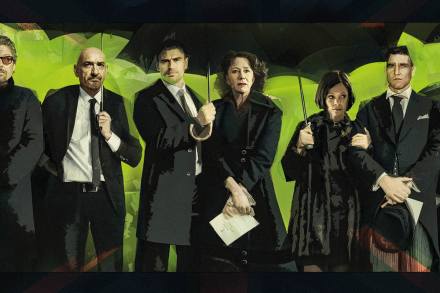
Alfred Hitchcock: the master of suspense. We grew up seeing his entertaining thrillers on TV, beautifully made movies about elegant people in danger. The glamour of To Catch a Thief; Cary Grant as the wrong man on the run in North by Northwest; Tippi Hedren looking chic with her chignon, brutally attacked in The Birds by the titular avian menace. Don’t look for heart, though. These were emotionally detached films, weren’t they? In his publicity Hitchcock joked about murder. He said that Psycho was a dark comedy. His TV programs were full of gallows humor. Critics said he had an ironic Englishness. Chilling and chilly. Maybe it’s the Celt in me, but I don’t quite see the films like that. Yes, I spot the irony, and that’s part of their appeal.

Hitchcock

Here Lies Love is too scared to be serious

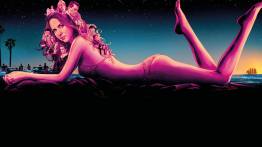
Imelda Marcos allegedly wants three words inscribed on her tombstone: Here Lies Love. It’s a poetic expression made grimly baleful by the reality of the Marcos regime: Imelda and her husband Ferdinand ruled the Philippines with an increasingly iron fist from 1965-86, committing countless human rights abuses as they robbed the country’s coffers. Yet the phrase has been borrowed by David Byrne and Fatboy Slim as the title of their musical about the Marcoses, Here Lies Love, now playing on Broadway (it premiered off-Broadway in 2013). Whether the phrase is used in earnest or irony is never quite clear in a show that apparently positions itself as a fun and fabulous karaoke dance party.

Here Lies Love

The death of Superman

In 2003, the Scottish comic book writer Mark Millar penned a three-part illustrated series for DC Comics titled Red Son. In it, he creates an alternate Superman universe that hypothesizes what would have happened had the Kryptonian orphan’s rocket landed in Soviet-occupied Ukraine, instead of Kansas, in 1953. Superman becomes a state agent for Joseph Stalin’s Kremlin. Instead of saving the world in the name of “truth, justice and the American Way,” he fights as “the champion of the common worker,” for socialism and the expansion of the Warsaw Pact.

superman

The demands and joys of contemporary art 

The career of artist Alberto Guerrero has been driven by an overarching desire to look for what is behind everything that we merely, and only dimly, perceive at present. The work of the forty-something Madrid-based Guerrero ranges from abstract, highly textured canvases and three-dimensional images which he calls “spherical paintings” to realistic presentations of daily life — such as his illustrated book Diary of a Quarantine showing life in the Guerrero household during Covid — and deeply reflective images of sacred art. There are few contemporary artists who have such a broad range and vision.

Guerrero

Taking a trip to Russoville

In Elsewhere, a coruscating memoir published in 2012, Richard Russo described his formative years as “an American childhood, as lived in the late Fifties, by a lower-middle class that barely seems to exist any more.” The setting for this slice of lost Eisenhower-era Americana was Gloversville in upstate New York, an East Coast leather town where the money had long since moved out and taken the locale’s animating spirit with it, to the point where the eighteen-year-old high-school graduate reckoned that “you could have strafed Main Street with an automatic weapon without endangering a soul.” The “Main Street” reference carries its own freight of associative cargo.

russo

Blood Meridian is Cormac McCarthy’s masterpiece

In June, Cormac McCarthy — our greatest living writer — slipped from this world to the next and joined his forebears Melville, Twain, Faulkner and Flannery O’Connor in the American literary pantheon. By noon the following day, Blood Meridian, or The Evening Redness in the West, his magnum opus, had reached number eight on Amazon’s Top 100 Books, assuring that, for the first time, it would hit the New York Times Paperback Bestseller List; a curious development for a novel that, when it was first published in 1985, failed to sell its initial print run of 1,500 and was quickly remaindered.

blood meridian

William Boyd’s latest novel is immense fun

William Boyd is perhaps best known for his novel Any Human Heart, which charts the adventures of Logan Mountstuart throughout the twentieth century. Mountstuart marries well, divorces, annoys the Duke of Windsor, is imprisoned, becomes an art dealer in America and has sundry diverting escapades. It’s a warm, impassioned and involving narrative, and Boyd winningly returns to a similar formula in his latest book, The Romantic. The prologue presents The Romantic as a fictionalized biography, reconstructed from notes and maps left behind by its subject. All biography, says Boyd, is by its nature fictional.

Boyd

Visiting a forgotten chapter in American history

Nowadays few Americans could identify what the Monroe Doctrine signifies. Named for the fifth US president, the point of the 1823 policy had been succinctly stated fifteen years earlier by the third, Thomas Jefferson: “The object... must be to exclude all European influence from this hemisphere.” Sean Mirski terms the Doctrine “revolutionary” in his impressively erudite We May Dominate the World, an astonishingly comprehensive and stylishly written account of US foreign policy in the Western Hemisphere during the years 1860 to 1945. Calling the period a “missing chapter” in American history, he rightly asserts that “the story of the United States’s rise to regional hegemony has not received anywhere near the attention it deserves.

mirski
Arnold

Arnold Schwarzenegger is back

It would be presumptuous to call 2023 the comeback of Arnold Schwarzenegger: he never went away. From his first starring role in 1982’s Conan the Barbarian to an illustriously memorable life and career that have included everything from the Terminator films to his term as governor of California, he has judiciously created an existence for himself as an all-American success story; a sort of Scott Fitzgerald character for the Reaganite age. Not bad, really, for a man born seventy-six years ago in a small town in Austria, the son of an unrepentant Nazi. Should you turn on Netflix, you will now be greeted by two incarnations of Der Arnold.

sonnez

Jane Clark Scharl delivers artful truths in Sonnez Les Matines

As preface to his verse play King Victor and King Charles (1842), Robert Browning made a striking assertion about the claims poetry has on truth. In dramatizing King Victor Amadeus II of Sardinia’s abdication and subsequent attempt at re-accession, Browning said, he had produced a “statement” on the subject “more true to person and thing than any it has hitherto been my fortune to meet with.” Naturally, that “statement” — peculiar word for poetry — differs considerably from the historical record. Yet the merits Browning ascribes to his version — not surpassing beauty, but truth to “person” and “thing” — we would tend to call prosaic, the province of history or science or some other species of nonfiction.

Richier

The brilliant, underappreciated work of Germaine Richier

In the spring of 1951, there was a commotion in Assy, a remote part of the Alps where France and Italy are only separated by mountains and valleys. In a town normally famed for its tuberculosis-healing properties and its winter sports, a debate about sacred art was beginning to make itself heard. After nine years of construction, the Église Notre-Dame de Toute Grâce du Plateau d’Assy was finally finished in 1946. A low, squat building, designed by architect Maurice Novarina and fashioned out of sandstone, it looked more like a chalet than a church.

art revolution Milano Painting Academy

Inside the traditional art revolution

More and more often lately, people are rejecting tired modern art. They often find solace in the art of the past; online accounts admiring “traditional art” have amassed hundreds of thousands of followers, but they act as online repositories for a bittersweet recognition: what once was, no longer is. But the kind of art they seek, involving detail, meaning and skill, still exists, and it is growing. The cultural hegemony of contemporary, abstract art is slowly beginning to crack; through those cracks we can see new art surfacing. As I have become increasingly disillusioned with the state of politics, an observation from Ernst Jünger, the German philosopher and skeptic of the extreme politics of his day, rings true to me.

The great late Yeats

The 1923 Nobel Prize in Literature was awarded to William Butler Yeats “for his always inspired poetry, which in a highly artistic form gives expression to the spirit of a whole nation.” Informed of the prize late on the night of November 14 by the editor of the Irish Times, the fifty-eight-year-old Yeats and his wife George sat up taking telephone calls and telegrams for a couple of hours. Then, according to Yeats’s sister Lily, the couple went down to the kitchen and cooked some sausages before going to bed. The next day, the Yeatses went out and began spending some of the check Yeats would receive in December.

yeats
Caroline

Lady Caroline Lamb and the frantic bed-hopping between the great houses of England

“Mad, bad and dangerous to know.” That’s the line Lady Caroline Lamb (1785-1828) is known for — her brilliant, pithy verdict on her lover Lord Byron. Her other great claim to fame — her marriage to Viscount Melbourne, twice prime minister — was marginal from a historical point of view: she died, aged only forty-two, her health shattered by drink and laudanum, before Melbourne became PM; before he became Lord Melbourne, in fact — he succeeded to the title after her death. But, still, as Lady Antonia Fraser reveals in her gripping biography, Lady Caroline Lamb: A Free Spirit, she was a remarkable woman, possessed of exceptional charm, as was Byron.

Moore

Lorrie Moore explores the thin veil between life and death

Very few of us could evade accusations of pretension if we quoted Faulkner in everyday conversation. The characters conjured up in Lorrie Moore’s fiction are granted an exception, though not always solely by virtue of their earnestness. In her novel I Am Homeless If This Is Not My Home, which traces a journey toward a final burial in the American South, allusion to As I Lay Dying is particularly apt. Moore has made a name for herself as one of America’s masters of the short story, with her inimitable style on display ever since her first work of fiction, “Raspberries,” was published in 1977. In this, her first novel for fourteen years, she once again wields her wordplay playfully and powerfully, striking a balance between levity and gravity.

ciano

The troubled relationship between Mussolini and his son-in-law

Like those of his wartime ally Joseph Goebbels, the diaries of the Italian fascist foreign minister Count Galeazzo Ciano (1903-44) have proved a mainstay of academic research into the frequently banal inner workings of the Axis dictatorships. Both men were entirely aware of their journals’ historical and commercial value. In 1937, Goebbels struck a lucrative deal with Max Amman, the Nazi Party publisher, for the release of his warped musings on race and politics twenty years after his death, which in the event came sooner than he might have imagined. Ciano in turn used his diaries to barter unsuccessfully for his life when arrested on charges of treason.

war

Men at War examines homosexuality among World War Two soldiers

As a little boy, Luke Turner, like so many other little boys, was fascinated by World War Two. He used to spend hours carefully making Airfix models of warplanes, and his favorite haunt was the Royal Air Force Museum in Hendon, a suburb of North London. Men at War, his second book, is an attempt to explore and explain both this interest and his own sexuality (he is bisexual, with a female partner), in response to what he sees as the dominant, jingoistic attitude propagated via general British cultural discourse. He claims that we do not see those who fought as individuals, but as clipped, heroic avatars, like Captain Sir Tom Moore, who raised millions of pounds for NHS charities during the lockdowns: dignified, silent, brave.

spears

The history of a Britney Spears masterpiece

The year was 2007. The Bush administration was launching bombs in the Middle East, the economy was collapsing and pop songstress Britney Spears was standing in a recording booth at Sony’s New York City office. As Spears waited to lay down vocals, producers Ezekiel Lewis and Christian “Bloodshy” Karlsson discussed the latter’s condo in Bangkok, Thailand. “Oh, Thailand,” Spears said, according to Lewis’s recollection. “Why don’t we go and do the songs in Thailand? Let’s go to Thailand. I have the plane coming tonight.” Lewis looked across the studio at Karlsson and mouthed, “What the fuck? Is she serious?” She was dead serious. “Well, why don’t we get this one down first, and then maybe let’s think about it tomorrow?” he said.