Books and Arts

The heart of Maria Callas’s genius

For much of the last century, a young woman’s concept of artistic vocation was forged by the ballet. The dream of being fêted for a body that was drilled, starved and exercised into a perfect instrument was preeminent — until Maria Callas came along. Daisy Goodwin’s fourth novel, Diva, is based on the life of Callas, whose affair with the other most famous Greek in the world, Aristotle Onassis, made her a worldwide celebrity. Her glamour and genius made her a superstar, but her life was crosshatched with tragedy. A singer’s voice, as her teacher told her, is like an amphora filled with golden coins: each time she sings, she is giving one gold coin away. Singing too much, too young, hastens destitution.

callas

A vigorous and persuasive defense of capitalism

“Under capitalism,” John Kenneth Galbraith once quipped, “man exploits man. Under communism, it’s just the opposite.” For a left-wing economist such as Galbraith, this was about as close as one might get to exalting capitalism — damning by faint praise. But in The Capitalist Manifesto, a lively, closely argued polemic by the Swedish historian Johan Norberg, we find a much more vigorous and persuasive defense of the most successful economic system the world has ever seen, a mechanism for sowing widespread abundance and lifting billions out of penury. “The argument for capitalism,” Norberg boldly declares in his preface, “is not that capitalists always behave well... but that they often do not behave well unless they have to.

capitalism

A definitive biography of Liz and Dick, Hollywood’s most controversial and glamorous couple

What is it about Richard Burton and Elizabeth Taylor that still hooks us in, thirty-nine years after his death and twelve years after hers? In his magnificent, definitive double biography, Roger Lewis nails down the answer. Liz Taylor was the last great Hollywood movie star, starting in the golden age in National Velvet (1944), aged twelve. As Lewis puts it, her origins were in the magazines and movies of the Forties: “the era of Bing and Bob, Big Bands, such as Glenn Miller, Bogie...Tom and Jerry, Disney.

lewis

Wolves of Winter focuses on the brutality of the past

Dan Jones’s Wolves of Winter follows from his first novel, Essex Dogs, which tracked the vicissitudes of the titular Dogs, a group of English blokes rampaging around France during the reign of King Edward III. Jones is a historian by trade, and so the setting and context are meticulously researched. If you want to know how to load an early form of cannon, you’ll find out here. Peering into the past is a complicated business, especially far into the pre-modern era, although we do have lots of documentary evidence. It can be hard to remember that those knights and ladies were people just like us, with tempers, frailties and habits.

wolves
miller

Jerry Miller’s tale

One of the saddest things about popular music is the talents it can’t accommodate. Robbie Robertson, of the Band and much else besides, died in August at the age of eighty, and never found a proper home for his gifts after that great initial burst of late-1960s creativity. But at least Robertson was widely recognized by his peers as one of the outstanding electric guitar players of his time, although the contemporary guitarist he most admired himself was Jerry Miller, of the group Moby Grape. Unlike Robertson, Miller, who’s happily still with us today, hasn’t as yet won a Grammy, or been inducted into the Rock & Roll Hall of Fame. But he did play a starring part in what’s surely one of the great show business morality tales of its time.

national

The bold new vision for Edinburgh’s National Galleries of Scotland

What do you generally think of when you hear the words “Scottish art”? There are the usual clichés of course, of large-scale landscape paintings depicting gorse and heather and startled-looking wildlife, or alternatively there are the portraits of various noblemen and worthies, many of whom have the well-fed hue that living high on the hog imbues. If you head to Edinburgh’s National Galleries of Scotland — often simply known as “the National” — and visit the traditional collection in the neoclassical building right in the center of the city, near the castle and major shopping streets, you won’t be disappointed by the eclectic selection of Old Masters and Scottish masterpieces alike.

Trumbull

Radical in the Rotunda

In a recent Saturday Night Live sketch, comedian Nate Bargatze portrayed General George Washington addressing his troops around a campfire in 1777, as they ask themselves what the Revolution is for. Washington shares some of his dreams for the new American republic — though he dodges difficult questions about slavery — in an effort to inspire his men to fight on. The writers take full advantage of the fact that a number of peculiarly American things, such as our version of football (in which feet rarely figure) or our complicated system of weights and measures, seem rather odd to the rest of the world. “We will be free to measure liquids in liters and milliliters, but not all liquids,” the general explains. “Only soda, wine and alcohol.

The Spectator’s 2023 Books of the Year

Andrew Roberts America’s Collection: The Art and Architecture of the Diplomatic Reception Rooms at the US Department of State (Rizzoli, $100) is beautifully written by the director and curator of the State Department’s truly extraordinary collection, Virginia B. Hart. It is a sumptuous volume chronicling the US government’s huge collection of American art, furniture, porcelain, maps, prints and drawings, compiled over a quarter of a millennium. Thirteen other writers and experts, including David M. Rubenstein, have also contributed to what is a genuinely remarkable as well as gorgeous-looking book. James B.

books
britney spears

Britney Spears’s much-anticipated memoir is a desperate cry for help

Biological differences exist between men and women. Hamas lacks a justifiable reason to kill Israelis. Joe Biden won the 2020 election fair and square. Vaccines work. These are truths which, depending on the political class you’re speaking to, you can no longer say in public. Reading Britney Spears’s memoir, The Woman in Me, I thought, “We should add ‘the Free Britney Movement was wrong’ to the unspeakable truths list.” Two years into her freedom, Spears should celebrate her memoir as her umpteenth comeback. She should be sitting down with Oprah, confessing what really led to her 2007 breakdown, and releasing a new album pegged to The Woman in Me.

american psycho musical

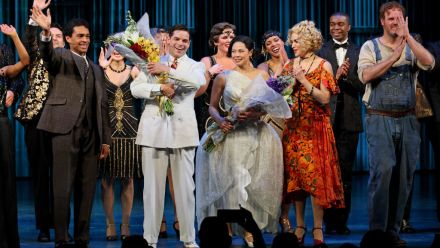
The birth, death and rebirth of American Psycho: The Musical

American Psycho was never supposed to be a hit. Bret Easton Ellis thought Glamorama would be his big seller, and Psycho was just an odd interlude; an experiment with form that mocked the disconnection, inanity and opulent obliviousness of America’s new, young, hyper-materialist upper crust. It was also a cloaked reflection of repressed homosexuality, written by a gay author who once dated a closeted financier. It’s not even that violent. Most of it is just the interior monologue of this cold man listing the clothes and food and bad music that occupies his hollow mind. And it was intensely funny, but dryly, darkly so. In short, it wasn’t an obvious literary smash.

Have we misunderstood David Fincher?

The trailer for David Fincher’s latest movie, the hitman thriller The Killer, promises that admirers of one of cinema’s most talented directors will be getting their money’s worth, whether they see it during its theater release or wait for it to premiere on Netflix (which paid for it), just as they did Fincher’s previous film, Mank, and his serial-killer series Mindhunter. There will be a lead performance by Michael Fassbender — returning from several years away from the big screen racing cars — that will, as usual, combine icy charisma with brute physicality. There will be impressively gloomy cinematography, courtesy of Erik Messerschmidt.

comic con

Comic Con with a Shakespearean twist

Recently, when I shared that I would be attending New York Comic Con in cosplay, I was met with a mixture of applause and derision. Why would an art critic want to participate in such an activity, let alone write about it? To me the appeal was obvious, since cosplay stems from the same impetus to tell tales, share values and dazzle the spectator that can be found throughout thousands of years of artistic expression. The first comic book conventions, popularly known as “comic cons” or simply “cons,” began as get-togethers for comic book aficionados to share their love of illustrated popular storytelling. Over time, cons absorbed other genres and forms of entertainment to become major social events and trade fairs.

America’s professor: the afterlife of C.S. Lewis

In the summer of 1955, an unusual meeting took place. Billy Graham visited the writer and academic C.S. Lewis in Lewis’s rooms at Magdalene College, Cambridge. It was unusual because leading British academics typically avoided Southern Baptist revivalists. But rather than encountering a fussy, prim don, Graham found a kind, intelligent scholar who was very happy to spend the afternoon with him. Later, Graham admitted he was intimidated by Lewis, but the English professor quickly dispelled any anxiety, probably by offering Graham a cup of tea. Graham’s impact on American religious culture, for good or ill, is unquestioned, but it is difficult to imagine what that same culture would look like without the works of C.S. Lewis.

lewis
congo

How the CIA interfered in the Congo

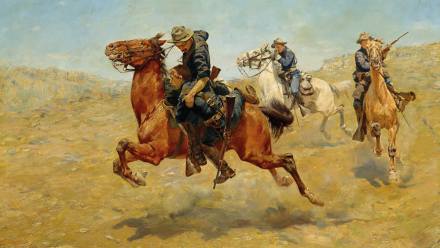
As everybody knows, as soon as you start to talk to any historian of postwar life in any Latin American or African or Southeast Asian country, the discussion quickly turns to the role of the CIA in subverting democracy. From the Truman-era coups in Syria and Egypt, through regime change in Guatemala, assassination in the Dominican Republic, the fomenting of industrial unrest in Guyana, and both the military and covert US involvement in Vietnam, it seems overseas intrigue was the rule and long periods of benign neglect the exception.

Suleyman

The gap between technotopia and dystopia are never far apart

Broken Arrow isn’t just the title of a mediocre 1996 film, but the term for a serious accident involving a nuclear weapon. Over the last seventy years, the United States has officially experienced thirty-two Broken Arrows, where a nuclear weapon has been in a crash or fire, accidentally been dropped — or just disappeared. Incredibly, six have been lost and never recovered. Artificial intelligence (AI) pioneer Mustafa Suleyman tells one such story in his new book, The Coming Wave: Technology, Power and the 21st Century’s Greatest Dilemma. In 1961, a B-52 bomber carrying two live hydrogen bombs broke up in the skies above Goldsboro, North Carolina. One bomb disintegrated when it plunged into a muddy field.

iliad

Two excellent books that offer new insight into The Iliad

The Iliad, Homer’s extraordinary epic poem, begins with Apollo, the god of light, zooming down from heaven “like night,” bringing plague to the Greek camp before Troy. Many days later, after the Trojan Hector’s funeral rites, the poem ends, at dawn. The light god brings darkness; dawn brings the doom of Troy. Such are the ironies that underpin the epic, revealing it as a work of supreme artistry, probably composed by one hand alone. For decades, I have lived in the light and shadow of The Iliad, reading it at first piecemeal in Greek, then in various translations, then all the way through in Greek (an experience both taxing and exhilarating). My Loeb edition, its prim English translation opposite the raw Greek, is never far from my side.

stuart

The great Marty Stuart, possessor of one of popular music’s legendary guitars

He stands five-foot-seven in his stocking feet — five-nine in boots — but with Clarence White’s Telecaster slung around his neck and a thick head of gray hair roostered up, he looks ten feet tall. John Marty Stuart has plucked the strings of every major figure in country music. Growing up in Philadelphia, Mississippi, his heroes were bluegrass legend Lester Flatt and American prophet Johnny Cash. Before going out on his own, Stuart only had two jobs: he joined Flatt’s band in 1972 as a fourteen-year-old mandolin virtuoso, and after Flatt retired in 1978, he joined Cash’s band as a guitarist.