Wild life

Our farm is a haven for lost souls

Laikipia He was turned out in a crisp bush ranger’s uniform and handled his assault rifle like a man hardened in the field for years to take on bandits and elephant poachers. ‘Ah Mario, what a pleasure it is to meet you again after all this time,’ I said. His severe military face collapsed into a beaming smile as he snapped to attention and slope-armed his weapon. He then relaxed and we chatted for a while on the roadside in our farming district, where I’ve been around so long now that I frequently encounter people whom I’ve known all their lives. Some, like Mario, even have a few wrinkles, greying hair, a couple of wives and several children. The farm has always been a refuge, remote from towns and the life outside.

With tourists absent, the teeming marine life has returned to the sea off Malindi

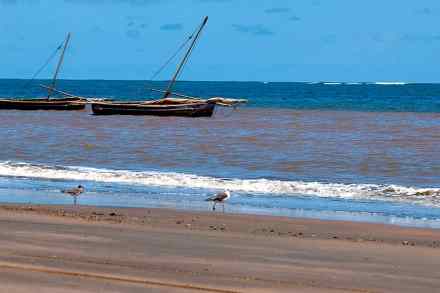
Malindi, Kenya Beneath the Indian Ocean’s surface, I wondered if the pandemic had turned out to be a good thing after all. I swam among corals blooming more colourfully and with more diversity of reef fishes than on any dive I can recall since my childhood. On the high-tide line in front of our beach house on Kenya’s north coast, sandpiper feet and the claws of ghost crabs are becoming entangled in discarded blue face masks. This year, the tourists are mostly absent and the seafront nightclubs, restricted by curfew, are silent. But out here among the coral gardens, the teeming marine life, flaring with psychedelic colours, hints how swiftly the world might recover if another variant wiped out the human race.

Is today the day I become a Kenyan citizen?

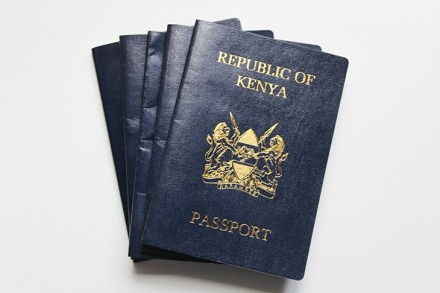
Nairobi Since my father first caught sight of Mombasa from his ship in late 1929, at least some of my family has lived continuously in east Africa until now. After Kenya’s independence in 1963, many Europeans opted to become citizens of the new country, but my parents did not. All my life, I never had any doubt where I wanted to be most of all and once, after too long overseas, I recall bursting into tears when the pilot announced that we had entered Kenyan airspace. Still, I grew up grateful that I held a British passport. It allowed me to travel the world as a correspondent, probably more easily than if I had held any other nationality. I have been proud to be British, yet I was always envious of those who held a Kenyan passport.

How WhatsApp mums saved Kenya’s castaway children

Kenya In March, Global Britain signed a new, post-Brexit trade deal with Kenya. This was a welcome agreement for my homeland, where the pandemic has caused tremendous economic suffering, but where comparatively few deaths have occurred among the fit, young population. Weeks later, on 9 April, the UK condemned its former colony to the red list of countries. Non-citizens were banned from travelling to the UK from Kenya, while arriving UK passport holders faced a £1,750, ten-day incarceration in a quarantine hotel. Such extreme measures were imposed on the excuse that a ‘significant’ number of passengers arriving from Nairobi tested positive for a variant of concern.

Thirty years ago, I saw the rebels take Addis Ababa

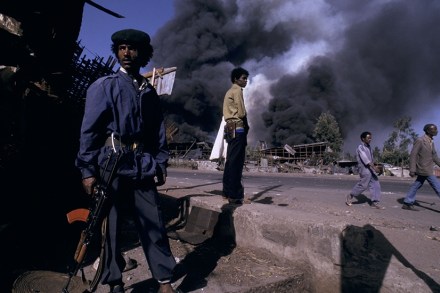
Kenya The evening before the assault on Addis Ababa, my guide Girmay and I ventured into a complex stuffed with bombs, bullets and missiles that must have been booby-trapped. A few minutes into taking photos, I heard detonations, and a bunker on the hill above us exploded. We dashed away as the rumbles and bangs behind us gathered in fury and then the earth burst in an eruption of fire, sending a mushroom cloud into the sky. As we ran, rockets and shells rained down on all sides, shrapnel and earth bursting in plumes. We took cover in a dry riverbed and I worked my way through a packet of cigarettes while the ground shook under the relentless explosions until dusk, when we raced madly across ploughed fields until we reached safety.

Did I catch Covid from a naked-rumped tomb bat?

Laikipia Until I promised to slaughter a fat-tailed sheep with a goat thrown in for a feast, the farm cowhands looked doubtful about going for their vaccinations. ‘Come on, it won’t hurt you,’ I cajoled. A panther-like man I’ve seen pursuing bandits with a rifle and reckless courage announced that he was frightened. The others nodded and rubbed their left arms. But at the offer of meat and sizzling fat over an open fire, everybody cheered up. Time was running short. A village clinic two hours away in Maasai country had phoned to say its supply of doses was sitting there unused and would I urgently muster some people?

Why I’m investing in sheep

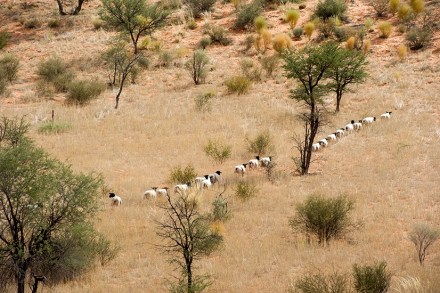
Laikipia In the past I had a low opinion of sheep. During my first forays into farming I saw them as creatures hell-bent on dying, with lung diseases, rotten feet or nasal maggots. Their legs snapped in ant-bear holes and hyenas tore them to pieces. To stem tides of oviform death we dipped, injected, dewormed and castrated. Many hours evaporated searching for stray animals. I found them dreary, sold off my flock and concentrated on cattle. Up here, north of Mount Kenya, people name their sons after special bulls and men hold important conversations in among the cattle at evening, so that the talk can be inspired in bold and manly ways. Everybody loves cattle.

The healing power of sweat

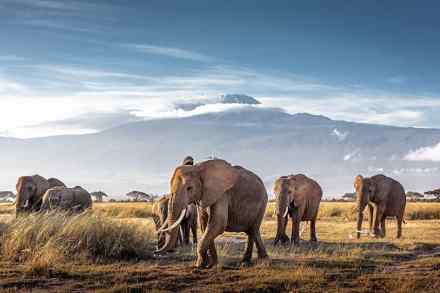
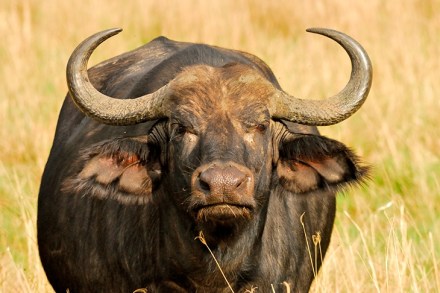
Laikipia In one of Kenya farmer Karen Blixen’s short stories, a character says: ‘I know of a cure for everything: salt water… Sweat, or tears, or the salt sea’. After two months on the Indian Ocean shore since Mum left us, I set off on the two-day drive back to the farm. At dawn in Tsavo I had breakfast watching a young leopard, and passed a herd of 400 buffalo, many elephant, kudu, giraffe and buck. In four hours on the back roads I saw just one car. I reached the Nairobi highway, overtook scores of juggernauts and then diverted along the track following the Selengei river, where Ernest Hemingway used to hunt, passing very few cars until I arrived in town towards evening.

The art of mourning well

Malindi, Kenya I’ve learned that mourning must be tackled ever so gently. As a younger man, when friends were killed in Africa’s wars I’d become angry and drink. When Dad died I cut adrift in Yemen for a time. Following Mum’s death a month ago, I decided to stay quietly at her home on the beach. The Kaskazi monsoon whirls through the house and white horses roar on the reef. Soon after dusk the memories appear more vivid than in daylight and these parade through my fitful sleeps until dawn, when I can at last get up and trek along the foreshore among ghost crabs and sandpipers. Each morning I box with my coach Amani, before starting work. I run the Laikipia farm by telephone and spend my days on Zoom calls to England.

Eccentric, artist and storyteller: in memory of my mother Doreen Sanders

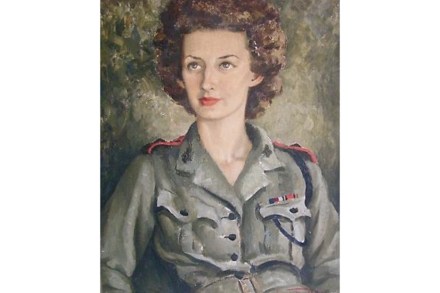
Indian Ocean coast ‘I love you’ became just ‘love’, and that was the last word Mum was able to say to me. Her children had been in and out for days, she had met her great-grandson from America for the first time and messages flooded in on the phone, from all around Kenya and from her grandchildren in Europe. Then one evening the two of us were alone together in her bedroom, surrounded by family photos and all her memories of India, Arabia and great-grandson. She was in my arms and it became so quiet I decided to play Vera Lynn’s ‘We’ll Meet Again’ on my phone, since it might remind her of her years of war service in Burma, when she was still a teenager.

The many good things to come out of lockdown

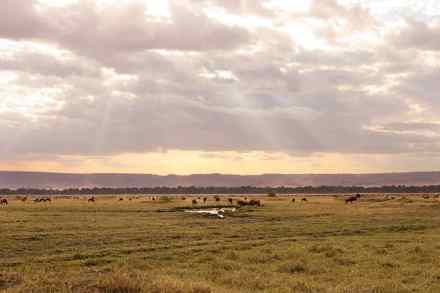
Laikipia I was drinking in the fresh air on the high earth wall of my farm dam last week, when I saw a low white cloud coming straight at me from the northwest. The distances you can see up here are immense, across tawny savannah towards blue hills on the horizon, an unfenced land stretching for days and days of travel to the Ethiopian frontier. As I was standing there, filling my lungs and feeling free and happy, the white mist got ever closer and began to resemble confetti. The low, fluttering cloud was entirely silent. And then I saw it was a multitude of white butterflies, all flying on exactly the same southeasterly bearing. In the days since, they have migrated in never-ending millions from dawn to dusk, pausing on flowers to fill up on nectar, before taking to the skies again.

The perils of being a Kenyan farmer’s wife

Laikipia As the train pulled into Victoria my wife Claire, back home on the farm in Kenya, revealed that a buffalo was charging her. ‘Oh dear!’ she exclaimed as the phone line went dead. She called back minutes later, out of breath, to explain she had been walking our three dogs when the beast came thundering across the savannah and chased her half a mile. It later turned out that lions had injured the buffalo, which put it in a foul mood, gave it a bad limp and — thankfully — slowed it down. That was just the first drama for Claire, when she put on her gumboots and ran the ranch for me while I was away.

Back to Exmoor, scene of prep-school rides on rough ponies

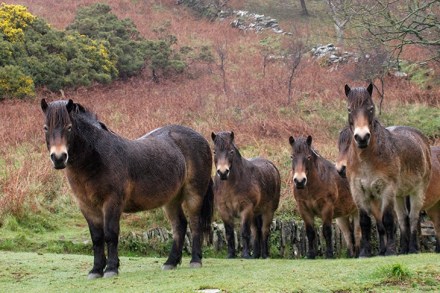
Exmoor I am heading to Exmoor for the first time since I was last there in 1977 — and as the train pulls into Tiverton Parkway station my childhood rises back up at me like ground rush. We head north and pass Ravenswood, the gothic building where I spent six years of my life when it was still a prep school. And suddenly I am back on the same road we’d take on Thursdays, in a van heading up to a farm on the moor’s edge. Back then, 43 years ago, a shaggy-haired farmer’s boy called Kevin would lead us out hacking on rough ponies across the heather and marshes. In winter months, mists and rain hugged the pagan landscape, and even in summer, curtains of cloud swept across the gorse and granite.

My Aunt Beryl’s zinc-lined trunk revealed extraordinary family secrets

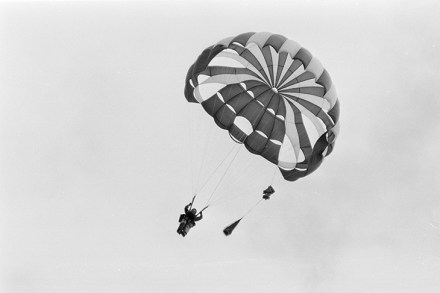
Bexhill-on-Sea My Aunt Beryl taught me to love books and paintings. When I’m at a loose end in London, lonely, or even rather boozed up, I still nip into one of the galleries she raised me on to say hello to pictures that have been my lifelong friends. Out of an envelope fell an original poem scribbled and signed by Rudyard Kipling Beryl never missed birthdays and Christmas, she wrote postcards and adored her nephews and nieces. She never married, but globe-trotted with easel and pencils, lived in a cave in Petra, went skydiving and skating, made a living from portraits and illustrated 52 children’s books — many of which she read to me when I was small. She cared for my grandparents and inherited their home in Sussex.

What a relief it is to be back among level-headed Kenyans

Kenya I stood under huge skies in the open country of our farm in northern Kenya and, after months of London lockdown, I remembered those Japanese tourists I had once seen, weeping with wonder at the sight of Africa’s savannah after their lives imprisoned in cities. I’ve been savouring every little detail of home since we returned the other day: the taste of water and mangoes, the joys of talking cattle with the stockmen, seeing my 95-year-old mother at last, birdsong and crickets, long treks with our dogs tearing off wildly after baboons and buck. I woke up before dawn when several lions noisily killed a zebra in front of our house. I lay in bed listening to them scrunch up the animal’s bones and felt that all was well in the world.

Solidarity in Soho: running a coronavirus testing centre

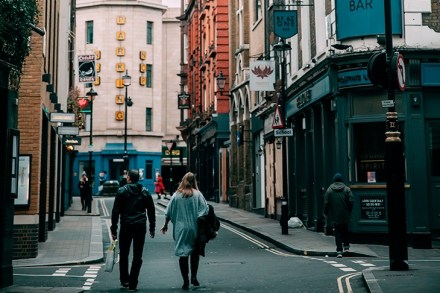
London Simon, proprietor of the sex shop opposite our Covid-19 testing centre in Soho, insisted on popping a pack of Sildenafil in my top pocket each time I passed his ribbon curtains. ‘Have a lovely weekend,’ he’d say kindly. For several weeks we occupied the delightful Boulevard Theatre at the end of Berwick Street. With all the theatres across the capital closed, it was the only show in town: fast antibody and antigen testing for the public at half the price of clinics in Harley Street. We first launched the business back in May in the City of London, at the Honourable Artillery Company — convinced that the British people were straining to return to work after lockdown.

How two children vanished for a week en route from Africa to London

As we all know by now, the pandemic distorts time like a concertina. Life before March is a world that seems too distant, an image viewed down a telescope held the wrong way — yet there are moments when the months retract into almost hours. We are still castaways in London, still waiting for the airspace to open so that we can fly home to Kenya. I feel glum about it, then remember how my father was marooned for 12 years in southern Arabia and Africa on either side of the war. He missed his mother, as I do, sitting in his mud tower on the edge of the Empty Quarter listening to Churchill on the wireless broadcasting about faraway battles. Letters arrived every few weeks or months and he just got on with his adventures.

The intense pleasures of lockdown

I used to live in Mogadishu for months at a time, cooped up in compounds behind fortified walls. Venturing on to the streets meant a flak jacket, escort vehicle bristling with guns, chain-smoking as we zoomed through smashed districts, militias, ambushes and roadside bombs. Despite the incarceration, Somalia gave me some of my happiest memories. At home on the ranch in Kenya we often make a point of staying away from town for as long as possible. Our record is three months of no shops, offices, crowds or traffic — just cattle, pasture, birdsong and the rarest of visitors dropping by for a beer. And as a child in north Devon during the winter of 1978, I recall the local constable escorting me across fields in a blizzard to my mother’s arms.

Why we’ll all be fleeing to Nigeria

I keep thinking what I’ll do when we regain our liberty — and I picture that beer at the end of Ice Cold in Alex, when after surviving his trek through the Sahara, a sweaty John Mills traces his finger up the frosted schooner, drinks the golden liquid down in one and says: ‘Worth waiting for.’ A month ago I had big ambitions for the future at home on the farm in Kenya. We were planting thousands of avocado trees, we were about to start rearing organic broiler chickens, there was a tilapia farm to expand, a new dairy project, and preparations for the Nairobi livestock breeders’ show later this year, when we hoped to compete with a string of Boran beef cattle. The event was cancelled and all my farm plans were delayed when the flights home to Kenya were closed.

Our exile in NW1

Laikipia The sweetest sound to me now is the dawn chorus of birdsong at home on the farm. I lay awake in bed and listened, as a light rain fell on the coconut thatch above me. When I walked out into the garden the three dogs burst out of the house to go off exploring. While I made coffee in the kitchen, our cats Omar and Bernini rubbed against my legs until I fed them and then in walked Long John Silver the orphaned calf, looking for a bowl of milk. I headed out to the crush where the herds were coming in to be dipped. Cattle were mooing, the sheep were bleating and the cowhands were whistling and shouting. With dew sparkling on the grass and the air alive with the hum of bees, I felt so grateful to be here. Home.