Theatre

Act of vision

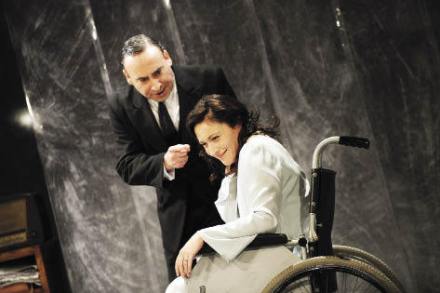
A wretched, stinking, mouldy, crumbling slice of old Glasgae toon has dropped on to the Lyttelton stage. Ena Lamont Stewart’s play, Men Should Weep, is an enthralling act of homage to her slum childhood and it follows the travails of the Morrison family, all nine of them, wedged into two filthy rooms in Glasgow’s east end. A wretched, stinking, mouldy, crumbling slice of old Glasgae toon has dropped on to the Lyttelton stage. Ena Lamont Stewart’s play, Men Should Weep, is an enthralling act of homage to her slum childhood and it follows the travails of the Morrison family, all nine of them, wedged into two filthy rooms in Glasgow’s east end. The play takes a while to ensnare your loyalty. The first act is a slack and linear piece of documentary reportage.

Family at war

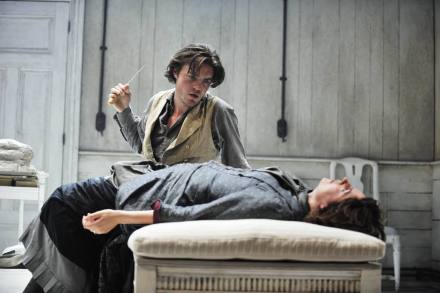
I couldn’t wait for this one. Nina Raine’s debut play Rabbit was a blast. With exquisite scalpel-work she dissected the romantic entanglements of a quartet of posh young professionals. Her new effort, Tribes, opens on similar terrain. A family of bourgeois Londoners are seated around the dinner table punishing each other with rhetorical flick-knives. Dad and Mum are writers. Ruth is a jobless soprano. Dan is wasting his youth smoking skunk and writing an impenetrable thesis on linguistics. I couldn’t wait for this one. Nina Raine’s debut play Rabbit was a blast. With exquisite scalpel-work she dissected the romantic entanglements of a quartet of posh young professionals. Her new effort, Tribes, opens on similar terrain.

Greek myth

Thank God for the critics. All failings can be laid at their door. Robert Lindsay appeared on a telly sofa last week to repudiate the shirtier reviews of Onassis. ‘It’s not a critic play,’ he said. And I wondered if ‘critic’ had changed grammatical species and become an adjective meaning ‘good’. The show has its moments but the script is devoid of dramatic intelligence. Proper plays open with a dilemma that enlists the audience’s sympathies, unifies the action and creates suspense. Plenty of options were available to playwright Martin Sherman. Would Onassis succeed in replacing Maria Callas with Jackie Kennedy? Would he destroy his son Alexander’s romance with an ageing English divorcee?

Bourgeois frippery

Regime change at Hampstead Theatre. The era of special measures is over and Ed Hall, son of Sir Peter, has taken charge. Hall’s debut show is daring in its complete lack of audacity. Regime change at Hampstead Theatre. The era of special measures is over and Ed Hall, son of Sir Peter, has taken charge. Hall’s debut show is daring in its complete lack of audacity. Shelagh Stephenson’s new play Enlightenment is the sort of bourgeois frippery we were used to yawning through under the previous administration. We’re in a posh house in Angstead Garden Suburb where two yuppie liberals are struggling to cope with the disappearance of their gap-year son in south-east Asia. Mum consults a psychic. Dad invites a TV producer to make a shock-doc highlighting their plight.

Short and sweet | 9 October 2010

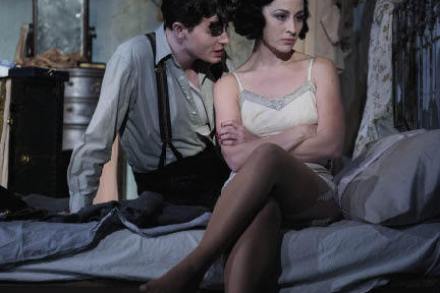
Who’s my favourite stage actress? Since you ask, Olivia Williams in Shakespeare and Nancy Carroll in anything. Who’s my favourite stage actress? Since you ask, Olivia Williams in Shakespeare and Nancy Carroll in anything. Currently, she’s starring in the weirdest show I’ve ever seen at the Almeida in Islington. Weird because it’s so predictable. The Almeida likes to attract the purists rather than the tourists and it seeks out half-forgotten masterpieces or wacky new experiments. If you want Carpathian tragedy or biblical mock-epic or Inuit slapstick, then the Almeida’s the place to look. A stage version of a David Mamet movie is positively abnormal by its standards.

Family Circle

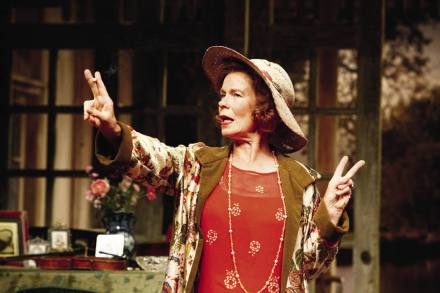
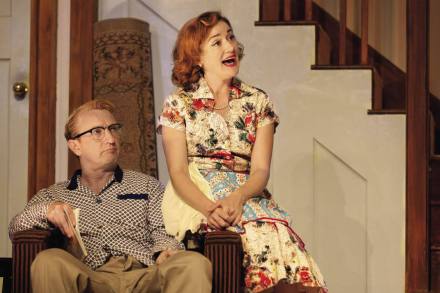
‘We’re a beastly family, and I hate us!’ laments Sorel Bliss in Hay Fever. And at first it seems all four Blisses share that sentiment. ‘We’re a beastly family, and I hate us!’ laments Sorel Bliss in Hay Fever. And at first it seems all four Blisses share that sentiment. Each has invited a guest to their house in Cookham, and appears to be hoping not just for a weekend of feverish passion but also for a permanent escape: as much from themselves as from the others. When the guests arrive, however, the Blisses taunt and ignore them by turns. As for feverish passion, it seems readily transferable.

Coalition wear and tear

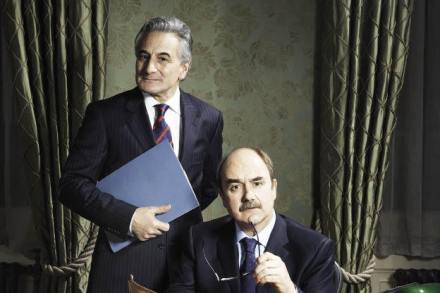
Let’s talk about Tucker. The Beeb’s mockumentary The Thick of It has been hailed as a brilliantly incisive glimpse into the corridors of power, and its diabolical protagonist, the scheming spin-merchant Malcolm Tucker, is regarded as a hilarious portrait of a modern political propagandist. That’s one view, anyway. Maybe I’ve got a blind spot. Maybe my sense of humour’s gone missing. Maybe I romanticise the ideals of public service because my mum and dad worked in Whitehall, but I’ve never understood the praise heaped on this cruel and distorted fantasy. It’s possible to overlook the relentless swearing, the vapid characterisation and the ever-predictable storylines.

Vexed issues

Clybourne Park Royal Court, until 2 October Tiny Kushner Tricycle, until 25 September Bash the bourgeoisie is a game the Royal Court likes playing and I’m always keen to join in. Bruce Norris, a brilliant American satirist, delighted us a few years back with The Pain and the Itch, a hilarious exposure of middle-class hypocrisy. Clybourne Park is a pair of plays set in a house in the prosperous Chicago suburbs. We start in the 1950s when black families are just arriving in the neighbourhood. We then fast-forward 60 years and see prosperous whites returning after decades of poverty and neglect. The earlier play feels very wonky. The dice are overloaded against the whites. As well as their black servants, they have a deaf friend and a kid next door with Down’s syndrome.

Send in the clowns

Counted? County Hall, until 22 May The Real Thing Old Vic, until 5 June Voting is so irrational as to qualify as an act of religious devotion. The process involves a fabulous confluence of approximations. Candidates offer a pattern of promises. Voters select the pattern that most closely meets their needs. And though there may be only the barest overlap between the needs and the promises, the voters maintain a belief that their choice carries influence even after it’s been diluted in the choices of millions of others. It’s a miracle anyone votes at all. A new verbatim play, Counted?, examines our attitudes towards the process.

Nightmare in Verona

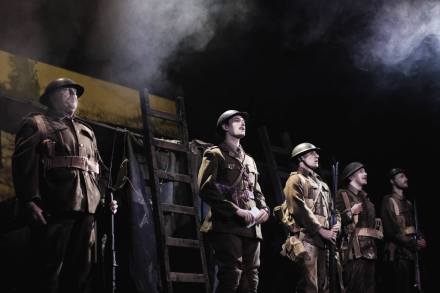
Romeo and Juliet Courtyard Theatre, Stratford-upon-Avon, in rep until 27 August Rupert Goold’s new staging of Romeo and Juliet will rocket you into a state of renewed excitement with the play. He returns to the RSC for the first time since conjuring Patrick Stewart as a magus of the frozen north in The Tempest (2006). Ever inventive as a directorial travel agent, Goold now transports the star-crossed lovers from the land where the lemon trees blossom into a Stygian underworld, illuminated by flickering flames, spurts of steam and sudden pyrotechnic eruptions. Why, this is hell, nor are the lovers out of it.

Liz Suggests

A few years ago I was given the Rough Guide to Shakespeare by Andrew Dickson. If you, like me, need to be reminded of the plot of some of Shakespeare’s plays it is an invaluable guide, giving a synopsis, a history of adaptations, further reading material and a list of filmed versions. And this summer the book has proved indispensable as there seems to be more than the usual number of Shakespeare plays being performed in London, the hot ticket being the Donmar West End’s Hamlet with Jude Law. All’s Well That Ends Well is at the National and has had great reviews (the Sunday Times called Marianne Elliott’s production ‘an irresistible blend of magic, psychological insight and moral judgment’).

Game’s up

Maggie’s End Shaw Death and the King’s Horseman Olivier Here’s an unexpected treat. An angry left-wing play crammed with excellent jokes. Ed Waugh and Trevor Wood’s lively bad-taste satire starts with Margaret Thatcher’s death. A populist New Labour Prime Minister rashly opts to grant her a state funeral which prompts a furious reaction in Labour’s northern heartlands. Former poll-tax rebel Leon Thomas organises a protest march to London intent on disrupting the ceremony and shaming the government. To complicate matters, Leon’s daughter Rosa is a rising Labour MP entangled with the super-smooth Home Secretary (with the slightly-too-clever name Neil Callaghan). In the opening scene Rosa is discovered tupping Callaghan on a parliamentary desk.

Verbal assault

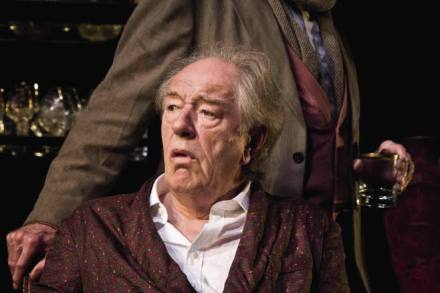
No Man’s Land Duke of York’s Mine Hampstead Slow, fractured, monumental, ineluctable, No Man’s Land lurches at you like a disintegrating ice shelf. The first act opens with two drunks staggering around a Hampstead mansion downing whisky and making oblique statements of self-revelation. Spooner, a broken-down poet, has been invited home by Hirst, a millionaire author on the verge of mental collapse. They appear to be strangers. When Hirst’s two manservants, Briggs and Foster, carry him off to bed they turn on Spooner and try to intimidate him. But Spooner has nothing to lose — ‘I have never been loved; from this I derive my strength’ — and brushes aside their menaces. Cut to the following morning. Spooner is unchanged, Hirst transformed.

Fun with Vermeer

Girl with a Pearl Earring Theatre Royal Haymarket Waste Almeida Creditors Donmar I don’t know much about art but I know what I dislike. Art history. It forces one to view paintings and sculpture through the medium of literature. Every word spoken in appreciation of art is a step away from true art appreciation, which is inevitably unconscious, illiterate, oblivious to itself. The more you know, the less you feel. Those who enjoy art understand these limitations and long for fresh ways to approach their pursuit. Soap opera provides a surprisingly satisfying point of entry and here’s the latest daub-drama, Girl with a Pearl Earring, a fictional narrative about Vermeer’s enigmatic portrait of sexy innocence.

First honk, then applaud

Turandot Hampstead Theatre Do You Know Where Your Daughter Is? Hackney Empire Eurobeat Novello Why the long wait? Brecht completed his last play, Turandot, in 1953 but only now does it receive its British premiere. This spirited, finely acted production provides the answer. The script is all wonky. Taken from the commedia dell’arte fable that inspired Puccini’s opera, this is a laborious political allegory about an impotent Chinese emperor, his spoiled eldest daughter and a rambling public conference that pitches two symbolic groups against one another, ‘the clothesmakers’, (standing for the Social Democrats), and ‘the clothesless’ (the Communists). The issues Brecht is examining are lost in the past and located two continents away.