Theatre

Under the rainbow

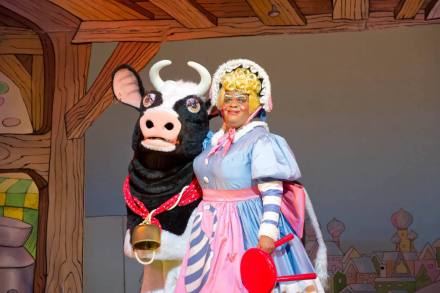
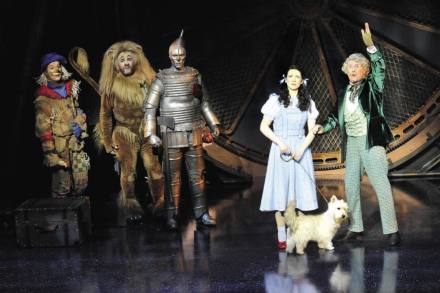
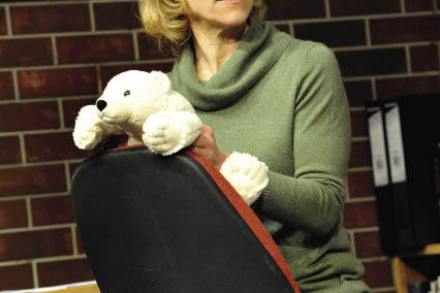
The pantomime, we’re often told, exists in no culture but Britain’s. Maybe we should look a bit harder. The Wizard of Oz is a children’s fantasy, epic in form, comic in idiom, populated by folksy stereotypes, which uses the metaphor of a journey to present a mythical clash between good and evil. It ends with order restored and virtue triumphant, and with the characters discovering that self-knowledge and wisdom are more valuable than the illusory contentments of wealth or power. All that’s missing is some bad acting and a few painfully ribald puns. The pantomime, we’re often told, exists in no culture but Britain’s. Maybe we should look a bit harder.
Eccentrics on parade

A young aristocrat and the daughter of a banished duke fall in love at a wrestling contest. Both are forced from court by family intrigue, and take refuge in the same enchanted forest. She recognises him, but not vice versa, since to avert assault she has disguised herself as a boy. Confusions ensue. Stephen Unwin’s production of As You Like It (at the Rose Theatre, Kingston, until 26 March) is hoppled from the start by an antipathetic Orlando. A few minutes into the play he charges across the stage and attacks his eldest brother violently from behind. We can only sympathise as Oliver (William Tapley) plots to have him killed by Duke Frederick’s prize wrestler.

Literary junkyard

We critics know everything about the theatre. We see the best shows, we get the finest seats in the house and we’re occasionally treated to a fuming glass of vin ordinaire to lubricate our ruminations. And yet what do we really know? We critics know everything about the theatre. We see the best shows, we get the finest seats in the house and we’re occasionally treated to a fuming glass of vin ordinaire to lubricate our ruminations. And yet what do we really know? Last week a family funeral forced me to miss the press night of Frankenstein and when I logged on to the NT website I found it proudly boasting that the entire run was a slam-dunk sell-out.

Flavour of freedom

Richard Bean is a creative nomad, a pix-and-mix sort of playwright who lights on subjects seemingly at random. He’s written about Brussels, racism, agriculture, social mobility and trawlermen. Now he’s taken on climate change and he’s hit the mark with delicious accuracy. This is his best play so far. The Heretic is set in a university earth-sciences faculty where Diane, a paleogeophysicist, has found incontestable proof that sea levels aren’t rising. A decade ago she planted a betel nut tree on a beach in the allegedly drowning Maldives. But instead of sinking, the tree is thriving. Her departmental head, Kevin, tells her that her findings may damage the faculty’s ‘business model’ and endanger a juicy contract with a top firm of eco-insurers.

Let’s twist again

An elderly stranger on a Jamaican train bets a young US Navy cadet that his lighter won’t light ten times in a row. If it does, the stranger’s Cadillac is his. If not, he forfeits the little finger of his left hand. The cadet accepts. Wouldn’t you? An elderly stranger on a Jamaican train bets a young US Navy cadet that his lighter won’t light ten times in a row. If it does, the stranger’s Cadillac is his. If not, he forfeits the little finger of his left hand. The cadet accepts. Wouldn’t you? Dr Landy offers a philosopher friend the chance of a lifetime: to live on as a brain, and one dangling eyeball, floating in a basin of nutritive solution. ‘It would be a tremendous experience!’ he says. For all I know, he’s right.

Cult of fear

Forty years ago kids assumed that when they grew up they’d fly to Mars. They didn’t expect to find a world that was too scared to turn on a lightbulb. Forty years ago kids assumed that when they grew up they’d fly to Mars. They didn’t expect to find a world that was too scared to turn on a lightbulb. Our timidity owes itself to the failure of science to devise impressive new large-scale pieces of kit. Every breakthrough these days takes place at the micro, nano and millimetric level, while up at the mega end nothing new has appeared since the jet. Space rockets are just a refinement of ballistics technology. Apollo 11 was a firework. The Shuttle is a reuseable firework. And even that seems to have run out of gunpowder.

Educating Rachel

The teeny-weeny Bush Theatre is grappling with the monster of the free schools debate. In Little Platoons by Steve Waters the issues are laid out rather simplistically, naively even, which is perhaps just as well with undereducated dimwits from London comps, like me, in the audience. The pivotal character is a disaffected music teacher, Rachel, who rabidly opposes the free school movement until she’s offered the headship of a zingy new academy whereupon, hey presto, her scepticism morphs into passionate support. Waters claims to be moderating the discussion as a disinterested umpire but his impartiality is, shall we say, only partial.

Trouble at home

The Almeida relishes its specialist status. The boss, Michael Attenborough, isn’t keen on celebrity casting because he wants ‘the theatre to be the star’. It’s a niche operation for purists and connoisseurs, for seekers and searchers, and for those who can spell Verfremdungseffekt without having to check (as I just had to) what the penultimate letter is. We’re privileged to have a theatre in London that wants to raise the bar rather than the bar prices. The Almeida relishes its specialist status. The boss, Michael Attenborough, isn’t keen on celebrity casting because he wants ‘the theatre to be the star’.

Losing the plot

An all-Hall haul this week. Sir Peter directs his daughter Rebecca in Twelfth Night at the National. This traditional and very fetching production opens in a sort of Elizabethan rock-star mansion where Orsino (Marton Csokas) lounges on a carved throne, in Lemmy locks and Ozzy cape, intoning the play’s gorgeous opening lyrics. Then the plot begins. There’s a she who dresses as a he and falls in love with another he who sends her to another she who loves the she who’s dressed as a he. Did you follow that? Don’t worry. Later, up pops another he who’s identical to the first she and they all get married. The audience is rarely at ease with any of this.

Non-stop larks

Gently does it. The Fitzrovia Radio Hour takes us back to the droll and elegant world of light entertainment in the 1940s when the airwaves were full of racy detective shows and overheated melodramas about pushy Yorkshiremen and rogue Nazis. The show is set in a radio studio during a live performance and we watch the actors rattling through their scripts while scurrying here and there to provide the effects for an exceptionally complex soundtrack. Cabbages get walloped with machetes to suggest stabbing. A game of billiards is done with some doorknobs being chinked together. A melon gets squished to represent the sound of a horse having its head chopped off. It’s a neat idea.

Going for gold

There’s gold out there. The search for lost masterpieces beguiles many a theatrical impresario but with it comes the danger that the thrill of the chase may convert a spirit of honest exploration into an obtuse reverence for the quarry. There’s gold out there. The search for lost masterpieces beguiles many a theatrical impresario but with it comes the danger that the thrill of the chase may convert a spirit of honest exploration into an obtuse reverence for the quarry. The huntsman starts to believe that neglect proves excellence. Sturdy Beggars, an independent troupe who accept no public subsidy, are mounting a season of ‘forgotten gems’ from Eastern Europe.

Twin peaks

It’s that time of year. The great reckoning is upon us. Insurance is being renewed. Tax returns are being ferreted out. Roofing jobs are being appraised and budgeted for. And spouses are being trundled into central London for the annual session of dialysis at the theatre. It’s that time of year. The great reckoning is upon us. Insurance is being renewed. Tax returns are being ferreted out. Roofing jobs are being appraised and budgeted for. And spouses are being trundled into central London for the annual session of dialysis at the theatre. And here to meet them is Ayckbourn’s yuletide comedy Seasons Greetings, which features three hilariously miserable families bickering their way through the festival of ill-will. Ayckbourn is the Christmas blow-out of dramatists.

Classy act

Michael Grandage, boss of the Donmar, is a most unusual director. He has no ideas. His rivals go in for party-theme, concept-album, pop-video Shakespeare (provincial folksiness in metropolitan disguise), but Grandage just goes in for Shakespeare. He arrives with no prejudices or pieties, only solutions. He’s the bard’s delivery boy. His current production of King Lear sweeps the stage clean of the usual Ozzy Osbourne clutter and reduces the inventory to just three items, a map, a chair and a pillory for Kent. Nothing else. This daring austerity opens things up and allows the mysterious, grotesque, lurching and inscrutable play to do its best and worst, to charm, horrify, move and appal us. There is nothing Grandage won’t consider omitting.

All over the place

Deceptively attractive. Romeo and Juliet tempts directors and leads them on while keeping all its false doors and secret pitfalls out of view. Rupert Goold’s RSC production is two fifths good and three fifths indifferent. A respectable score. This lovely, tricky and rather silly play isn’t the work of a genius but of a jobbing apprentice with a careless, or perhaps ambitious, sense of what could be managed on stage. Goold adds a spot of extra bother here and there, overusing the balcony, bunging Arabic music into the masque ball, and botching the costumes. Spectacular irrelevance seems to be his guiding principle. The street brawls are enlivened by whooshes of flame surging up from beneath the boards like an oil-rig blow-out.

Flawed curiosity

His brain clouded with opium fumes, Jean Cocteau wrote Les Parents Terribles in just one week. It opens like a Greek tragedy crossed with a madcap sitcom. The ageing beauty Yvonne prances around her Bohemian apartment pining and weeping for her son, Michael, who has gone missing. When he turns up safe and sound, she throws herself into ecstasies of relief, leads him to the chaise-longue and showers his face and lips with kisses. He then breaks the news that he’s in love with a typist. She reacts like a cobra touched with a cattle prod. Spitting with anger she denounces the ‘lying hussy’, and vows never to let an intruder steal away her happiness and leave her to die neglected and unloved.

Child abuse

Christmas approaches. And kitchens and playrooms across the land resound with the joyous tinkle of little Josephs and Marys rehearsing their roles in the Nativity play. My four-year-old son, making his debut in a farmyard cameo, has just one line, ‘I’m a donkey and I’m very tired,’ which he repeats endlessly to the delight of his beaming dad. So I can only imagine the levels of pride surging through the families of Ciara Southwood and Madison Lygo as they prepared for the lead roles of Mimi and Janey in the Royal Court’s new play Kin, which is set in a girls’ prep school. The homes of these lucky ten-year-old actresses will have echoed with the play’s exquisitely turned dialogue. ‘Lazy shit,’ says Janey.

No laughing matter

The Nobel prize is nothing. The real badge of literary greatness is the addition of the ‘esque’ suffix to one’s name and, if you’re truly outstanding, the word ‘nightmare’, too. Franz Kafka manages this distinguished double, although some readers find the connotations of horror arise not so much from his totalitarian dystopias as from his prose. But it’s best to approach Kafka with an open mind. The Nobel prize is nothing. The real badge of literary greatness is the addition of the ‘esque’ suffix to one’s name and, if you’re truly outstanding, the word ‘nightmare’, too.

Too much chat

Ed Hall, boss of the Hampstead theatre, places before our consideration a new play by Athol Fugard. The gong-grabbing, apartheid-drubbing South African author creates dramas that are rich in humanity and compassion, filled with curiosity about the architecture of suffering, and distinguished by flights of poetic soulfulness. And by God, they’re dull. Fugard doesn’t do action, romance or suspense. He does chat. Lots of it. His monologues stream in and out of one another in a textured gloop of Oscar-hinting earnestness. Generally, he deploys the same easy-to-assemble stage furniture: a shack dumped on the orange savannah surrounded by poverty-stricken fences. The shack can be assembled from the contents of a skip. The fencing can be cadged from nearby allotments.

Curing amnesia

As Iraq fades from view so does our outrage at the crimes it provoked. Three monologues by Judith Thompson may cure our amnesia. Forgetting atrocities is an essential preliminary to repeating them. We meet a girl soldier (based on Lynndie England although not identified as her), who faces trial for brutalising prisoners at Abu Ghraib. At school she was a bullied bully, an opportunistic sadist who instigated attacks on others as a survival mechanism. Once she invited a girl with a false leg to a house-party where a gang removed the prosthetic limb, cut it to pieces, and jeeringly ordered the girl to crawl home. At Abu Ghraib, this self-defence technique serves her again, and she strives to impress the male soldiers by devising pantomime humiliations.

Interview: Rachael Stirling – happy with her lot

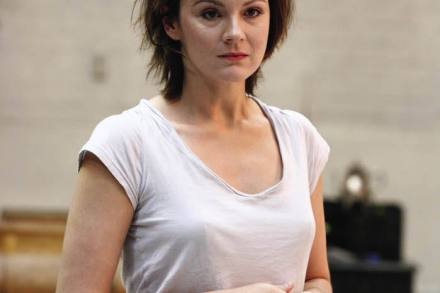
It’s noisy here in the bar at the Old Vic; the air is teeming with thespy gossip and laughter and clinking glasses. It’s noisy here in the bar at the Old Vic; the air is teeming with thespy gossip and laughter and clinking glasses. I’m sitting in a corner with the actress Rachael Stirling, who is drinking white wine and talking about her new play, An Ideal Husband. Luckily, Rachael has that actress’s knack for projecting her voice without shouting. I can hear her clearly above the din. She has a very fine voice, in fact, smooth and husky at the same time. She sounds like a public schoolgirl who has smoked too many cigarettes. Rachael is excited after a long day of rehearsals. Taking a script from her handbag, she thumbs through it impatiently.