The Spectator's Notes

Why Liz Truss’s political journey matters

As is now well known, Liz Truss has travelled politically. Her parents are left-wing, and there is a photograph of her as a child posing with them and their CND banner in Paisley. She herself was active in the Liberal Democrats. Professor Truss is reportedly upset that his daughter became a Conservative. I can identify with this story a little since both my parents were/are (my mother is still alive) ardent Liberals and I fear my own move to the right – though never really a party-political thing – upset them. Parents tend to be more upset by children moving to their right than to their left. This is because non-conservative politics is pseudo-religious. It sees political allegiance as a test of virtue and political programmes as means of salvation.

Trimble may prove to be Unionism’s last statesman

David Trimble, who has just died, has rightly been praised for his courage. History may prove him to have been Unionism’s last statesman. But the well-known people who sincerely eulogised him this week – Tony Blair, Bill Clinton, Jonathan Powell – all helped end his career. There are many good things to be said for the Belfast Agreement, and no one said them better than David, but it achieved at least one big, bad thing: it undermined moderation in Ulster politics. By persuading Trimble to move so far, Blair and co separated him from his political roots. This broke Trimble’s Unionists and empowered the much more sectarian followers of Ian Paisley.

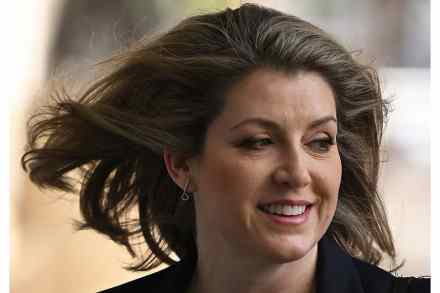
Who can read Penny Mordaunt?

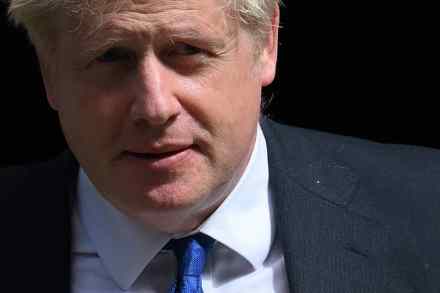
Whitehall is telling ministers that this is a ‘caretaker’ government and so, by convention, cannot take decisions. This is not correct. A caretaker government is one in which an acting prime minister is in charge following a resignation. But Boris has not resigned: he has merely said that he will resign once his party has chosen a new leader. Until then, he remains Prime Minister. Obviously it would be wrong for him to introduce policy changes which would commit his successor, but officials should not twist convention to prevent ministers from using their usual discretionary powers in individual cases. This bogus invocation of propriety is related, I think, to the anti-Boris rhetoric which implies that his continuation in office is unethical. In fact, it is customary.

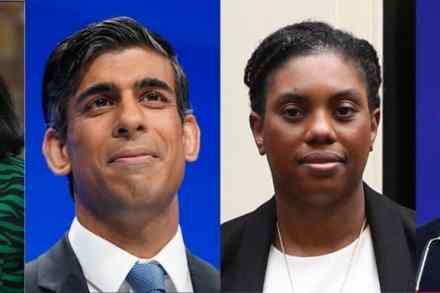
The triumph of ethnic-minority Tories

If you had said, even ten years ago, that there was no chance of a white male cabinet minister becoming the next Conservative leader, you would have been greeted with incredulity. Yet it is so today. And it is good, because the change has happened on merit. When the Conservatives began advancing ethnic-minority candidates under David Cameron, I feared it would be tokenistic. One such appointment was making Sayeeda Warsi party co-chairman, only for her to preach about Muslim victimhood; but in general the doors to new talent were opened. I am not sure Cameron got quite what he bargained for, however, because the new entry could loosely be called right-wing.

Thatcher and Boris: the problems of downfall

Few leaders could be as different in character as Margaret Thatcher and Boris Johnson, but one can compare their predicaments when colleagues turned on them. Both had large parliamentary majorities and were never defeated in any election they led, yet both faced internal coups. In both cases, there were/are good reasons why colleagues were fed up with their leaders. What was true in Mrs Thatcher’s case, however, and may well apply in Boris’s if he does go, is that her political assassination caused remorse, and immense, lasting division. As John Major understood and Michael Heseltine did not foresee, remorseful MPs tend to turn on the chief assassin and favour, almost paradoxically, the successor candidate who seems loyal to the ousted leader.

Who monitors the moralists?

If anyone was suitable to be the Prime Minister’s adviser on ministerial interests, it was Lord Geidt. Self-effacing, professional, unself-righteous but thoroughly proper, he could be relied on to do his job without an eye to attracting headlines, gaining Remainer revenge and similar modern temptations to which some officials succumb. Yet last week he resigned. It seems a good moment to ask whether the job is doable. Many will say that it isn’t, and blame Boris Johnson. It is undoubtedly true that any system based on rules comes under strain when confronted with Boris’s work methods. Last week, a horse called Etonian ran at Ascot. A newspaper reported that he was ‘evidently hard to train after his smart juvenile days’. That sums up the Boris problem.

Why neither Andrew Neil nor I can be part of the Establishment

Even before the ECHR injunction, the bishops had issued their anathema. All 25 of them in the House of Lords told the Times that flying asylum-seekers to accommodation in Rwanda ‘should shame us a nation’. I can see reasonable objections to the policy, but is it really a source of shame? Most countries try to check the flow of refugees and most voters agree. They pay other countries to help them do this. In 2020, Turkey contained about four million refugees from Syria. It is still being paid by the EU to keep most of them out of the EU. The housing Britain is funding in Rwanda looks (though one must lay off for propaganda) like proper permanent buildings, much more pleasant than refugee camps. If we had called it development aid, the bishops might even have praised it.

Boris’s cheerers will feel cheated if he goes

It was reported gleefully that Boris Johnson was booed as he entered St Paul’s Cathedral for the Jubilee Thanksgiving service last Friday. This was true but – as the BBC did add, though sotto voce – he was also cheered. Listening to the recording, I thought the cheers were a bit louder than the boos, but obviously neither has any statistical significance. What the mixture may indicate, however, is a problem which will arise if – which is likely, but by no means certain – he does have to leave office in the coming months following his weak victory in the no-confidence vote. The cheerers will feel cheated. The myth will develop that the duly elected Boris was destroyed by the establishment.

Monarchy is the guarantor of democracy

Like many people who do not share his views, I have felt intermittent admiration for Peter Tatchell over the past 40 years. He has often been brave, and when I have met him, I found him open and friendly, as is often the way with cranks (e.g. Tony Benn). As the Platinum Jubilee approaches, however, I have gone off him. Last month, the Peter Tatchell Foundation (there’s posh) issued a press release headed: ‘Queen’s Platinum Jubilee invite declined by Peter Tatchell: Monarchy is not compatible with democracy. The Queen has snubbed the LGBT+ community for 70 years.’ He was turning down a role in the finale of Sunday’s Jubilee pageant which will celebrate him as one of our ‘national treasures’.

The endless tiny errors of the NHS

I wrote recently elsewhere about Jeremy Hunt’s good new book examining unnecessary deaths in the NHS. Someone should write a companion volume about the other end of the scale of seriousness – the literally millions of small mistakes and obstructions effected by ‘the envy of the world’. Since 2014, I have found myself in hospitals many times, though never as a patient. Four close family relations or in-laws have died in hospital in that time, and several living members of my family have received various treatments. This has involved, I think, eight NHS hospitals and dozens of visits. In only one case has a major misdiagnosis contributed to otherwise avoidable death, but almost every encounter has been strewn with error or delay.

How not to level up parliament

Justified relief that soldiers are now coming out of the Azovstal steelworks alive is accompanied by anxiety about what might happen next. The day before the news broke, I was talking on WhatsApp to Daniel Detcom, a Ukrainian territorial reservist (in normal life, a disc jockey), currently on active service in Mykolaiv. He told me that the Azovstal issue was producing disagreement among Ukrainians. Those fighting in the steel plant were mostly more nationalist than President Zelensky. Some people suspected him of not striving hard enough to help them, because they might be better for him as ‘dead heroes’ than as active participants in a future Ukraine.

Prince Charles and a living history lesson

When I was a lobby journalist, I never went to the State Opening of Parliament. I much regret it, because when I finally went this week, as a peer, there was no Queen. The printed programme on our seats described itself as ‘The ceremonial to be observed at the Opening of Parliament by Her Majesty The Queen’, but in fact the Prince of Wales stood, or rather, sat in, because of his mother’s ‘mobility issues’. He read well, sticking to her understanding that to give any expressiveness to the Queen’s Speech would be to verge on constitutional impropriety. Imagine how inappropriate it would have been, for example, if the phrase ‘Her Majesty’s Government will level up’ had been uttered with any hint of enthusiasm.

The truth about Roe vs Wade

As we get back into Roe vs Wade, prompted by the leak of what is said to be the US Supreme Court’s draft decision to throw out that famous judgment, prepare for an avalanche of misinformation. On BBC Radio 4 on Tuesday, the news said that the court’s 1973 decision had ‘legalised abortion’. Not so. Abortion had long been legal in many states of the Union. But until the judgment, different states had been free to adopt different policies. Roe vs Wade decided that within the 14th Amendment to the Constitution and its implied right to privacy lay a constitutional right to abortion and that the amendment’s ‘due process’ clause prevented any state from abridging that right.

Putin’s argument is blood

My friend, the novelist Alan Judd, emails with the right quotation for those who argue that Putin should be given an ‘off-ramp’. It is from Henry V: ‘How can they charitably dispose of any thing when blood is their argument?’ It really is Putin’s argument. I have been studying an astonishing piece from RIA Novosti, the official Russian news agency, earlier this month, called ‘What Russia should do with Ukraine’. Barbarously written (or possibly barbarously translated), and barbarous in thought, it is about the need to extirpate every ‘Nazi – read Ukrainian –’.

The case against a European army

The end of the Cold War was used by the victors to unite Germany. To balance this, Europhiles created a single currency which, by replacing the deutschmark, would ‘hold Germany down’. The reverse occurred. The euro made Germany the most important power in the European Union, and so it remains. Today, the same Europhiles want to use the rebirth of the Cold War to encourage Germany to re-arm. To balance this, they want to create a truly ‘European’ defence, of which Germany would be a vital part. The EU would prevent Germany from using its force for national needs. For this purpose, they say, Nato would be no good because it is intergovernmental.

Spies shouldn’t be political

Now that events in Ukraine are restoring a sense of proportion about the difference between aggressive autocracies and free countries, it seems almost incredible that, only last year, sporting teams etc were all but compelled to ‘take the knee’ in deference to Black Lives Matter. One official prominent in this obeisance (metaphorical not literal in his case) was Sir Stephen Lovegrove. As Permanent Secretary at the Ministry of Defence, he emailed staff in the wake of George Floyd’s murder in May 2020, using the BLM hashtag, and castigating the racism of his own department.

What would have happened in the Falklands if Thatcher had been a man?

Argentina invaded the Falkland Islands 40 years ago. I had joined the Daily Telegraph as a reporter in 1979 and was by then a leader writer. The Falklands was the first really seismic story I had encountered. What made it so exciting was that it was both genuinely absurd and genuinely important. The absurdity lay in Argentina’s vainglory. It violently claimed a right to the islands which not one single Falklands resident accepted. Its caudillo, General Galtieri, was from the comic-opera school of Latin American dictators, covered with gold braid and frequently drunk. In his invasion broadcast, he invoked the Virgin Mary. But Our Lady wisely ducked the contest, leaving the Iron Lady to sort it out.

The West needs to spread doubt and fear

Zakhar Prilepin is a well-known novelist in Russia and an ultra-nationalist warrior in Donbas. Once a member of the National Bolshevik party (yes, the left/right implications of its name are as bad as they sound), he is now a strong Putin supporter. He appeared on Russian state TV last Sunday to emphasise that the Russians should not try to appear nice and humane to the West (not a clear and present danger, one would have thought). Prilepin argued that Russia’s approach should be as harsh as possible: ‘If they [the West] are seriously afraid of the conflict with Russia, of WWIII, of nuclear war or the escalation of the conflict, we should be convincing them that we’re ready for it, that we love it, that we like to make war.’ I regret to say he is completely right.

Is Putin really losing?

I remember my father telling me about Imre Nagy’s final broadcast before the Hungarian leader was taken by the Russians after they crushed his revolution in November 1956. He recalled listening as Nagy’s voice, often faint, came in and out of reception. He said: ‘This fight is the fight for freedom by the Hungarian people against the Russian intervention, and it is possible that I shall only be able to stay at my post for one or two hours. The whole world will see how the Russian armed forces, contrary to all treaties and conventions, are crushing the resistance of the Hungarian people.

Putin is bad, not mad

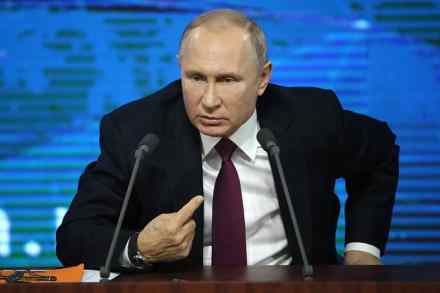
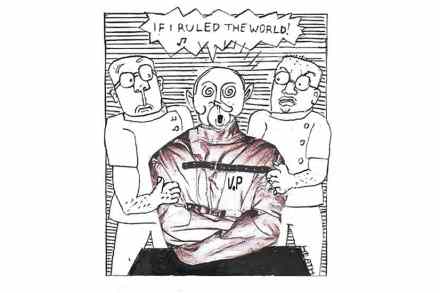
I wish people would not say Vladimir Putin is mad. One understands him much better if one says he is bad. In some ultimate sense, evil is a form of madness because it brings destruction to its perpetrators as well as its victims, but Putin is not mad in the ordinary sense of the word. He knows what he is doing. The value of saying something like ‘He would happily murder every single Ukrainian if it served his purpose’ is not to express one’s anger and disapproval (both of which should be obvious) but to shed light on his attitude of mind. Given that he is such a person and his purpose is the re-creation of the Russian empire, the western allies cloud their own minds by seeking a conventional diplomatic path.