The Spectator's Notes

Will Keir Starmer condemn Greenpeace?

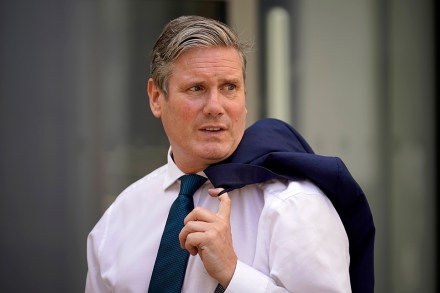
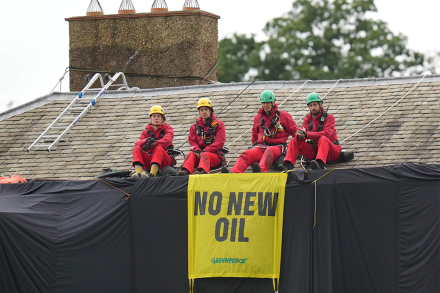
Sir Keir Starmer’s piece in the Times on Monday was presumably constructed round the front-page headline Labour wanted – ‘Just Stop Oil tactics are contemptible, says Starmer’. Behind the headline, and therefore unnoticed, was his argument that the Tories are wrong to allow new drilling for oil and gas in the North Sea, and Labour is right to allow only old drilling. This wedge between the two main parties is relatively trivial, since both are still committed to getting rid of all new petrol and diesel cars by 2030 and therefore on course to create what Sir Keir, speaking of Just Stop Oil, calls ‘chaos for working people’.  Will Sir Keir also condemn Greenpeace’s invasion of Rishi Sunak’s house in Yorkshire last week?
In praise of Barbie

For the last time, on Saturday, I stuck the head of the late Queen, without a barcode, on an envelope and posted it. I have kept the two remaining stamps of my sheet as souvenirs. Stamps survive, of course, under the new King, but they are gradually becoming like cash – marginal and out of date. The letter is no longer a primary means of communication, just as notes and coin are no longer the primary means of purchase. I wonder how these changes will affect our view of monarchy. The head of the monarch, unnamed, has been the daily sight of virtually every citizen since the Penny Black arrived in 1840. The head of a monarch on coins, similarly visible to all, is more than two millennia old.

Coutts has forgotten what the job of a bank is

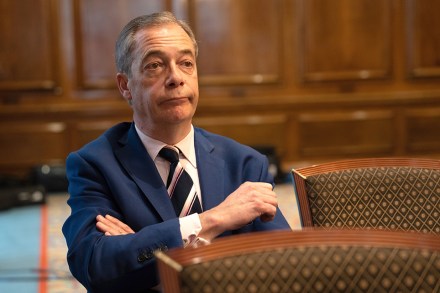
We now have a reluctant apology from Dame Alison Rose, followed by her even more reluctant resignation. Her departure is a major achievement, but the reluctance is a symptom of the problem. How could she possibly have thought she could stay after she was caught breaking a client’s confidentiality and spreading untruths about him (untruths which the BBC checked with her before publishing)? How could her chairman, Sir Howard Davies, have possibly thought that she could? And still we have nothing from Coutts, the bank that tried to trash Nigel Farage in the first place. Coutts is a B Corp, meaning a corporation which signs up to the commandments of current virtues, such as sustainability and inclusion.

The remarkable story of how Justin Welby discovered the truth about his father

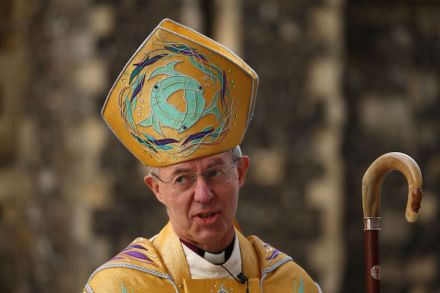
Jane Portal, as she was when she worked for Winston Churchill, died last week, aged 93. Lady Williams of Elvel, as she much later became, had an extraordinary life. I encountered her story by chance. In 2015, near us in Sussex, I was told that ‘of course’ (people love saying that when telling you a surprise) Jane Williams’s son, Justin Welby, the Archbishop of Canterbury, was not the offspring of Gavin Welby, as the Archbishop believed, but of Sir Anthony Montague Browne, Churchill’s last private secretary. Of course he wasn’t, I said. I made further inquiries, however, and saw letters and heard testimony which began to persuade me. I also noticed that, when the Archbishop took off his spectacles, he did look remarkably like Montague Browne.

The BBC and a 21st-century media madness

The story of the famous BBC television presenter who, at the time of writing, has still not been named, has all the elements of 21st-century-media madness – something allegedly sexual which may or not involve a person too young for such things; a desperate hue and cry to see who will dare to name the accused first; anonymous accusers; a clash between strong legal rules about the accused’s anonymity and the strong social media custom of ignoring them; a confusion as to whether the ‘victim’ is a victim or whether he/she even believes he/she is a victim; gabby lawyers; the Sun; an angry mum; a stepfather; ‘fresh allegations’; a ‘concerned’ government which does not exactly know what it is concerned about; show-off MPs who want to use parliamentary privilege to name the ac.

We’re finding out the price of net zero

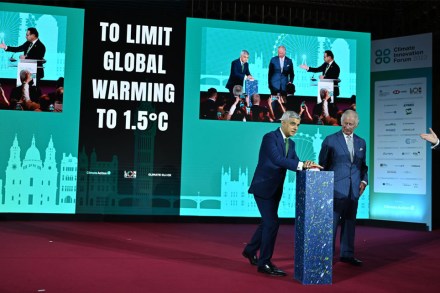
Now that the cost of net zero has become a pressing political matter, I have been re-reading the prescient words of Matt Ridley in the House of Lords when, in 2019, he was one of very few who opposed the government’s ‘net zero by 2050’ pledge. ‘I was genuinely shocked,’ he said, ‘by the casual way in which the other place [the Commons] nodded through this statutory instrument, committing future generations to vast expenditure to achieve a goal that we have no idea how to reach technologically without ruining the British economy and the British landscape. We are assured without any evidence that this measure will have, “no significant… impact on business” – but where is the cost-benefit analysis on which this claim is based? Where is the impact assessment?

I feel sorry for Nadine Dorries

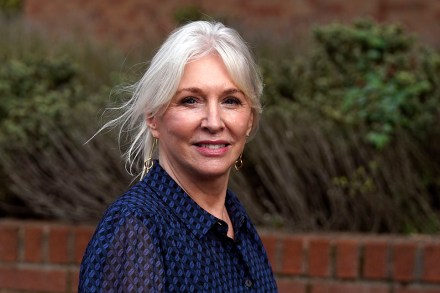
When Boris Johnson’s resignation from parliament was announced, we were in the audience for Glyndebourne’s production of Don Giovanni. Controversially, this includes a vast cake which is part of the bacchanals and then reappears, in rotting form, as the statue of the Commendatore approaches to take the antihero to his eternal damnation. Don Giovanni sprawls in the gap left by the removal of a giant slice, cramming putrescent crumbs into his mouth and necking a bottle. The news must have given great satisfaction to the director because the production’s take on the opera is, as the programme knowingly explains, the problem of ‘trying to have your cake and eat it’. Don G equals Boris. Mozart himself was against Brexit!

Why Russia blew up the Kakhovka dam

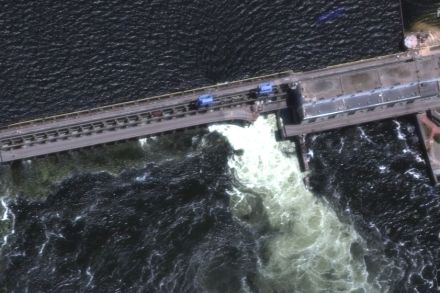
When I first heard that the Russians had blown up the Kakhovka dam, I assumed that this was an effective tactic to frustrate the Ukrainian counteroffensive. It will surely slow it. But a Ukrainian friend raises an additional possibility – that these are the scorched-earth tactics the Germans used in much the same places 80 years ago. Writing from Kyiv, she quotes a letter from Himmler to the SS commander in Ukraine in September 1943: ‘It is necessary to make sure that when retreating from Ukraine, not a single person, not a single animal, not a single gram of grain, not a single metre of railway track is there, so that not a single house survives… The enemy must be a totally burned and devastated country.

A dispatch from Ukraine

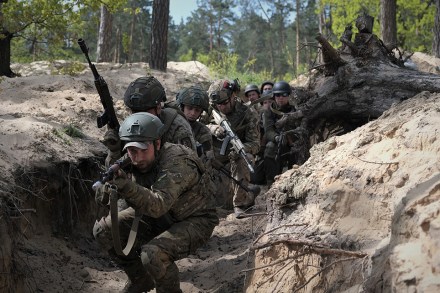
Last week, I visited Ukraine – Lviv, Kyiv, Kharkiv, Kramatorsk. Impressions crowded in. Here are a few: Air-raid sirens sound every night at present. Almost no one goes to the shelters until actual explosions start. It is the repeated disturbance of sleep, more than risk of death, which frays people’s nerves. And not only people’s. A woman I met for breakfast brought along her poor toy poodle, frightened after a noisy night. Courage is visible in so many one meets; but a notable branch of it is those who admit they are scared of fighting. I met two such men, so far not summoned. Both have family responsibilities and do valuable work for their country and yet, they tell me, they feel ashamed. A friend showed me the result of his online Airbnb searches in Kharkiv.

The power of Penny Mordaunt

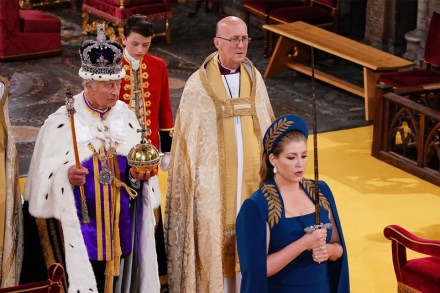
The police have said sorry for arresting anti-monarchy protestors under the wrong legal rubric on Coronation Day, but is that really a lead news story, as it was on Tuesday’s Today programme? If the police had failed to contain the mini-mob and a couple of them had, as they intended, obstructed the processional route, there would have been a huge and justified outcry. Coverage like that of Today makes no allowance for the fact that these protestors are not ordinary citizens. Protest is their full-time job, as is making a monkey of the law. Every week, I receive notice in my inbox of protests by this coalition of organisations which explicitly promises trouble. As I write, I am looking at one which says, ‘Animal Rising Declares Intention To Disrupt The Derby Festival’.

What do we expect of a modern king?

Perhaps we have not focused enough on the fact that we are crowning a king, rather than a queen, as monarch. It is nearly 90 years since this last happened, so no one alive today has an adult memory of what was expected. There is a further difficulty, in that the coronation of Charles III occurs in circumstances almost diametrically different from those of the coronation of George VI. In 1937, what was happening had not been foreseen before December of the previous year. It was Edward VIII’s coronation that everyone had been expecting, and although those in the know were aware of Edward’s inadequacies, these had been kept from a public most of whom found him very glamorous. With the shock of Edward’s abdication came the arrival of the shy Duke of York, George VI.

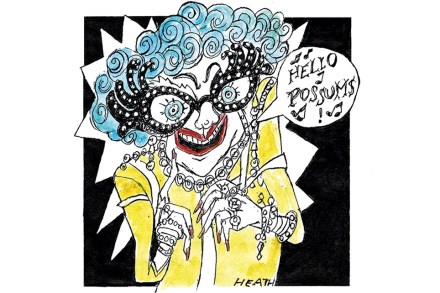
Dame Edna’s elusive origins

On 25 October last year, Thérèse Coffey became Defra Secretary. On 2 November, Sir James Dyson wrote to her. The famed inventor, who is the biggest owner and active farmer of agricultural land in Britain, outlined the problems of producing food sustainably and profitably, inviting her to visit one of his farms and meet him. No reply. A week later, Sir James’s office contacted Ms Coffey’s office and were assured her reply would be sought. None came. On 8 February this year, his office tried again. Two days later, her special adviser told the Dyson team that the original letter had been lost. Sir James re-sent it. On 24 February, having received no reply, his office checked once more. Ministers would review the draft reply next week, they were told.

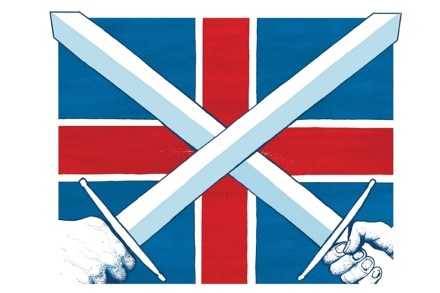
The common cause of Scottish Unionism

Although it cannot be stated publicly, Labour and the Conservatives have much common cause in Scotland now. They won’t stand down in each other’s favour at the next election; but expect ‘paper’ candidates in constituencies where one is much stronger than the other and the Nationalist is vulnerable. Wavering SNP supporters can be divided into welfare drones (who have benefited under the SNP to the detriment of spending on health and schools), and ‘tartan Tories’, social conservatives who hoped that Kate Forbes would be SNP leader. Labour courts the former, the Tories the latter. Both parties pray that Humza Yousaf, the new First Minister, remains in office. He is the gift that keeps on giving.

The apotheosis of Starmerism

To celebrate this week’s 25th anniversary of the Good Friday Agreement, the European Movement has launched a ‘powerful intergenerational film’ which, it says, ‘exposes Brexit as the biggest threat to peace since the 1994 ceasefire’. The film contains ‘true stories of how… Europe’s mission, commitment and hope for a peaceful future transformed Northern Ireland, changed the course of history and inspired the world’. Not a lot of people know that. Even fewer know that ‘the only organisation with the courage and commitment to… win the Battle for the Soul of our Country – is the European Movement.’ Mere raving? Such thoughts are not a million miles from EU/US orthodoxy.

Why Tony Blair was a Christian

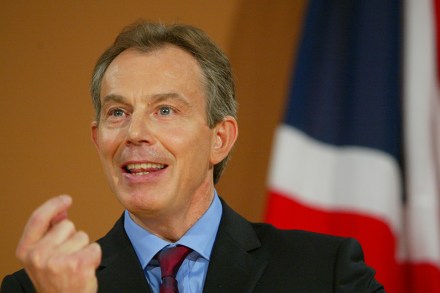
Easter Monday marks the 25th anniversary of the Good Friday Agreement. One of the most interesting things ever written by its most famous architect, Tony Blair, appeared (in the Sunday Telegraph) at Easter 1996, two years earlier. The piece, largely devoid of his vague boosterism, suggested he had thought about his subject. Under the title, ‘Why I am a Christian’, Blair wrote of Pontius Pilate: ‘The intriguing thing… is the degree to which he tried to do the good thing rather than the bad. He commands our moral attention not because he was a bad man but because he was so nearly a good man. One can imagine him agonising, seeing that Jesus had done nothing wrong, and wishing to release him.

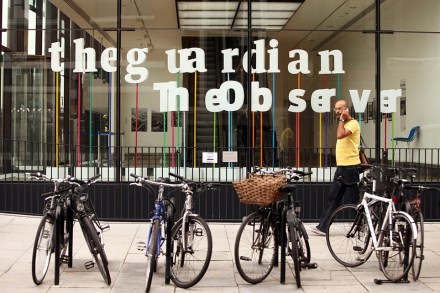
The Guardian’s slavery dilemma

When you read the Guardian free online, a yellow notice appears asking you for money (‘Will you invest in the Guardian?’) to support its fearless journalism. But now arises a donor’s dilemma. After two years’ work, the paper has just produced a full report on and apology from its current owner for its founders’ involvement in slavery. The historian David Olusoga, part of the project, says that what the Guardian owes the descendants of slavery for this is ‘an unpayable debt’. The paper is attempting to pay it, however, setting aside £10 million for the purpose of restorative justice over ten years. So for the conscientious Guardian reader (is there any other kind?

Ofsted’s zealous overreach

Obviously it is not the fault of Ofsted that a headteacher, Ruth Perry, killed herself after her school, formerly rated ‘outstanding’, was downgraded to ‘inadequate’ by its inspectors. Suicide is, by definition, the decision of the person committing it. It is also true that second-rate schools and teaching unions detest inspections precisely because they keep them up to the mark. Nevertheless, Ofsted does need to think carefully about the impact of that word ‘inadequate’ when linked, as it was in the case of Ms Perry’s school, with another word, ‘safeguarding’. I saw what happened when the same charge was laid against Ampleforth College. ‘Safeguarding’ is a word that contains many things.

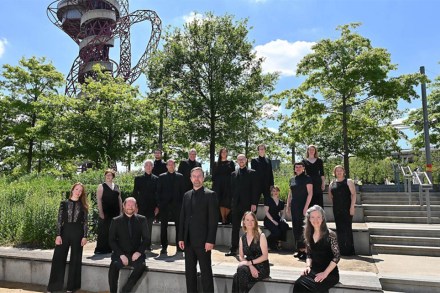
Speak up for the unsung BBC Singers

There are 20 BBC Singers and they cost less than one Gary Lineker. Unlike Lineker, they have broken no rules, but the BBC want to close them down. They have worked in a cave in Maida Vale for a hundred years and it is quite possible that top BBC executives, much too busy to listen to the Corporation’s own cultural output, know almost nothing about the Singers. They probably do not know, for instance, that the BBC Singers have a nice line in singing the Match of the Day theme tune. The Singers are a prime example of the sort of thing which justifies the BBC’s unique privilege of raising money through the licence fee. They are central to Britain’s musical ecology and keep our great choral tradition alive by commissioning new work in a way no commercial organisation could manage.

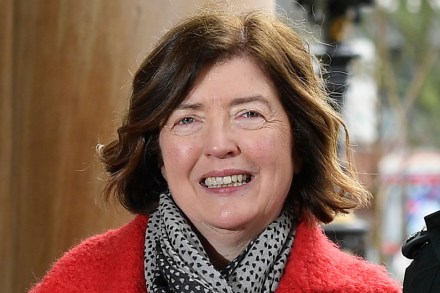
The perils of thinking you are good

The Sue Gray phenomenon fascinates me as an example of the perils of thinking you are good. (A related case study is that of Sir Keir Starmer.) It strikes me again and again that the most self-deceiving people in modern public life are those who publicly set themselves on the side of virtue. You see this in senior civil servants, judges, university vice-chancellors, NHS administrators, green businesses, heads of big charities and aid organisations. ‘We do good, so we can do no wrong’ is the great non-sequitur of the age, and the proliferation of ‘standards in public life’, ‘propriety and ethics’ committees, experts on ESG, diversity, inclusion, decarbonisation, transparency etc only makes things worse.

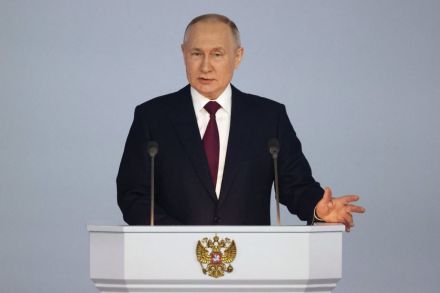
Putin and the Almighty’s gender self-ID

Vladimir Putin suffered a difficulty of his own making in his big anniversary speech on Tuesday. He was calling for something not far short of total war – a cluster of schemes to house, improve, offer therapy to and reconfigure the command of the armed services, to withdraw Russia and Russians from the global economy and to direct economic activity into areas most likely to defeat western technology. Yet he has always maintained that his country is not at war, and it does not sound very ringing to call (in the phrase which he first used a year ago and repeats today) for a total ‘special military operation’. He therefore likes to maximise the number of enemies and threats Russians must consider.