The Spectator's Notes

What ministers won’t admit about A-levels

The tale of A-levels shows how ministers can sometimes find themselves in a position when it is simply too dangerous to admit something that is true. To the exterior eye, it is obvious that the temporary abolition of exams and its replacement by teacher assessment has produced grade inflation. This year’s A-level cohort has not suddenly got a third better than its pre-Covid equivalent. You or I can point that out, but if Gavin Williamson, the Education Secretary, says it, he thereby implies that he has presided over a change which devalues the exam, seriously weakening the basis of admissions to university. He will also be accused of disparaging pupils who, we all know, have had a very rough time.
Chris Packham’s suggestions to save the world

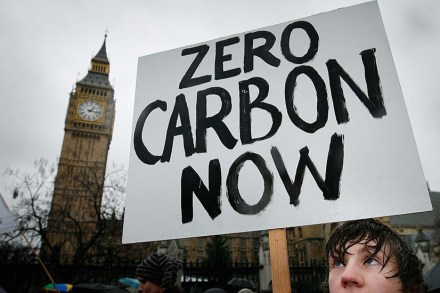
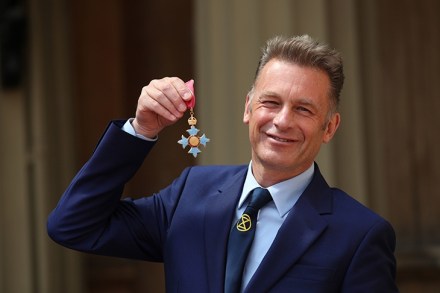
On Monday 2 August, the BBC Today programme offered its ‘Countdown to COP26’. For the rest of the month, Amol Rajan announced, Chris Packham would give us ‘a different suggestion’ about climate change EVERY DAY. I make that 26 Packham slots — Sunday being Today-free — on the main national news magazine programme. Chris’s Day One suggestion to address the ‘colossal, planet-threatening mess that we find ourselves in’ was that everyone should buy an alarm clock (second-hand if possible to save on emissions), set it to wake up 15 minutes earlier and devote that quarter of an hour to doing something helpful, rather as we did, he said, when we abolished slavery.

The West’s moralising over climate change will cost India

On Tuesday, I chaired a session at Policy Exchange addressed by Tony Abbott, the eloquent former prime minister of Australia, now an adviser to the British Board of Trade. Although he acknowledged severe recent difficulties, he declared himself optimistic that free-trading democracies, such as his country and ours, can combine to strengthen rules-based, transparent trade (i.e. the sort of trade China dislikes) across the world. I truly hope he is right. One problem, though, which we barely touched on, is climate change. In the West, this is considered the great global challenge of our time. In developing countries, however, it is often seen as the West’s way of denying them the advantages which made us rich.

What Dominic Cummings gets wrong

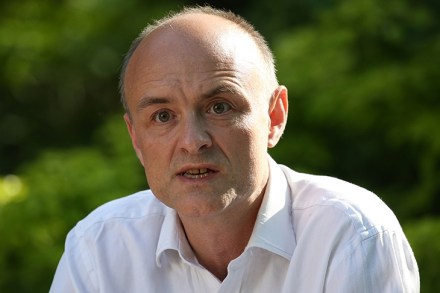
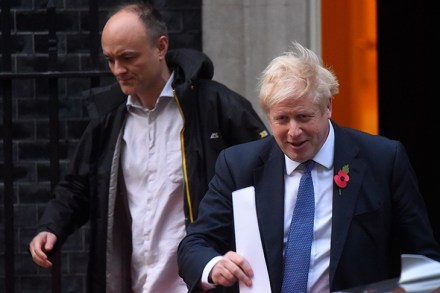
Anyone who thinks Boris Johnson lacks statecraft should pay attention to Dominic Cummings’s attacks on him. They often to seem to show the opposite of what Dom intends. Cummings now reveals that, in January 2020, he and his allies were saying: ‘By the summer, either we’ll all have gone from here or we’ll be in the process of trying to get rid of [Johnson] and get someone else in as prime minister.’ In fact, neither happened. By November, however, Cummings was (to use Mr Pooter’s joke) going; Boris stayed. The winner of the then still recent landslide election victory presumably discovered about his adviser’s seditious conversations and, reasonably, did not like them.

The real reason Priti Patel is targeted

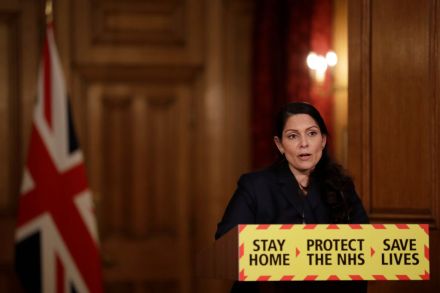
A special animus is aimed at Priti Patel, perhaps because the combination of being Indian, female and firmly Tory is unbearable to the left. The BBC’s Chris Mason, though paid to report, not pass judgment, speaks of the Home Secretary’s ‘at best equivocal stance’ about racist insults in football. The particular anger against her is that earlier on in the Euros, she described taking the knee as ‘gesture politics’, declining to condemn fans who booed it. Yet taking the knee is a gesture and is political. In its current form, taking the knee was invented by Black Lives Matter. Last summer, after the murder of George Floyd, there was a sort of ambush by BLM activists trying to force the West to kneel.

Should trains have mask and non-mask carriages?

In deciding whether or not to wear a mask after 19 July, I am sure Boris Johnson is right that one must consider the feelings of others. But I notice this consideration is argued only one way: those not wearing masks are asked to consult the sensitivities of those wearing them. Should not people who insist on continuing to wear masks also be invited to reflect on whether their behaviour might upset the unmasked? After all, in a culture long committed to showing your face as a mark of trust, covering it is depressing and even intimidating for others. It makes people almost inaudible. Or perhaps the simpler answer on trains is to have mask and non-mask carriages, like the smoking and no-smoking ones of old.

‘Fear and bullying’ at the National Trust

Is Winston Marshall — guitarist, banjo player, composer of Mumford & Sons, and father of the west London ‘Nu-Folk’ music that eventually conquered the world — a martyr to the Twitter mob? I find his story more interesting than that. He was trolled earlier this year for tweeting in favour of a book by Andy Ngo about the power of the far-left in the United States. (I haven’t read the book; I gather it is polemical, but in no way fascist.) Because of the difficulties this created for the band, he apologised, but later felt uneasy since he believed he had said nothing wrong. After consulting his fellow band members, he decided he wanted to be able to speak out.

Why the BBC believed Martin Bashir

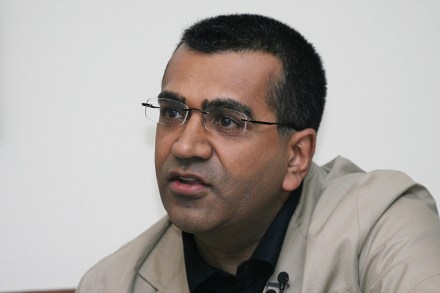
If it is true, as Lords Hall and Birt told a Commons committee this week, that Martin Bashir succeeded in duping all the five top BBC executives involved about the forged invoices by which he convinced Diana, Princess of Wales of the establishment’s conspiracy against her, then those executives must be very, very unworldly people. I am reluctant to believe that of them. There must be a different explanation, one with which, as an ex-editor, I have some sneaking sympathy. The interview got the BBC a wonderful story, so when trouble started shortly afterwards, that trouble had to be smoothed away. The problem was not only the BBC’s reputation, but also the careers of the five executives.

Would you pay £80 for a video from John Bercow?

There is much to be said for meritocracy, and Adrian Wooldridge, in his new book, The Aristocracy of Talent, says it very well. He is right: a society organised on anti-meritocratic principles will decay, making life worse for all, not just for the naturally successful. And yet I feel that meritocracy is inadequate. Most of us, sensing our lack of merit, feel left out. It takes small account of things that matter in real life — love of family and friends, relationships across generations, enduring ill health and bereavement, beauty, landscapes, animals, flowers, kindness, joy, pleasing idleness, traditions, prayer, being silly, jokes, song, meals, bed. Meritocracy rightly seeks results. But life is better understood as a predicament, not a race.

The first step towards restoring the National Trust

It is poetically fitting that the resignation of the chairman of the National Trust, Tim Parker, was announced on the first anniversary of the murder of George Floyd. The collective mistakes that have so damaged the Trust’s reputation were bound up in the rush of many institutions to ‘take the knee’, metaphorically and literally. Immensely delicate questions about how best to study the connections of Trust properties with slavery and (ill-chosen word) ‘colonialism’ were rushed and politicised. The view inevitably spread that the Trust now bears an animus towards the past whose glorious buildings and landscapes it is supposed to protect so that millions may enjoy them.

A tree is for centuries, not just for COP26

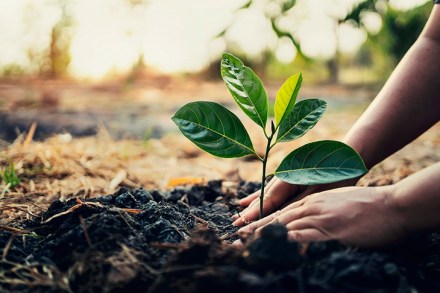
We are being urged — and, in some cases, paid — by the government to plant more trees. Actually, this happens most years. I can even remember ‘Plant a tree in ’73. Plant one more in ’74’. It is a bit like saying ‘Have more babies’, without any provision for their care once born. It all depends which trees, where you plant them and how you tend them. If you walk through the country nowadays, or near new-build housing estates where trees have been planted in ‘mitigation’, you will see large numbers of saplings dead or dying, still in their tree guards, planted too close together and then forgotten. New trees need protection from rabbits, deer, weeds and competition.

Should monuments to past Archbishops of Canterbury come down?

This week, the Church of England issued its document ‘Contested Heritage in Cathedrals and Churches’. It is guidance for what those locally running more than 12,000 churches should do about their monuments ‘to transform unjust structures of society, to challenge violence of every kind and pursue peace and reconciliation’ and address ‘the Church’s own complicity in structural sin’ and ‘oppression or marginalisation of people on the basis of their race, gender, religion or sexual orientation’. In church monuments, this usually boils down to whether the person commemorated had links with slavery. Seen from a parish level (where the poor churchwardens, such as my dear wife, will have to do the work), here are some preliminary questions.

‘Religious literacy’ rules risk gagging the press

There should be more ‘religious literacy’. So says the All-Party Parliamentary Group on Religion in the Media, chaired by Yasmin Qureshi MP. Amen to that. Religious ignorance is now virtually universal, so errors appear in news stories every day. But the APPG report seems less concerned with facts, more with attitudes. It wants news to concentrate more on ‘lived experience’, less on doctrine and ritual; it asserts that ‘religious literacy also incorporates respect for religion and belief as a valid source of guidance and knowledge to the majority of the world’s inhabitants’.

The difference between private and public conversation

Like almost everyone else writing on the subject, I have no idea whether Boris Johnson told colleagues in October that he would rather ‘let the bodies pile high in their thousands’ than have another lockdown. When such words are reported, they are given to journalists ‘on lobby terms’ and are therefore unattributable. But surely the report should indicate from which point of view they come. In this case, the BBC cites ‘sources familiar with the conversation’, a phrase which gives it permission, it thinks, to run headlines like ‘Boris Johnson’s “bodies pile high” comments prompt criticism’, as if it knows that the Prime Minister definitely spoke those words.

The strangeness of Britain’s BLM mania

The conviction of Derek Chauvin for the murder of George Floyd makes last summer’s Black Lives Matter mania in British institutions look even stranger. The British Museum, Oxbridge colleges, Sir Keir Starmer, football teams, government departments, Kew Gardens, the National Trust and numerous corporations indulged in various forms of self-abasement. Some ‘took the knee’. At the Ministry of Defence, the permanent secretary, Sir Stephen Lovegrove, broke professional political impartiality by emailing his staff about the ‘deep roots’ of ‘systemic racial inequality’ in Britain, and signing off with a BLM hashtag. He was subsequently promoted to be the UK National Security Adviser.

A word about Prince Philip and religion

The recent Sewell report on Race and Ethnic Disparities has been much abused and little read. It is full of interesting suggestions, however. One, emphasising the shared history of modern Britain, is to compile ‘a dictionary or lexicon of well-known British words which are Indian in origin’. Actually, such a work already exists. It is called Hobson-Jobson, ‘a glossary of colloquial Anglo-Indian words and phrases, and of kindred terms, etymological, historical, geographical and discursive’. Edited by Colonel Henry Yule, Royal Engineers, and Dr A.C. Burnell, of the Madras Civil Service, it was completed in 1886. It is a large, fascinating book, half an hour in whose company is never wasted.

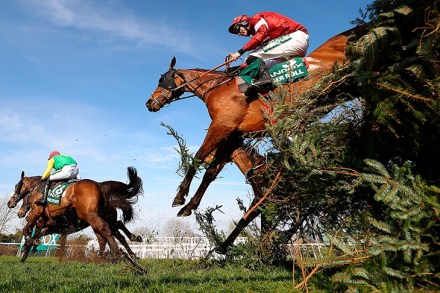
Aintree is doing Rose Paterson proud

On Grand National Day at Aintree this Saturday, the Rose Paterson Trust will be launched. This time last year, Rose was the chairman of Aintree, and had to cancel the meeting because of Covid. In June, she took her own life. The purpose of the trust is to help prevent such events. Owen, her widower, is very frank. He believes that: ‘If Rose had been aware of the utter catastrophe she has wrought — the first victim being herself — she would not have done it.’ The worst is that it cannot be undone. It is a wound that time can do frighteningly little to heal. He says it is wrong to think of suicide only as something committed by obviously lonely and depressed people.

By banning what we dislike, we create a secular shariah

‘Interior silence’ is not a phrase I associate with Sarah Sands, until recently the editor of the BBC Today programme and formerly my superb deputy at the Daily Telegraph. All her friends love her worldly, witty talk. Yet The Interior Silence is the name of her new book, whose subtitle is Ten Lessons in Monastic Life. Sarah knows that the contrast between author and subject is intrinsically funny, and laughs at herself — her struggle to fast in Assisi, parasites mercilessly biting her face while she sleeps in her Coptic desert cell. She is epigrammatic about monasticism: ‘Effortlessness is hard.’ But she is also appealingly sincere. She does want to understand it. She does long to turn off her mobile, though she rarely succeeds.

In defence of hereditary peers

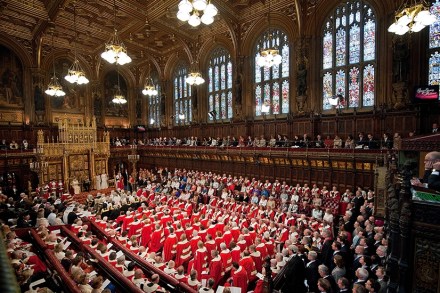
As the former editor of a Sunday newspaper, I know their front pages can be rather confected. There is sometimes a shortage of news at the weekend. But I was nevertheless stunned by the front-page splash of the latest Sunday Times. ‘Revealed’, it said in red letters, ‘The truth about the peers who are born to rule’. This ‘investigation’ showed there are currently 85 hereditary peers in the House of Lords, their average age is 71, 46 per cent of them went to Eton, none is a woman and they or their predecessors have claimed £47 million in ‘expenses’ (actually mainly allowances) ‘since 2001’. It was the ‘since 2001’ which rather gave the game away.

What happens when Facebook pays for news?

The recently departed head of MI6, Sir Alex Younger, wants to balance China’s ideological antagonism to the West with the need for coexistence. Commenting on the government’s new ‘integrated review’, he says we must fight back with technological innovation and stronger alliances but avoid a second Cold War. He advocates ‘One Planet: Two Systems’ — a globalised echo of the Anglo-Chinese Hong Kong Agreement by which Hong Kong was handed back to China in 1997 under the principle of ‘One Country: Two Systems’. Sir Alex’s is an interesting analogy, but the important thing to note about ‘One Country: Two Systems’ is that China adhered to it only for 20 years and is now trashing it. Could the same problem take over the world?