The Spectator's Notes

The fall of Sturgeon

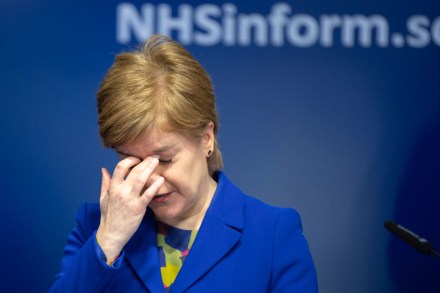
I don’t specially want Sir Keir Starmer to be prime minister, but if that is the eventual price of Nicola Sturgeon’s resignation, so be it. Although Ms Sturgeon’s political skills deserve respect, her rule in Scotland has been rigidly ideological and thus – by an apparent paradox – corrupt. If you believe you are the political version of Calvin’s elect, you can do no wrong. You therefore create a one-party state, police force, civil service etc staffed by your own supporters, and crush any dissenters. As a result, your country becomes divided and badly governed. Eventually, your righteousness traps you in extremist insanity – in this case, maintaining that a dangerous male rapist is a safe woman. You thought you were an angel, so you fall like Lucifer.
Heseltine’s great, misguided speech

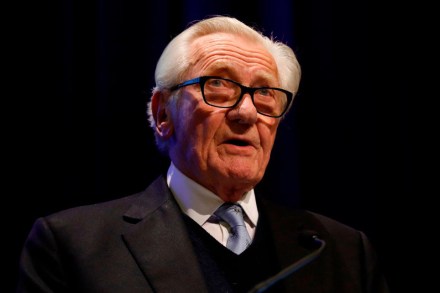
On Monday in the Lords, Michael Heseltine, 90 next month, orated (I employ that Welsh usage because it fits him so well) in favour of the European single market. He regarded its regulations as ‘one of the most successful concepts ever developed by humankind’. He deplored the fact that the government is trying, post-Brexit, to escape them. He attacked Rupert Murdoch and Conrad Black and compared Jacob Rees-Mogg to Robespierre. His stirring words reminded me of another great nonagenarian performance in the upper house – Harold Macmillan’s maiden speech as Earl of Stockton in November 1984, which I watched from the gallery.

The Ukrainian flag conundrum

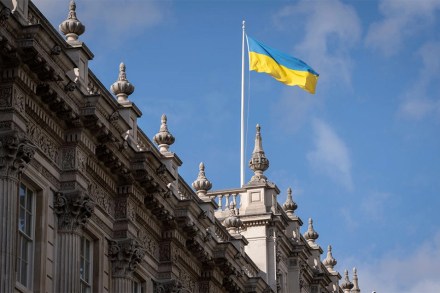
If you walk down Whitehall, you will see numerous Ukrainian flags on government buildings. I approve the sentiments. Like many all over the country, we fly the Ukrainian flag in our garden. But is it right that the flag should be flown by HMG? On what basis, and by whom, is such a decision made? Just now, of course, the interests of the United Kingdom and of Ukraine are closely allied; but it is a basic principle of foreign policy that British interests may sometimes clash even with those of close allies. Suppose we fall out with Ukraine while the war continues. Would we keep the flags flying, thus looking hypocritical, or take them down, thus looking disloyal?

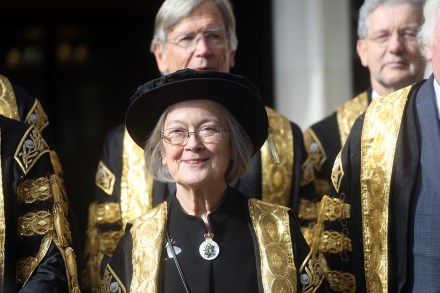
The curious tale of Lady Hale

Has the German leopard at last changed its spots, now that it says it will release the tanks of that name? The Germany/Ukraine story has so far been another example of the former’s long-proclaimed desire to create a European Germany rather than a German Europe. In fact, however, the two phrases now amount to much the same thing. As with the single currency and with energy, so with war materiel: German power exceeds that of all continental rivals. But, by speaking about being so European, Germany has probably gained dominance more easily than if it had been more national in tone. It might now be more honest – and safer for Ukraine – if Germany were to follow the logic of its leadership and help Zelensky as fast, rather than as slowly, as possible.

Paul Johnson’s great mind

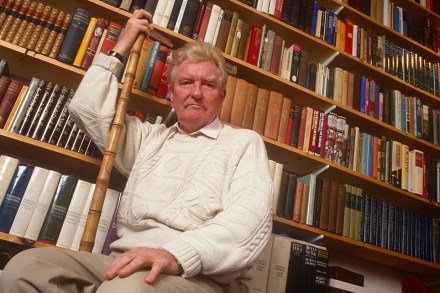
Obituaries of Paul Johnson, who died last week, have captured his prodigious gifts of exposition, wide range of knowledge and formidable power of attack. All true, but there are good things to be added, which I saw as his editor at this paper in the 1980s, and as a friend. Despite his reputation for uncertain temper – Jonathan Miller said he ‘looked like an explosion in a pubic hair factory’ – Paul was a most reliable and easy contributor. His copy was self-starting, to length, on time. It hardly needed editing (except that he was, like Evelyn Waugh, surprisingly bad at spelling). Given that he lived entirely on what he wrote, I was touched that he never once complained about The Spectator’s fee for his weekly contribution, which was tiny (£90, I think).

Harry shouldn’t be invited to the coronation

The Duke of Sussex says that he and his wife can never return to live in the United Kingdom. They will never again perform royal duties. By the same token, surely, they should not be invited to the coronation in May. There has to be a price for publicly attacking the King, the Queen Consort and the heir to the throne, attacks in which he gave accounts of private occasions when he must know that the people he condemns can never give their version of the events. If the Sussexes were invited, that would imply that their behaviour was condoned, which would in turn imply that the manner and content of their criticisms were justified. If they accepted, their presence would disrupt the ceremony. If they refused, they would also grab attention.

What Ladybird Books taught me about history

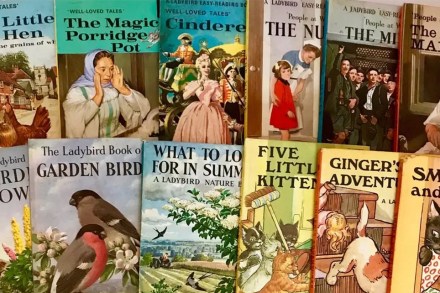
Visiting my family’s house, now inhabited by my sister, the other day, I dug out the heart of my childhood library, my Ladybird Books. They were the only books I bought with my pocket money when I was a small boy. Each short, well-produced hardback cost half a crown (12.5p). I got one old penny for each year of my age. So when I stopped buying Ladybirds at the age of 12, I was laying out two and a half weeks’ earnings on them. Rereading them now, I see how much they excited my imagination. Perhaps because of their link with childhood, they read well at Christmas. There were many different types of Ladybird books – ones about the farm, or travel, for instance – but the ones I liked the best were called ‘Adventures from history’.

The error of involving Gordon Brown

Sir Keir Starmer says the House of Lords is ‘indefensible’. It is an odd thing to say about an institution which has lasted more than 700 years. It is slightly like saying the common law is indefensible, and extremely like saying that the monarchy is indefensible (which is, I think we know, what Sir Keir does actually believe). There are several defences to be made for the Lords. They are just not, strictly speaking, democratic ones. But I must stick to my rule (see last week) of avoiding the subject of House of Lords reform. The funniest bit of Sir Keir’s constitutional plans is that he chooses to justify them in economic terms. Apparently, his new layer of elected regional non-Lords will bring new prosperity to the United Kingdom.

It is harder to run a dictatorship than a democracy

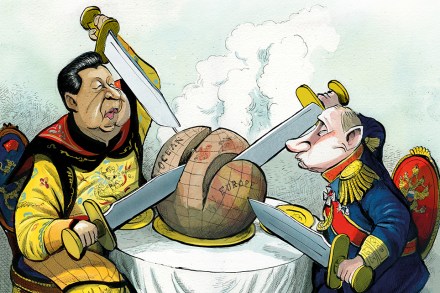
Things are currently so bad in the western democracies that we tend to ignore how much worse they are in what one could politely call ‘non-democracies’. China’s policy of developing Covid in a lab, and then covering up its leak, seemed to work at the time. Western scientists, some corrupted by their links with China, helped persuade many that Beijing had the best policy for infection control. But it is increasingly clear that Chinese people themselves do not believe this and are rebelling. In Russia, Putin’s policy of war has isolated his country, humiliated his armed forces and bound his democratic enemies more closely even than did anti-Soviet feeling in the Cold War. In Iran, more than 300 people have been killed in riots against the oppression of women.

MPs won’t ditch the House of Lords

The Supreme Court decided rightly on Wednesday, rejecting the Scottish government’s claim that a second referendum on independence was not a ‘reserved matter’. But since it was obvious from the beginning that this was the case, why did Nicola Sturgeon insist on bringing an unwinnable action? Presumably to lay blame, as usual, on UK authorities. The Supreme Court is presented as the enemy of the people, Ms Sturgeon conveniently forgetting that the people, when last asked, voted against independence and may not wish to be asked again in the hope that they will give the ‘right’ answer. The SNP will now claim that the next Scottish parliament election will be amount to the referendum ‘London’ has forbidden. Will this help the SNP?

Cop and the League of Nations

In order to understand why all Cops (Conference of the Parties), including the one which began this week, are so unsatisfactory, historical analogy may help. They resemble the League of Nations between the wars. The League’s aim was to ensure world peace. The purpose of Cops, and their associated UN processes, is to arrest climate change. Neither purpose was/is achievable by the chosen means, chiefly because the countries where the problem was/is greatest were/are the least likely to cooperate. Germany, defeated in the Great War, was not allowed into the League in the first place. Japan and Italy withdrew from its council so that they could get on with their aggressions. This week, the leaders of China, India and Russia were all absent from Sharm El Sheikh.

Greta’s right about Cop being useless

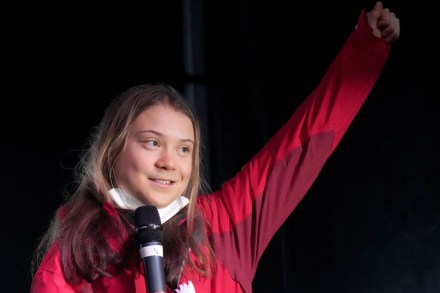
Greta Thunberg said, in a newspaper interview, that Cop27 is a ‘scam’ for ‘greenwashing, lying and cheating’. Then she said to Jeremy Vine: ‘The fact that one of the most powerful people in the world [Rishi Sunak] doesn’t have time for this, it’s very symbolic and says that they may have other priorities.’ It is very disappointing that Mr Sunak did not listen to her words, recognising that the Cop is indeed a place of greenwashing etc and sticking to other priorities (though not ones pleasing to Greta). He has now gone back on his promise to stay away. This is a dreadful sign of weakness. His appeal lies in his sense of what matters most. There have already been 27 years of Cops, and yet global carbon emissions have continued to rise. They do not work.

The personal faith of PMs

I have seen it suggested that because Rishi Sunak is a Hindu, it would be wrong for him to have any role in the appointment of bishops in the Church of England. This is a non-sequitur. So long as the C of E remains the church by law established, its main appointments must, in formal terms, be made by the Supreme Governor of that church, the monarch, ‘on advice’. That advice, though informed by the views of the hierarchy, must be tendered by the Prime Minister. Gordon Brown, when prime minister, tried to shuffle off these responsibilities, perhaps feeling rather Presbyterian about them; but this does not work. If the Church of England has the privileges of Establishment, it must permit an exterior eye on whom it appoints.

Has a Conservative government got any power at all?

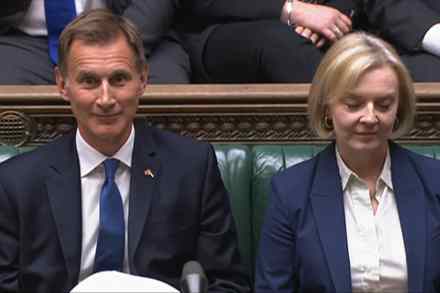
In the House of Commons on Monday, someone accused Liz Truss’s government of being ‘in office but not in power’. By chance, I was sitting in the peers’ gallery immediately behind the author of that famous phrase, Norman Lamont, who applied it to John Major’s administration in his resignation statement as chancellor in 1993. It grows ever more apt. I sometimes wonder if modern politicians positively welcome this situation. It is a general feature of the structures of the EU, where no elected politician has real power, but none seems to mind.

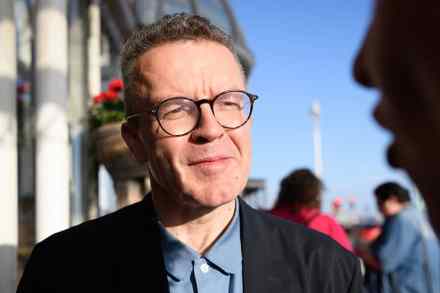
Why should Tom Watson be given a peerage and not Paul Dacre?

Much of this is not Liz Truss’s fault. The great big adjustment all over the West is that the era of low interest rates is now over. This is causing a crisis because most people, businesses and governments – and, we now discover, most pension funds – planned their finances on the basis that the era would go on for ever. It was bad luck that this hit markets just as Britain got its new prime minister. However, the Trussties undoubtedly overreached. Having been caught out, they are forced to become the sober-sides they previously mocked.

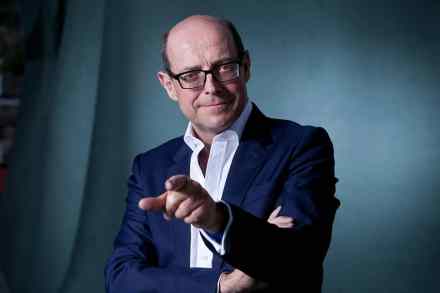
The trouble with Nick Robinson’s Thoughts for the Day

Thought for the Day appears every morning on BBC Radio 4. This preachy slot is hallowed by longevity, if not because of its content. But when Nick Robinson presents the accompanying Today programme, he often uses the moment after the hourly news and papers to contribute a political Thought for the Day of his own. Before he settles down to attack a government minister with his dentist’s drill, Nick likes to deliver his own wisdom about the foolishness of political leaders. ‘Making promises is easy,’ he told listeners on Tuesday. ‘Explaining how you’ll pay for them is rather harder, as the Chancellor and the Prime Minister are beginning to discover.’ What is the point of such remarks?

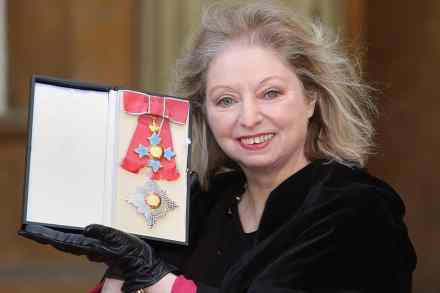
The genius of Hilary Mantel

Yes, but why did the IMF put out its Tuesday night statement? Even if all its criticisms of the government’s new economic policy were correct, why the rush? The IMF’s action is insulting to a G7 country and premature because its thoughts were inevitably composed without full knowledge. It is best seen as part of a pattern, like the early attempts to reverse Brexit, or the US government’s related interventions over the Northern Ireland Protocol. The people who have been running the developed world badly for more than two decades resent those who now challenge them. They pick their moments. The coup de grâce to Boris Johnson earlier this year was delivered by Lord Macdonald, the former head of the Foreign Office.

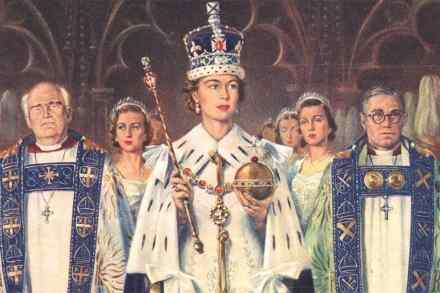
Should Queen Elizabeth II be made a saint?

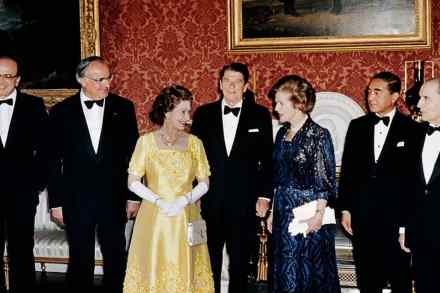
If this were a Catholic country, up would go the cry for canonisation. When Pope John Paul II died, the crowds in St Peter’s Square shouted ‘Santo subito!’ And the Polish Pope was indeed made a saint with unusual speed. What about St Elizabeth, with Windsor as her Compostela? Well, we are not a Catholic country, and if we were, Elizabeth II would never have become our Queen. She clearly did, however, possess the first of the two formal qualifications for sainthood, what the Church calls ‘heroic virtue’. The second is to prove two miracles effected by intercession to the person concerned. This can take time, but the world is already full of people who believe the late Queen cured them of this or that.

The night the Queen refused to read my book

‘So it is come at last, the distinguished thing!’ exclaimed Henry James on his deathbed. Such a thought is reflected in funerals – always more powerful than a memorial service or ‘celebration’ – because the person’s body is present. When it comes at last to Elizabeth II on Monday, it will be the most distinguished of all the ceremonies. The Household Division is in charge. It is always and only the Grenadier Guards who make up the bearer party. By then, all serving Guards officers will have stood watch over the coffin for the lying-in-state. The Guards are so called because they must guard the Sovereign in life. Their last, distinguished duty is to guard her in death.

Why Liz Truss’s political journey matters

As is now well known, Liz Truss has travelled politically. Her parents are left-wing, and there is a photograph of her as a child posing with them and their CND banner in Paisley. She herself was active in the Liberal Democrats. Professor Truss is reportedly upset that his daughter became a Conservative. I can identify with this story a little since both my parents were/are (my mother is still alive) ardent Liberals and I fear my own move to the right – though never really a party-political thing – upset them. Parents tend to be more upset by children moving to their right than to their left. This is because non-conservative politics is pseudo-religious. It sees political allegiance as a test of virtue and political programmes as means of salvation.