The Spectator's Notes

How to beat cancel culture

One of the most extraordinary features of the ‘cancel culture’ is how well it works. All decent people hate it, but it happens. Why? The key is speed. The bosses of big businesses, universities, quangoes, museums etc. are absurdly frightened by the sudden ambush. Some once-exalted alumnus or benefactor is ‘revealed’ on Twitter as having got money from slavery or worked for the British Empire or used a rude word in 1895. Out comes a petition against him, accompanied by a bit of spray-painting and a shouty demo, and he’s done for. In 99 per cent of the cases, the ‘revelation’ is not new, the alleged evil has been known and publicly discussed for years, sometimes for centuries. Almost every single time, the authorities are not ready, so they give in.

Are we seeing the last push against Brexit?

Large parts of the senior civil service regard Brexit as almost illegal. Some of them regard loyalty to the EU as a higher duty than to the elected government they are paid to serve. They feel this most strongly in relation to the Good Friday Agreement in Northern Ireland which they believe — with no textual evidence — is indissolubly linked with the EU. Some of the top mandarins now leaving their jobs prematurely think this way, perhaps none more so than Sir Jonathan Jones, the government’s chief legal adviser. On Tuesday, Lord Adonis, the most Remainery Remainer there is, tweeted: ‘We are going to hear a lot more about Sir Jonathan Jones, the government’s chief legal adviser, who has resigned rather than be a party to breaking international treaties.

In defence of Hans Sloane

‘The British Museum stands in solidarity with the British Black community, with the African American community, with the Black community throughout the world. We are aligned with the spirit and soul of Black Lives Matter everywhere.’ So blogged the director of the British Museum, Hartwig Fischer, shortly after the death of George Floyd. Many such messages were rushed out by institutions, colleges and businesses at the time. It was never really clear why. Why did one cruel death, above all the other cruel deaths always happening in the world, require this collective response? What led Dr Fischer to assume that ‘the British Black community’ must be at one with the aims of Black Lives Matter?

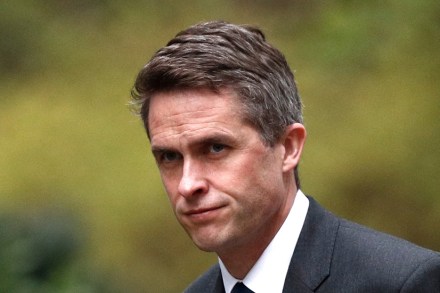
Should Gavin Williamson resign as a career move?

Amid all the puzzlement and recrimination about why the government got into this mess about A-level and GCSE results, one factor has been missed — the effect of Covid-19. I do not mean the obvious fact that none of this would have happened without the disease. I mean the less obvious one that our governmental and political system works very badly without the close human contact which Covid forbids. In normal times, MPs meet their constituents. Ministers meet fellow MPs in the Members’ Lobby and hear from them about constituents’ worries, such as their children losing university places. In Whitehall corridors, civil servants bump into one another and notice upcoming problems.

Is Chris Packham finally facing facts on shooting?

Chris Packham is widely seen as the most extreme of well-known animal rights activists. His obsessions against hunting and shooting forfeit the impartiality required of a television nature presenter. So it is bold of the excellent new magazine, Fieldsports Journal, to give Mr Packham lots of space in its issue designed for the start of the grouse season this week. Photographed in a butt, Mr Packham not only grants an interview, but also contributes his own article, which begins with his almost lyrical description of holding a rifle (‘I lift the fore-end and feel its weight on the bulb of my left thumb…’). Not strictly relevant, since grouse are dispatched by shotgun, but his tone sounds conciliatory.

Why poetry matters

Juan Carlos, ex-King of Spain, behaved foolishly in relation to money and sex, and so his decision to leave Spain is sad, but justified. That seems to be the view of most moderate people outside Spain who are not ill-disposed to the monarchy. But it is it right? Certainly Juan Carlos’s foolishness was real, but his imposed exile (it is not really voluntary) to the Dominican Republic is not a punishment for a crime: there has never been any legal process. It is a partisan political act which is bad for the unity of Spain. Juan Carlos’s exile was forced on the current King, his son Felipe VI, by a weak prime minister, the Socialist Pedro Sanchez.

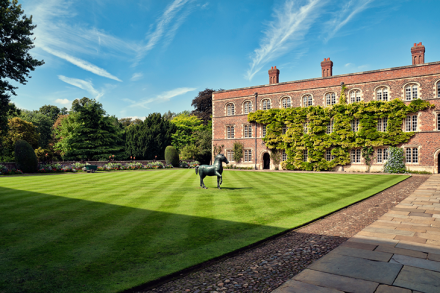
Jesus College’s China problem

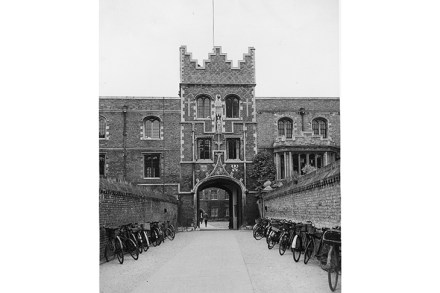
Although Stephen Toope, vice-chancellor of Cambridge University, is committed to openness, it is a struggle to get information out of him about his university’s dealings with the Chinese Communist party. He has declined an interview, and when I raised questions about Jesus College’s China Centre and other China links, which he has publicly backed, he replied that ‘You cited one very specific initiative, organised by one of our 31 colleges, with a very narrow thematic focus’. I wrote back with further questions, but he says he is ‘not able to add anything to my earlier remark about Jesus College’.

The politics of email sign-offs

I think Anne Applebaum is a friend of mine. I certainly hope so, since I have always admired her writing, her dignified charm and her un-English readiness to be serious. Her new book Twilight of Democracy is subtitled ‘The Failure of Politics and the Parting of Friends’. Quite a large number of friends, several associated (as was she) with this paper, she now names as ex-friends, so I feel relieved not to have been so identified. As a matter of historical fact, Anne is right: lots of friends have fallen out about issues relating to globalisation, identity, ‘Somewheres’ and ‘Anywheres’, Brexit, Trump etc. Anne seems to see this as inevitable, once people understand how much they differ. But is it?

Why did we not ban Huawei earlier?

‘Just rejoice’, as Mrs Thatcher once said about something else. The government’s decision to debug our national security by getting rid of Huawei is the right one (although seven years is much too long). The puzzle is why it did not happen earlier. At the end of January, I interviewed the US Secretary of State, Mike Pompeo, when he came over here. We knew by then everything we needed to know about the Chinese government’s control of Huawei and the lack of trust this must engender. The British government also heard clearly from Mr Pompeo — and from Australia — that its preference for Huawei 5G threatened the deep trust of the Five Eyes intelligence partnership. Yet it sent him away empty-handed.

Are Hong Kong students safe in British universities?

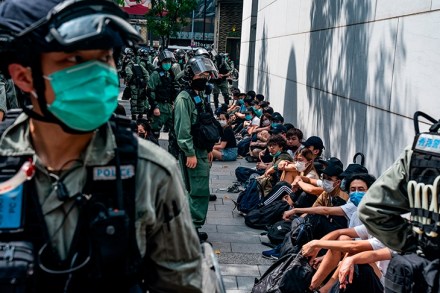
There are far more Chinese students in British universities than there are from the entire Commonwealth. Many universities have been accused of indulging the Chinese regime in return for the students and the money. Now that Beijing has imposed its draconian security law upon Hong Kong, will Hong Kong students in British universities be safe to return in October? Beijing now seeks to control them. What assurances can British universities give Hong Kong students that it will protect them from intimidation from fellow students acting on the orders of the Chinese embassy in London? The new law claims the right to punish Hong Kong people for offences committed anywhere in the world. Will our universities protect such students?

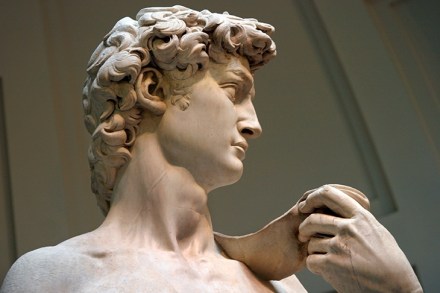
Michelangelo’s David must fall

‘White Lives Matter Burnley’ said the plane’s banner as it circled the club’s stadium just after the teams had ‘taken the knee’ in support of Black Lives Matter. I must admit that my very first reaction on hearing the news was pleasure at the idea that the self-righteousness of Black Lives Matter was being guyed. My second, more considered response is that the banner was bad — and for precisely the same reason that BLM is bad. It takes a statement which any decent person would consider true and turns it into a weapon of race war. Of course black lives matter. Of course white lives matter. The question is: ‘Why are you saying it now?’ The answer, in both cases, is discreditable. It is to make one lot hate the other lot more.

The grand names on Huawei’s payroll

Why is it wrong, some ask, for senior British businessmen, former civil servants etc to work for Huawei UK? After all, it is a major company which needs business experience and advice here. Even now, despite the government’s apparent U-turn, it is not certain it will be excluded from our 5G contracts. Surely the answer is that if a director were to explain frankly to the public how Huawei works, he would have to admit that — whatever its formal ownership structure — it is controlled by and furthers the aims of the Chinese Communist party regime. He would also have to concede that these aims have now become hostile to British and western interests. Ren Zhengfei, the boss, expresses himself in belligerent terms.

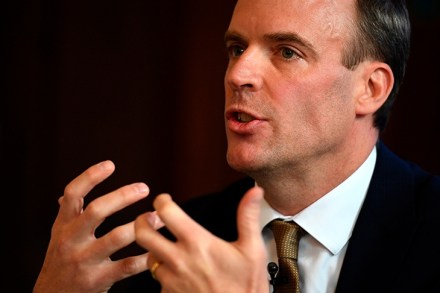
What is Dominic Raab not telling us about Hong Kong?

The government’s promised ‘pathway to citizenship’ to Hong Kong people is wonderful, but has the Foreign Office arranged a get-out clause? Last week, Dominic Raab told parliament that ‘if China enacts the [proposed new security] law, we will change the arrangements for British National (Overseas) passport holders in Hong Kong’. He added, however, that ‘We do not oppose Hong Kong passing its own national security law’. Behind this lies the fact that the Basic Law of Hong Kong, arising from the Sino-British Agreement of 1984, prescribes that Hong Kong ‘shall enact its own laws to prohibit any act of treason, secession, sedition or subversion against the Central People’s Government’. So far, it has not done so.

The Spectator’s proud history of standing up for Hong Kong

This week in 1989, the Chinese authorities massacred protestors in Tiananmen Square, Beijing. I was editing this paper. It struck me that the people of Hong Kong would suffer huge collateral damage. The Spectator should campaign for them, I thought, and draw attention to the dangers of trusting China to honour the 1984 Sino-British Agreement which Mrs Thatcher and Deng Xiaoping had made to provide for the handover to China in 1997. So we turned the leading article into a two-page affair (a thing unheard-of) and devoted the whole cover to a drawing by Nick Garland of Britannia and the British lion, both kowtowing. The headline was ‘Our Betrayal of Hong Kong’.

The ferocious bias against Dominic Cummings

At Dominic Cummings’s press conference on Monday, reporters tried two lines of attack. One was to behave like local detectives, fixating on exact details of the Cummings family journey to Barnard Castle, such as why the car had stopped en route (answer: so that the Cummingses’ son, aged four, could have a pee). The other was to invoke viewers, readers, members of the public blind with fury that there was ‘one law’ for government bigwigs, and ‘another’ for everyone else. Yet Mr Cummings’s statement and answers made a good case that there had not been ‘one law’ for him, but that he had the ‘reasonable excuse’ that the law permits for everyone, given the needs of his son.

Cambridge University is kowtowing to China

Last month, writing elsewhere, I quoted the website of the China Centre at Jesus College, Cambridge: ‘Under the leadership of the Communist party of China since 1978, [China] has experienced an extraordinary transformation… China’s national rejuvenation is returning the country to the position within the global political economy that it occupied before the 19th century.’ The tone sounded propagandist not academic. This month, all mention of the Chinese Communist party disappeared from the China Centre home page. Now the Centre says it concentrates on ‘mutual understanding between China and the West’, contributing to ‘harmonious global governance’, which should be ‘non-ideological and pragmatic’.

Mixed messaging is good for us

A friend, a senior retired mandarin, emails. He complains that rural lockdown means that he and his wife have ‘got out of the habit of making even the simplest decisions’. I know exactly what he means, and I suspect the problem is more widespread than the shires. The capacity to decide is like a muscle: if it is not exercised, it quickly atrophies. This may explain why some people are so querulous at the suggestion of Boris Johnson that they should now, given the declining rate of infection and death from Covid-19, decide whether to go back to work. They complain of ‘mixed messaging’, instead of the clear earlier instruction to stay at home. But the messages of normal life are mixed, and rightly so.

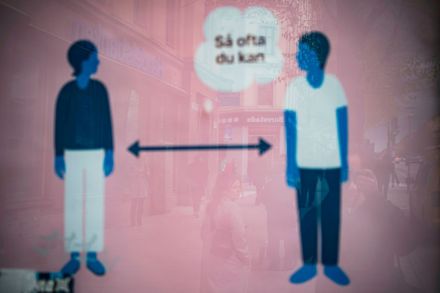
Sweden and Britain are not the same

Mathias Döpfner is that still rare thing — an outspoken German. I have known him slightly for many years and admire his brain and boldness: a long time ago he even came close to buying the Telegraph Group. The 6ft 7in CEO of Axel Springer has just issued a challenge to Europe and particularly to his own country. In an article published on Sunday, he told Germany that it must stop dithering and choose. The coronavirus, he says, has brought out the great danger the Chinese Communist party presents to the West.

Good news for the Jewish Chronicle

During the second world war, the collection of the National Gallery had to be hidden in a mountain in Wales to prevent bomb damage. Its director, Kenneth Clark, eventually realised, however, that this was bad for morale, and so made a single but striking exception. Starting with Rembrandt’s ‘Portrait of Margaretha Trip’, which the gallery had just acquired, he ensured that each month one famous painting would be on display in an alcove at the top of the main staircase. ‘Picture of the Month’ proved tremendously popular, almost a pilgrimage site. In the time of Covid-19, the gallery is closed once more, but now the danger is not to paintings but to people.

The secrets of The Spectator’s success

Although I once edited this paper, and have written for it for almost 40 years, I did not know that it is the oldest magazine in the world. I learn this from 10,000 Not Out, David Butterfield’s short but scholarly new history of the paper from its foundation in 1828 to today. I wonder why it has survived. Here, more or less at random, are aspects emerging from the past 10,000 issues. • The paper began with ‘News of the Week’ and continues — in much crisper form — with ‘Portrait of the Week’ to this day. From time to time, this has been dropped, but the paper has mysteriously suffered as a result. The same applies to the leading article.