The Spectator's Notes

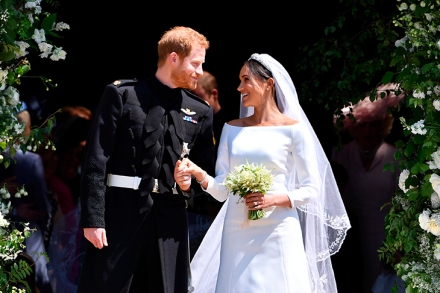
So did Harry and Meghan get married in their ‘backyard’?

I have been slow in the uptake. When I saw the Duchess of Sussex complain in her interview clips about how her son had not been given a title and then move on to the alleged racism of an alleged speculation by an unnamed but probably royal person about the possible skin colour of the child she was expecting, I did not immediately see the connection. The full interview makes it clear. Meghan is saying that Archie was not allowed to be a prince because of his skin colour. Oprah: ‘Do you think it’s because of his race?
Emmanuel Macron’s vaccine muddle

In 2000, this magazine dipped its toe in murky Irish water. Stephen Glover wrote three articles, one provocatively entitled ‘The Republican cell at the heart of the Guardian’. (For more detail, see Douglas Murray’s article.) One of the IRA supporters identified was Roy Greenslade, the paper’s media commentator. Alan Rusbridger, the Guardian’s editor, wrote angrily to the then editor, Boris Johnson, demanding an apology. Boris refused. Now Greenslade has emerged from that murky water, with an armalite in one dripping hand, and admitted he always secretly supported IRA violence and was close to IRA leaders. Where does his admitted ‘entryism’ leave the Guardian?

Will social kisses survive Covid?

There is a ‘pervasive presence of Chinese military-linked conglomerates and universities in the sponsorship of high-technology research centres in many leading UK universities’. When the think tank Civitas recently revealed this, Cambridge University denounced the report as misinformation and pushed Civitas to qualify it. Thus, when Civitas had referred to Cambridge’s Memorandum of Understanding (MoU) with China’s National University of Defence Technology (NUDT), Cambridge wanted it added that the MoU had been ‘signed in the wake of the UK… government’s encouragement to create a “golden decade” for the UK-China relationship. That MoU produced no research, no collaborations, no funding and has been expired for three years’.

The unintended consequences of the Macpherson report

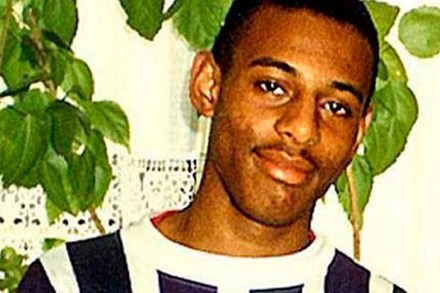
Sir William Macpherson of Cluny has died. His obituaries praise him for his 1998 inquiry into the Stephen Lawrence case. His report did indeed shed light on the failure of the police to catch the young man’s killers. It has had, however, a profound and bad effect on our law. The report’s recommendations redefined a racist incident: ‘A racist incident is any incident which is perceived to be racist by the victim or any other person.’ This definition means that absolutely anything in the world could be a racist incident, because it relies wholly on what a complainant ‘perceives’. The definition’s use of the word ‘victim’ also implies acceptance that every person who claims to be a victim is one.

Where would politics be without fighting talk?

‘Tencent Wykeham’ has a ring to it. It captures how easily British universities can be bought. It is the new name for what was until now the Wykeham Professorship of Physics at New College, Oxford, now acquired by the huge Chinese techno-conglomerate Tencent for £700,000. William of Wykeham founded New College and Winchester in the 14th century. ‘Tencent Winchester’ next? The problem, which Oxford seems to ignore, is that Tencent acts for the national security interests of the Chinese Communist party. It propagandises too: for Xi Jinping’s address to the 19th Party Congress in 2017, it brought out a mobile game called ‘Clap for Xi Jinping: An Awesome Speech’.

Lockdowns can destroy the lives they’re intended to protect

Some Leavers are perturbed that Lord Frost was suddenly stood down as the next National Security Adviser. This anxiety may be misplaced. If he gets the necessary authority in No. 10, his new job of making our European policy fit with our entire foreign policy and making both serve a sovereign nation will be just what is needed. More discouraging, though, is his replacement choice at the NSC. Sir Stephen Lovegrove comes from the Ministry of Defence but is more renowned for tweeting the hashtag of Black Lives Matter and getting generals into rainbow lanyards than for helping the armed services adjust to war in the information age. His appointment is a victory for the Blob over Boris’s attempts at reform.

Will Samuel Pepys be cancelled next?

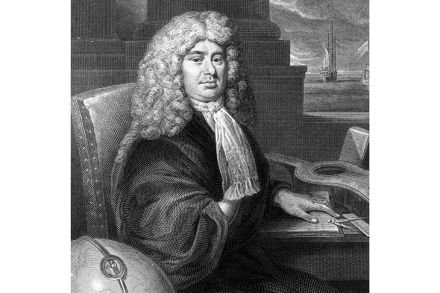
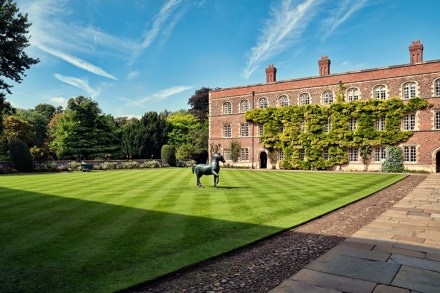
A seemingly obscure battle in an ecclesiastical court could threaten the security of every historic monument in the care of the Church of England. As reported in this column last year, Jesus College, Cambridge, is trying to extirpate the memorials (while keeping the money) of its greatest historic benefactor, Tobias Rustat. Rustat was a loyal servant of King Charles II who helped him escape from the battle of Worcester, looked after him in exile, and became his Yeoman of the Robes after the Restoration. He also gave huge sums to Jesus (as to St John’s, Oxford, the Royal Hospital, Chelsea, St Paul’s Cathedral and the University of Cambridge). His sin was investing in the Royal African Company, one of whose activities was trading in slaves.

The truth about the vaccine ‘postcode lottery’

‘Postcode lottery!’ people scream when one area feels less well treated than another in a public service — in this case, the rollout of the Covid vaccines. It is a silly phrase, if you believe in the devolution of power and the importance of locality. The point of local health trusts, councils and so on is to let local people run most of the things that matter to them. The logical result is that — even within a national set-up like the NHS — there will be differences. If there were no differences, it would not follow that everyone was getting the same high-quality service. It would much more likely show that the service was uniformly bad, because all convoys, to remain in convoy, must go at the speed of the slowest. Visible difference is a spur to improvement.

My memories of Sir David Barclay

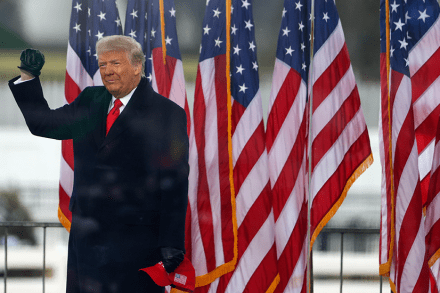
Even with its 27 amendments, the US Constitution is only 7,591 words. I keep it beside me, and find in it — as Sir Walter Elliot found in the Baronetage — ‘occupation for an idle hour, and consolation in a distressed one’. The final part of Section 3 of Article 1 is relevant in this distressed week: ‘Judgment in Cases of Impeachment shall not extend further than to Removal from Office, and disqualification to hold and enjoy any Office of Honor, Trust or Profit under the United States.’ To use, after Donald Trump’s departure, a device designed to remove a president seems strange.

Covid, like war, brings less obvious shocks

Domenica Lawson, daughter of Rosa and Dominic, the former editor of this paper, has Down’s syndrome. She is classified as ‘extremely clinically vulnerable’ to Covid and has therefore been living with her parents since October. When Rosa was briefly not around to interpret last week, Domenica opened a letter to herself from the NHS: ‘You are considered to be at highest risk of becoming very unwell… you are someone with Down’s syndrome, and so the government now considers you to be in the highest risk category.’ This shocked Domenica. ‘I have spent the last year trying to protect her from the worst of the news and now she is more scared than ever,’ Rosa tells me.

The Darvell marvel has brought joy to a Covid Christmas

Many ingenious ways of evading Covid-19 have been devised to assist commerce, fewer to assist worship. In our next-door village, however, is Darvell, a large, longstanding Bruderhof community, part of a worldwide Anabaptist movement. Always welcoming to neighbours, they normally hold a carol concert in Advent. This year, such a thing is forbidden. Instead, the brotherhood devised a ‘Christmas Drive Through Darvell’. I slightly feared a gigantesque version of the dropsical Father Christmases and reindeer which people stick on their roofs, but I was wrong. At dusk on Saturday, we arrived with three generations of our family. The drive stretches well over a mile before exiting into another lane.

In defence of Eton’s headmaster

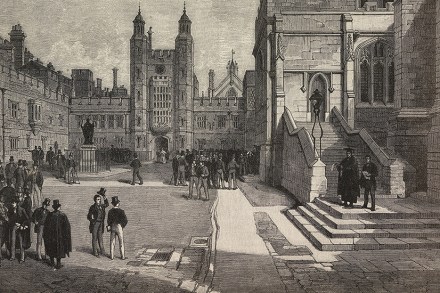
My inbox is crowded with messages from Old Etonians attacking Simon Henderson, the headmaster of Eton. They are furious that he sacked a master, Will Knowland, for putting on YouTube his talk to boys about masculinity, and then refusing to take it down. As one complainant puts it: ‘Eton and Woke are both four-letter words, but they should have nothing in common beyond that.’ I agree, but the case is more complicated. In disciplinary questions, one must ask: ‘What else could the boss have done?’ Suppose I, when a newspaper editor, had told a staff journalist that he could not publish an article he had submitted, yet he went ahead and did so. I think I have would have been right to punish him severely, even if I had been wrong about the merits of his piece.

China has a friend in Jesus

Last week, I wrote about ‘Frost & Lewis’ (David and Oliver), leaders of our country’s team at the Brexit negotiations, guarantors of our Brexit intentions. It is they who have throughout maintained the essential position — that we are becoming an independent state and therefore will not trade sovereignty for market access. It is them, therefore, whom the EU wishes to neutralise. Hopes have risen in Brussels after the Downing Street ‘Carrie coup’ against Dominic Cummings. Frost & Lewis now lack a close friend at the court of King Boris except, possibly, the King himself. So it may be a good thing that Covid isolation forced them to return to London at the end of last week. They are negotiating from their base, close to their leader.

Are our churches safe from Justin Welby?

‘Frost & Lewis’. It sounds like a programme amalgamating two of the most famous TV detectives. The former diplomat, Lord (David) Frost, is our chief Brexit negotiator and Oliver Lewis, an expert on the Irish aspects, is his right-hand man. Until recently, they were simply considered the two best men for the job. Since the departure of Dominic Cummings, they have acquired a political role too. Close colleagues of Cummings who did not walk out with him, they stayed to Get Brexit Done, so they act as reassurance to anxious Brexiteers that the government will not throw in the sponge. Their staying also implies a threat. Dom has said he doesn’t want anyone else to leave No. 10 — yet. Tristram Hunt, director of the V&A, is a former Labour MP.

The strangeness of voting in the Lords from my bed

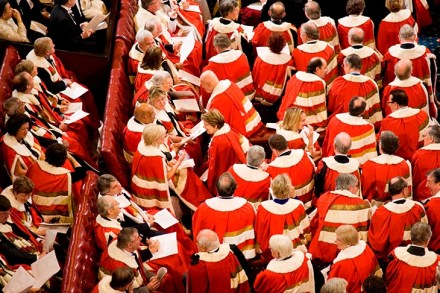
Having only recently entered the House of Lords, I must tread with caution, but I had always understood that it is chiefly a revising chamber. By strong convention, it does not reject legislation arising from the election manifesto of the party victorious in the House of Commons. Yet on Monday night, faced with the Internal Market Bill (which helps provide for a full Brexit), it attempted no revision at all. The House was sitting in committee, whose very purpose is revision, but the anti-government majority was on such a high horse that it happily let an amendment from critics of the government fall. It refused to engage. A key feature of the Bill is to ensure that Northern Ireland should maintain ‘unfettered access’ to trade with the rest of the United Kingdom.

Churches are more Covid-secure than trains or takeaways

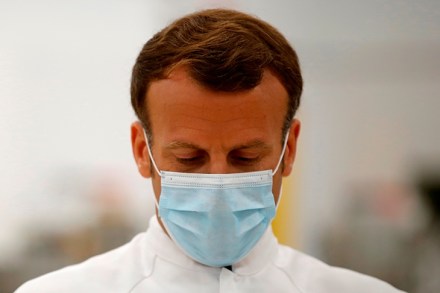
Monday night’s murderous gunman in Vienna is officially described as ‘Islamist’. Brahim Aioussaoi, the man accused of murdering worshippers in a Nice cathedral last week, arrived (reported the BBC) with ‘three knives, two phones and one Quran’. These would seem to be the basic toolkit required. A friend who lives in southern France tells me that although the latest lockdown measures prevent church services being held, so serious is the terrorist threat to churches that many are guarded by police. So it seems natural that President Macron of France warns of the danger to French Catholics and speaks of ‘Islamist terrorist folly’. Each of his three chosen words rings true, and the link between them cannot be avoided.

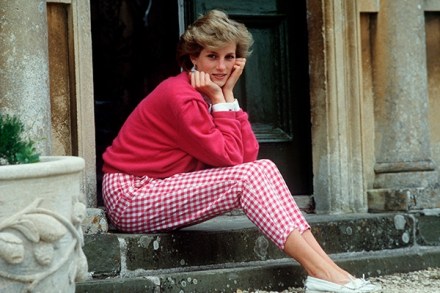
Did Panorama use tabloid methods to lure Diana?

As time passes, there is — blessedly — ever less need to pay attention to ‘untold’ stories about Diana, Princess of Wales; but the Channel 4 documentary Diana: The Truth behind the Interview did make me sit up a bit. It revealed, and the BBC does not deny, that Martin Bashir and Panorama colleagues caused fake invoices to be created purporting to show that a rogue employee of Charles Spencer, the Princess’s brother, had sold stories about her to newspapers. It seems this forgery — and Panorama’s assurances about Bashir’s good character — persuaded Lord Spencer to meet Bashir and to urge his sister to do the same.

Trump tried to bribe my daughter-in-law

You have to give it to Donald Trump: he never stops trying. In a letter dated 25 September, he wrote to our daughter-in-law, who is an American citizen living in Britain (‘United Kingdom Englan’, it said on the envelope) to tell her he was giving her $1,700 under the Coronavirus Aid, Relief and Economic Security Act ‘which I proudly signed into law’. It is a pretty impressive bribe, and it pays out, I believe, to every American who earns less than $50,000 a year. In Hannah’s case, however, it might not work for the President at the coming poll.

The BBC can’t resist speculating on the science

In this column (26 September), I pointed out that the National Trust’s new ‘Gazetteer’ of its 93 properties linked with slavery and ‘colonialism’ was not so much a scholarly documentation as ‘a charge sheet and a hit list’. Once the organisation entrusted with the care of a building denigrates that building’s most famous occupants, logic suggests it will care for the building less well than for that of an occupant it admires. This logic is already starting to work through. The National Trust owns Thomas Carlyle’s house in Chelsea, but now it has closed it ‘until further notice’, whereas all the other small houses of the Trust in London will reopen in March.

The National Trust’s shameful manifesto

The National Trust has brought out its ‘Interim Report’, with the clumsy title ‘Addressing our histories of colonialism and historic slavery’. Such use of the word ‘histories’, as opposed to ‘history’, is an alert that a woke view is coming your way. Like ‘diversity’ and ‘multiple narratives’ (also deployed in the report), it suggests plurality but imposes uniformity. The aim is to be ‘historically accurate and academically robust’. According to John Orna-Ornstein, the Trust’s director of culture and engagement, ‘We’re not here to pass judgment on the past’.