Portrait of the week

Portrait of the week | 16 June 2012

Home The Church of England opposed government plans for gay marriage, noting that if they were brought into law, the European Court of Human Rights would probably oblige churches to perform such marriages. Michael Gove, the education secretary, said he expected children of five to recite poetry. Gordon Brown, the former prime minister, in evidence to the Leveson inquiry, flatly contradicted evidence that Rupert Murdoch had given about their dealings. Edinburgh saw 39 confirmed and 49 suspected cases of legionnaires’ disease, which killed one man. David Cameron and his wife, it was discovered, accidentally left their eight-year-old daughter behind in a pub one Sunday lunchtime this year. There was widespread flooding in England and Wales. Thames Water lifted its hosepipe ban.

Portrait of the week | 2 June 2012

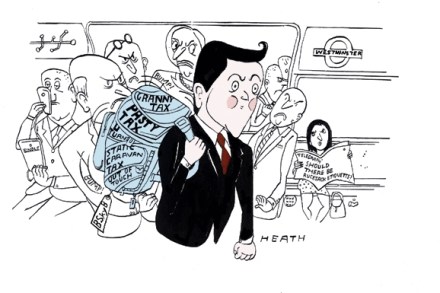
HomeThe government revised plans announced in the Budget to put VAT on warm Cornish pasties and supermarket rotisserie food, and reduced the proposed 20 per cent VAT on static caravans to 5 per cent. It launched an £82 million scheme to lend money (typically £2,500) to people aged between 18 and 24 who want to start a business. Baroness Warsi, the co-chairman of the Conservative party, referred herself to the Lords commissioner for standards after newspapers alleged that she claimed accommodation allowance while staying with a friend rent-free. A government internet service for people to discover how much income tax they pay broke down on its first day. Boris Johnson, the Mayor of London, said he would rather ‘die in a ditch’ than allow a third runway at Heathrow.

Portrait of the week | 26 May 2012

HomeThe International Monetary Fund suggested Britain should undertake more quantitative easing or even cut interest rates. But Christine Lagarde, the IMF’s managing director, said ‘I shiver’ at the thought of Britain’s deficit in 2010 having been left without plans for fiscal consolidation. Vince Cable, the Business Secretary, made a noise for his side of the coalition by writing in the Sun about the report on employment commissioned by the government from Adrian Beecroft, the venture capitalist: ‘Some people think that if labour rights were stripped down to the most basic minimum, employers would start hiring and the economy would soar again. This is complete nonsense.

Portrait of the week | 19 May 2012

HomeThe Bank of England decided against more quantitative easing, after creating £325 billion in three years. Steve Hilton, the Downing Street director of strategy, left proposals for cuts of £25 billion from welfare spending as he headed off for an academic post in California. Philip Hammond, the Defence Secretary said that business leaders were whingeing, and ‘large businesses are sitting on a pretty large pile of cash’. William Hague, the Foreign Secretary, said: ‘There’s only one growth strategy: work hard.’ Unemployment fell by 45,000 to 2.63 million. Thousands of civil servants are to be asked to work from home during the period of the Olympic Games, from 21 July to 9 September.

Portrait of the week | 12 May 2012

HomeDavid Cameron, the Prime Minister, declared that he would ‘focus on what matters’ after the Conservatives’ poor showing in the local elections brought accusations that pursuit by the coalition of such aims as gay marriage and reform of the House of Lords was alienating voters. On the eve of the Queen’s Speech he appeared at a tractor factory in Essex with Nick Clegg, the deputy prime minister and leader of the Liberal Democrats, who had done disastrously in the local elections. ‘I’m really sad,’ Mr Clegg had said of the results. Labour had gained an extra 823 wards, the Conservatives lost 405 and the Liberal-Democrat party 330, leaving it with the lowest number of council seats since its foundation in 1988.

Portrait of the week | 3 May 2012

HomeA report by the Commons culture media and sport select committee into News International and phone-hacking declared: ‘Rupert Murdoch is not a fit person to exercise the stewardship of a major international company.’ Four of the ten members of the committee did not endorse this finding. David Cameron, the Prime Minister, was called to the Commons to answer a question from Ed Miliband, the leader of the opposition, on whether he would refer the case of Jeremy Hunt, the culture secretary, to the independent adviser on ministerial interests (Sir Alex Allan). The question arose from Mr Hunt’s handling of News International’s application to take over BSkyB. Lord Justice Leveson declined a request from Mr Hunt to appear early before his inquiry into the media.

Portrait of the week | 28 April 2012

HomeThe British economy went back into recession, shrinking by 0.2 per cent in the first quarter of 2012, following a contraction of 0.3 per cent in the last quarter of 2011. Government debt rose by £117 million over last year’s figure, to £1,022.5 billion, equivalent to 66 per cent of GDP. George Osborne, the Chancellor, lent the International Monetary Fund another $15 billion to help it bail out countries in the eurozone. In the Commons, Ed Miliband, the leader of the opposition, had earlier characterised Mr Osborne’s Budget as an ‘omnishambles’.

Portrait of the week | 21 April 2012

HomeAbu Qatada, wanted in Jordan on terrorism charges, was held in prison in England again, two months after his release from prison, and Theresa May, the Home Secretary, said he would be deported to Jordan, although ‘deportation may still take time’. Abdel Hakim Belhadj, a Libyan commander, sued Jack Straw, the former foreign secretary, alleging that he was instrumental in his arrest by US agents who sent him into the clutches of the late Colonel Gaddafi. Charities campaigned against the plans by George Osborne, the Chancellor of the Exchequer, to limit tax relief on big donations to £50,000 or a quarter of the donor’s income, whichever the higher.

Portrait of the week | 14 April 2012

HomeThe European Court of Human Rights ruled that Britain would not violate human rights by extraditing to the United States five terrorist suspects: Abu Hamza, Babar Ahmad, Adel Abdul Bary, Talha Ahsan and Khaled al-Fawwaz; the case of Haroon Aswat, who suffers from schizophrenia, was adjourned. A car bomb was found at Newry, Co. Down. The Independent Police Complaints Commission investigated ten incidents of alleged racism involving 18 officers. Football clubs should pay for policing further away from stadiums, Assistant Chief Constable Andy Holt said on behalf of the Association of Chief Police Officers. A fire in a goods yard in Canning Town cut off electricity for 88,000.

Portrait of the week | 7 April 2012

HomeNick Clegg, the deputy Prime Minister, said he could not support as they stood government plans to hold in camera civil court cases involving secret intelligence. The government also proposed changing the law to allow it to monitor the telephone calls, emails, texts and visits to websites of everyone in the country. UK Biobank began making available to researchers information on 500,000 volunteer patients in the National Health Service. The government said it had accepted ‘virtually all’ of the 28 recommendations in a report commissioned from Mary Portas on the rejuvenation of high streets, including reduced charges for parking.

Portrait of the week | 31 March 2012

HomePeter Cruddas resigned as co-treasurer of the Conservative party after being recorded by undercover reporters from the Sunday Times encouraging donations with the prospect of private dinners with David Cameron, the Prime Minister, in his Downing Street flat. ‘Hundred grand is not Premier League. It’s not bad. It’s probably bottom of the Premier League,’ he said. ‘If you donate, you will be invited to events where the Prime Minister is.’ Downing Street rapidly published details of all Conservative donors who have had dinner there with Mr Cameron. German Gorbuntsov, a former Russian banker, was shot several times on the Isle of Dogs, where he lived, and taken to hospital, with a police guard. The temperature at Aboyne in Aberdeenshire reached 23.

Portrait of the week | 24 March 2012

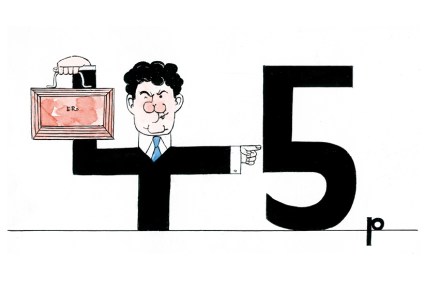
HomeIn the Budget, George Osborne, the Chancellor of the Exchequer, raised the threshold for workers to start paying income tax at standard rate to £9,205 and announced a gradual reduction of the rate for those earning more than £150,000 from 50 per cent. He imposed a higher level of stamp duty on houses costing more than £2 million and promised measures to make people pay. Child benefit would be withdrawn from fewer families. Tobacco and drink duties went up by 5 per cent above inflation. Taxpayers will each be sent annual details of the tax they pay and what it is spent on. The Office for Budget Responsibility had raised its expectations for growth in the economy a smidgeon, and the Chancellor expected to eliminate the national deficit by 2016-17.

Portrait of the week | 17 March 2012

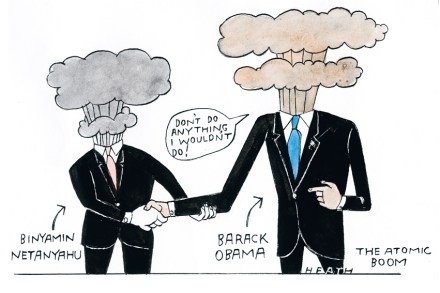
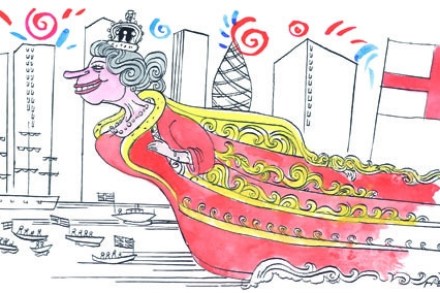
HomeDavid Cameron, the Prime Minister, on an official visit to the United States, joined President Barack Obama in declaring that their relationship was not just special but ‘a unique and essential asset’. The Queen began her Diamond Jubilee tour of the United Kingdom at Leicester, with the Duke of Edinburgh and the Duchess of Cambridge. George Osborne, the Chancellor of the Exchequer, put his mind to new government bonds of 100 years or more. In the face of government proposals to introduce marriage between people of the same sex, the Archbishops of Westminster and Southwark wrote a joint letter read out in pulpits about the Catholic ‘duty to do all we can to ensure that the true meaning of marriage is not lost’.

Portrait of the week | 10 March 2012

HomeVince Cable, the Business Secretary, said in a leaked letter that the coalition lacks a ‘compelling vision’. He proposed that RBS be split up and half turned into ‘British business bank’. Earlier he had said that there was a ‘broad understanding’ in the coalition that, if the 50p tax rate was removed, it should be replaced by a tax on wealth such as a ‘mansion tax’. House prices fell by 0.5 per cent in February compared with January, according to a survey by the Halifax. Engelbert Humperdinck, aged 75, was chosen to represent the United Kingdom at the Eurovision Song Contest, to be held in Azerbaijan. Lord St John of Fawsley, the former Conservative MP sacked by Margaret Thatcher in 1981 after two years in the Cabinet, died, aged 82.

Portrait of the week | 3 March 2012

HomeNick Clegg, the Deputy Prime Minister, lent his support to a series of amendments to the government’s Health and Social Care Bill that he said would limit its adoption of competition and privatisation. The British Medical Association said that two thirds of members had approved some form of action over plans to make them contribute more to their pensions. Len McCluskey, the General Secretary of Unite, called for industrial disruption during the Olympics. Police and bailiffs removed tents from a protest camp at St Paul’s Cathedral set up on 15 October. The BBC found that thousands of illegal immigrants from India were living in sheds, particularly in Slough and the London borough of Ealing.

Portrait of the week | 25 February 2012

HomeImmigration officials did not check the details of 500,000 people entering Britain by Eurostar trains, and left unread the biometric chip in passports of people entering the United Kingdom on 14,812 occasions in the first half of 2011, according to a report by John Vine, the independent chief inspector of the UK Border Agency. Theresa May, the Home Secretary, told Parliament that the UK Border Agency would be split in two, with the UK Border Force becoming a separate law-enforcement body.

Portrait of the week | 18 February 2012

HomeBideford town council acted unlawfully by allowing prayers to be said at meetings, the High Court ruled. ‘A local authority has no power under section 111 of the Local Government Act 1972,’ Mr Justice Ouseley said, ‘to hold prayers as part of a formal local authority meeting’, but he rejected arguments based on the European Convention on Human Rights. Abu Qatada, the Islamist extremist cleric, was released on bail and confined to his home for 22 hours a day. Lord Carlile, the former independent reviewer of terrorism legislation, said: ‘We have to find a way of making him leave. There are legal, rule-of-law ways, of achieving that.

Portrait of the week | 11 February 2012

HomeA judge granted bail to Abu Qatada, once described by a Spanish judge as ‘Osama bin Laden’s right-hand man in Europe’, who was to be freed from Long Lartin prison and allowed to leave a fixed address in London for two one-hour periods a day, in order to take his youngest child to school. Ed Davey replaced his fellow Liberal Democrat Chris Huhne as Energy Secretary after Mr Huhne’s resignation to concentrate on defending himself against charges that he persuaded his ex-wife to accept his speeding points in 2003 to avoid a driving ban. The Metropolitan Police unlawfully failed to warn people that their telephones had been hacked by the News of the World, a judicial review, sought by Lord Prescott, ruled.

Portrait of the week | 4 February 2012

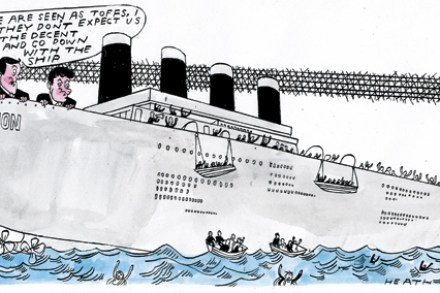
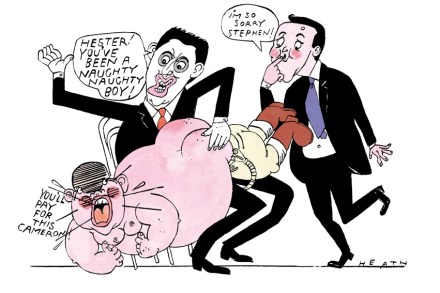
HomeFred Goodwin, the former chief executive of the Royal Bank of Scotland, was stripped of his knighthood by the Forfeiture Committee, which said he had ‘brought the honours system into disrepute’. Stephen Hester, the chief executive of the Royal Bank of Scotland, turned down a £963,000 shares-only bonus payment in the face of ‘enormous political pressure’. The Institute for Fiscal Studies said that the government was borrowing £2.9 billion less this year than expected and that there might be room for tax cuts in the budget next month. A man in Bournemouth found blue spheres of jelly an inch across on his lawn after a hailstorm.

Portrait of the week | 28 January 2012

Home The government was defeated in the Lords by 252 to 237 on an amendment by the Rt Rev John Packer, Bishop of Ripon and Leeds, to the Welfare Reform Bill, removing child benefit from the proposed welfare cap of £26,000 a year per household. Vince Cable, the Business Secretary, said in the Commons that he wanted to see legislation to give shareholders a binding (rather than the current advisory) vote on executive pay. MPs heard that the clock tower that houses Big Ben was leaning by 0.26 degrees to the north-west, which was just visible, but that it would not become unstable for more than 4,000 years.