Portrait of the week

Portrait of the week | 7 February 2013

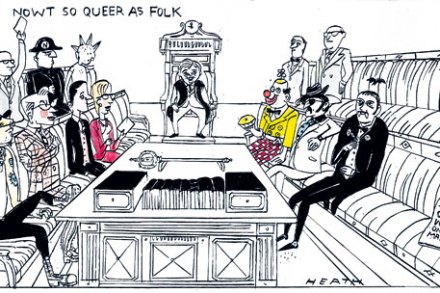
Home  The Marriage (Same Sex Couples) Bill was given its second reading in the Commons by 400 votes to 175. Of Conservative MPs, 127 voted for it, and 136 against. David Cameron, who did not attend the debate, called the result ‘an important step forward’. The bill does not apply to Scotland, which has its own plans, or to Northern Ireland, which does not. A provision of the bill prohibits the Church of England and the Church in Wales from conducting same-sex weddings, which are against canon law (itself part of English law). On the day of the confirmation of his election as Archbishop of Canterbury, the Most Revd Justin Welby said: ‘I support the Church of England’s position on this.

Portrait of the week | 31 January 2013

Home Britain decided to send 40 ‘military advisers’ to Mali, 70 more with an RAF Sentinel surveillance aircraft and 20 with a C17 transport plane, and 200 to neighbouring states in a training role; Britain was ‘keen’, according to Downing Street, to aid France there. David Cameron, the Prime Minister, visited Algeria. The British economy shrank by 0.3 per cent in the fourth quarter of 2012, according to the Office for National Statistics, meaning that there was no growth at all last year. The FTSE 100 share index went above the 6,300 mark for the first time since May 2008. Qatari Diar, the property arm of the emirate of Qatar, put its £3 billion development project at the Chelsea Barracks under review.

Portrait of the week | 24 January 2013

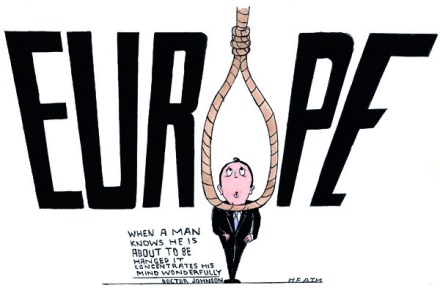
Home David Cameron, the Prime Minister, at last delivered his speech on Europe, postponed during the Algerian hostage crisis. He wanted to ‘negotiate a new settlement with our European partners’, and before the end of 2017, ‘when we have negotiated that new settlement, we will give the British people a referendum with a very simple in or out choice. To stay in the EU on these new terms; or come out altogether. It will be an in/out referendum.’ The government started trying to hurry through a Bill to change succession to the Crown. Blockbuster, the DVD rental firm, went into administration and announced the closure of 160 of its 528 shops. Tom Albanese resigned as the chief executive of Rio Tinto after the company wrote off £8.

Portrait of the week | 17 January 2013

Home David Cameron, the Prime Minister, brought forward his speech on new relations with the European Union from 22 January when it was realised that it was the 50th anniversary of the Elysée treaty between Germany and France. Britain went to war in Mali by sending two transport planes in support of the French invasion directed against Islamist groups. The rights of a British Airways employee, Nadia Eweida, had been violated by her being forbidden to wear a cross at work, the European Court of Human Rights ruled.

Portrait of the week | 10 January 2013

Home David Cameron, the Prime Minister, said that, for the ‘coalition government with a full tank of gas, it’s full steam ahead’. He announced a ‘mid-term review’, but an audit that showed which pledges had not been met was held back. ‘We are married, not to each other,’ he said at a joint press conference with Nick Clegg, the deputy prime minister, ‘So, to me it’s not a marriage, it is, if you like, a Ronseal deal — it does what it says on the tin.’ He promised details in coming weeks on such things as ‘capping the potentially huge cost’ of social care, and extending the HS2 high-speed rail line from Birmingham to the north of England.

Portrait of the week | 3 January 2013

Home On the eve of a speech by David Cameron, the Prime Minister, on the EU, Andrew Duff MEP, the leader of the Union of European Federalists, suggested that Britain could be offered second-class ‘associate member’ status in the EU. ‘If the British cannot support the trend towards more integration in Europe,’ Jacques Delors, the former president of the EU Commission said in an interview with a German paper, ‘we can nevertheless remain friends, but on a different basis.

Portrait of the week | 28 December 2012

Home Banks should erect a protective ring-fence round their high-street operations, the Parliamentary Commission on Banking Standards recommended, and moreover it should be ‘electrified’. The metaphor meant that regulators should have the power to break up banks that misbehaved. The ten members of the commission included the next Archbishop of Canterbury, the Rt Revd Justin Welby, and ‘Nigella’s Dad’, as one paper put it, Lord Lawson of Blaby. Mark Carney, the next governor of the Bank of England, suggested that economic growth should be a target, rather than inflation. The government had to borrow £17.5 billion in November, £1.

Portrait of the year | 12 December 2012

January Britain’s public debt rose above £1,000 billion for the first time. Fred Goodwin, the former chief executive of the Royal Bank of Scotland, was stripped of his knighthood. The High Speed 2 rail link between London and Birmingham was given the go-ahead. Police removed protestors’ tents in Parliament Square under a new act. Abu Qatada won an appeal to the European Court of Human Rights against deportation to Jordan. In Syria protestors continued to be killed. In Saudi Arabia 28,000 women applied for jobs in lingerie shops, in which only men could previously serve. February The High Court ruled that prayers said at meetings of Bideford council were unlawful. Police removed tents from a protest camp at St Paul’s, set up on 15 October.

Portrait of the week | 6 December 2012

Home In his Autumn Statement, held nearer the winter solstice, George Osborne, the Chancellor of the Exchequer, confronted the need to extend austerity measures for reducing the deficit to 2018. The economy would shrink by 0.1 per cent in 2012. He cut corporation tax to 21 per cent from 2014, cancelled January’s fuel tax rise and promised consultation on tax incentives for shale-gas exploitation. All but four Whitehall departments would be asked to save an extra 1 per cent next year and a further 2 per cent the year after, with the hoped-for £5 billion going to schools and roads. Battersea should get its own Underground connection.

Portrait of the week | 29 November 2012

Home Rotherham Borough Council took away three children from foster parents because they belonged to the UK Independence Party. ‘If the party mantra is, for example, ending the active promotion of multiculturalism I have to think about that,’ said Joyce Thacker, Rotherham’s Strategic Director of Children and Young People’s Services. Rochdale Council said that 12 of its workers were being investigated following the conviction last May of nine men who ran a child sex ring. Greater Manchester Police said that boys ‘were victims of physical and sexual abuse’ by the late Sir Cyril Smith, the MP for Rochdale, in the 1960s. Boris Johnson was mistaken for Boris Becker in Delhi on a tour promoting London business.

Portrait of the Week – 22 November 2012

Home The General Synod of the Church of England voted against the ordination of women bishops. The measure required a two thirds majority in each house of the Synod, but the voting was 44 for and three against with two abstentions in the House of Bishops, 148 for and 45 against in the House of Clergy, and 132 for and 74 against in the House of Laity. Kweku Adoboli, a trader with UBS, was jailed for seven years for fraud that lost the bank £1.4 billion, the largest trading loss in British banking history. The G8 summit next year is to be held at Lough Erne golf resort near Enniskillen, Co Fermanagh. The number of people in England waiting more than a year for NHS hospital treatment fell to 1,600 from 20,000 a year before, although the earlier statistics were said to be unreliable.

Portrait of the week | 15 November 2012

Home Abu Qatada, detained in Britain for seven years although not charged here, but wanted on terrorist charges in Jordan, could not be deported, the Special Immigration Appeals Commission ruled, because evidence might be used against him that had been obtained from the torture of others; so he was freed on bail. The annual rate of inflation by the Consumer Prices Index rose to 2.7 per cent in October, from 2.2 per cent in September, and to 3.2 per cent, from 2.6 per cent, by the Retail Prices Index. Unemployment fell by 49,000 to 2.51 million in the three months to September. The Rt Revd Justin Welby, Bishop of Durham, is to be enthroned as the 105th Archbishop of Canterbury on 21 March 2013.

Portrait of the Week – 8 November 2012

Home David Cameron, the Prime Minister, flew to the Gulf to sell Typhoon jets to Dubai and Saudi Arabia. On the border of Jordan with Syria he said he shared a ‘goal of a Syria without Assad’. Mr Cameron appointed Mrs Justice Macur to examine the treatment of allegations of sexual abuse at children’s homes in North Wales in the 1970s and 1980s. Someone abused at that period accused a former Conservative politician. Theresa May, the Home Secretary, announced a new police inquiry into the abuse. A text message from Rebekah Brooks to Mr Cameron was published by the Mail on Sunday: ‘Brilliant speech. I cried twice. Will love “working together”.

Portrait of the week | 1 November 2012

Home Hitachi bought Horizon Nuclear Power for £700 million, giving it rights to build nuclear power stations in Anglesey and Gloucestershire. John Hayes, the energy minister, said that Britain was ‘peppered’ with onshore wind turbines, and ‘enough is enough’. HM Revenue and Customs wrote to families with at least one member earning more than £50,000 telling them they are no longer entitled to the full amount of child benefit. Some 100,000 ash trees had been burnt in an attempt to halt the spread of Chalara fraxinea, a fungus deadly to them, David Heath, the environment minister, told parliament, as import of the trees was banned.

Portrait of the week | 25 October 2012

Home Andrew Mitchell, the Conservative chief whip, resigned, still denying that he referred to police as ‘plebs’ for refusing to allow him to cycle through the main gate to Downing Street three weeks ago. The Chancellor, George Osborne, was caught in a first-class carriage with a standard-class ticket. One of his aides paid £160 for an upgrade, saying that the Chancellor couldn’t possibly travel in standard class. The Prime Minister said that energy companies would be put under a duty to make sure that their customers were on the lowest-possible tariff, but the plan lasted only three hours. The working population rose by 212,000 to just under 30 million, the highest number ever recorded.

Portrait of the week | 18 October 2012

Home Theresa May, the Home Secretary, blocked the extradition of Gary McKinnon to the United States, where he is suspected of having hacked into government computers. She told the Commons there was no doubt he had Asperger’s syndrome and suffered from depressive illness, and that there was a risk of suicide. Dominic Grieve, the Attorney General, blocked the release of private letters that the Prince of Wales had sent to seven government departments. The Territorial Army would be renamed the Army Reserve and become an ‘integral part’ of the Army, Philip Hammond, the Defence Secretary said. Five Royal Marines were charged with murder over an incident in Afghanistan in 2011 that concerned an insurgent but no civilians.

Portrait of the week | 11 October 2012

Home ‘Unless we take difficult, painful decisions,’ David Cameron, the Prime Minister, told the Conservative party conference, ‘Britain may not be in the future what it has been in the past.’ He said that it was ‘an hour of reckoning for countries like ours. Sink or swim, do or decline.’ Earlier he had said that a referendum on the terms of EU membership is the ‘cleanest, neatest and simplest’ solution, though a general election would count as an alternative.

Portrait of the week | 3 October 2012

Home In a well-received 65-minute speech without notes to the party conference, Ed Miliband, the Labour leader, presented himself as a human being and concluded: ‘This is who I am. This is what I believe. This is my faith.’ Mr Miliband presented Labour as a One Nation party. He also said that if banks do not separate their retail and investment arms, a future Labour government would ‘break them up’. Ed Balls, the shadow chancellor, said that 100,000 houses should be built with the £4 billion raised from the sale of the 4G mobile phone spectrum. Dave Prentis, of the union Unison, criticised Mr Miliband and Mr Balls for supporting a freeze on public-sector workers’ pay.

Portrait of the week | 27 September 2012

Home The European Court of Human Rights approved the extradition of Abu Hamza al-Masri, Babar Ahmad, Syed Talha Ahsan, Adel Abdul Bary and Khaled al-Fawwaz to the United States, where they are wanted on suspicion of terrorism. The BBC then had to write to the Queen to apologise for Frank Gardner, its security correspondent, reporting what he said she had told him in a private conversation about her anxieties over Abu Hamza before his arrest. A 49-year-old man, transferred to a London hospital by air ambulance from Qatar, was found to be suffering from a viral disease similar to Sars; another man with the disease died in Saudi Arabia. Hundreds of houses were flooded, and England was cut off from Scotland by the east coast rail line. The streets of Aberdeen were filled with sea foam.

Portrait of the week | 19 September 2012

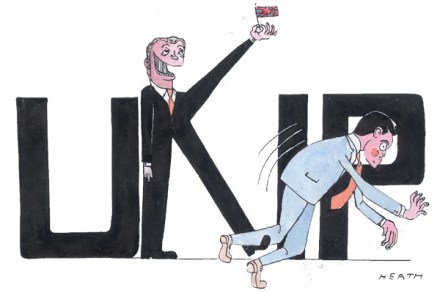
Home The government gave a commercial company, Capita, a contract to find and remove more than 150,000 migrants who have overstayed their visas. A French court prohibited a magazine from republishing pictures of the Duchess of Cambridge topless, or distributing them. After appearing in the French magazine, the pictures had been printed in the Irish Daily Star. The Duke and Duchess continued their Jubilee year tour, taking in the Solomon Islands and Tuvalu. In a freedom of information case brought by a Guardian journalist, an appeal court ruled that correspondence between Prince Charles and the government should be made public. Derek Jameson, a former editor of the Daily Star, died, aged 82. Lord Stevens of Ludgate, a former chairman of United Newspapers, joined Ukip.