Portrait of the week

Portrait of the week | 13 September 2012

Home George Osborne, the Chancellor of the Exchequer, said the autumn statement would be on 5 December, and commentators said he would confront the dwindling chance of meeting debt targets set for 2015. Vince Cable, the Business Secretary, said the government would set up a ‘business bank’ to lend to companies. The Commons Public Accounts Committee said a £1.4 billion Regional Growth Fund set up in April last year had created only 2,442 jobs. Delegates to the Trades Union Congress voted to support co-ordinated strikes against a public sector pay freeze. Tories from the right of the party started a group called Conservative Voice.

Portrait of the week | 6 September 2012

Home David Cameron, the Prime Minister, shuffled the Cabinet a little, with Sir George Young being replaced as Leader of the House by Andrew Lansley, who was replaced as Health Secretary by Jeremy Hunt, who was replaced as Culture Secretary by Maria Miller. Justine Greening was replaced as Transport Secretary by Patrick McLoughlin, who was replaced as Chief Whip by Andrew Mitchell, who was replaced as International Development Secretary by Justine Greening, whose move, according to Boris Johnson, the Mayor of London, showed that the government wanted to ‘ditch its promises and send yet more planes over central London’. Caroline Spelman was replaced as Environment Secretary by Owen Paterson, who was replaced as Northern Ireland Secretary by Theresa Villiers.

Portrait of the week | 25 August 2012

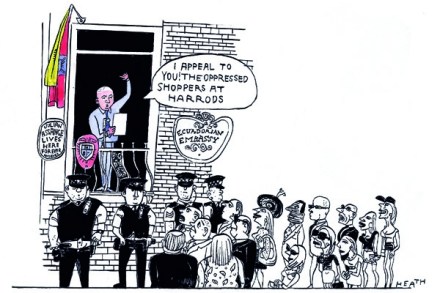
Home After being granted asylum by Ecuador, Julian Assange, the founder of WikiLeaks, addressed a crowd of supporters from a balcony of the Ecuadorian embassy, to which he had fled in June to avoid extradition to Sweden, where he faces questioning over allegations of sexual assault. The Foreign Office had annoyed Ecuador by drawing attention to the Diplomatic and Consular Premises Act 1987, which might allow police to enter the embassy to arrest Mr Assange. George Galloway, the Respect party MP, said that what Mr Assange was accused of ‘might be really sordid and bad sexual etiquette, but whatever else it is, it is not rape’. Asil Nadir was found guilty on three counts of theft totalling £5.

Portrait of the week | 18 August 2012

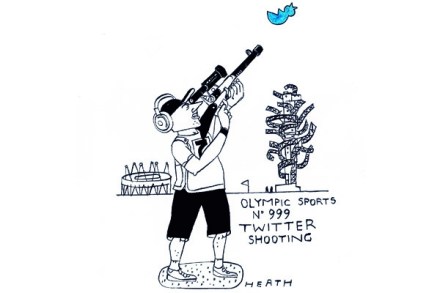
Home The closing ceremony of the Olympic Games, watched by an average of 22.9 million people in Britain, included a mixed choir of deaf and not-deaf children singing: ‘Imagine there’s no heaven/ It’s easy if you try’; Pete Townshend (67) and Roger Daltrey (68) singing ‘My Generation’, omitting the line ‘Hope I die before I get old’; and Eric Idle, surrounded by Welsh women in national dress, Scottish pipers and rollerskating nuns, singing: ‘Life’s a piece of shit when you look at it.’ David Cameron, the Prime Minister, said that the primary school curriculum would in future include competitive sport; but requirements for schools to provide stipulated space for playing fields were relaxed.

Portrait of the week | 11 August 2012

Home The Olympic Games dominated national life. Eight of Great Britain and Northern Ireland’s first 22 gold medals (outdoing its 19 golds in Beijing in 2008) were in cycling. Sir Chris Hoy brought the total of gold medals in his Olympic career to six, outdoing Sir Steve Redgrave’s record. Bradley Wiggins added an Olympic gold in the road time trial to his victory in this year’s Tour de France. There were four golds in rowing, four in athletics (Jessica Ennis winning the heptathlon, Alistair Brownlee the triathlon, Mo Farah the 10,000 metres and Greg Rutherford the long jump), and one in sailing (Ben Ainslie), tennis (Andy Murray beating Roger Federer, who had beaten him in the Wimbledon championship final), team showjumping, team dressage, shooting and canoeing.

Portrait of the week | 4 August 2012

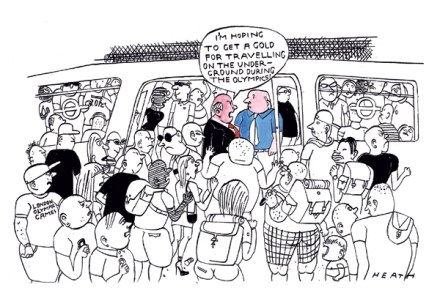
Home After an opening ceremony going on into the early hours, directed by Danny Boyle and watched at one point by 26.9 million viewers in Britain, the Olympic Games in the Lea valley settled down to its sporting business, with only marginal complaints about empty seats, food queues, over-protective branding and the loss of the keys to Wembley stadium. The locks were changed. Two hundred and four copper petals attached to steel tubes had risen into the air without a hitch to form an Olympic cauldron of flame, to the designs of Thomas Heatherwick. The Queen had co-operated in making a jokey film sequence with Daniel Craig in the character of James Bond, during which she pretended to parachute into the stadium. Predictions of medal numbers for Britain seemed initially over-optimistic.

Potrait of the week | 28 July 2012

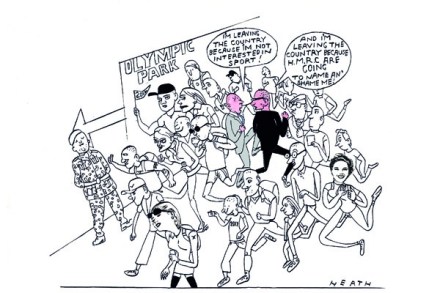
Home The nation was divided between those who moaned about the Olympic Games and those who didn’t. Some immigration staff decided to hold a strike, then called it off an hour before the government was due to go to court to seek an injunction against it. Another 1,200 troops joined the 3,500 deployed to cover security deficiencies. Campanologists agreed to ring bells across the land at 8.12 a.m. on 27 July. Boris Johnson recited an ode composed in ancient Greek that in English ended: ‘Now welcome to this sea­-girt land,/ With London’s Mayor and Co at hand./ Good luck to all who strive to win:/ Applaud, and let the Games begin!’ Bradley Wiggins became the first Englishman to win the Tour de France bicycle race.

Portrait of the week | 21 July 2012

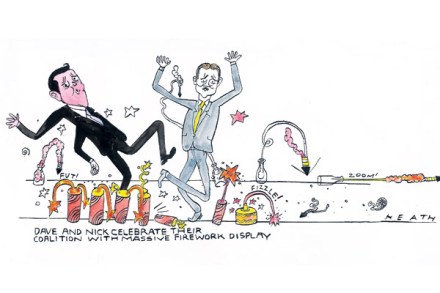
Home The Armed Forces were called upon to supply 3,500 men to look after security for the Olympic Games after GS4, a security company, failed to recruit enough staff. Nick Buckles, its chief executive, agreed before a Commons committee that it had been a ‘humiliating shambles’ but said that the company would keep its £57 million management fee. The UK Border Agency had laid off 1,000 more workers than it intended, the National Audit Office found. David Cameron, the Prime Minister, appearing at a rail depot in Smethwick with Nick Clegg, the deputy prime minister, said that he was ‘even more committed’ to the coalition, and announced new rail schemes costing £4.

Potrait of the week

Home The government cancelled a vote setting a timetable for a Bill to reform the House of Lords after dozens of Conservative MPs were ready to rebel. The Bill, which gained a second reading thanks to Labour, was brought in at the insistence of the Liberal Democrats. Six men from the West Midlands were charged with terrorism. President François Hollande of France visited David Cameron, the British Prime Minister, who, standing next to the 5ft 7in leader, said: ‘We both want to stand tall in the world.’ The unseeded Jonathan Marray of Britain and Frederik Nielsen of Denmark won the Wimbledon men’s doubles. Roger Federer of Switzerland won the men’s title, beating Andy Murray, the first British finalist since Bunny Austin in 1938.

Portrait of the week | 7 July 2012

Home  Bob Diamond resigned as chief executive of Barclays a day after he said he wasn’t resigning. Marcus Agius resigned as chairman of Barclays, and a day later was appointed ‘full-time chairman’ to seek a replacement for Mr Diamond. The imbroglio followed a £290 million fine (£59.5 million by the British Financial Services Authority and the rest by American authorities) for Barclays’ having filed false information on its borrowings in connection with the setting of the London Interbank Offered Rate (Libor).

Portrait of the week | 30 June 2012

Home A computer failure left millions of customers of RBS and NatWest without access to their money for days; a man was held in jail over the weekend because his bail payment could not be traced, and other customers feared that their credit ratings would suffer because of missed payments for mortgages and regular direct debits. Alistair Darling, the former Chancellor of the Exchequer, launched the campaign against Scottish independence called Better Together. England was knocked out of Euro 2012 in a penalty shootout with Italy. ••• The government introduced, at the instigation of the Liberal Democrats, a bill for a reformed, mostly elected House of Lords.

Portrait of the week | 23 June 2012

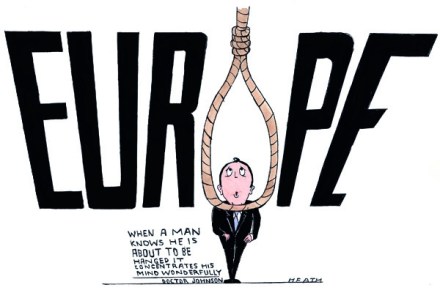
Home Europe faced ‘perpetual stagnation’ unless leaders acted to resolve the euro crisis, David Cameron, the Prime Minister, said at the G20 summit of leading economies in Mexico. He also said that he would ‘welcome more French businesses to Britain’, where they would pay tax at a lower rate than that imposed by the Socialist government. David Lidington, the Europe Minister, insisted that a proposal by European Union ministers to reduce the British budget rebate was pointless, as Britain would not accept it. Workers paid less than £13,000 a year will no longer be able to claim working tax credits when they are on strike, the government said.

Portrait of the week | 16 June 2012

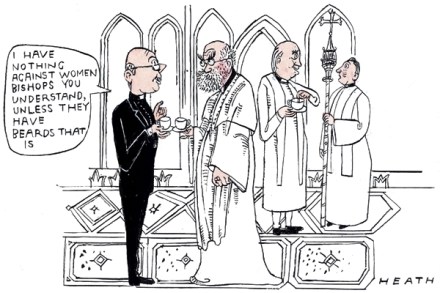
Home The Church of England opposed government plans for gay marriage, noting that if they were brought into law, the European Court of Human Rights would probably oblige churches to perform such marriages. Michael Gove, the education secretary, said he expected children of five to recite poetry. Gordon Brown, the former prime minister, in evidence to the Leveson inquiry, flatly contradicted evidence that Rupert Murdoch had given about their dealings. Edinburgh saw 39 confirmed and 49 suspected cases of legionnaires’ disease, which killed one man. David Cameron and his wife, it was discovered, accidentally left their eight-year-old daughter behind in a pub one Sunday lunchtime this year. There was widespread flooding in England and Wales. Thames Water lifted its hosepipe ban.

Portrait of the week | 2 June 2012

HomeThe government revised plans announced in the Budget to put VAT on warm Cornish pasties and supermarket rotisserie food, and reduced the proposed 20 per cent VAT on static caravans to 5 per cent. It launched an £82 million scheme to lend money (typically £2,500) to people aged between 18 and 24 who want to start a business. Baroness Warsi, the co-chairman of the Conservative party, referred herself to the Lords commissioner for standards after newspapers alleged that she claimed accommodation allowance while staying with a friend rent-free. A government internet service for people to discover how much income tax they pay broke down on its first day. Boris Johnson, the Mayor of London, said he would rather ‘die in a ditch’ than allow a third runway at Heathrow.

Portrait of the week | 26 May 2012

HomeThe International Monetary Fund suggested Britain should undertake more quantitative easing or even cut interest rates. But Christine Lagarde, the IMF’s managing director, said ‘I shiver’ at the thought of Britain’s deficit in 2010 having been left without plans for fiscal consolidation. Vince Cable, the Business Secretary, made a noise for his side of the coalition by writing in the Sun about the report on employment commissioned by the government from Adrian Beecroft, the venture capitalist: ‘Some people think that if labour rights were stripped down to the most basic minimum, employers would start hiring and the economy would soar again. This is complete nonsense.

Portrait of the week | 19 May 2012

HomeThe Bank of England decided against more quantitative easing, after creating £325 billion in three years. Steve Hilton, the Downing Street director of strategy, left proposals for cuts of £25 billion from welfare spending as he headed off for an academic post in California. Philip Hammond, the Defence Secretary said that business leaders were whingeing, and ‘large businesses are sitting on a pretty large pile of cash’. William Hague, the Foreign Secretary, said: ‘There’s only one growth strategy: work hard.’ Unemployment fell by 45,000 to 2.63 million. Thousands of civil servants are to be asked to work from home during the period of the Olympic Games, from 21 July to 9 September.

Portrait of the week | 12 May 2012

HomeDavid Cameron, the Prime Minister, declared that he would ‘focus on what matters’ after the Conservatives’ poor showing in the local elections brought accusations that pursuit by the coalition of such aims as gay marriage and reform of the House of Lords was alienating voters. On the eve of the Queen’s Speech he appeared at a tractor factory in Essex with Nick Clegg, the deputy prime minister and leader of the Liberal Democrats, who had done disastrously in the local elections. ‘I’m really sad,’ Mr Clegg had said of the results. Labour had gained an extra 823 wards, the Conservatives lost 405 and the Liberal-Democrat party 330, leaving it with the lowest number of council seats since its foundation in 1988.

Portrait of the week | 3 May 2012

HomeA report by the Commons culture media and sport select committee into News International and phone-hacking declared: ‘Rupert Murdoch is not a fit person to exercise the stewardship of a major international company.’ Four of the ten members of the committee did not endorse this finding. David Cameron, the Prime Minister, was called to the Commons to answer a question from Ed Miliband, the leader of the opposition, on whether he would refer the case of Jeremy Hunt, the culture secretary, to the independent adviser on ministerial interests (Sir Alex Allan). The question arose from Mr Hunt’s handling of News International’s application to take over BSkyB. Lord Justice Leveson declined a request from Mr Hunt to appear early before his inquiry into the media.

Portrait of the week | 28 April 2012

HomeThe British economy went back into recession, shrinking by 0.2 per cent in the first quarter of 2012, following a contraction of 0.3 per cent in the last quarter of 2011. Government debt rose by £117 million over last year’s figure, to £1,022.5 billion, equivalent to 66 per cent of GDP. George Osborne, the Chancellor, lent the International Monetary Fund another $15 billion to help it bail out countries in the eurozone. In the Commons, Ed Miliband, the leader of the opposition, had earlier characterised Mr Osborne’s Budget as an ‘omnishambles’.

Portrait of the week | 21 April 2012

HomeAbu Qatada, wanted in Jordan on terrorism charges, was held in prison in England again, two months after his release from prison, and Theresa May, the Home Secretary, said he would be deported to Jordan, although ‘deportation may still take time’. Abdel Hakim Belhadj, a Libyan commander, sued Jack Straw, the former foreign secretary, alleging that he was instrumental in his arrest by US agents who sent him into the clutches of the late Colonel Gaddafi. Charities campaigned against the plans by George Osborne, the Chancellor of the Exchequer, to limit tax relief on big donations to £50,000 or a quarter of the donor’s income, whichever the higher.