More from life

Dear Bill de Blasio: there are better reasons to boycott the St Patrick’s Day parade

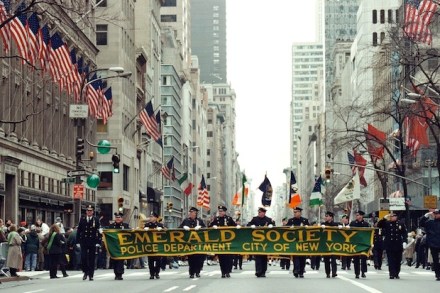
The new mayor of New York, who despite his name (Bill de Blasio) claims Irish ancestry, is boycotting this month’s St Patrick’s Day Parade because its organisers refuse to allow a contingent of gays and lesbians to march up Fifth Avenue as an identifiable group bearing the insignia of gay pride. This is not exactly surprising, because the New York St Patrick’s Day event, claimed to be the oldest such parade in the world, is more or less controlled by the Roman Catholic Church, which doesn’t encourage displays of gay self-congratulation.
How Paul Bittar has kept British racing together

British racing is such a quirky minefield that some were surprised when in 2011 the authorities chose Paul Bittar, a man from Wagga Wagga with most of his racecourse experience in New Zealand and the state of Victoria, to run the British Horseracing Authority. Australian cricketers, it used to be said, had a standard uniform: green caps and a chip on the shoulder. When I mentioned in front of a racing club audience the other night that New Zealanders will bet on anything that moves, and if it doesn’t move they will kick it and bet on when it will start to move, Paul was sufficiently Australian to chide: ‘You’re not suggesting, are you, that Australians would be any less eager to have a bet?’ It set the tone for an evening of good humour and candid common sense.

Sorry, campaining mums – it’s faith that makes faith schools work

An email popped into my inbox on Tuesday morning urging me to join a ‘fair admissions campaign’ that’s been launched by a couple of mums in Shepherd’s Bush. Their children are at a local primary school and they’re angry that they won’t be able to get them into any of the local faith schools. ‘Two of our children are in Year Five and we feel offended by the fact that out of 11 secondary schools in the borough almost half will put them at the very bottom of the waiting list due to our “wrong” beliefs,’ they write. Now, I’m probably among the dozen or so local residents least likely to join this campaign but, to be fair, I don’t think they singled me out.

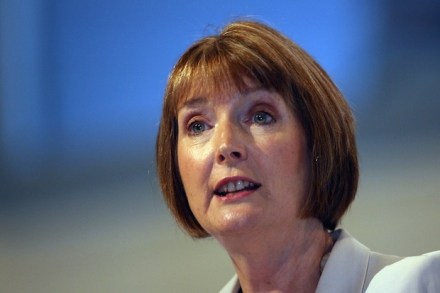
What’s happened to Harriet Harman?

Watching Harriet Harman being interviewed by Laura Kuenssberg on Newsnight earlier this week was a strange experience. I felt as if I’d entered a political twilight zone where nothing was quite as it seemed. Was the deputy leader of the Labour party really saying these things? I knew she was, but it seemed so miscalculated — so unwise — it was as if Harman’s body had been taken over by someone else. A mischievous political demon, perhaps. Or Lynton Crosby. The entire interview was like a nine-minute party political broadcast for the Conservative party.

I was forced on to the internet in the 1980s. I still don’t belong there

With regard to modern technology, I find that people of around my age — by which I mean people in their seventies or over — are divided into two camps. There are those who have embraced the digital revolution with embarrassing enthusiasm, knowing much more about it than it is decent to know; and then there are those who, almost as embarrassingly, take pride in knowing nothing about it whatsoever. The former seem determined to show that they are not past it, that they are in tune with the modern world, and, like teenagers, are never parted from their computers, emailing and tweeting as the day is long. The latter claim to see no point in email or any of the social media and talk nostalgically about the days when people used to write each other letters in long hand.

Playground bullies and the contradiction at the heart of democracy

A new book by a Swedish psychiatrist has just come out that I like the sound of. It’s called How Children Took Power and argues that the child-centred approach to parenting that’s been popular in Scandinavia since the 1960s has created a nation of ouppfostrade, which roughly translates as ‘bad children’. Dr David Eberhard, a 42-year-old father of six, says a lack of discipline during childhood has left millions of Swedes unable to cope with the challenges of adult life. By way of evidence, he cites the above-average number of anxiety disorders and higher suicide rate among children raised by liberal parents. ‘Saying ‘no’ to a child is not the same as beating a child,’ says Dr Eberhard.

The Grand National needs kinder weather

This year you don’t want to be a jockey’s valet. Never have their washing machines spun so vigorously. From every sortie, riders return as mud-spattered as if they had been trampled by a dozen rugby scrums, and so many of us gathered at the Abbey Road Studios to hear the weights to be carried in this year’s Grand National were praying that the elements will have relented well before the 5 April contest. The National is both jump racing’s biggest advertisement and its greatest potential disaster. In 1998, when the four-mile marathon was run in atrocious conditions, three horses died and only six of the 37 runners finished the course. In 2001, it was again a mudlarks’ benefit: only seven entrants survived the first circuit and only two completed without a fall.

Was Graham Greene right about Shirley Temple? 

Shirley Temple, who died last week at the age of 85, was the most successful child film star in history. During the second half of the 1930s, a decade in which she made 23 films and earned $3 million before puberty, she was America’s most popular film star of any kind; Clark Gable came only a distant second. What was the secret of her enormous popularity? According to Temple’s own oft-repeated explanation, ‘People in the Depression wanted something to cheer them up, and they fell in love with a dog, Rin Tin Tin, and a little girl.’ This surely has truth in it, for the precocious, confident, sparkling little actress embodied an optimism for which her country yearned.

Oh no. Have I let my children have too much self-esteem?

Two new books have been published recently on the thorny issue of social mobility, one optimistic, suggesting various things parents can do to maximise their children’s chances of success, the other pessimistic, concluding that a child’s fate is more or less sealed at birth. Paradoxically, the optimistic book is incredibly depressing, while the pessimistic one is quite reassuring. The first book is The Triple Package by the husband and wife team of Amy Chua and Jed Rubenfeld. The authors, who are both law professors at Yale, identify three characteristics that America’s most successful cultural groups have in abundance: a superiority complex, insecurity and impulse control.

In praise of Milton Keynes

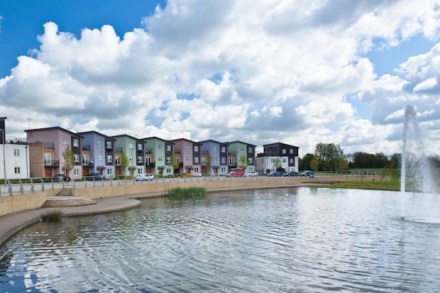
Who would ever have thought it, but I have become quite fond of Milton Keynes. Although I live slightly closer to the ancient city of Northampton than to this widely mocked ‘new town’ of the 1960s, I definitely prefer the latter. Northampton is a fine example of the ruination of an English market town by misguided post-war planners; Milton Keynes an example of the fulfilment of their utopian dreams. It is no utopia, of course.

My battle with Michael Gove’s Blob

Michael Gove has been under fire this week for ‘sacking’ Sally Morgan as chair of Ofsted. You’d think he’d be within his rights not to re-appoint her, given that she’s a former aid of Tony Blair’s and her three-year term has come to an end. But no. This has become Exhibit A in the latest case for the prosecution against the Education Secretary, namely, that he’s too partisan, too ideological. He’s abandoned the ‘big tent’ approach that characterised the honeymoon period of the coalition and reverted to type. He’s a Tory Rottweiler. All complete balls, of course. When it comes to education reform, supporters and opponents don’t divide along party lines.

Women simply don’t understand sport’s importance

Liverpool manager Bill Shankly was once challenged with the story that for their wedding anniversary treat he had taken his wife to a Rochdale match. ‘Sheer nonsense,’ he replied. ‘It was her birthday. Would I have got married during the football season? And anyway it was Rochdale Reserves.’ Shankly may have taken it to extremes, but there is a man/woman thing over sport. Women simply cannot register its importance, not even the saintly Mrs Oakley. Having missed the last race at Sandown on Saturday to drive 90 minutes back to Oxfordshire in time to pick her up from the station, I thought I would be doing OK, brownie points-wise. I was rapidly proved wrong. We arrived home just in time for the second half of England v.

Local protests don’t stop windfarms. Subsidy cuts do

Here in the valley of the River Tove in south Northamptonshire my chickens are laying copiously, my ducks are quacking loudly, and my Jack Russell, Polly, is yapping gaily in celebration of a great victory: the Spanish energy company, which for more than three years has been threatening to desecrate this pleasant bit of countryside with a line of eight giant wind turbines, each taller than Big Ben, has suddenly said it is abandoning the plan after deciding that it is not feasible.

What The Bridge tells us about Scandinavian social democracy – and why it’s not all good news.

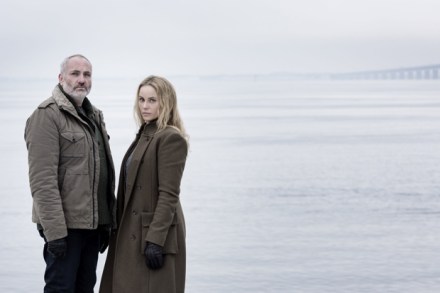
This Saturday night I’ll be staying in to watch the final two episodes of The Bridge, the Scandinavian detective series on BBC4. I missed the first season of The Bridge when it was broadcast on BBC4 in 2012, but have since caught up on all ten episodes, as well as the first eight of season two in the past fortnight. I highly recommend it. The bridge of the title is the one that links Malmö to Copenhagen, and the two central characters, a Swedish detective called Saga and a Danish detective called Martin, flit back and forth between the two cities. It’s hard for English viewers to keep track of which country they’re in because the two languages sound so similar.

Why I get my health advice from the Daily Mail

When one is in one’s seventies, as I am, one begins to fear the horror of dementia and to carry out anxious checks on one’s memory to see if the brain is still working. The results in my case are not very encouraging. For example, it took me several days to remember that the film star who canoodled with Leonardo DiCaprio in the stern of the Titanic was called Kate Winslet, although I am an admirer of hers and even once met her. Nor can I remember the words of the songs and poems that I used to know by heart. Am I on my way to becoming a helpless vegetable at the mercy of resentful carers? This is the point at which one turns to the Daily Mail for comfort.

Britain’s upper class is now too snobbish to speak its name

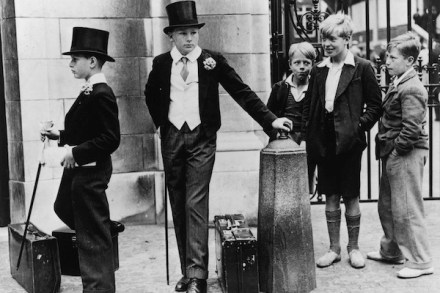
Last week, YouGov conducted a poll in which people were asked to judge how middle class the party leaders are. Ed Miliband was the winner, with 45 per cent deeming him ‘middle class’, compared with 39 per cent who thought him ‘upper class’. David Cameron was the clear loser. Only 15 per cent judged him ‘middle class’, against 77 per cent who thought him ‘upper class’. Cue much handwringing in the Conservative party about what the Prime Minister can do to appear less out of touch. I don’t use the terms ‘winner’ and ‘loser’ loosely. Being perceived as upper class in contemporary Britain is the kiss of death, and not just in politics. In the same poll, YouGov asked people the question, ‘What class are you?

If America can’t put a person to death painlessly, it should stop executions altogether

I have never supported the death penalty. Maybe I was influenced when I was six or seven years old by the fact that our next-door neighbour in Campden Hill Square, west London, was a woman who devoted her life to campaigning for its abolition. She was born Violet Dodge in Surrey in 1882, the daughter of a washerwoman and of a ‘coal porter’ (a person whose job is to carry sacks of coal). She herself had worked for a while as a scullery maid, but eventually became immensely rich for inventing and manufacturing Shavex, the first brushless shaving-cream. She also married a Belgian painter called Jean Van der Elst, who died suddenly in 1934 and in whose memory she dedicated herself to the campaign against capital punishment.

When lawyers take to racehorses

Can you be both restless and content? Standing last week with Graeme McPherson on the viewing platform over his sharply rising gallops near Stow-on-the-Wold, I found a man who answers to both descriptions. An in-demand QC with a big sporting practice, Graeme is also a racehorse trainer with a fast-expanding yard, a glorious Cotswold hillside house and a plan for the future. Like most journalists, I live by the next deadline. My lawyer daughter and her husband, another advancing QC, chide me for my lack of a life plan, so perhaps it reveals something about the legal profession that Graeme started his racing career with two. The five-year plan was for a yard of 30 decent horses by December 2014, a target achieved with a year to spare.

Want to create the next Mark Zuckerberg? Teach Latin!

I was disappointed to read an article in the Times about a new free school in Hammersmith being proposed by Ian Livingstone, one of the founders of the UK games industry. This isn’t because I’m worried about Livingstone’s school luring pupils away from the West London Free School, also in Hammersmith. I’m all in favour of competition. Rather, it’s because Livingstone’s ideas about education are so wrongheaded. According to the Times, Livingstone believes children should learn through play rather than be subjected to ‘Victorian’ rote learning.

Forget the sex scandal. Why does Francois Hollande have only one pair of shoes? 

Of all the interesting revelations by the French magazine Closer about François Hollande, the most interesting for me is its claim that he owns only one pair of shoes. I don’t think I know anybody with only one pair of shoes. Even my brother John, who at the age of 86 has rather let himself go sartorially-speaking, possesses two pairs. Yet if Closer is to be believed, the President of France has only one pair. The president’s shoes are important because when he arrived from the Elysée Palace on the back of a moped for a visit to his alleged mistress in a nearby apartment, his face was hidden by a safety helmet. So Closer, which secretly photographed his arrival, had to rely on his shoes to confirm his identity.