More from life

The rich have given up their freedom

The appointment of Sajid Javid as the new Secretary of State for Culture has been much criticised on the grounds that culture is not his forte; and in an interview with the Times the other day he confessed that he had never been to the opera. This is a little surprising because, as a former banker in the City earning an estimated £3 million a year, he is just the kind of person you might expect to go to the Royal Opera House if only to flaunt his wealth. However, Javid has never seen an opera; and the reasons he gave for this in his interview were that when he was young he was too poor, and that once he had become rich there was ‘not much time outside work’. Not much time outside work?

Own up, Twelve to Follow fans – which of you sabotaged my BMW?

Mrs Oakley takes a dim view of my using the BMW that consumed much of her savings to ferry sacks of garden refuse and discarded paint tins to the council dump. She took an even dimmer view when, in executing a three-point turn recently, I missed a marker post behind me and reshaped the bumper: replacing it will require regular success in the Tote Placepot. But it really wasn’t my fault when a warning light flashed to tell us we had low tyre pressure. The garage reported that not just one tyre but all four had been penetrated by vicious-looking carpet tacks: it was either mindless vandalism or deliberate sabotage, which is not a pleasant thought to contemplate. Nobody else in our village found any tacks in their tyres.

The only way to survive as a cyclist is to behave like you’re suicidal

I wonder how many cyclists are killed in London during tube strikes? I had a 10 a.m. meeting in the West End on Tuesday that I couldn’t cancel so made the seven-and-a-half-mile journey by bike. It was hairy, to put it mildly. You’d think it would be safer cycling in London when the tube’s not running because the traffic is almost stationary. But it isn’t, thanks to the above average number of cyclists. I found myself constantly having to overtake people, most of whom were too cautious to weave in and out of the traffic like me. The danger came when they’d gingerly poke their noses out in between cars, completely oblivious to the maniac bearing down on them at breakneck speed. I almost killed at least half a dozen people.

As a nation of voyeurs, we don’t cook but watch TV cookery programmes instead

When I got married 50 years ago, my wife and I had somehow acquired a little cookery book called Cooking in Ten Minutes. We never quite managed to cook anything in so short a time, mainly, I think, because the book was a bit of a cheat: it seemed to expect you to have a saucepan full of boiling water and a whole lot of washed and prepared vegetables ready before the ten minutes began. We lost the book long ago, but 40 years afterwards I read a volume of essays by Julian Barnes, The Pedant in the Kitchen, in which he devoted an entire chapter to French Cooking in Ten Minutes and to its author, Edouard de Pomiane, who, he informed me, had been a food scientist and dietician much admired by Elizabeth David.

Yes, Britain is a Christian country

I can’t say it was a great surprise to read a letter from a group of well-known authors, academics, comedians and politicians in the Telegraph earlier this week complaining about David Cameron’s description of Britain as a ‘Christian country’. As a general rule, any acknowledgment of Britain’s Christian heritage has members of the liberal intelligentsia reaching for their keyboards and angrily typing out words like ‘sectarian’, ‘alienation’ and ‘division’. As Harry Cole argued in a blog post for The Spectator, the evidence that Britain is a Christian country is overwhelming. We have an established church, our head of state is also the defender of the faith and 59 per cent of us define ourselves as ‘Christian’.

Sympathy for the bookies

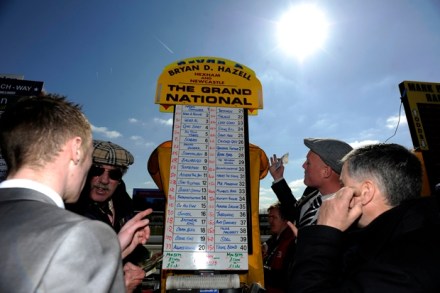
We all have to adjust to reality, like the lady who entered a Barbados bar having already enjoyed several gin and Dubonnets. On her shoulder was perched a rare parrot and she announced, ‘The first person to guess what this bird is can go to bed with me tonight.’ A voice calls out: ‘A turkey.’ After a quick survey of the other bar stools she replied: ‘That’s near enough.’ Under the leadership of the British Horseracing Authority chief Paul Bittar, racing too has been adjusting to reality, most notably in working for a better relationship with the betting industry on whom it must continue to rely for funding.

Our first kills of spring

The arrival of spring is not an unmitigated joy. The warmth is nice, of course, as are the fresh leaves on the trees and the general sense of rebirth and renewal after a dismal, soaking winter. And maybe, if you live in London, there is very little to complain about. There are delightful parks and squares, lovingly tended by others, in which to lie semi-naked in the sun or otherwise disport yourself. Nature in its wantonness is held at bay without any effort on your part. But here in the countryside of Northamptonshire, spring has its dark and menacing side. The daffodils have been splendid, as were the snowdrops before them; but they are over now, and the nettles are rapidly taking over.

The day I discovered what worry was

Before I had children I don’t think I appreciated what anxiety was. I’d been anxious at various points in my life up until that point — when taking exams, for instance — but those occasions paled into insignificance when I experienced the full monty. The occasion was the birth of my son Ludo in 2004. The delivery was fine, but it just so happened that he was born in a five-day window between Caroline being infected with chickenpox and presenting the first symptoms. That meant Ludo was exposed to a full load of the Varicella zoster virus before Caroline had had a chance to develop any of the antibodies and pass them on. Given that newborns don’t have much in the way of an immune system, Ludo would be in some danger if he became infected.

Compassion is fashionable again. Thank the Pope

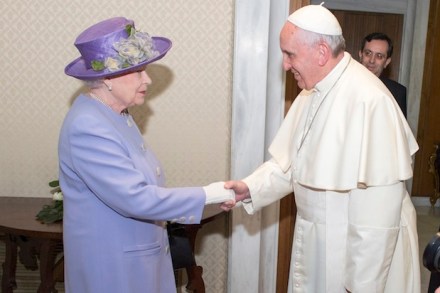
There was something poignant about the decision of L’Wren Scott, Mick Jagger’s American girlfriend, who committed suicide in New York last month, to leave everything she had to him in her will. Maybe it was out of gratitude for his help in keeping her foundering fashion business afloat; or maybe it was just a mark of her devotion to the man she referred to in the will as ‘my Michael Philip Jagger’. But whatever her motive, it was a decision very much against the spirit of the times, one that will further widen the gap between rich and poor by adding property worth £5.5 million to Jagger’s already estimated personal fortune of around £200 million. He is hardly the most needy recipient of such largesse.

The books I couldn’t get written

There’s nothing quite so burdensome as having a book to write. Maybe it’s not so bad when it’s your first book, but after that it’s a terrible chore. The publishing industry doesn’t help by paying authors up front. The temptation to pocket the advance and not deliver the manuscript is overwhelming. Believe me, when Douglas Adams said he liked the whooshing noise that deadlines make as they go by, he was speaking for all of us. I signed up to write a book for Viking, part of the Penguin group, five years ago. Called Fully Comprehensive, it was going to be one part polemic about the shortcomings of Britain’s state schools and one part memoir about my misadventures at a series of sink comprehensives.

America’s crazy war on old pianos

More than 20 years ago, when I was living in New York, I wrote an article about the mutilation by the United States government of a fine old piano on the pretext of saving the African elephant. The piano was a 1920 concert grand from the once famous Parisian house of Érard, from which came the favourite piano of Franz Liszt. It had been bought in Paris by the Israeli–American pianist Ophra Yerushalmi, a huge admirer of the Hungarian virtuoso, and flown by her at great expense to New York, where it had been seized by the US Fish and Wildlife Service on the grounds that it had ivory-coated keys. Well, of course, until recently all piano keys had ivory on them, and this particular piano was then 73 years old.

Why the other jockeys love Jamie Moore

In the parade ring just after Sire De Grugy had won this year’s Queen Mother Champion Chase, I found myself among a group of jockeys who had run out of the weighing room jostling and joshing like a bunch of schoolkids. They had, though, a serious purpose: they had emerged to pay tribute to one of their own, the winning rider Jamie Moore. Daryl Jacob, Aidan Coleman, ‘Choc’ Thornton and half a dozen others climbed on each other’s shoulders to cheer him in. I asked Daryl, why such a rare public honour? ‘It’s just that Jamie’s such a great guy from such a great family,’ he replied. Said Choc, ‘He’s ridden here 70 times without a winner and this is special. He’s a top guy.

Knowing things isn’t ‘20th century’, Justin Webb. It’s the foundation of a successful life

It’s scarcely possible to open a newspaper or magazine these days without reading an article about how the latest technological gizmo has rendered traditional education obsolete. According to Justin Webb, a presenter on the Today programme, it’s no longer necessary to commit any facts to memory thanks to the never-ending miracle that is Google. ‘Knowing things is hopelessly 20th-century,’ he wrote in the Radio Times. ‘The reason is that everything you need to know — things you may previously have memorised from books — is (or soon will be) instantly available on a handheld device in your pocket.’ The same view was expressed by Ian Livingstone CBE, one of the pioneers of the UK games industry.

I’ll have to give up Waitrose. It’s too exciting for me now

Waitrose in Towcester has closed down for a week to make what it describes as ‘a final few touches’ to an ‘exciting’ refurbishment. We will see just how exciting this is when the store reopens this weekend with its ‘improved customer toilets’, ‘improved café’, and so on. But forgive me for being a little sceptical, for normally the main effect of a supermarket ‘refurbishment’ is to disorient shoppers. Managements wait until customers such as myself have finally mastered the layout of the store and know where to find everything they need (something that can take a long time to achieve) and then suddenly they move everything around again.

Lessons from Tina Brown on the art of failing upwards

Shortly after I started working at Vanity Fair in the mid-1990s, I suggested to my boss Graydon Carter that I write an article about the number of New York society types who were bankrupt. Not morally bankrupt, but up to their eyeballs in debt. ‘Let’s get a team of researchers to go through the financials of everyone on the guest list of the annual costume ball at the Met,’ I suggested. ‘We could publish a list, like the Forbes 400, but the exact opposite: America’s most indebted billionaires.’ Graydon didn’t go for it, and not just because he was worried about its impact on his social life. ‘Like who?’ he said. I rattled off a list of names, but he pooh-poohed every one. ‘This is just wishful thinking, Toby,’ he said.

It’s sheer madness for Cameron to resurrect the hunting issue

My house in south Northamptonshire looks out over parkland on which Henry VIII used to hunt deer with Anne Boleyn. The only deer on it nowadays are the unhunted muntjacs, charmless little creatures that only arrived in England from Asia 400 years later; but there still are plenty of foxes, which carry out periodic massacres of my chickens. I am in the country of the famous Grafton hunt, but the hunt, alas, never ventures into my area because of the busy roads that surround it. The Grafton is still, however, extremely active elsewhere in the county and thrives just as much as it did before Parliament’s ban on hunting with hounds came into effect nine years ago.

Comebacks, longshots and cruel disappointments: what makes Cheltenham Festival great

No sporting event anywhere compresses so much drama, emotion and character into a single venue as the Cheltenham Festival. It wasn’t just an extraordinary Gold Cup — in that six horses jumped the last with a chance of winning and at least two jockeys will go to their graves believing they were denied a victory that should have been theirs: the blanket finish had to be investigated fully by the stewards before the result was confirmed. What kept crowds of 60,000 or so entranced were the endless series of back stories, of comebacks that worked and comebacks that didn’t, of opportunities taken and cruel disappointments.

I was all for press freedom. Then I heard from Gary Lineker…

It looks as though Hacked Off has finally won its three-year battle for tighter regulation of the press. Why do I say this? Because on Tuesday it published a list of 200 people who agree with them in various national newspapers. These weren’t just the usual suspects — Hugh Grant, Rowan Williams, Richard Curtis. And this isn’t the same list of panjandrums Hacked Off has published in this week's Spectator. No, these were, in Hacked Off’s words, ‘the leading figures in literature, arts, science, academia, human rights and the law’. Not some leading figures, mind you, but the leading figures. So who are these luminaries? One of them is Zoe Margolis, described as an ‘author’.

Death brings out everyone’s inner Mary Whitehouse

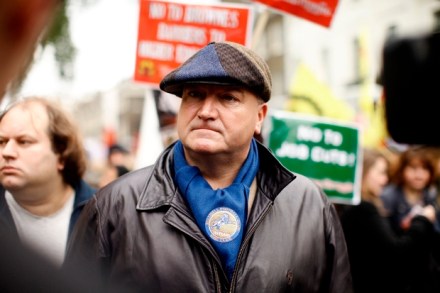
Shortly after Bob Crow’s death was announced on Tuesday, Nigel Farage sent the following tweet: ‘Sad at the death of Bob Crow. I liked him and he also realised working-class people were having their chances damaged by the EU.’ Cue a predictable storm of Twitter outrage. Farage was attacked for trying to make political capital out of Crow’s death. The following tweet, from the ex-FT journalist Ben Fenton, was typical: ‘Bit off-key for @Nigel_Farage to link a tribute to Bob Crow to his own anti-EU rhetoric, I think.’ Now, some of those criticising Farage had a political axe to grind. They were claiming Farage had broken an unwritten rule that they clearly don’t believe in themselves.

I want to age like the Three Tenors

In February each year the Oldie magazine gives ‘Oldie of the Year Awards’ to people who show unusual vigour and enterprise in old age. This year’s winner was Mary Berry, the cookery teacher, who at 78 had achieved sudden fame as a presenter and judge on the BBC television show The Great British Bake Off. ‘I just love being an oldie,’ she said. ‘There’s no Botox, no implants and no tucks, and that’s how I think we should all be.’ While this surely reflects the views of Richard Ingrams, the Oldie’s founder and editor, not everyone would agree. To look one’s age as a pastry cook may be no disadvantage, but survival in other forms of popular entertainment may well be dependent on the odd tuck.