More from life

How the slowest horse won — and caused the biggest upset in Grand National history

On a grey October morning, along a Berkshire lane leading up to the Ridgeway amid fields stuffed with pheasant, 30 of us joined a mini-pilgrimage. The former champion jockeys Graham Thorner and Stan Mellor had made it along with Marcus Armytage, who won the Grand National on Mr Frisk. There, too, were a cluster of racing historians including Chris Pitt and John Pinfold. More importantly, the former trainer John Kempton and the former jockey John Buckingham were present with the author David Owen for the unveiling of a plaque to a horse whose name will never be forgotten in jump racing: Foinavon was the 100–1 winner of the 1967 Grand National after he and jockey Buckingham alone avoided the 23rd fence pile-up that devastated the field.

Fighting dirty

Why is local politics so much dirtier than national politics? Is it because the players are fighting over relatively trivial matters, like Oxbridge dons competing for college posts? As Henry Kissinger said, ‘University politics are vicious precisely because the stakes are so small.’ Or is it because local politicians are less likely to be exposed to the disinfectant of publicity? Well, I intend to remedy that. Last week, a Conservative councillor in Hounslow drew my attention to an election leaflet distributed by three prospective Labour councillors that contained the following misrepresentation under the headline ‘Chiswick School loses out to Free School’: ‘Chiswick School was on the list for Hounslow’s Building Schools for the Future money.

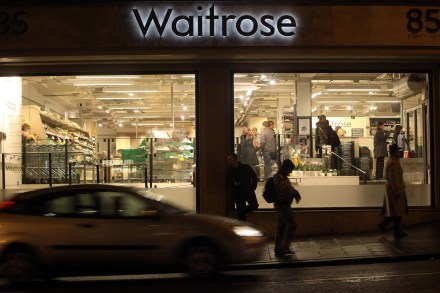
Toby Young: Please, Boris, don’t allow a Waitrose in my neighbourhood

Five years ago I joined forces with some local worthies to object to the opening of a strip joint on Acton High Street. We weren’t successful, but the owner of the club decided to invite us all to the opening night. He claimed we’d got the wrong end of the stick. It wasn’t a sleazy lap-dancing club — oh no — but a ‘burlesque’ club. What this meant in practice is that the dancers had glued feathers to their micro bikinis. Apart from that it was business as usual. The upshot was that I spent a couple of hours standing in the middle of a strip club trying to make small talk with about 20 middle-aged ladies, most of them Lib Dem activists, as a succession of topless women gyrated on stage.

A dog mess or two is not too high a price to pay for an owner’s happiness

A month ago I was reporting complacently that peace and calm had returned to Stoke Park after a series of bestial attacks on my chickens and ducklings by foxes and birds of prey. No foxes had come to call since the spring, and seven of the eight Indian runner ducks hatched here in September had survived and grown big enough to deter avian predators. All seemed to be well in this little corner of south Northamptonshire. The hens seemed contented and were laying copiously in gratitude; the ducks were gliding dreamily on the pond. But my complacency was premature, for last weekend turmoil returned.

‘Too Fat Polka’, and other politically incorrect songs of the 1940s

When I was a child, growing up in Hertfordshire just after the second world war, my parents employed a cook called Mrs Sharp, who was a very kind and good woman. But she was also extremely fat and had an enormous protruding stomach that impeded her access to the kitchen stove. Lying around in the house at the time was a 78rpm record of a new popular song from the United States called the ‘Too Fat Polka’, of which the recurrent chorus was ‘I don’t want her, you can have her, she’s too fat for me’. The song, recorded by the then famous but now generally forgotten American broadcaster and entertainer Arthur Godfrey, was a big hit in 1947 when people may have been more amused than offended by gentle mockery of the obese.

The Qataris are influencing every aspect of racing

Not having the odd £100,000 to spare, I had never before joined the world’s richest owners and their bloodstock agents at Tattersalls yearling sales. It was my loss. Sheikhs in tracksuits and princes in flat caps mingle with ruddy-faced, padded-jacket consignors. In the sales ring, auctioneers rattle through their machinegun patter: ‘What do you want to get her away?...Here’s a wonderful chance to buy into this family who rarely come up for auction, do I have 100,000?...280,000 will seal the deal...he goes right-handed now at 750,000, any more outside?...The hammer’s up, 280,000 will seal the deal.’ They work through 22 lots an hour (at an average price this year for the Book One sale of 207,501), and all figures are in guineas, not pounds.

Toby Young: It’s biological, I become a caveman when my child is sick

The first sign that something was wrong with Ludo was when he complained of a tummy ache. This was after school and hardly a rare occurrence so I didn’t think anything of it. The following morning, he still had a tummy ache. Not a good enough reason to miss school in my opinion, but Caroline thought otherwise. Before I left for a meeting I told him to eat some toast. ‘You’re probably just hungry,’ I said. By lunchtime the pain had become localised on the lower left-hand side of his stomach and Caroline decided to Google his symptoms. It sounded like it could be appendicitis so she took him to the GP and he advised her to take him to paediatric A&E at Chelsea and Westminster.

Toby Young: Am I in denial about turning 50?

By the time you read this I’ll be 50. A couple of years ago, when President Obama passed this milestone, I wrote a piece for the Telegraph about how much I was dreading it. But now it’s finally happening, I can’t think what all the fuss was about. Turns out it’s a bit like being mugged: more terrifying in the imagination than reality. It’s possible that I’m in denial. According to a study carried out by Warwick University and Dartmouth College, involving more than two million people, turning 50 is a low point. ‘One in five women and one in six men in this country suffer from depression at this time,’ says Dr Andrew McCulloch, the ex-chief executive of the Mental Health Foundation.

Alexander Chancellor: Why aren’t Italians angrier about Nazi atrocities?

Given that more than 9,000 innocent Italian civilians, many of them women and children, died in Nazi massacres during the dreadful last 18 months of the second world war, it is amazing how few of the perpetrators have been brought to justice. Only five members of the German occupying forces were ever imprisoned in Italy for war crimes; and with the death last week, aged 100, of Erich Priebke, the former SS captain who in 1944 helped organise the execution of 335 men and boys at the Ardeatine Caves south of Rome, none of them is now still alive. Hundreds of others were, of course, involved in these crimes, but none of these has ever been punished. And now, it seems certain that none will be.

Alexander Chancellor: I don’t like traffic jams or lager louts but that doesn’t mean I hate Britain

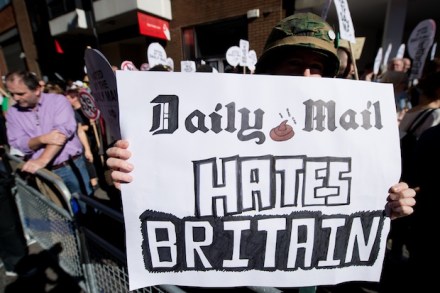
The Italians are often thought of as being unpatriotic, and one can see why. They relentlessly denigrate their national institutions, abuse their politicians, and compare their democratic arrangements most unfavourably with those of the ‘more mature’ north European countries. You might conclude, therefore, that most Italians ‘hate’ Italy. But, of course, you would be wrong, just as the Daily Mail was wrong when it decided on the basis of Ralph Miliband’s political opinions that he ‘hated Britain’.

Toby Young: I’m too posh for the Tories. I should try Labour

I’m still weighing up whether to run for Parliament, but after this week’s reshuffle I’ve concluded I’m in the wrong party. If you’re a middle-aged white male, particularly one who’s been to Oxford, your chances of becoming a Conservative minister are negligible. Unless you’re a pal of George Osborne’s, obviously, in which case it doesn’t matter if you have B-U-L-L-E-R tattooed on your knuckles, you’ll still get promoted. In the Labour party, by contrast, coming from a privileged background actually seems to help. I’m not just talking about the usual suspects, like Lord Longford’s niece Harriet Harman and ex-public schoolboy Ed Balls. I’m thinking of the new shadow education secretary.

The turf: bad-mane day for Tropics

At the degenerative stage of a dinner party recently I heard related with perfect timing the tale of the gent who saw a sign in the window of his local newsagent/tobacconist/sweet shop offering ‘Condoms personally fitted’. Finding a pretty blonde behind the counter when he entered, he inquired, ‘Do you really have the service you are advertising in your window?’ ‘Oh, yes, sir.’ ‘And who does the fitting?’ ‘I do, sir.’ ‘Well, in that case, young lady, would you mind washing your hands, because all I want is half a pound of liquorice allsorts.

Good news from Alexander Chancellor’s menagerie

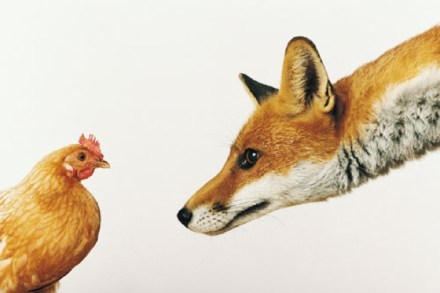
There is at last good news to report on the poultry front. In the past, when I have mentioned my chickens or my ducks, it has usually been after some grisly tragedy — a duck decapitated by a terrier, another disembowelled by a fox. I can no longer remember how many chickens I have lost to foxes, which usually leave only piles of feathers as evidence of their visits (though I once saw a fox brazenly killing a chicken in broad daylight just outside my front door). But since I am determined never to yield to terrorism, I always head off to the poultry centre in Towcester to replace whatever bird has been killed with one looking as much like it as possible. I thus keep my poultry numbers roughly stable at around eight ducks and eight chickens at any one time.

Miliband’s fight with the Mail is cold political calculation

I’m writing this from the Conservative party conference in Manchester, but it’s Ed Miliband I want to discuss. In particular, his objection to Saturday’s article in the Daily Mail about his father Ralph. I felt a smidgen of sympathy for Ed when I saw the headline (‘The Man Who Hated Britain’) because a similar piece could be written about my father. May be written about him, in fact, if I pursue a career in politics. Like Ralph Miliband, he was a left-wing intellectual and, while he didn’t renounce parliamentary democracy, he was at one point a member of the Communist party. He left in 1936 after the first of Stalin’s show trials.

Alexander Chancellor: The Kindle is marvellous, but it cannot satisfy an addiction to books

My brother John’s great book sale, about which I wrote on this page a couple of weeks ago, finally took place at Stoke Park last weekend, and it went far better than I had anticipated. Admittedly, I had expected little. For a while I had even feared catastrophe. John, who is 86 and in poor health, seemed to think that he alone could sort out and price some 6,000 books in three weeks, even though he liked to stop and read them as he went along. But he has always had an enviable gift for arousing in others an urge to take care of him; so many helpers duly appeared, unprompted, to offer their services for free.

Dean Ivory — from mechanic and welder to enthusiastic and successful trainer

Trainers used to come into racing with Aunt Agatha’s legacy after a short service commission, having probably worn a trilby in their playpens. These days some come by different routes. To describe Dean Ivory as a small trainer, as the media do, is technically accurate but missing the point. Drive along a lane in leafy Hertfordshire, past care homes, stockbroker villas and driving ranges, and you come across an imposing set of electronically operated gates next door to a bustling premises embracing self-drive hire, recycling and road haulage. The commercial yard, run with brother Christopher Ivory, is a thriving business.

The great zebrafish massacre

I should never have agreed to buy Sasha fish for her tenth birthday. But it seemed like such a modest request. It’s not like you’re going to come home one day to find they’ve escaped or starved to death — like certain rodents I can think of. I was also lulled into a false sense of security by Sasha’s promise that she would look after them herself. I wouldn’t have to lift a finger. It wasn’t until we were in the pet shop that I discovered she had something more exotic in mind than a couple of goldfish. She wanted tropical fish. That meant spending £100 on a 50-litre tank, complete with built-in filter and heating element.

Alexander Chancellor: It seemed a little creepy that thousands of people wanted to

My village, Stoke Bruerne in south Northamptonshire, is just getting back to normal after a great influx of visitors for its annual weekend festival called ‘Village at War’. Stoke Bruerne is a small place that sits astride the Grand Union Canal about halfway along its route from London to Birmingham. Its fame, such as it is, rests on its seven locks and the fact that it houses a Canal Museum; and the ‘Village at War’ event was started six years ago by the Friends of the Canal Museum to raise money for that excellent institution. I don’t yet know how well it has done this year, but last year it was attended by more than 12,000 people and raised £20,000.

Why I want my schools to ban the burka (and the miniskirt)

For most people, the question of whether to ban the burka is a purely theoretical one. Not for me. As the chairman of a charitable trust that sits above two schools, it’s something I’m obliged to consider. Usually, the heads of the schools fight tooth and nail to preserve their autonomy, claiming that such and such an issue is an ‘operational’ matter and therefore none of my beeswax. But in this case, they’re happy to kick the decision upstairs. It’s not a matter for me alone, but for the trust’s board of directors, of which I’m only one. And I can’t predict how the board will vote. Nevertheless, I will be arguing for a ban. I should begin by saying I’m not in favour of passing a law to ban the burka outright.

Alexander Chancellor: Pursued around the world by a thousand books

It is exactly 40 years since my elder brother John gave up a successful career as a publisher to set up in business on his own as an antiquarian bookseller. He lived at the time in a fine 18th-century house on Kew Green next to the botanical gardens, and perhaps for no reason other than its location he decided to specialise in botanical books. The business, conducted from his home, went quite well; but various events led him in due course to move to New York, where Kew Books, as the business was and still is called, established itself grandly in Madison Avenue on the Upper East Side. This proved less successful. The overheads were enormous and the competition formidable, so John moved to Puerto Rico where Kew Books was re-established in the capital, San Juan.