More from Books

The human element

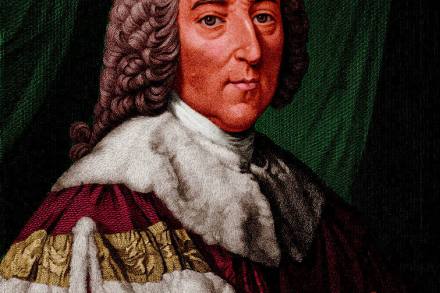
Writing in 1792, in the aftermath of the French revolution, Jeremy Bentham famously dismissed all talk of the rights of man as mere rhetoric. Justice, he said, was concerned with rights and duties, and they were the creatures of law. There could be no rights without law to express them, he said, no justice without

Lost in the fog

Thomas Pynchon’s reputation has risen and fallen over the past five decades; one of his conspiracy-chasing characters might note a pattern of inverse relation to rises and falls in the world’s financial markets. Gravity’s Rain- bow, 36 years ago, confirmed Pynchon as America’s new great reclusive genius; since then battalions of academics have made careers

Challenging perceptions

Mrs Noyce kept on being prosecuted, appearing immaculately clad on her many court appearances. But she carried on, keeping her thoughts to herself. She probably echoed the complaint of another madam, Margaret Sempill, in the 19th Century: when she was accused by the Kirk of keeping prostitutes — in particular the very pretty Katherine Lenton,

Horror in the Arctic

Around the middle of the 19th century a new image of horror appeared in Victorian art. In 1864 Edwin Landseer exhibited something the like of which he had never painted before and never would again. In ‘Man Proposes, God Disposes’, the man who had painted ‘Dignity and Impudence’ shows two polar bears, one howling above

An unlikely hero

This sparkling biography of a small-part actor who did two missions into Nazi-occupied France as a radio operator for the Special Operations Executive (SOE) begins with a rather iffy 60 pages on his identity and pre-war stage career; much of what the agent said about himself was contradictory, much was exaggerated, and little of it

A choice of first novels | 22 July 2009

This year’s summer flurry of debut novels appears to tick all the booksellers’ boxes. This year’s summer flurry of debut novels appears to tick all the booksellers’ boxes. There’s the headline grabber, the European bestseller, the wartime melodrama and the quirky romancer. Publishers recognise a good thing when they see it. 60 Years Later is

Fine feathers

This is a glorious book with one crippling flaw. Let’s put the ecstasy before the agony. Faber and Faber, founded in 1929, commissioned some of the best book jackets of all time; Private Eye, retracting its claws for once, called the firm Fabber and Fabber — of course that applied to the authors as well

Lust for life

The Junior Officers’ Reading Club: Killing Time and Fighting Wars, by Patrick Hennessey Patrick Hennessey was one of the British army’s self-proclaimed Bright Young Things, an Oxford graduate with a lust for combat and a literary bent. Born in 1982, he belongs to a generation of uniformed men and women who would, as he puts

Beyond the guidebook

Between the Assassinations is to summer reading what Slum-dog Millionaire was to feelgood movies: the book, like the film, beneath a deceptively beguiling surface, is a Dickensian-dark view of child labour, corruption, poverty, and ruthless privilege in modern India. Aravind Adiga won the Man Booker prize with his first novel, The White Tiger, a savage

Inconvenient truths

People who’ve read Justin Cartwright’s previous novels possibly won’t be too startled at what they find in his new one. The main character is a clever, well-read media man of about Cartwright’s age, who lives in London but ends up feeling the tug of a more primal culture — in this case by clearing off

A literate despair

This large and ambitious novel is timely, given the apparent rise in popularity of extremist political parties throughout Europe. Lucy Beckett sets her story in inter-war Germany. She shows, painstakingly, how Nazism spread its poisonous roots in the fertile soil of a disrupted, demoralised and divided country, and how those who refused to accept its

Reaching for the moon

Some writers spend their careers happily producing variations on the same book. Others seem to rethink the sort of book they would like to write with each new work. Only a very few, however, have a career which looks like a planned trajectory into something completely new; you would not predict Tolstoy’s late fables from

The Old Red Lion and Dragon

In the 1970s, when Byron Rogers was appointed speechwriter to the Prince of Wales, the Daily Telegraph, where he was for many years a prolific contributor, report- ed the story in a one-sentence paragraph: ‘The Prince of Wales has appointed as speechwriter Mr Byron Rogers, a colourful Welshman.’ Nearly 40 years on, he still resents

Home thoughts from abroad | 8 July 2009

The subtitle, ‘The Anglo-American Gardens of Florence’, of this engaging and elegantly produced book, is misleading. The reclusive and narcissistic chatelaine of the Villa Gamberai in the days of its glory, Princess Catherine Jeanne Keshko Ghika, was not an Anglo-American but a Romanian. Similarly, Lady Paget, indefatigable not merely as a custodian of her superb

The Oaks of Cheyithorne Barton

Michael Heathcoat Amory inherited Chevithorne Barton in Devon from his grandmother. She had experienced the unimaginable loss of her husband in the First War and their three sons in the Second, including the author’s father. Creating a garden at Chevithorne was a consoling distraction. Michael Heathcoat Amory has done her and his family proud, transforming

Raising the last glass

My Father’s Tears, by John Updike Although an air of valediction inevitably hovers over this collection of short stories, the last of John Updike’s more than 60 books and published in the wake of his death, it is in no way a depressing read. On the contrary: there is something exhilarating about finding him maintaining

Life & Letters | 4 July 2009

‘I think there would be something wrong with a middle-aged man who could take pleasure in Firbank’. That, more or less, was Evelyn Waugh’s judgement in the interview he accorded the Paris Review in the mid-Fifties. (I say ‘more or less’ because I can’t lay my hands on that volume of the interviews, but if