Letters

Letters | 28 March 2019

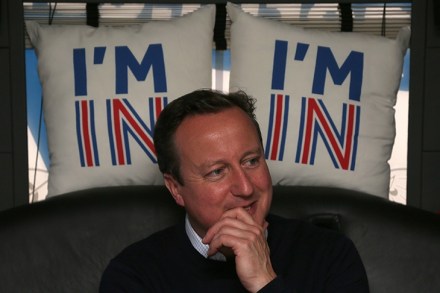
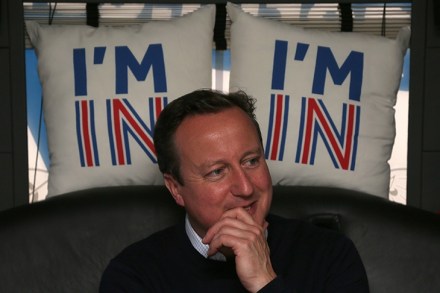
Still better than Cameron Sir: I disagree with your editorial (‘Agony prolonged’, 23 March) that Theresa May is the worst prime minister in our history. Unlike her predecessor, Mrs May — for all the flaws that have been ruthlessly exposed by the Brexit process — did not fail to learn the readily accessible lessons from the 1975 referendum. Harold Wilson played something of a blinder, and even a brief reading of this history would have guided a premier willing to learn. David Cameron clearly failed to do this and must assume the mantle of the worst. History will surely judge the PM who caused our current malaise more harshly than its unfortunate inheritor.

Letters | 21 March 2019

What’s the point? Sir: Katy Balls asks ‘Will there be an election?’ (16 March). That prompts the question: ‘To what purpose?’ Jeremy Corbyn may be ‘keen for an early election to break the deadlock’, but as the EU has repeatedly emphasised that its withdrawal deal is the only one on the table, how would Labour win a substantively better one than what’s already on offer? Besides, in the 2017 general election, more than 80 per cent of the electorate voted for parties promising to remove Britain not just from the EU, but also from its customs union and single market. Duly returned to the Commons, a majority of these MPs are now openly labouring to renege on their manifesto commitments and to thwart Brexit.

Letters | 14 March 2019

Turn it off and on again Sir: The conclusion of your leading article of 9 March (‘Close the deal’) that MPs should ‘hold their noses and vote for May’s deal’ is understandable, but deeply disappointing that this seems to be the best choice left. It occurs to me, however, that there is another solution which might remove many of the obstacles we are currently facing. Could we not revoke Article 50 (as we are unilaterally permitted to do), but then immediately trigger it again? This would wipe the slate clean and give us two years to negotiate in the way you think it should have been done in the first place — hopefully under a new prime minister with a modicum of negotiating nous.

Letters | 7 March 2019

The point of Article 50 Sir: I read Paul Collier’s article in your 23 February issue, which has just reached me in la France profonde, with interest. The principal author of Article 50 was John Kerr, aka Lord Kerr of Kinlochard. I have known John for quite a long time, and enjoyed his company: when I became chancellor in 1983 he was my principal private secretary. He explained to me some time ago, before the referendum, that the purpose of Article 50 was to make it as difficult as possible for a country to leave the European Union. A clever man, he did a good job.

Letters | 28 February 2019

It’s now or never Sir: I read with great interest Paul Collier’s suggestion (‘Take back control’, 23 February) that Britain should withdraw Article 50 and remain in the EU as a means of obtaining a better exit at some point in the future. This would be a UK humiliated by the inability of parliament to carry out the clear direction of the voters after nearly three years. A UK so abjectly defeated it would hardly be in any position to build alliances. What EU country would want to endanger its reputation by supporting the country which has been taught such a salutary lesson by the European Commission?

Letters | 21 February 2019

The breakaway seven Sir: ‘In both parties there are fools at one end and crackpots at the other, but the great body in the middle is sound and wise.’ One of the magnificent seven speaking this week? Well, the sentiment is surely present day, but rather they are the words of Churchill in 1913 trying to engineer a centrist national movement from ‘a fusion of the two parties’. In those days, it was the Conservative and the Liberal parties, but the history of the middle ground since then augurs poorly not just for the breakaway seven, but for those of us who feel disenfranchised by politics. We can argue who currently represents the devil and who the deep blue sea, but right now neither seems an attractive or palatable home.

Letters | 14 February 2019

We need a generosity report Sir: Your leading article bemoaning the lack of charitable giving in Britain misses the mark (‘The power of giving’, 9 February). It is not a lack of generosity that’s the problem, but a lack of acknowledgement. Our lifeboats and air ambulances are kept in operation by charitable donations. In 2016/17 Cancer Research UK raised £190 million from individual donations. First aid and other services at public events are supplied by volunteers. Every NHS trust in the land has buildings and equipment funded by charitable donations. Every art gallery, theatre and museum has facilities funded by donations.

Letters | 7 February 2019

Fawning over China Sir: In reading your recent leading article on Huawei (‘Red-handed’, 2 February), I feel I should point out that it is not solely the British government who have been wrong-footed by the rise of China. Here in Canada, Prime Minister Trudeau has long desired to open up Canadian markets to Chinese companies, going so far as to express admiration for the country’s ‘basic dictatorship’. The Chinese press even bequeathed him with a charming nickname: the Little Potato. Now, in the face of the Huawei charges, Mr Potato has been forced to change course and has fired his ambassador, John McCallum, after he defended Huawei’s Chinese executives rather than supporting Canadians who have recently been imprisoned in China.

Letters | 31 January 2019

Vegan excess Sir: As a lifelong vegetarian I am heartily sick of vegans and of the amount of attention that is being paid to them. (‘The great carniwars’, 26 January). Vegan food is everywhere, in places where it used to be difficult to find vegetarian dishes. Often it tastes of nothing much and has the consistency and flavour of sawdust. Their principles of not harming animals seem to me to be a little warped. I accepted long ago that animals have to die to provide meat for people and pets. Vegans would do well to campaign, if campaign they must, against factory farming and cruel methods of slaughter. Issuing death threats for farmers seems a little extreme. Why should the life of an animal have more importance than that of a human?

Letters | 24 January 2019

Autistic freedom Sir: Jonathan Mitchell, an autistic writer, argues that autism is an affliction and that a cure should be found (‘The dangers of “neurodiversity”’, 19 January). When my son was diagnosed I would have agreed with him, but I disagree strongly now. My son’s autism comes with real challenges, but I value the ways it’s helped him become a thoroughly decent person: he doesn’t lie, it wouldn’t occur to him to be nasty and he’s totally logical. Surely, the world needs more people like him, not fewer. As Mr Mitchell says, the autism spectrum is huge, encompassing people who can’t communicate, who are locked in a sensory hell and need a high level of care, often for conditions that are not part of their autism.

Letters | 17 January 2019

The straight dope Sir: Much of the media and a large part of the political class in Britain seem to have fallen completely for the propaganda of one of the biggest greed lobbies in the world, the billionaire-backed campaign for cannabis legalisation. Articles such as the one by Robert Jackman (‘Homegrown industry’, 12 January) suggest that marijuana is a benign drug, and make vague claims for its supposed medical benefits. Yet across the world, as Alex Berenson’s new book on the subject, Tell Your Children, shows, worrying developments are correlated with this poorly researched, expensively hyped and brilliantly spun adventure.

Letters | 10 January 2019

The changing EU Sir: If, as Frederik Erixon writes, ‘there is a strange pre-revolutionary atmosphere in Brussels’ and ‘power will be handed back from Brussels to the nation states’ (‘The Last Heave’, 5 January), isn’t this what we have wanted and shouldn’t we delay our Brexit negotiations in order to see what happens? The Brexiteers have always said that the EU, its immigration policies and the euro are not sustainable. After the elections across Europe in 2019 the forces for change will be greater than David Cameron found. Surely we need to combine with other like-minded nations, as we have done in the past, to strengthen the forces demanding change rather than walking away, leaving us unable to influence what happens in Europe?

Letters | 3 January 2019

Lords reform Sir: How astonishing that the historian Robert Tombs (‘Beyond Brexit’, 15 December) should think that the Lords might ‘at last be seriously reformed’ after more than a century of schemes that foundered in the Commons. MPs have an unthreatening upper house; they will never agree on substantial changes that would increase its power. They will leave the Lords to implement its own sensible plans to cut its numbers to 600 by bringing party strengths into line with those in the Commons over the next few years.

Letters | 13 December 2018

Life in the borderlands Sir:  The Irish border question has grabbed political headlines this year, but spare a thought for those who live near it. The border takes a haphazard route along river banks, and even through farms. I recall visiting a farm in Fermanagh: I drove into the farm from Northern Ireland but the farmer showed me an exit which led straight into the Republic. For a number of years the Methodist Church in Pettigo (NI) had a minister whose house was on the other side of the border. This porousness is remarkable considering the historical conflict between our two countries. To this day, many Irish call Northern Ireland ‘the North’, as if to deny the border exists.

Letters | 6 December 2018

Sleeping on the streets Sir: Mark Palmer claims that ‘homelessness is hardly a top government priority’ (‘Home truths’, 1 December). I was disappointed to read this, given the ambition of this government to make rough sleeping a thing of the past. As I have said previously in this magazine, we are committed to supporting people off the streets and have committed £1.2 billion to tackle all forms of homelessness. We are working tirelessly to end rough sleeping by 2027 and have outlined our long-term plan — backed by £100 million — to get people into a safe and secure home where they can rebuild their lives.

Letters | 29 November 2018

The Irish border Sir: Contrary to the assertion that the Irish border ‘only hit the headlines’ after Leo Varadkar became Taoiseach in June 2017, as Liam Halligan claims (‘Irish troubles’, 24 November), the negative impact of Brexit on the peace process and the Good Friday Agreement was clearly signalled during the referendum campaign itself, including by the Irish government and by two former British prime ministers, Sir John Major and Tony Blair. There was no discontinuity in policy when Leo Varadkar succeeded Enda Kenny as Taoiseach, as reflected in the latter’s statement in February 2017. ‘The Irish government will oppose a hard border… This is a political matter, not a legal or technical matter.

Letters | 22 November 2018

There is no ‘good’ Brexit Sir: David Harper claims to know ‘what the population of the UK voted for’ in the EU referendum (Letters, 17 November), yet no definitive Brexit plan was ever offered by the Leavers. That is one reason why the government, having prematurely triggered Article 50 and recklessly established its ‘red lines’, has been floundering in an attempt at damage limitation. Harper’s disparagement of the single market ignores the fact that any gains from new trade agreements with non-EU countries would be greatly outweighed by the costs of leaving it and would require exports to these countries to grow at a rate that is unfeasible.

Letters | 15 November 2018

Hearts as well as heads Sir: Simon Jenkins suggests we should stop remembering and start forgetting about the first world war (‘Don’t mention the war’, 10 November). His beef is with artists in particular, claiming that art ‘drenches history in emotion’. He prefers to read history books. No one would argue against history books, but surely it is not a question of either/or. Artists tell a story in a different way from historians, often to a different audience. They can move people to want to find out more: to look in the box of letters in the attic, to find out about their family connection to the war, to think again about the past and how it impacts on our present. Good history books open our minds to new ideas and perspectives.

Letters | 8 November 2018

Hubris and nemesis Sir: Douglas Murray’s assessment of Angela Merkel’s decision to stand down as German Chancellor (‘Europe’s empty throne’, 3 November) suggests a certain symmetry with the fate of our own former Prime Minister. David Cameron also declared that he would leave office at a time of his own choosing, but circumstances conspired against him. Mutti shows a great deal of presumption in announcing she will stay until the next election. If German politics bears any resemblance to our own, the very act of announcing a long goodbye will ensure that she leaves before her chosen moment. Cameron brought about his own demise by hubris, thinking he could renegotiate the terms of EU membership.

Letters | 1 November 2018

Political vitriol Sir: Vitriol and incivility seem to be everywhere in politics just now. In the last issue (27 October) John R. MacArthur linked a ‘rise in national coarseness’ to the election of Donald Trump, while Freddy Gray hints at a longer historical perspective when he writes that American politics ‘has always been unpleasant’. That ‘always’ is not hyperbole: in Alexander Hamilton Ron Chernow describes in vivid detail the ‘vile partisanship’ of the 1790s, stoked by newspapers that were often ‘scurrilous and inaccurate’. ‘Nothing can now be believed which is seen in a newspaper,’ said Thomas Jefferson, third president of the United States.