Leading article

Doping the economy

An outsider viewing the Olympic opening ceremony could easily have gained the impression that Britain was in the midst of an unprecedented boom. A week on Sunday we are promised an equally spectacular closing ceremony. For the moment, the cost of staging the Olympics — £9.3 billion for the games, including £80 ­million for the opening and closing ceremonies alone — has been laid aside in a rush of public enthusiasm. The biggest source of discontent this week has been the rows of empty seats reserved for the IOC’s politburo and their associates. After any big party, of course, there is the risk of a big hangover. The Olympics will be no exception.
Summer of discontent

The ninth of August will mark the fifth anniversary of the beginning of the credit crunch: the day in 2007 that the banks found themselves frozen out of the debt markets, leading to the Northern Rock collapse and on to the more general banking crisis of 2008. By this stage of the Great Depression, western economies were not only growing again; they had surpassed the level at which they had peaked in the late 1920s. Unemployment was falling and the banking system had regained some solidity. It is no longer accurate, therefore, to describe the economic crisis as the ‘worst since the 1930s’. On some measures it is worse than that. The banks are still far from safe and there is no end yet in sight to the second trough of Britain’s double-dip recession.

Competitive advantage

Scambusters is the name of a government initiative to prevent householders falling victim to rogue traders who use high-pressure sales techniques to flog lousy and vastly overpriced goods and services. It would be more convincing if the government did not so frequently allow itself to be ripped off. At his appearance before the home affairs select committee this week, G4S chief executive Nick Buckles had the air of a cowboy plumber standing amid a bathroom full of leaking pipes, and demanding, in spite of the havoc he has caused, that his bill be paid in full. To astonished MPs he agreed that the reputation of his company was in ‘tatters’, and doubted whether it could provide even its lowered target of 7,000 security guards for the opening day of the Olympics.

The Tories are back

This week marks 50 years since Harold Macmillan’s ‘Night of the Long Knives’, in which he sacked a third of his Cabinet. As if to mark the anniversary, Tory MPs this week sunk the dagger into the Liberal Democrats’ plans for House of Lords reform. So great was the potential defeat — the largest in Tory party history — that the government cancelled its vote on its attempts to place a time limit on debating the Bill. The proposals would have been rejected entirely had it not been for the opportunistic support of the Labour party. Coalition government was not supposed to be like this.

Omniscandal

It is easy to understand Bob Diamond’s miscalculation. In the great pantheon of banking scandals, it was unlikely, he thought, that Libor interest-rate rigging would rank very high. Libor is the average interest rate at which banks lend to each other — or, rather, the rate at which they admit to lending to each other. Any metric that depends on bankers’ honesty is, obviously, wide open to manipulation, so when the Financial Services Authority decided to tighten the rules, with an investigation six months ago, the natural response was a yawn. Barclays had been bending the rules, but so had everyone else, and Barclays was so co-operative that the FSA reduced its fine by £25 million.

Cyber insecurity

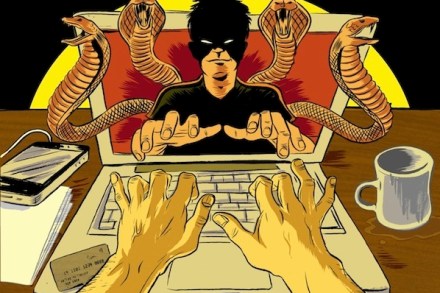
The NatWest banking disaster is an ominous reminder of the way in which technology has come to control our lives. We now know what a proper IT collapse feels like: a piece of computer code goes wrong and, within days, bank machines shut down and chaos ensues. This week the stories range from unpaid bills to the parents of a critically ill seven-year-old in hospital in Mexico fearing that her life-support machine would be turned off for want of funds. NatWest says it was a software screw-up, not a cyber-attack. But there are plenty of the latter taking place every day. As we show in our special cybersecurity supplement this week, Britain’s dependence on computers has become one of our biggest vulnerabilities.

Summit of arrogance

The folly of jetting off to an international summit in a pleasant tropical resort during a time of emergency at home was amply demonstrated by Jim Callaghan in 1979 when he arrived, suntanned, back from the Caribbean apparently unaware of the seriousness of growing industrial unrest at home. But at least he never actually uttered the words ‘Crisis, what crisis?’ This week, on the other hand, the EU Commission president, José Manuel Barroso, really did make a statement that deserves to enter the history books, as a symptom of the detachment of EU leaders from the economic crisis engulfing the eurozone.

Much ado

The American political scientist Wallace Sayre said that the bitterness of a political debate was inversely proportional to its importance. This has been true for US politics, where at each election time the issue of gay marriage divides the country — even when the president has no authority to either legalise or ban it. It’s all about sending messages and expressing values. This murky, often hysterical form of campaigning has largely been absent from British politics — until David Cameron, that is. The Prime Minister’s decision to legalise gay marriage has, from the off, been more about political positioning than equality. He has created a fuss which is, as Sayre would have predicted, out of all proportion to what is at stake. The pot has been stirred.

The virtue of restraint

As Britain prepares for a week of peaceful celebration, Syria will be bracing itself for more bloodshed. The Assad regime, perhaps emboldened by the knowledge that the west has no appetite to intervene in Syria, is becoming ever more brutal in its repression. The massacre in villages around Houla, where 108 were slain, most of them women and children, has shocked the world. The images of tiny bodies being prepared for burial pose an uncomfortable question for Britain. Is David Cameron prepared to intervene to stop the bloodshed as he did in Libya? For more than a year now, the West has mulled over its options. During that time Assad’s soldiers have killed more than 10,000 Syrians, and 20,000 are now in exile. The death toll and the accelerating exodus is focusing minds in Turkey.

What’s stopping us?

The Climate Change Secretary, Ed Davey, promised this week to ‘reduce the volatility of energy bills’. Unfortunately, his proposal to eliminate the peaks and troughs in the electricity market involves elevating bills to a much higher level and leaving them there. Besides the pain this will inflict on already stretched households, the result of the highly rigged energy market envisaged by the government will be to make British industry chronically uncompetitive. The conceit that fossil fuel prices are necessarily set on an upward and increasingly volatile trend over the coming decades has been put about by the Department for Energy and Climate Change (DECC) for years in spite of mounting evidence to the contrary.

Old news

There is one crumb of comfort that Fleet Street can extract from the phone-hacking scandal: its own foibles still create a vastly bigger splash than do those of newer media. This week Facebook investors harangued the company’s chief executive for wearing a hoodie in meetings and Yahoo’s chief executive resigned after a shareholder questioned his claim to hold a computer science degree. But they hardly caused a ripple compared with the news that former News International chief executive Rebekah Brooks, her husband and five others are to be charged with perverting the course of ­justice. The hacking inquiry has become like The Mousetrap: a show that never closes.

Fewer laws, more action

This government has run out of good ideas; that was what the Queen’s speech told us this week. When the coalition was formed, it united behind a genuinely bold agenda: school reform, welfare reform, health reform and deficit elimination. Where has the boldness gone? The coalition’s courage has vanished, as has its sense of purpose and the ability of the Conservatives and Liberal Democrats to agree on anything sensible. So for the next year, our MPs will be kept busy, not pushing on with important changes, but debating intractable problems like House of Lords reform and long-term care for the elderly. If there’s not much to be said for what was in the speech, we can at least be grateful for what has been left out — in particular, the High Speed Rail Bill.

Science or starvation

At the end of the month, a group of protestors plan to descend upon a field in Hertfordshire and ‘decontaminate’ (i.e. destroy) a field of genetically modified wheat. The activists, from an organisation called Take the Flour Back, claim to be saving Britain from a deadly menace. In reality, they are threatening not only to undo decades of publicly funded research but destroy one of the best hopes we have of avoiding catastrophic famines. Those opposing transgenic technology have been given an easy ride by the media for the past 20 years.

Leave those Lords alone

The Joint Committee on the Draft House of Lords Reform Bill could have saved itself a lot of bother if, instead of producing a lengthy report, it had simply quoted the words of Lucius Cary, 2nd Viscount Falkland, in the House of Lords in 1641: ‘When it is not necessary to change, it is necessary not to change.’ That was the attitude of the British people, expressed as eloquently as can be through a ballot box, the last time that a proposal to change the British constitution was put to them a year ago. The alternative vote system was rejected as emphatically as Lords reform would be if the public were given a say. But Nick Clegg has learned from his mistake over AV.

The technocrats are coming

  There was a time when the British could look upon the French, and their monstrously big government, with a sense of superiority: not any more. There is now a horrible similarity to our political predicaments. We both have political leaders who have failed to kick-start an economic recovery, in spite of repeated promises. We both have old-school socialists as opposition leaders, riding worryingly high in the polls while touting high-taxing policies that would not have sounded out of place in the 1970s. Meanwhile, national debt is rising on both sides of the Channel, albeit twice as fast in Britain as in France. But Britain does have the pound sterling. A country with its own currency can print money and keep debt artificially cheap.

Human wrongs

There is a danger in this week’s ruling by the European Court of Human Rights that Abu Hamza and four other Islamic extremists can be extradited to face terror charges in America. The danger is that it makes the court look reasonable and in doing so weakens the case for removing Britain from its jurisdiction. The Prime Minister did nothing to allay this fear when he appeared flattered by the court’s ruling, admitting only to a little frustration at the speed of its decisions. But one apparently reasonable decision does not eliminate the court’s inadequacies, or the indefensible fact that Britain has to wait to hear from Strasbourg over matters of national security and sovereignty. Nor is this week’s decision final — Hamza and the others can appeal.

Carbon captives | 7 April 2012

The government’s desire for a ‘green economy’ has become such an obsession that it has begun to override common sense. This week, the Department for Energy and Climate Change invited bidders to apply for £1 billion of public funding for a commercial-scale carbon capture and storage project. The money will be used, we are told, to extract carbon dioxide from the chimneys of a large power station, condense it and pump it 150 miles out into the North Sea to be buried in the chambers of an empty oil well. The department justifies this expenditure by claiming that by the next decade carbon capture will be an industry worth £6.5 billion a year to Britain. It is a preposterous figure, quoted by officials without any suggestion as to how it was arrived at.

The generations game

‘When the Cold War ended, we thought we were going to have a clash of civilisations,’ wrote the American author and businessman David Rothkopf. ‘It turns out we’re having a clash of generations.’ As the aftermath of last week’s ­Budget demonstrated, this clash is well under way in Britain. Behind it lies the idea that the baby-boomers have stolen their grandchildren’s future, hoarding all the property, accumulating debt and then running up NHS bills as they enjoy a retirement funded by the young. This analysis was first advanced by the right, notably by the universities minister, David Willetts, in his book The Pinch. But the left bolted on its own conclusion: that it is time to tax the oldies, and claw the money back.

Budget battles

For the past couple of months, government business has been bogged down in the detail of taxation policy. Higher personal tax allowances, a lower top rate, more stamp duty for £2 million mansions, a tycoon tax — all have been batted across the coalition ping-pong table at dizzying speed. While engaged in this game the government has refused to consider the other side of its ledger: the spending side. This is seen as a great untouchable, thus considerably reducing George Osborne’s room for manoeuvre. This is why this was a Budget that laid the foundations for an economic recovery, rather than starting one in itself. The tax cuts which the Chancellor did make were welcome, as far as they went.

Repatriate British justice

If an inquiry were to be launched into the excesses of the dentistry profession, it would not be conducted by a body made up entirely of dentists. You wouldn’t put a team of journalists in charge of the Leveson inquiry. Why, then, was Nick Clegg allowed to appoint a commission on a bill of rights — the body charged with reviewing Britain’s membership of the European Court of Human Rights — made up almost entirely of lawyers, and human rights lawyers at that? Was there ever any doubt that lawyers would argue for more complexity, and a system which protects their power? Almost every day in government, ministers are told they cannot make decisions because something or other is illegal under European law. It’s become the standard gambit, used to end discussions.