Food

Bruton is suddenly the place to be – and I have a theory why: At the Chapel reviewed

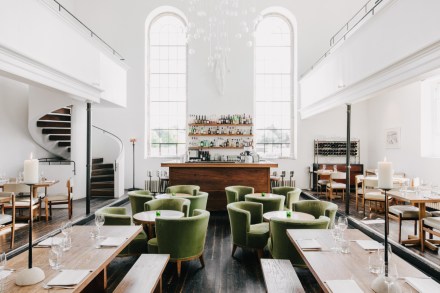
At the Chapel, Bruton, is a restaurant and hotel in a former chapel in Bruton. This was once an ordinary town in Somerset, with a note in the Domesday Book, a ruined priory and a famous dovecote on a hill. Bruton is known for a flood in 1917 – it was the second-largest one-day rainfall measured in the UK – but another calamity was coming. In 2014 the art gallery Hauser & Wirth, with branches in London, Zurich and New York, decided it needed a premises in Bruton, and a restaurant called the Roth Bar and Grill. There is also an Instagram-friendly farmhouse to rent on this site. When I toured it, the price was £666 a night, including the art and, I hope, a food gift basket and, I suspect, an ancient native Briton graveyard.
A Margherita in Tolkien’s Middle-earth: Pizza in the Courtyard at Sarehole Mill reviewed

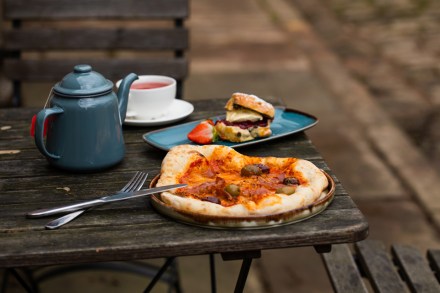
Sarehole Mill is four miles south of the centre of Birmingham. If this were a fairy tale, and it should be, it would follow that Birmingham swallowed Sarehole a century ago, like a dragon and its prey. I like Birmingham: I like its optimism, its violence and its multiplex, which can match any American Midwest mall in competitive dystopia and idiocy. Birmingham has energy, and that swallowed Sarehole, but unfortunately for Birmingham, there was a writer who cared: John Ronald Reuel Tolkien.Sarehole was his childhood palace, and now, more reluctantly I would imagine, his memorial pizzeria.

‘Thinks of the diner, not the chef’: Claridge’s Restaurant, reviewed

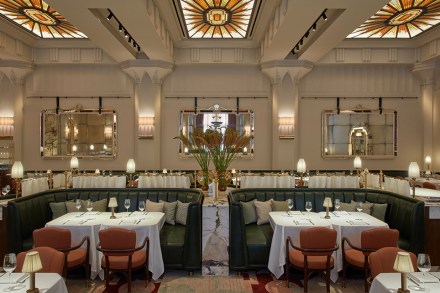
The BBC made a very odd documentary about the renovation of Claridge’s: The Mayfair Hotel Megabuild. They filmed, agog, as the hotel grew eight new storeys – three above, and five below – between 2014 and 2021 while staying open: guests slept and ate, unaware of ‘Narnia doors’ to the building site. (That Narnia is where guests aren’t indicates what Claridge’s employees cannot put into words without spontaneously combusting.) Labourers dug the basement by hand and impersonated the Artful Dodger when management toured. The BBC described the new penthouse at length without mentioning that it is gross, with a grand piano in a glass box on a terrace like a Richard Clayderman-themed nightmare. A roof was assembled off-site and stuck on as for a doll’s house.

Big Little Bavaria on Thames: Bierschenke bierkeller reviewed

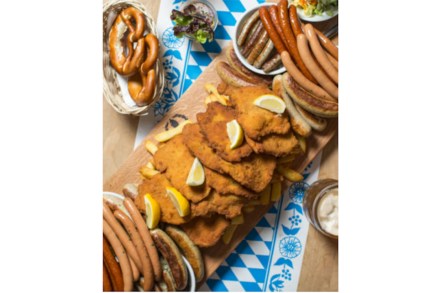
I am not sure the vast Bierschenke bierkeller in Covent Garden is successful, even if it is skilful: I worry it is the wrong place for it. People go to Covent Garden to buy gym clothes, watch musical theatre and pick up men, not to find Wagner and pigs and the drumbeat of the earth: Covent Garden is more Kit Kat Club than Twilight of the Gods with sausage. I am not saying you must be into Götterdämmerung to enjoy this restaurant. It just helps. There is no atmosphere I can find, and I think this is deliberate: a beer hall is an existential void to fill  It used to be in the City of London, and that worked. City men are savages, mining for gold: they would absolutely kill a pig. That is what beer halls are, base: wheat, fat, sweat.

A taste of 1997: Pizza Express reviewed

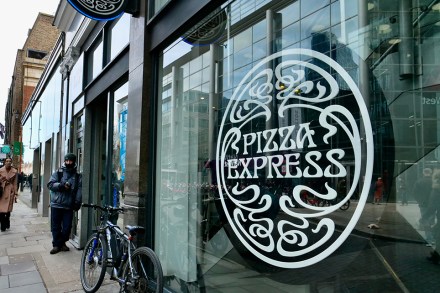
As the government withers this column falls to ennui and visits Pizza Express. As David Cameron, who left the world stage humming, said of Tony Blair: ‘He was the future once.’ So was David Cameron, and so was Pizza Express: I bet they meet often. It was founded in 1965 by Peter Boizot, who shipped a pizza oven from Naples and a chef from Sicily and opened in Wardour Street. That branch closed in 2020. Boizot grew up in Peterborough but lived in continental Europe for a decade, and he learnt three things: an Italian restaurant must be bright; good pizza must be slightly charred (burning food is underrated); children need restaurants too. These changes were sensational, and Pizza Express was launched on the stock exchange in 1993.

As good as pub food gets: The Red Lion, East Chisenbury, reviewed

The Red Lion, East Chisenbury, is in the Pewsey Vale on the edge of Salisbury Plain. Wiltshire’s strangeness surpasses even Cornwall and its menhirs: it has the greater volume of ghosts. I once spent an eerie day in Imber, the deserted village on the plain – the inhabitants were given 47 days’ notice to leave in November 1943, so American soldiers could shoot up Imber in preparation for invading Normandy. Its church of St Giles, perfectly maintained, is open one day a year in September. Its pub, the Bell Inn, was sold to the Ministry of Defence, and is not a fine restaurant with rooms but a red-brick ruin, with the glass of the windows shot out: Daphne du Maurier’s ideal, the Manderley of pubs.

Home cooking, but idealised: 2 Fore Street reviewed

The restaurant 2 Fore Street lives on Mousehole harbour, near gift shops: the post office and general store have closed, leaving a glut of blankets and ice cream, the remnants of Cornish drama. It’s a truism that Mousehole is hollowed out – tourism changes a place, and no one knows that better than Mousehole. Eating at 2 Fore Street gives the visitor the opportunity to examine what they have done with what they call love. There’s a mania for creating 30 perfect soufflés a night thatI cherish  Mousehole is one of those cursed villages that gather in the south-west: haunted in winter and glutted in summer, to paraphrase ‘The Pirates Next Door’.

Wuthering Heights in Devon: the Pilchard Inn, Burgh Island, reviewed

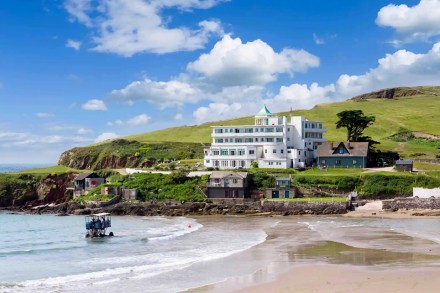
The Pilchard Inn sits at the entrance to Burgh Island, a minute tidal island off the coast of south Devon. The island is home to the Burgh Island Hotel, an eerie Art Deco masterpiece built by the son of a screw mogul, which dominates the view from Bigbury-on-Sea like Coney Island: it is more apparition than hotel. The hotel is faded, fascinating, plated in Art Deco and decorated with vast screws. I wonder if this is a joke: there is little information about the early years of the house, which vibrates with depravity and things unsaid. To compound the mystery, Agatha Christie wrote here in a shack by the sea, eating cream from a tub as she murdered people in her head, and wrote it down for money. The hotel inspired And Then There Were None and Evil under the Sun.

A themed restaurant done right: The Alice, Oxford, reviewed

The Alice lives in a ground-floor room of the Randolph Hotel in Oxford, which venerates the fantastical and the savage, as Oxford does. The savage lives in the Randolph’s dedicated crime museum with cocktails: the (Inspector) Morse Bar. The Alice is named for two women: Alice Liddell, the daughter of the ecclesiastical dean of Christchurch College – the grandest and most unfinished Oxford college – who posed for photographs for Lewis Carroll, became Alice of Wonderland and later invented a ladyship (an act as English as anything that ever happened here).

Faultless food with the promise of vengeance: The Trough, reviewed

Lady Bamford’s Cotswold fairy-land Daylesford Farm has sprouted leaves. It is no longer a farm shop, which should be a humble thing. I went to the Chypraze farm shop at Morvah last month, for instance. The proprietor only had honey, he said, and also pork, because he had just killed a pig. Daylesford is a sort of Las Vegas-themed hotel, invoking something half--imagined from something half-real. Caesar’s Palace; the Paris; the Luxor; the Venetian; Le Petit Trianon; Moreton-in-Marsh! It is not uncharming – many of us have a parallel life in which we live in Lady Bamford’s Cotswold fairy-land, on a pile of Lady Bamford’s dragon gold – but it is a travesty, and it should have a floor show.

Serious about its whimsy: Sessions Arts Club reviewed

The Sessions Arts Club is a restaurant inside the Old Session House in Clerkenwell, a pale George III building where the criminals of Middlesex were once judged in splendour. It’s common for fine once-public buildings to become private buildings now: the old War Office on Whitehall will be, come summer, Raffles at the OWO. The acronym is not mine – it never is – and I doubt you could run a war from there, though you could try. You could throw a mojito at a laptop. I wonder if there is a connection between the ugliness of the new public buildings and the state of our public discourse: what is there to be proud of but rage?

Eat here now: Darjeeling Express reviewed

Darjeeling Express lives at the top of Kingly Court, just off Carnaby Street, which was once the world-famous embodiment of Swinging London but now seems the global capital of the sports shoe. No matter – Kingly Court, which is built in the shape of a medieval coaching inn, is a happy nook: it is shut away, which means you can’t see sport shoes from the window. It is small in scale; it is for Londoners in their thinning melting pot. Kingly Court already has a superb restaurant in Imad’s Syrian Kitchen. Darjeeling Express, newly opened, joins it on the second floor. My companion calls the chicken kati the platonic ideal of aa KFC wrap, and he is right It used to be a yoga studio, but I don’t let that bother me: the yoga hags have fled.

All mirrors and monochrome: Mister Nice reviewed

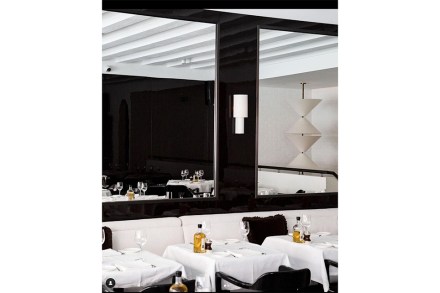
Mister Nice is not so much a restaurant as a pre-dawn thought flung into the drag between Piccadilly Circus and Oxford Street. Mayfair is becoming a drug for me, in that I both hate it and can’t stop eating here: a recent review was so poisonous that the owner telephoned, with fake bonhomie, to ask what I thought his next Mayfair site should be. Social housing, I replied: he won’t telephone again. Here is the next one: Mister Nice. It sits opposite 21 Davies Street, which houses Lynch Pest Control Mayfair, and has a motto from Louis de Saint-Just etched into the stone: Les mots juste et injuste sont entendus par toutes les consciences. And ‘Too many laws, too few examples’. Say what?

Too perfect for Instagram: Cédric Grolet at the Berkeley reviewed

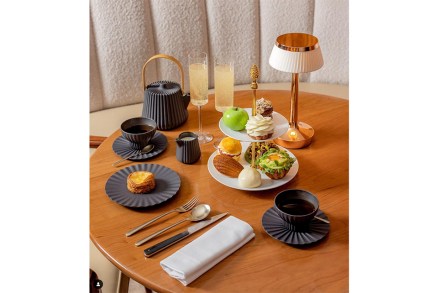
The Cédric Grolet at the Berkeley lives in the shiniest hotel in Knightsbridge, though I prefer the Mandarin Oriental, because it looks like the crown of a toppling king: no matter what they spend on it, it seems in danger of falling into Hyde Park. The Berkeley operates a pass the parcel for restaurants and, for now, Cédric Grolet (the World’s Best Pastry Chef 2017) has it. The cakes sit under glass domes like sculptures: a fake mango, a fake apple, a fake fried egg The Berkeley has a fondness for mad teas, which is, by itself, a cognitive dissonance, as I haven’t seen a fat person in Knightsbridge since the 1990s: perhaps they are all dead.

An innate contradiction: Mount St Restaurant reviewed

The Mount St Restaurant lives above the Audley Public House on Mount Street, ‘a traditional neighbourhood pub, carefully restored, and where history and contemporary art collide’, and which once appeared in a Woody Allen film called Match Point. It is owned by Artfarm, founders of the Hauser and Wirth Gallery, who have created an art gallery above the pub and inserted a restaurant into it. I have been rude about Hauser and Wirth in the past. Its Somerset gallery featured a recording of a cow mooing in a former cowshed, which was insulting to the cows, but people do terrible things to farms nowadays: perhaps we could pay for Jeremy Clarkson’s screams in his tool shed. Here, though, is real art, and it is for sale: in acknowledgement of this the King came to the opening.

Still thrilling: the Wolseley reviewed

Restaurant and dog years are similar, and so the Wolseley, which is 20 this year, seems as if it has always been here. Other restaurants fall so swiftly you have only fragments of impressions. Breakfast on Bond Street in what feels like a one-bedroom flat belonging to Patrick Bateman. Pasta in a cellar with art, and they only care about the art. Salad at an Aslan-style stone table without mice. Nudity and berries. The original Wolseley was so good it spawned a slew of bad impersonators It was opened by Chris Corbin and Jeremy King, the best restaurateurs of the age, in the old Wolseley building at 160 Piccadilly, between Caviar House and the Ritz hotel. Wolseley is a forgotten brand of motorcar, and this was its preening showroom.

Better than the original: Scott’s Richmond reviewed

Scott’s, Richmond, is a fish, champagne and oyster bar, and a new branch of Scott’s, Mayfair. The original Scott’s was part of what became the Trocadero Centre. (Ian Fleming was a regular. He would take captured U-boat officers there to get them drunk and chatty. James Bond visited too.) It moved to Mount Street and was bombed by the IRA in 1975. This Scott’s is on the Thames at Richmond and is part of a development by the King’s favourite architect Quinlan Terry, who managed, in the mid 1980s, to throw up a Domestic Revival village on the water. It looks very weird, but I’ve always liked it because the alternative is worse.

Rich pickings: Alex Dilling at Hotel Café Royal reviewed

Alex Dilling at the Hotel Café Royal is a minute restaurant above Regent Street, which has the type of British imperial architecture that looks most like a cake: that is, the most preening, deceptive and pale. For someone who did almost no exercise, the Prince Regent built quite a lot of roads and there my interest in him ends, like the road itself. In this hotel, which is very fine, stone cake vies with the tepid luxury of this age, which indicates invisibility, and with it guilt. There’s not much to do in central London nowadays beyond watching wealth aesthetics fight it out. The Hotel Café Royal used to be more interesting. This is the hotel where Oscar Wilde decided to sue the Marquess of Queensberry for libel. I think he was drunk. I hope he was.

Beyond satire: Richard Caring’s Bacchanalia reviewed

Bacchanalia is the new restaurant from Richard Caring – I sense he would like me to call it a ‘landmark’ or ‘super-restaurant’, so I won’t – in the old Porsche showroom on the corner of Mount Street and Berkeley Square, and all nightingales have fled. Caring, who has doused Britain with his metal Ivys, is the Ludwig of Bavaria of Mayfair. If he hasn’t bought the silver swan tap at Neuschwanstein Castle, he should open negotiations. I will review his interpretation when it appears: what will he do with the Bavarian Alps? Marshmallows I suppose. Or mashed potato.

The best Ukrainian restaurant you will find: Mriya reviewed

Mriya lives at the end of Old Brompton Road where South Kensington turns into Earl’s Court and, as if by some alchemy, becomes interesting. It is a Ukrainian restaurant, but something more touching too: a memorial and a retreat. It opened in August, in the sixth month of Putin’s war. Twelve of its 15 staff are displaced Ukrainians and their stories are common immigrant stories of renewal and loss. The kitchen porter is a mathematics teacher, the waiter is an English teacher, and the chef, Yurii Kovryzhenko, is one of the most famous in Ukraine. Mriya is the name of the largest cargo aircraft ever built, designed by Ukrainian engineers, which was destroyed by the Russians at the beginning of the war.