Food

‘An exceptional roast lunch’: Quality Chop House reviewed

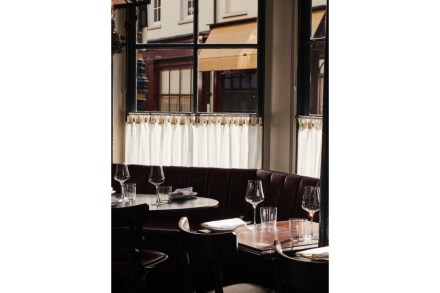
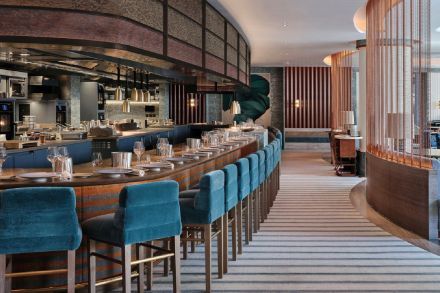
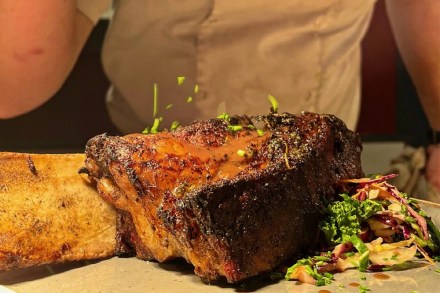
The oldest and best chophouse in London was Simpson’s Tavern in Ball Court Alley off Cornhill (since 1757 on that site): Charles Dickens’s favourite chophouse, and mine. Simpson’s was locked out by landlords who impersonate cartoon villains at the end of 2022 for failing to pay pandemic arrears promptly. Simpson’s said they survived world wars, the plague and the Industrial Revolution, but not a landlord who doesn’t understand chops. (This part I paraphrase.) We settle into a spindly table for what is, by any measure, an exceptional roast lunch Court proceedings are ongoing: meanwhile it’s a ruin. It was vandalised in May, as these things tend to be. Now it is empty, and ornamental books tumble out of smashed windows.
‘Grand and isolated’: The Wolseley City, reviewed

I am fretting about this restaurant column’s election coverage and then I alight on something superficially grand and lovely, which has been hollowed out and is now useless and barely able to function: a shell. It is the Wolseley 2 – the Wolseley City – and this is perfect. I name it the election restaurant, and Tories should eat here while they still have their shirts Few restaurants are important, though I treasure Martha Gellhorn’s description of an operating theatre for the wounded of the Spanish Civil War which was once a restaurant in a grand hotel. But was it any good? Tales of society folk eating are self-serving: real history happens nowhere near them, says the Marxist in me – and PR is, well, PR.

‘Great restaurants can’t thrive in Hampstead’: Ottolenghi reviewed

Ottolenghi is an Israeli deli co-owned by Yotam Ottolenghi, an Israeli Jew, and Sami Tamimi, a Palestinian Muslim. They met in Baker & Spice in London, where they bonded over the dream of persuading more British people to eat salad. This is an ideal story of co-existence (I have met a group of Israeli Jews and Arabs dieting for peace) and I thought the new Ottolenghi in Hampstead might be picketed by idiots shouting for peace but meaning war. (Martha Gellhorn was right about slogans. Never shout them: even ones you agree with.) It is fine in that I wish I were in the Middle East to eat the original But this is Hampstead, not Bloomsbury, and there aren’t any pickets.

‘Vital but fraying’: Five Guys reviewed

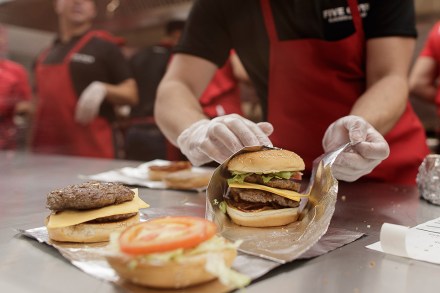
Five Guys is a burger house from Arlington, Virginia, based on the premise that if you can serve a drink, cut a fringe, or make a hamburger, you will always make money in America. Thirty years and 1,700 restaurants later, it sits on Coventry Street off Piccadilly, soaking up the alcohol of a thousand British stomachs. If central London is a strip-lit bin alley between palaces, this is its restaurant: vital but fraying. I am here because I will not eat at McDonald’s, even when I am sad. I do not think my McDonald’s burger is all from the same cow, and this disturbs me: I can eat one cow happily, but a multitude frightens me. McDonald’s doesn’t fill you either, no matter what you eat: is it just an idea?

‘Five stars, no notes’: Arlington reviewed

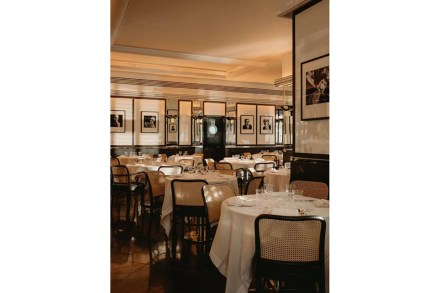
Arlington is named for the 1st Earl of Arlington and his street behind the Ritz Hotel. It used to be Le Caprice, which was opened in 1947 by the Italian Mario Gellati, who would not, by the new rules, get into Britain now, but this is not a column about pain. In 1981 Le Caprice was taken over by Chris Corbin and Jeremy King, and it became the most fashionable restaurant in London. Princess Diana dined here and when Jeffrey Archer was released from prison, he ate here. None ofthese dishes could be improved. Five stars, no notes After an interregnum from Richard Caring, under which Le Caprice closed in 2020 – it could not compete with Caring’s mad themed restaurants across Piccadilly – Jeremy King, who is more emotional and skilful than most restaurateurs, returned here.

‘Can’t help but exude warmth’: Paper Moon at the OWO, reviewed

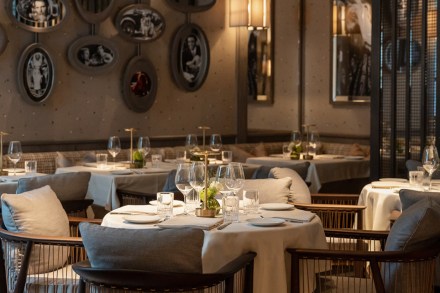
Paper Moon is the Italian restaurant inside the Old War Office on Whitehall, now a hotel called Raffles London at the OWO. It has nine restaurants and bars, because it is a Disneyland for the 1 per cent in the fraying centre of the British state, which is enraging and hilarious. I reviewed Saison in November and found it as chilly and finessed as the British state pre-crisis. OWO reminds me of a theme park I visited in Georgia, Russia, two decades ago in winter. It was a fine endeavour but pointless, the happy children had fled. You can’t have a grand hotel inside a post-Imperial bin fire. It makes no sense. Paper Moon is grey, and Art Deco, of course: the pre-calamity aestheticof choice Paper Moon is rather better than Saison: perhaps Italian food can’t help but exude warmth.

‘The interiors are happily insane’: Dear Jackie, reviewed

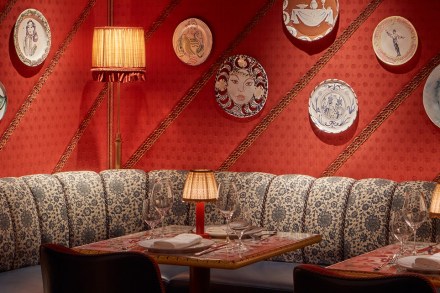
Dear Jackie is the restaurant in the new hotel Broadwick Soho on Broadwick Street in Soho, which is most famous, if you are an infectious diseases nerd, for being the site of the 1854 cholera outbreak and its cure. Dr John Snow isolated it to the street’s water pump, noted local brewers were immune, and proved cholera is not airborne. When children stopped dying, Soho eased into its time of moral rot. This is as spirited an attempt to re­animate the 1970s as I have found beyond musical theatre This is a changeable thing. Drama fled Soho in the 1970s, and Broadwick Soho is an attempt to put it back. This is no generic hotel.

‘As good as you will find in London’: Noble Rot Mayfair, reviewed

Noble Rot, which is named for a sickness that afflicts grapes, a self-aware name for a restaurant in London, is becoming a chain. Don’t get me wrong. The Rots in Lamb’s Conduit Street and Greek Street (which replaced the Gay Hussar that died in sympathy with the intelligent left) are two of the best restaurants we have. My only complaint is that, like the Plastics in Mean Girls, they know how lovely they are and have their own promotional magazine. This food has a loving intensity to it, and it is as good as you will find in London Now they have expanded into Mayfair – but the least horrifying part, which is Shepherd’s Market.

‘You can stare at a cow you will soon eat’: The Newt, Hadspen, reviewed

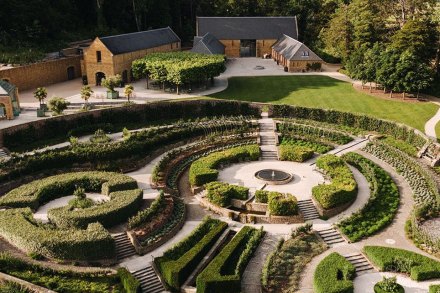
The Newt is an idealised country house in Somerset which won the World’s Best Boutique Hotel award last year. It is small, beautiful and mind-meltingly expensive, even for the Bruton Triangle and its mooing art galleries. Poor Somerset! It never wanted to be monied enough to have a triangle, but the rich make their own mythology. Since they paint every-thing grey – and now green, I learn at the Newt – they need it. A triangle fills the day. The Newt is for people who think that Babington House is stupid (it is) and though the Newt has its own issues – like the King, its taste is almost too immaculate – you never feel that the chief executive of a media conglomerate will bounce past you on a space hopper eating a fishfinger sandwich and shouting into an iPhone.

‘Is it France? I don’t know’: Hôtel de Crillon, Paris, reviewed

Hôtel de Crillon sits on the Place de la Concorde, a vast square renamed for bloodshed, then the lack of it – it was the Place de la Révolution, with knitting and bouncing heads. Now it is placid, and the Crillon is the most placid thing in it. No one does grand hotels like the French, except perhaps the Swiss, who have nothing better to do. Hôtel de Crillon was one of twin palaces commissioned by Louis XV before the French butchered his grandson and his wife outside them: it looks like Buckingham Palace but prettier and with possible PTSD. It has been a hotel for 115 years and next to it our Ritz and Savoy look grubby, needy even, but they were built for the bourgeoisie. They have a different kind of grandeur, a kind I prefer.

‘I pity MPs more than ever’: the Cinnamon Club, reviewed

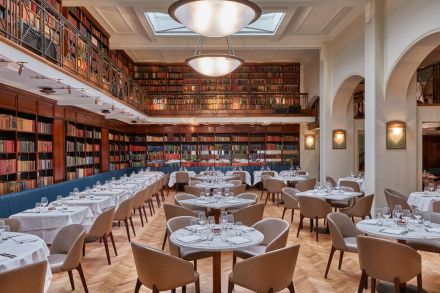
The Cinnamon Club appears on lists of MPs favourite restaurants: if they can still eat this late into a parliament. It lives in the old Westminster Library on Great Smith Street, a curiously bloodless part of London, and an irresistible metaphor wherever you are. When once you ate knowledge, you now eat flesh, but only if you can afford it. Now there is the Charing Cross Library, which lives next to the Garrick Theatre, and looks curiously oppressed. Perhaps soon it will be a falafel shack and knows it. There is also the Central Reference Library, which could be a KFC, and soon will be. Public spaces are shrinking. They will all be online soon, and we will see how that goes. (It will be bad.) The Cinnamon Club, which identifies as ‘fine dining’, seeks finesse. What for?

‘The lasagne is perfect’: Hotel La Calcina, Venice, reviewed

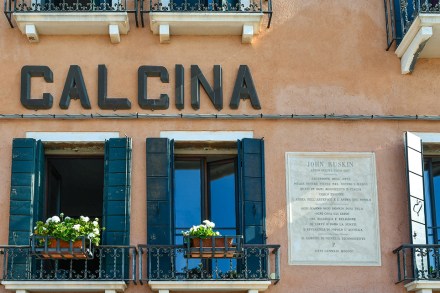
Pensione La Calcina is one of John Ruskin’s houses in Venice. He stayed here in 1877, after completing The Stones of Venice and going mad, and there is a plaque for him on the wall: a stone of his own. It is next to the Swiss consulate on the Zattere, but never mind them. I think the Zattere is for people who have tired of Venice. It has a view to the Giudeccacanal, and the waterbus to the airport: to the exit. You can breathe here. I am staying in San Marco, where I can’t. My son falls from a water gate into a canal, and Italian grandmothers tut at us, and we get sick, which my friend says is ‘very chic in Venice’. Before we get sick, we eat at La Calcina.

‘The chocolate soufflé is too good for people’: Pavyllon at the Four Seasons Hotel, reviewed

One in, one out, as Rick says in Casablanca. Le Gavroche, which was the first restaurant in Britain to win three Michelin stars – and this was before Michelin stars indicated poor mental health in gifted chefs – closes in January, which is serious news in the land of London restaurants: a kind of Congress of Vienna with Michel Roux bowing out with the blood of infinite chickens on his knife. I don’t love Le Gavroche the way other critics do but I admire it, even if it means ‘urchin’, which is not witty when you consider its prices. There was a scandal involving staff’s tips going to management – an ongoing obscenity, though this one was resolved – and I also think that if you desire French food you could just go to France. It’s not far, at least in miles.

‘This is generous food’: The Salt Pig Too, reviewed

Swanage is a town torn from a picture book on the Isle of Purbeck: loveliness and vulgarity both. It is famous for fossils, Purbeck marble, a dangerous-looking small theme park, and Punch and Judy. My husband is very attached to Swanage, because it exists in a state of 1952 – in homage to this, it has a branch line with a station from The Railway Children. In the summer, on the beach, you see fat sunburnt people with handkerchiefs on their heads. I didn’t think they existed anymore: I thought they were all dead. Some parts of Dorset have gentrified, though this doesn’t really describe what has happened to Sand-banks, the Bishop’s Avenue of the coast. That is closer to calamity, or invasion by space aliens who love concrete and glass.

‘The potential for jeopardy’: Pullman Dining on the Great Western Railway, reviewed

I am lazy and nosy, and so I spend a lot of time on the GWR service from Penzance to London Paddington. Each journey is a play with a unique atmosphere. Some are seething, particularly in summer when an eight-carriage train cannot fit everyone who wants to swim in the ocean but dine in west London that same night. Some are non-committal; some restful. I rage at usual things: luggage in the disabled space, which is almost always occupied by the non-disabled, though they may be fat; videos played without headphones; young people swearing at older people because they grapple with a rage they cannot understand. You can measure the social contract on any long train journey, and I have. It’s broken.

‘The food is as good as you will find in London’: Saison at Raffles London, reviewed

The Old War Office (bad acronym OWO) on Whitehall is now a Raffles hotel: you can stay in Winston Churchill’s office if that helps you sleep at night. I’m not sure I could, but this is the rational endgame of privatisation: you can sleep inside British history, which is quite close to sleeping through it. War isn’t the jolly marketing riff it was five weeks ago, and the atmosphere in the OWO reflects this. Even so, you need the money of a (fleeing) Tory donor to stay here, and perhaps they won’t notice that pre-war is outside their door in the form of children setting off fireworks and picking fights with the police during marches ‘for’ Palestine.

‘They do better spaghetti bolognese in Hampstead for a tenner’: The Lobby at The Peninsula, reviewed

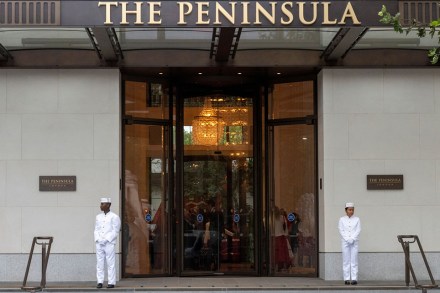
The Peninsula is a new hotel at Hyde Park Corner. It is part of the trend for absurd expense: rooms start at £1,400 a night and express the kind of preening mono-chrome blandness that will be the London of the future. It is a building of great ugliness – I would type the names of planners who allowed it, but on these pages it is incitement to violence. It sits on its six-lane round-about between the Lanesborough hotel and a long peeling red-brick late Victorian terrace that once appeared in a Stephen Poliakoff film about how things always fall apart. This food knows nothing of beauty, delicacy or comfort: it’s a grift It isn’t really a hotel, I think, staring: it doesn’t have that much identity.

‘Well-priced and skilful’: Masala Zone, reviewed

There are cursed restaurants and cursed women, and this makes them no less interesting. One is Maxim’s in Paris, which knows it – it gaily sells ties in a charnel house decorated for the Masque of the Red Death – and another is the Criterion at Piccadilly Circus, which doesn’t. One day it might meet its destiny, which is to be an Angus Steakhouse (this might lift the curse, the Angus Steakhouse has its own magic) but it isn’t there yet. Restaurant after restaurant favours hope over experience here: Marco Pierre White (Mark White) passed through, spilling acronyms about. I suppose it serves it right for being in the neo-Byzantine style. Don’t restaurant developers watch horror films?

Fine food in a fine restaurant: Origin City reviewed

Origin City is a good name for this restaurant, whether it knows it or not. It is at West Smithfield, the only surviving wholesale market in the City of London (I do not count Borough, which is a snack shack impersonating a greengrocers and is only spiritually in the City). Covent Garden sells face cream – Eliza Doolittle didn’t need it – and Billingsgate awoke one morning to find itself on the Isle of Dogs. Somehow the cows hung on in West Smithfield. We owe them a lot but I would say that, I am a restaurant critic. Somehow the cows hung on in West Smithfield. We owe them a lot This is the most interesting part of the City of London: St Bartholomew the Great, of God and Four Weddings and a Funeral – the one where Charles was punched, fairly – and Cloth Fair.

As gaudy as Versailles: The Duchess of Cornwall in Poundbury reviewed

Poundbury is the King’s idealised town in Dorchester, built on his land to his specifications: the town that sprung out of his head. (‘My dream,’ says Harry Enfield in The Windsors, ‘was always to build a mixed-used residential suburb on the outskirts of Dorchester.’) It is so fascinating that I dream, briefly, of moving in for the completeness of the vision – who doesn’t want to live inside art? – and the portrait of the British class system in housing. Here it is, at last, laid out like a textbook: journey’s end. We order via app and pay in advance: there is a shortage of what tabloids call flunkeys It is becalmed on a Sunday evening, and sun saturated: there is almost no one about. Perhaps the residents are indoors, enjoying the lushness of their fittings.