Food

Pass on Piggy’s, head to Hide: central London breakfasts reviewed

The centre could not hold, at least for Piggy’s. The drama of being the only greasy spoon in the West End — in Air Street, of all places — was too much, and it swelled, panicked, and fell apart. Yesterday I ate a mean sliver of almost cold bacon inside hard white supermarket bread. The butter had fled, possibly in the night, possibly with its luggage. There is a good, cheap bacon sandwich — I would argue the cheap bacon sandwich is the only good bacon sandwich — but it must have soft bread, crispy bacon, and butter as plentiful as a lover’s heart. This wasn’t it.

A ghost at the feast: The LaLee at the Cadogan hotel, reviewed

The Cadogan hotel, Chelsea, is where Oscar Wilde was arrested for sodomy and gross indecency in 1895, in Room 118, which is now memorialised as the site of the arrest. Institutional homophobia is a weird thing to commemorate in fabrics, but everything is a tourist attraction these days. The hotel is a tall red late-Victorian castle incorporating neighbouring houses, one of which belonged to the actress and mistress of Edward VII, Lillie Langtry. It was, then, a hotel for betrayal on the corner of Pont Street. John Betjeman mentions this in his poem ‘The Arrest of Oscar Wilde at the Cadogan Hotel’, and offers disaster PR of a timeless kind: ‘More hock, Robbie — where is the seltzer?/ Dear boy, pull again at the bell!

The best schnitzel in London: Schnitzel Forever reviewed

It is a truism that there is never enough schnitzel (‘slice’, German); or, rather, schnitzel does not get the attention it deserves. Restaurants do serve it, of course. Fischer’s does a fine Wiener schnitzel, as part of its riotous pre-war Vienna tribute act, and elderly people, I am told, queue for it while wearing slankets. Brasseries sell it often: the perhaps unconscious desire to re-enact the meals of the Weimar Republic is one of the stranger things of the age. The Coffee Cup in Hampstead serves it with a jaunty side order of spaghetti pomodoro. But the (chicken) schnitzel has never had the stardust of the less interesting but more widely beloved hamburger; perhaps it is because cows are bigger.

The torment of a tasting menu: Hélène Darroze at the Connaught reviewed

The Connaught Hotel’s formal dining room was always, to me, a place of childish myth; more comforting for being mythical. I am certain it is the dining room in Judith Krantz’s novel Princess Daisy, to which a Russian prince takes his daughter in the 1970s. In this tableau you find Robert Maxwell, Margaret Thatcher and people willing to pay for newspapers. I had, in a crowded field, my best ever celebrity encounter here, with the Netanyahus, in what used to be the breakfast room overlooking Carlos Place. ‘Shalom,’ I said, thrilling to the Waspy-ness we were subverting with our very presence. (I meant it. I meant it more than they did. I think that is clear.) ‘Shalom,’ Mrs Netanyahu said back. That was it.

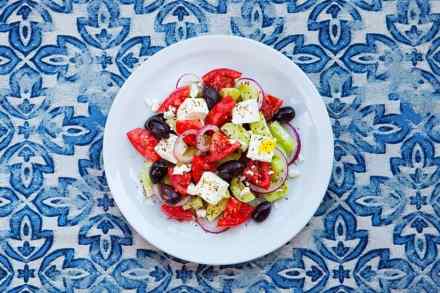
The best Greek salad I’ve ever tasted: INO Gastrobar reviewed

Soho is so gilded nowadays that even drug addicts look down on it. The wasteland without must match the wasteland within. That is harmony. Soho is not a wasteland now: it is no longer that interesting. It is, rather, a shopping district with restaurants and hotels: whimsical, trivial, overpriced. People say it is our youth we lament when we moan about Soho, not the filthy streets we lay in and were fond of, but I am not sure if this is true. Every great city needs a district for wanking and sobs. But this is not it, not anymore. The gateway under the grand hotel by Piccadilly is now an Ugg shop and I have not seen an Orthodox Jew leap into a sex shop with a great, subversive skip — he was vaulting through cultures, after all — for years. Those days are over.

A small victory in a bad year: José Pizarro at the RA reviewed

Piccadilly is losing its patina of dirt, its cadaverous character. It is overpriced and over-renovated,a meeting place for luxury goods. Perhaps I cannot forgive it for not actually containing Dracula’s ‘malodorous’ house; but who has a resentment against a street except this column and Hillary Clinton, who set a terrorist attack here in her new novel State of Terror (written with Louise Penny), which describes her resentment towards Donald Trump through the prism of genre fiction? Piccadilly does, though, now have three excellent restaurants: HIDE; the Wolseley; and José Pizarro at the Royal Academy of Arts, which opened this summer. I am used to good art and bad food: one can’t have everything.

Sentenced to chicken: NoMad reviewed

NoMad is a new hotel in what used to be Bow Street Magistrates’ Court: a preening piece of mid-Victorian classicism opposite the Royal Opera House that is clearly too fine for the half-hearted criminal classes these days. I was judged in this court once for the very boring crime of cannabis possession (I think I did it), as was Giles Coren for something else (he says: ‘I never done nuffink’), General Pinochet, Dr Crippen (VeryMad) and Oscar Wilde. It heard its last case in 2006: the breaching of an Asbo by a man called Jason. Now it sells cocktails. NoMad has a restaurant named, as if in homage to a public relations panic attack, the NoMad Restaurant. (I thought NoMad was named after a refugee but I checked and I was wrong.

Dregs of fake Provence: Whitcomb’s reviewed

Whitcomb’s is in The Londoner hotel on the south-west corner of Leicester Square. The Londoner calls itself ‘the world’s first super boutique hotel’, which may mean that it is the world’s biggest small hotel. Or its smallest big hotel. I don’t know. Whatever its existential status, the developers destroyed an art deco cinema — the dour and lovely Odeon West End — to make it, and it looks like a piece of bright blue infant Lego with lesions for windows. Heritage organisations objected to the cinema’s destruction. Westminster council replied: who cares? We need Lego with lesions, or anything that looks like Lego: look at the Hotel W round the corner. That looks like a giant Lego fridge!

The Batman restaurant that’s totally bats: Park Row reviewed

There is a Batman restaurant in London, or rather there was: Savini at the Criterion on Piccadilly Circus. Savini was a haunted grey Italian restaurant that closed in 2018 and was artistically dependent on salt. It appeared in The Dark Knight, in which Batman, who is Bruce Wayne to everyone but himself (I have a theory that everyone knows Bruce Wayne is Batman, but they pretend not to because he is an orphan), owned this restaurant, in which case he should have fixed the telephone lines. (Savini was plagued by a dispute with BT.) But because you cannot ever have enough of a strange thing, there is a new Batman restaurant to the north on Brewer Street, Soho, under a calm Edwardian wedding cake which was once Marco Pierre White’s Titanic.

The real Greek: Lemonia reviewed

Lemonia lives in the old Chalk Farm Tavern in Primrose Hill, which is better known as the set of Paddington. It is not surrounded by fields filled with duellists under a hill of primroses these days, but it is still vast, pale and beautiful: a survivor in the sprawl. There has been a tavern on this site for so long — it was first recorded in 1678 when a corpse was carried to it — that it is possible John Keats drank here. I hope so. It is not a beaker of the warm south – it is slightly too near Camden and its stink of pigeon and bleach for that — but it is close enough. Some restaurants hold memories of pleasure: this is one such place.

Dining in nowhere: Bar des Prés reviewed

The residents of Mayfair are misnamed: they do not really live here. They live in Mayfair like I live on the A30 roundabout near Morrisons or in dreamland. I am sometimes on the A30 roundabout near Morrisons and sometimes in dreamland but only -sporadically. It would be ludicrous to suggest that either is my permanent address, even if pretending it means that the people I stole my money from can’t steal it back. Mayfair is a district with an itinerant population and when they are here, tidally like plastic, they dine conservatively, almost fearfully, in a series of restaurants so generic and dispiriting that they either righteously hate themselves, righteously fear us, or have — as anyone who’s ever been to a yacht show will know — absolutely no taste.

Scarface’s lair with nibbles: Louie reviewed

A French creole restaurant rises in the sullen ruins of London. It is called Louie, for French king or trumpeter, depending on your wish. It is next to the Ivy — now a private members’ club and franchise stretching to the London suburbs bearing small bowls of shepherd’s pie — and it is infinitely preferable. That is, I can get a table, and no pastiche medieval windows or tabloid photographers are involved. It’s a terrible thing being jostled into a gutter so someone can photograph the former cast of Crossroads. The Ivy is the Love Island of grand restaurants. It is for the spuriously famous, which is now everyone. The zeitgeist cries: we’re going to need a bigger Ivy. Or at least it used to. Louie is a small, golden rebuke.

‘Lifeless and necrotic’: Native at Browns is an ode to joylessness

Browns is a famous fashion boutique in deepest Mayfair. It occupies a curved cream townhouse on Brook Street, which seems sunken and shuttered. Perhaps it is the lingering effects of the pandemic or because it’s late summer, but the interior — carefully designed over multiple eyries over many floors, like gold teeth fallen on a garden — feels lifeless and necrotic. High fashion needs joyful people to wear it (or at least people pretending to be joyful, which is more usual) and here there are none. Perhaps they are all in the south of France? Perhaps they never existed and were invented so the rest of us, regarding their perfection, would buy cheap moisturiser and cheap knickers?

High on the hog: The Pig at Bridge Place reviewed

The Pig at Bridge Place is not a pig in possession of a country house, but I would be for it. You cannot have enough pigs, or any edible fauna. It is, rather, a hotel inside a Jacobean mansion — or, rather, part of a Jacobean mansion, the rest burnt down, and is all the better for it — in a pleasingly unkempt part of Kent, just beyond Canterbury. There are ten Pigs, dotted across the south coast as if in homage to Armada beacons. They are the successor to the Soho House brand, which is looking increasingly dusty, and in velvet. My main objection to Babington House is that it is for people with Peter Pan Syndrome: children who cannot grow up. They served fish-finger sandwiches and I think I saw a giant inflatable unicorn in the pool, but I have may have imagined it.

A Damascene moment in London: Imad’s Syrian Kitchen reviewed

Imad’s Syrian Kitchen is an eyrie off Carnaby Street, a once-famous road which seems to exist nowadays to sell trainers to tourists who have fallen, as if by wormhole, out of the Liberty homeware department with its pathological dependence on florals. No matter. Nearby, in Kingly Court, which is like Covent Garden before it fell to Dior and Apple, more interesting things happen: the sort of things that London, so sunken, needs. Kingly Court is charming because it invokes an ancient coaching inn — London was once filled with them — and it is, due to the presence of independent eating houses, still palpably bright, pleasing and alive. The restaurant is likewise cheerful: wooden floors; pale walls; blue windowsills; blue tiles; a beamed ceiling; photographs of Damascus.

An utterly convincing dreamworld: The Ritz reviewed

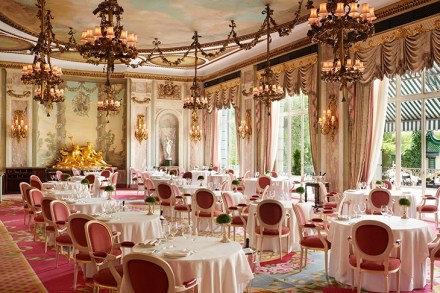
The Ritz is still here, and still gaudy. No grand hotel in London feels quite so complete, if pink; as if it landed like a Tardis on Green Park. There is no real life here, and there shouldn’t be. Each guest travels with their own novella. There are jewels in the window and brides on the stairs. Lady Thatcher died here, in a corner suite. Don’t ask which one. They won’t say, to discourage ghouls, party hacks and perverts. You cannot know if you are sleeping in her bed, and that is not even the oddest thing about the Ritz. The staff, who dress like toy soldiers, are charming in that way you don’t find outside Judith Krantz novels. That is, you believe them, and that is rare. The Ritz is a myth, and it is dedicated to itself.

Harry Potter meets Ikea: Backlot Cafe reviewed

Harry Potter is a fictional orphan locked in a cupboard by his aunt and uncle, after which he discovers a magical world and a better class of nemesis than his ugly suburban relatives. It seethes with class. The Dursleys are lower-middle-class, golf-club-haunting gammons. I suspect their MP is Dominic Raab, and I suspect they vote for him. The improved nemesis ‘Lord’ Voldemort is half landed gentry and heir to a Jacobean manor house on a hill. Harry Potter is world famous, and so people want to join him in suburban misery (we are near Watford), though in a slightly larger cupboard: the vast prop room in a former sound stage off the M1 called the Warner Bros Studio Tour London — the Making of Harry Potter. Harry is a boiler-plated mythical hero.

A careful parody: Noble Rot Soho reviewed

Noble Rot sits in Greek Street, Soho, on the site of the old Gay Hussar, which squatted here from 1953 like a rebuke. Some people loved this Hungarian ‘left-wing’ restaurant, with its terrible food, its library of Labour-themed political biographies, its raging cartoons and fond memories of Harold Wilson. But you can’t eat political biographies — not if you have taste. An attempt to save it by a ‘Goulash Collective’ failed, because the Gay Hussar was a themed restaurant whose theme — a sort of politicised London Dungeon — ran out. In an exquisite metaphor, it closed in 2018, at the height of Jeremy Corbyn’s self-hating — and self-thwarted — grasp for power.

Bad food is back: The Roof Garden at Pantechnicon reviewed

The Roof Garden is a pale, Nordic-style restaurant at the top of the glorious Pantechnicon in Belgravia — formerly a bazaar — opposite a Waitrose I didn’t know existed. (Waitrose seems too human for Belgravia. Food seems too human for Belgravia.) This thrilling building, which should be a library — it has Doric columns — is instead a collection of restaurants, shops and what I think are called ‘outlets’ (a Japanese café; something called, gnomically, ‘Kiosk’), all celebrating the ‘playful’ intersection — I mean meeting, but marketing jargon is addictive if you are an idiot — between Nordic and Japanese food. It is a wealth mall from hell, then, in the style of Terminal 5’s main street.

Pretty food with a side order of pollution: 28-50 reviewed

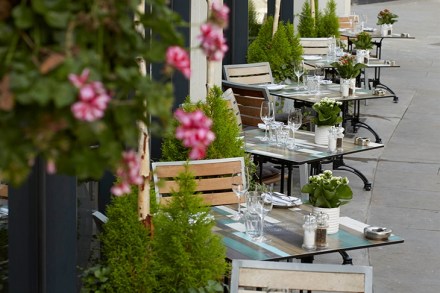
You cannot have cars and dining tables in the same dreamscape: it doesn’t work, unless you think carbon monoxide is a herb, or are wearing full Hazmat, like some teachers. London is in much denial about its air pollution; in the East End child asthmatics are choking. But we must embrace it for a few days more; others have lost more in pandemic than an attachment to the convention that if we dine outside it should be in a flower-filled garden. Perhaps there are enchanted restaurant gardens in London, but I have never found one. I conclude that, outside fiction or aristocracy, they do not exist. Instead, we have modish kerbside dining.