Features

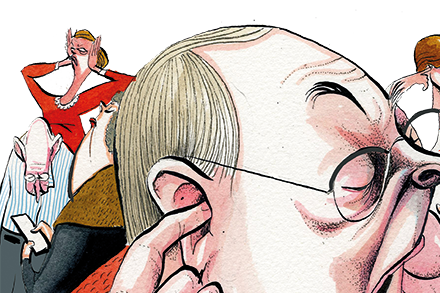
‘I asked for a substitute for the f-word. He suggested the c-word’: the joy of editing Rod

It was in Westminster Magistrates’ Court, where I was sitting waiting for the judge’s verdict, that I decided I needed a better way of handling Rod Liddle’s column. As editor of this magazine, I had inherited one of its greatest writers; a force of nature loved by his readers for his bravery and candor. But it sometimes led to difficulties: in this case, criminal prosecution. The judge had a choice: prosecute our owners, the editor, or the magazine. The magazine was fined. “Rod was right,” I was told by Aidan Barclay, who as proprietor had nearly ended up in the dock himself. “But truth is no defense. Not any more. You need to spot these things before they blow up.

rod liddle

To be a Spectator reader was to love Rod

Since becoming Spectator editor there was one observation I heard more often from readers than any other: “Rod is the first page I turn to every week.” Whatever people’s politics, background or other interests, to be a Spectator reader was to love Rod. Rod did his best, of course, to be unlovable. At least in print. Nothing, and no one, apart from possibly Millwall, was spared from his criticism. Savage, foul-mouthed, merciless. But also hilarious, superbly well-informed and honest. Above all honest. There are all sorts of enlightened souls in and around journalism who pretend to that virtue.

rod liddle

I didn’t want to like Rod Liddle

One of the joys of being director of digital at The Spectator, back in 2015, was seeing the magazine proofs before they went to print. Rod Liddle’s column was the first thing I looked for, always the one I was most eager to read. He made me laugh every single time, something very few columnists are able to do. I was annoyed I liked those columns, because I didn’t want to like Rod Liddle. All I knew of his personal life was through the scandal that followed him leaving his wife during the so-called “Sextator” years. I took a dim view of that. Although we both worked for The Spectator, I didn’t actually meet Rod for a long time because, woke snowflake that he was, he only ever worked from home. The first time we met was at a Spectator summer party, years later.

rod liddle

The curious history of sporting superstitions

My father had been waiting his entire life for that whistle. After 75 years, the curse was over. Mayo were Gaelic football champions, having overturned the second-biggest deficit in the history of All-Ireland finals. The county hadn’t seen such a miracle since Father Horan got the taoiseach to fund an international airport near the shrine of Our Lady of Knock. Three months before Dad was born in Castlebar, Mayo won the 1951 title. Their celebrations on the way home were exuberant and, so the legend goes, disrupted a funeral in Foxford. The furious priest (some versions blame the widow) cast a curse on them, saying Mayo would never again lift the Sam Maguire Cup while any of those players lived. Nonsense, right? Except that Mayo then lost 11 finals, four by one point.

sporting
love

Love lessons from my grandfather

After a lovely 25th birthday trip to Vienna, I returned home to face the reality of my quarter-life circumstances. I had been happy with my milestones to date – a degree, a stint of modeling on the European and New York runways, a couple of relationships and some encouraging writing contracts – but was then told by my mother what my grandfather Alexander Chancellor had pulled off by the time he was my age. Having moved to Italy to work for Reuters news agency, he spoke Italian fluently and had married my grandmother, Susanna Debenham; he had two children, he had bought a house and even had someone iron his shirts from time to time, which Susie was definitely not going to do. By the time he reached 35, he was editing this magazine.

rod

Rod had one great regret

In 2019, I had to explain to Iain Dale – live on LBC – that Rod Liddle’s suggestion in his Spectator column that elections should be held on Islamic holy days to deter Muslims from voting was not a serious proposal. Neither was his idea that students be drugged by their parents to the same end. It was humor, and they were jokes. When he was in hospital a few weeks ago, I visited Rod with some cake. While he munched away, he expressed a sense of regret that he could have been a great writer. Rod always thought his true calling was writing fiction, rather than journalism, and always wondered if he’d sold his soul by following the money. He was right – he did have the makings of a British Houellebecq.

rod

‘The Middlesbrough Shakespeare’: Why I loved Rod

I met Rod 22 years ago this month. We had been selected as teammates on a gameshow pilot, and, halfway through the morning’s filming, we went for a fag break. He said to me: “This is crap, shall we go to the pub?” We scarpered and spent the rest of the day in a Covent Garden pub, working our way through the drinks list and chatting away like chipmunks. I’d never been starstruck by anyone before I met Rod. However famous or talented actors are, their job is to say stuff written by other people. Rod, however, was a legend to me. I began reading his Guardian columns at university. Though I was studying all the greats of English literature, it was Rod’s writing which felt like a ribbon-wrapped gift, a treat, a joy.

rod liddle

Rod’s genius? Driving his enemies nuts

There is a reason the death of Rod Liddle has provoked such a swirling tide of grief among his millions of followers, including readers of this magazine, and that is that in the last 25 years Rod came to occupy a crucial position in journalism, and indeed in our country as a whole. His columns became a haven, a refuge, in which he gave us permission to think things that are in fact common sense, but which have for some reason become taboo. He gave us a renewed permission to laugh – at him, at ourselves, at our collective absurdities – at a time when laughter is increasingly controlled and often suppressed.

Andy Burnham’s centrist act isn’t fooling anyone

When Ed Miliband and Shabana Mahmood arrived in Downing Street on July 20, the image of political rivals arm in arm symbolized a new government of differing views taking shape. It might have been more awkward. As they neared the door of No. 10 and the waiting television cameras, Miliband turned to Mahmood and asked: “Should we turn around for a photo together?” Mahmood gave the idea short shrift: “We’re not getting married, Ed!” But in a sense, Labour is seeking a new relationship with the British public – and everyone around Andy Burnham is alive to the importance of images, symbols and vibes. As Wes Streeting, the new Defense Secretary, put it in cabinet the next day: “We have a second chance to make a first impression with the voters.

burnham
arwap

The Welsh government’s mad decolonization plans

A teenager in Wales might want to play video games, hang out with friends or even, dare I suggest it, read a book. The Welsh government, however, would prefer they put on a headset and confront their “unconscious bias.” It has created a £1.2 million metaverse, the “world’s first anti-racist virtual world,” to teach Welsh teens about their “white privilege.” But this is only one element of an official commitment to end racism by 2030. Not today, not yesterday, but a specific year in the future. The idea for an Anti-racist Wales Action Plan – ArWAP – was born following fervor around the Black Lives Matter movement, and an official plan followed in 2022.

Turtle doves and the myth of rewilding

In the latest success story for reintroducing species to the British countryside, turtle doves, reared in captivity and released at three locations in Somerset and Devon last year, have returned to breed. Turtle doves have steeply declined in numbers, hanging on in the south and east of the country, but this scheme opens a new front in the battle to save the species as a British summer visitor. In May 2025, 244 captive-bred turtle doves were set free across three sites. Like others of their species, they spent the winter in Africa but a handful found their way back to southwest England this summer. Reintroductions like this are now all the rage among conservationists because it is a policy that can have spectacular results.

The radical left-wing takeover of the Democrats is nearly complete

Tuesday August 4 could prove to be a turning point in American political history. If Democratic primary voters in Michigan choose Haley Stevens, a moderate, as their Senate nominee, the party establishment should stagger on, perhaps up to and beyond the presidential election of 2028. It’s more likely, however, that the Democrats will elect Dr. Abdul el-Sayed, a pro-Palestine radical who supports Medicare for All and the abolition of Immigration and Customs Enforcement. El-Sayed’s victory would confirm that the hard left is the coming force in national politics, and suggest that the long-anticipated socialist takeover of the oldest party in the US – the party of Andrew Jackson, Harry Truman and Bill Clinton – is finally under way.

Are you enjoying a ‘nun girl summer?’

The nuns were wrapping up their night prayer when I entered the chapel at Tyburn Convent. I couldn’t see them but heard their soft voices singing the last phrases of the “Salve Regina”: “O clement, O loving, O sweet Virgin Mary.” Across the road in Hyde Park, an outdoor concert heaved. What was I doing, spending my Friday night here instead? I had come to see if the rumors of a “nun girl summer,” as it’s being called on TikTok, were true. Earlier this year, a video of two nuns discussing their ultimate frisbee skills went viral: “Sister, you are so good at that!” “Sister Miriam, you also are!

nun

Christopher Nolan’s Odyssey is a triumph

Incredible stories, otherworldly creatures, false identities, a cavalcade of trickery: the original Odyssey is packed with everything you could want from a big-screen blockbuster. And like all great stories, it’s more than just a fantasy adventure. It’s about survival, marriage, truth, what it means to be a man and much more. It’s also roughly 2,700 years old, and by picking it for his latest movie, Sir Christopher Nolan has definitively proved that the old ones are the best. But why, really, has he decided to go Greek? Screenwriters have always been suckers for a good “coming home” story. It was such a popular genre in ancient times that the Greeks even coined a name for it: “nostos.

odyssey

Is there any route back for the Society of St. Pius X?

As any Catholic master of ceremonies will tell you, it takes only the tiniest sartorial mishap to lend a Python-esque flavor to moments of the utmost solemnity. On July 1 the rebel traditionalist Society of St. Pius X (SSPX) created four new bishops in defiance of Pope Leo XIV during a five-hour open-air Latin Mass in a Swiss alpine meadow. The consecrating prelates wore dark-red velvet chasubles over scarlet-and-gold dalmatics with matching gloves. They descended from their thrones bearing sacred chrism. Afterward the new bishops stood in a row, miters perched on their heads for the first time. Liberal bishops wear stumpy headgear.

sspx pius

Prince Harry’s vacation from hell

Has grace-and-favor accommodation now fallen from grace – and favor, too? In recent days, we have learned that both our head of state and our (likely) head of government are giving up the free homes that come with the job. The King has said he will not live at Buckingham Palace once major refurbishment works are completed next year. His heir has let it be known that he won’t live there either. The monarch is very happy living at Clarence House, just as his mother was when she became Queen in 1952. Back then, Winston Churchill formally advised the Sovereign that she had to move into the Palace. No modern prime minister would dream of telling the Sovereign where to sleep, least of all one who plans to follow his example. Andy Burnham has said that he will not live at No.

Harry

The Iran war is Trump’s Suez crisis

Clarissa Eden famously declared that "in the past few weeks I have really felt as if the Suez Canal was flowing through my drawing-room." Does Melania Trump feel the same about the Strait of Hormuz? Or perhaps Donald will be reminded of the strait every time he hits one over the water at Bedminster. He ought to be. The Iran war will define his presidency. It is his legacy – just not in the way he imagined. In 1956, a British prime minister discovered that we were no longer a great power. It was an end to illusions. We liked to think we had the best navy in the world, but that was irrelevant to whether we could keep a canal in Egypt.

suez

The secret to dressing exceptionally well

As I scribble these words on a train to London, I’m wearing a lightweight Italian wool suit, a shirt from Gieves & Hawkes, a silk spotty tie and a pair of Church’s suede brogues. You might mistake me for a prosperous Neapolitan gentleman of a certain age. But in fact, I’m a charity-shop dandy – my outfit came to less than £60. That’s less than a pair of new trainers for my teenage daughter. I’m particularly pleased with the shoes, which I picked up locally for £30. A new pair would set you back £700. If you’re not too grand to buy secondhand, it’s actually far easier and cheaper for men to dress smartly than to be slovenly. I learned this important fact in my early twenties.

dressing

Long vacations are the worst

“Is there ever a holiday so heavenly that one is not counting down the days?” a friend texted me last summer, homesick in the Loire Valley. Another French friend messaged me from Montréal on day five of a holiday which, she was now regretting, she’d booked to last for nine days. She too was counting down. Having recently returned from two weeks in Cambodia with four extra days in Hanoi tacked on at the end, I counted down in sympathy. Those final four days, from Saturday morning till her flight back home on Tuesday night, seemed to drag on for ever, over a desolate weekend – and I wasn’t even there in the characterless Airbnb flat among the skyscrapers and crack addicts. “I’m longing to see that tray of food in the plane,” she texted.