Features

How Ireland succumbed to ‘radical chic’

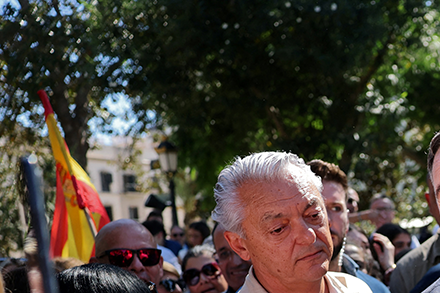
When a law student from Co. Kildare was stopped this summer on suspicion of transporting a bomb across the Irish border for use by dissident republicans, her solicitor said she had not been aware of what was in the bag and that she had been “manipulated.” Yet the 25-year-old’s arrest highlighted an alarming revival in Irish republicanism – and the role being played by a younger, well-educated, middle-class generation. During the Troubles, much of Ireland mercifully avoided the pull of radicalism. There was always a certain degree of quiet sympathy for the IRA in predictable sections of the media and academia, but popular support for Sinn Fein, the Irish Republican party, in the 26-county Republic remained negligible throughout the worst years of terrorism.

Enjoy Anglican priests while you still can

Something amazing happened as I was walking my 91-year-old mother through Ledbury: we saw a bobby on the beat. He was even in a helmet, not a baseball cap. “A real policeman!” squealed various people, reacting as they might to a steam train or an Austin-Healey, reminders of more distinctive days. The same surprise may soon be evident when we see dog collars. A new scheme, oversight ministry, adopted by some Church of England dioceses, is taking vicars off the streets. Instead of being front-line clergy they will become “oversight ministers” and “area deans,” managers of lay, unpaid “focal ministers.

anglican priests
reform

Revealed: the feuding at the heart of Reform

If Tolstoy had written about British politics, he might have noted: “Happy parties are all alike; every unhappy party is unhappy in its own way.” Reform UK is beginning to resemble a laboratory test for the idea that every party run by Nigel Farage is unhappy in the same way. Just as in UKIP and the Brexit party, a highly dominant leader exists at the center of a court, with extreme tensions between loyalist long-marchers and arrivistes, between insurgency and respectability, between campaigning and preparing for government. A new round of bloodletting erupted on August 17, when the founder of ConservativeHome, Tim Montgomerie, who defected to Reform two years ago, was suspended following public criticism of Farage and the party’s home affairs spokesman Zia Yusuf.

west

There’s still time to save the West

When The Spectator asked me whether I would write an essay on “Why we need to strengthen the West,” I was delighted – and bemused. Why is this even up for debate? That we must explain and justify “the West” at all indicates just how weak it has become. It would be better if it did not need strengthening but were simply strong. It is not. The West has become an invalid. What exactly, though, are we trying to strengthen? The West is an idea, not a location. It rests on four pillars: Athens – where democracy was born. Rome – the cradle of the rule of law. Jerusalem – where Judeo-Christian values placed the inviolable dignity of the individual at the center.

The great whataboutery delusion

If you live near the frontiers of acceptable opinion, as any thinking person must surely do, you quickly find that these badlands are policed mainly with insults and innuendos. And so you learn one morning, to your surprise, that you are an apologist for some repulsive regime which you strongly dislike. If you have been especially daring, you may be a “war crimes denier” as well. Or you are charged with “whataboutery,” a word its users think will magically erase your case. Or, in many ways best of all, you are a conspiracy theorist. There is a myth that this phrase was invented by the CIA to try to discredit protesters against the Vietnam War, but the expression is far older than that.

Do you have Old Money Face?

Recently, I have started to worry about my face. Early in the morning, before the children wake up, I’m sure I can see ghosts in the downstairs loo mirror. My 20-year-old self’s face flashes before me but soon vanishes reproachfully into the crow’s feet around my eyes; I didn’t like her anyway. My long-deceased father lingers over my cheekbones and draws the smoking lines around my mouth in ash. I frown back. My grandmother, anxious, appears in the split second between posing and relaxing. I squint as she used to when playing bridge. If the past is an inscrutable face, I am reduced to reading, not between the lines but between the wrinkles. I never thought I would get old – I’m 43 – but it’s happening.

Who gets to decide when assassination is justified?

When is extrajudicial killing just war by other means, and when does it become a state-sponsored act of terror? “We were not terrorists but fighters for freedom who fought with our eyes open,” Menachem Begin wrote of Irgun, the irregular group of fighters he led during the 1947-48 civil war in Mandatory Palestine, the tactics of whom included bombings and assassinations. But where does the August 1 bombing of the Balzi Rossi restaurant in central Moscow – which killed at least five people and injured more than 20 – stand on the scale? Some would describe the attack as a legitimate military operation. The bomb targeted the lavish birthday celebrations of Colonel-General Aleksandr Chayko, commander-in-chief of Russia’s Aerospace Forces (whose son-in-law died in the blast).

Who decides if a word is racist?

I swear Rod Liddle was smiling down on me last week, as I found myself tussling with an editor. I’d written a sentence containing the word “Chinamen.” She wanted me to remove it, because, she said, “Chinaman” is widely acknowledged to be a racial slur. In my view, words have no single intrinsic meaning. Within limits, they can mean a variety of things, differing according to context – not least the tone of voice in which they’re delivered. Even “Yes” can mean “No,” when said by an Englishman trained in the subtle art of oblique speech.

racist

Class clowns: the triumph of inanity over British academia

Daniel Defoe observed that plague victims “never perceiv’d that they were infected” until they discovered the “tokens” on their skin. By that point, “nothing could follow but certain Death”. Something similar might be said of Britain’s universities. In recent days, the Jason Arday affair has captured the world’s attention because of its absurdity. But the humiliation of Cambridge is not an early sign of infection. It is just a particularly visible bubo. At one level, Arday’s fall reveals how, even in the most elite universities, DEI (diversity, equity and inclusion) dogma has warped intellectual standards to the point of madness.

academia

There’s a logic to Donald Trump’s incendiary diplomacy

On his very first day as Colombia’s new President, Abelardo de la Espriella received a dramatic house-warming gift: a billion dollars, courtesy of Donald Trump. Three days later, a magnitude 7.4 earthquake struck the country – but correlation is not causation. The President’s ten-figure donative arrived as aid for the militarized crackdown de la Espriella has promised against Colombia’s fearsome drug cartels and jungle guerrillas. And de la Espriella quickly showed himself eager to align with President Trump by adding Colombia to the Shield of the Americas, Trump’s signature new venture in Latin America. With this old-fashioned exchange of gifts, de la Espriella became the newest member of the eclectic global club of Trump allies. This is not a stable alliance.

‘I asked for a substitute for the f-word. He suggested the c-word’: the joy of editing Rod

It was in Westminster Magistrates’ Court, where I was sitting waiting for the judge’s verdict, that I decided I needed a better way of handling Rod Liddle’s column. As editor of this magazine, I had inherited one of its greatest writers; a force of nature loved by his readers for his bravery and candor. But it sometimes led to difficulties: in this case, criminal prosecution. The judge had a choice: prosecute our owners, the editor, or the magazine. The magazine was fined. “Rod was right,” I was told by Aidan Barclay, who as proprietor had nearly ended up in the dock himself. “But truth is no defense. Not any more. You need to spot these things before they blow up.

rod liddle

To be a Spectator reader was to love Rod

Since becoming Spectator editor there was one observation I heard more often from readers than any other: “Rod is the first page I turn to every week.” Whatever people’s politics, background or other interests, to be a Spectator reader was to love Rod. Rod did his best, of course, to be unlovable. At least in print. Nothing, and no one, apart from possibly Millwall, was spared from his criticism. Savage, foul-mouthed, merciless. But also hilarious, superbly well-informed and honest. Above all honest. There are all sorts of enlightened souls in and around journalism who pretend to that virtue.

rod liddle

I didn’t want to like Rod Liddle

One of the joys of being director of digital at The Spectator, back in 2015, was seeing the magazine proofs before they went to print. Rod Liddle’s column was the first thing I looked for, always the one I was most eager to read. He made me laugh every single time, something very few columnists are able to do. I was annoyed I liked those columns, because I didn’t want to like Rod Liddle. All I knew of his personal life was through the scandal that followed him leaving his wife during the so-called “Sextator” years. I took a dim view of that. Although we both worked for The Spectator, I didn’t actually meet Rod for a long time because, woke snowflake that he was, he only ever worked from home. The first time we met was at a Spectator summer party, years later.

rod liddle

The curious history of sporting superstitions

My father had been waiting his entire life for that whistle. After 75 years, the curse was over. Mayo were Gaelic football champions, having overturned the second-biggest deficit in the history of All-Ireland finals. The county hadn’t seen such a miracle since Father Horan got the taoiseach to fund an international airport near the shrine of Our Lady of Knock. Three months before Dad was born in Castlebar, Mayo won the 1951 title. Their celebrations on the way home were exuberant and, so the legend goes, disrupted a funeral in Foxford. The furious priest (some versions blame the widow) cast a curse on them, saying Mayo would never again lift the Sam Maguire Cup while any of those players lived. Nonsense, right? Except that Mayo then lost 11 finals, four by one point.

sporting
love

Love lessons from my grandfather

After a lovely 25th birthday trip to Vienna, I returned home to face the reality of my quarter-life circumstances. I had been happy with my milestones to date – a degree, a stint of modeling on the European and New York runways, a couple of relationships and some encouraging writing contracts – but was then told by my mother what my grandfather Alexander Chancellor had pulled off by the time he was my age. Having moved to Italy to work for Reuters news agency, he spoke Italian fluently and had married my grandmother, Susanna Debenham; he had two children, he had bought a house and even had someone iron his shirts from time to time, which Susie was definitely not going to do. By the time he reached 35, he was editing this magazine.

rod

Rod had one great regret

In 2019, I had to explain to Iain Dale – live on LBC – that Rod Liddle’s suggestion in his Spectator column that elections should be held on Islamic holy days to deter Muslims from voting was not a serious proposal. Neither was his idea that students be drugged by their parents to the same end. It was humor, and they were jokes. When he was in hospital a few weeks ago, I visited Rod with some cake. While he munched away, he expressed a sense of regret that he could have been a great writer. Rod always thought his true calling was writing fiction, rather than journalism, and always wondered if he’d sold his soul by following the money. He was right – he did have the makings of a British Houellebecq.

rod

‘The Middlesbrough Shakespeare’: Why I loved Rod

I met Rod 22 years ago this month. We had been selected as teammates on a gameshow pilot, and, halfway through the morning’s filming, we went for a fag break. He said to me: “This is crap, shall we go to the pub?” We scarpered and spent the rest of the day in a Covent Garden pub, working our way through the drinks list and chatting away like chipmunks. I’d never been starstruck by anyone before I met Rod. However famous or talented actors are, their job is to say stuff written by other people. Rod, however, was a legend to me. I began reading his Guardian columns at university. Though I was studying all the greats of English literature, it was Rod’s writing which felt like a ribbon-wrapped gift, a treat, a joy.

rod liddle

Rod’s genius? Driving his enemies nuts

There is a reason the death of Rod Liddle has provoked such a swirling tide of grief among his millions of followers, including readers of this magazine, and that is that in the last 25 years Rod came to occupy a crucial position in journalism, and indeed in our country as a whole. His columns became a haven, a refuge, in which he gave us permission to think things that are in fact common sense, but which have for some reason become taboo. He gave us a renewed permission to laugh – at him, at ourselves, at our collective absurdities – at a time when laughter is increasingly controlled and often suppressed.

Andy Burnham’s centrist act isn’t fooling anyone

When Ed Miliband and Shabana Mahmood arrived in Downing Street on July 20, the image of political rivals arm in arm symbolized a new government of differing views taking shape. It might have been more awkward. As they neared the door of No. 10 and the waiting television cameras, Miliband turned to Mahmood and asked: “Should we turn around for a photo together?” Mahmood gave the idea short shrift: “We’re not getting married, Ed!” But in a sense, Labour is seeking a new relationship with the British public – and everyone around Andy Burnham is alive to the importance of images, symbols and vibes. As Wes Streeting, the new Defense Secretary, put it in cabinet the next day: “We have a second chance to make a first impression with the voters.

burnham