Exhibitions

Dazzling but it’s all show: Tate Britain’s Sargent and Fashion reviewed

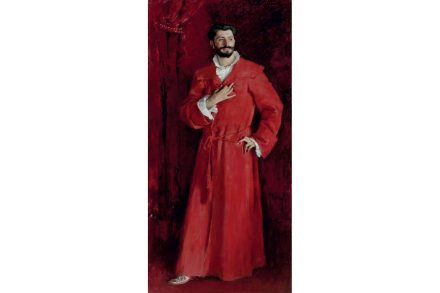
Madame Ramon Subercaseaux, the beautiful wife of a Chilean diplomat, was not a Parisienne. So when the 25-year-old John Singer Sargent’s portrait of her in a black and white ensemble straight out of the Renoir playbook won a second-class medal at the 1881 Paris Salon, French pride was wounded. Édouard Pailleron, father of the purebred French children in Sargent’s other Salon submission, kicked up a fuss and had to be placated with another medal. But that was nothing to the scandal that erupted three years later over the American artist’s provocative portrait of femme du monde Virginie Gautreau, salaciously anonymised as ‘Madame X’.
The genius of Yoko Ono

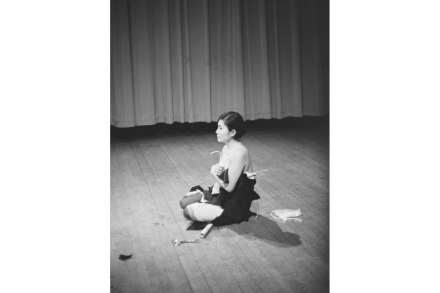
The first I heard of Yoko Ono was when my sister’s boyfriend brought home a little book of hers called Grapefruit. It was 1970, four years after John Lennon took the bite out of an apple that led to the break-up of the Beatles. The apple had been on a plinth in Ono’s 1966 exhibition at London gallery Indica with a price tag of £200, for which the purchaser was promised the ‘excitement of watching the apple decay’. Lennon then offered Ono an imaginary five shillings to bang an imaginary nail into her conceptual piece, ‘Painting to Hammer a Nail’ (1961). ‘I met a guy who plays the same game I played,’ she reported.

Winning: When Forms Come Alive, at the Hayward, reviewed

In case you didn’t know, we live in a ‘post-minimalist’ age, sculpturally speaking. Not a maximalist age, though some of the works in the Hayward’s new sculpture show are huge – an age of revolution against neatness. Who’s to blame for this call to disorder? Women. The two prime movers of this movement, if you can call it that, could not be more different, but both rebelled against minimalist geometry. As a student at Black Mountain College in the late 1940s, Ruth Asawa travelled to Toluca, Mexico, and saw villagers looping wire to make baskets for eggs. It struck her as a way of drawing in three dimensions and later, after becoming a mother of six, of working from home.

Like swallowing a pack of Parma Violets: CUTE, at Somerset House, reviewed

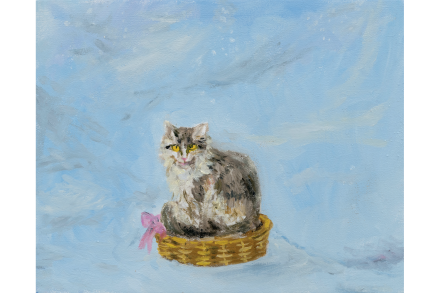
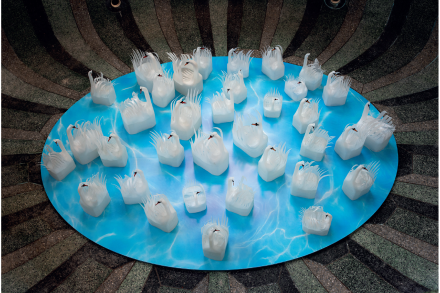
It’s funny how badly some 1960s films have dated. Watch What’s New Pussycat? today and you feel faintly sick. Never mind the chorus line of high-kicking cartoon cupids in the title sequence, what about the lyrics of Tom Jones’s theme song? ‘So go and powder your cute little pussycat nose…’ Yuck. Tim Berners-Lee, asked what uses of his invention he hadn’t foreseen, replied with one word: ‘Kittens.’ But if you think we’ve moved on, you’d better not visit CUTE. Coinciding with the 50th birthday of Japanese cartoon character Hello Kitty, Somerset House’s latest exhibition – ‘a landmark exploration of the irresistible force of cuteness’ – takes as its starting point the craze for funny cat memes unleashed by the internet.

Joyous chaos: Lucy Harwood, at Firstsite, reviewed

‘Welcome to England’s Most Misunderstood County’, reads an imitation road sign inside the entrance to Firstsite gallery. It’s part of ‘The Essex Way’ (2021), a monumental collage commissioned from local boy Michael Landy to mark the 10th anniversary of the Colchester gallery’s opening. With its discombobulating mix of illustrations of native birdlife and views of landmarks such as the Veolia landfill site at Rainham, Landy’s mural is designed, like the gallery’s current exhibition series, to challenge assumptions about the county now most commonly associated with Towie.

Modern, timeless, effortlessly avant-garde: Pasquarosa, at the Estorick Collection, reviewed

In February 1929, an exhibition by a young unknown female painter opened at the Arlington Gallery on Bond Street. This was not surprising in itself, given that the gallery specialised in lesser-known artists. More surprising was the fact that this artist was a woman – and Italian. As the critic Emilio Cecchi noted in the catalogue: ‘As regards the best Italian art of today the English public knows very little.’ What piqued people’s interest in this particular Italian artist was her fascinating backstory. Born in 1896 in Anticoli Corrado, a small hill town northeast of Rome known as a nursery for artists’ models, Pasquarosa Marcelli had never painted and was virtually illiterate when she moved to the capital in 1912, aged 16, to work as a model.

The killer satire of James Gillray

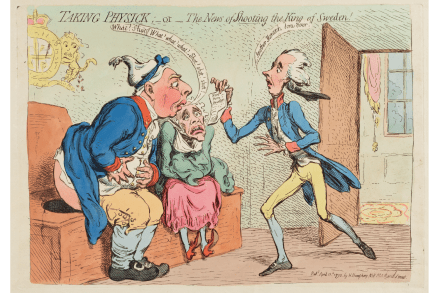
‘I hope the day will never come when I shall neither be the subject of calumny or ridicule, for then I shall be neglected and forgotten’, is how Samuel Johnson greeted the news that James Gillray had caricatured him as Dr Pomposo. In Georgian London, a caricature was a fast-track to celebrity. And, as described by one contemporary observer, the print shop window was ‘the temple of fame in grotesque’. Gillray was chiefly responsible for this. When he emerged on to the print publishing scene in the 1780s, the British art of ‘caricatura’ – an Italian import – was in its infancy. It grew up fast.

The spare, graceful, revelatory sculptures of Kim Lim

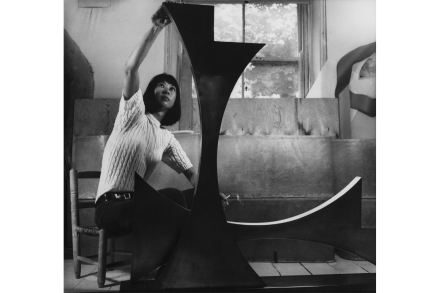
In 1989, the sculptor Lorna Green circulated a questionnaire among 320 of her female peers about their experiences as women in a male-dominated field; three years ago she sent a follow-up survey. The work of 29 respondents to both is currently on show in an instructive exhibition, If Not Now, When? Generations of Women in Sculpture in Britain 1960-2023 at the Saatchi Gallery (until 22 January). They include Kim Lim (1936-97), who is the subject of an overdue retrospective at the Hepworth Wakefield.

David Starkey on the inventor of the portrait

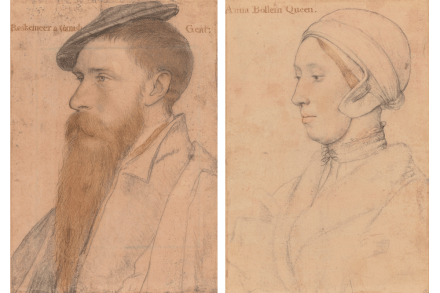
On 12 November 1549, the 12-year-old Edward VI, newly liberated from the tutelage of his overweening uncle, Lord Protector Somerset, was at last able to enter his father Henry VIII’s private apartments in the Palace of Whitehall. From the extraordinary mixture of treasures and bric-à-brac he found there, he chose one thing: ‘a book of patterns of physiognomies’ by his father’s court painter, Hans Holbein, who had died in 1543. Edward was already familiar with his fellow European rulers from their portraits in the long gallery at St James’s, which seem to have been labelled and arranged as a teaching tool for the boy. Now, on the threshold of power, he wanted to familiarise himself with the establishment of Tudor England.

Masterclass of an exhibition: Impressionists on Paper, at the RA, reviewed

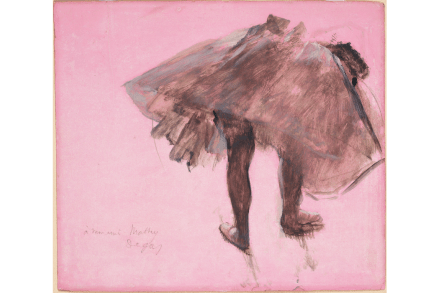
Viewers have different relationships with small pictures, or perhaps it’s the other way round: small pictures have different relationships with them. A big picture clamours for attention; a small picture you have to lean in to hear. No picture is more intimate than a drawing, and none brings you closer to the artist’s hand. A drawing can’t lie; it wears its facture on its sleeve. If you look closely, you can work out how it was made and even track the artist’s changes of direction. You can see, for instance, how Van Gogh launched into ‘The Fortifications of Paris with Houses’ (1887) in watercolour, then fortified the fortifications with gouache and chalk. A graphic artist by nature, he was at sea with watercolour washes.

Britain’s forgotten female pop artist 

T o describe Pauline Boty as a ‘pioneer’ is a bit like calling someone a ‘one-off’. It’s not an adequate description of her in any way. Pauline was the only female British pop-art painter of the early 1960s. You may not know of her. She died in 1966, aged 28, and her name has remained very much in obscurity ever since. Pauline, in her youth, appeared to have it all. She had movie-star looks, a provocative intelligence and a magnetic personality. ‘She was beautiful, with this marvellous laugh: clever, very bright, very much the early feminist,’ says designer Celia Birtwell, who lived with her. Male interviewers would ask: ‘What’s a pretty girl like you doing in a place like this?

The art of not taking out the bins: Madelon Vriesendorp, at the Cosmic House, reviewed

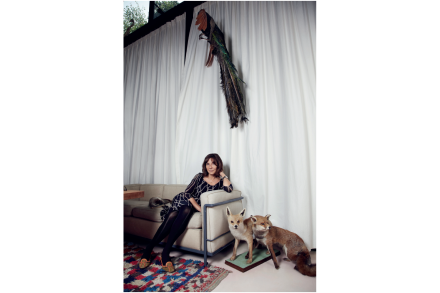
‘I was really angry at this fly,’ the artist Madelon Vriesendorp explains with a grin as I hold out my hand to shake hers, which is in a splint. ‘I jumped onto the bed to swat it, fell over and broke my wrist.’ Vriesendorp is showing me around her latest exhibition, which follows a long list of achievements: she co-founded the ground-breaking architectural practice OMA, and her illustrations of architectural theory defined its visual language for a generation. Now in her late seventies, she’s still characteristically unserious, except about one thing: ‘I’m very serious about jokes.

Rich, beautiful and vital: John Craxton, at Pallant House Gallery, reviewed

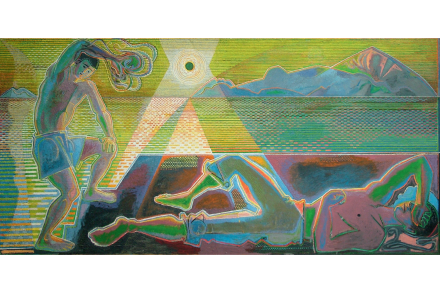
The sensuality of the light in John Craxton’s painting ‘Two Figures and Setting Sun’ (1952-67) has to be seen to be believed. Viewing this large work in Pallant House, you feel its full force. Craxton was concerned with a scene’s essence, rather than simply its appearance and here he achieves not merely an effect but affect. In spite of most of the light being painted in yellows and oranges rather than white, the contrast and refraction of the rays produce a blinding sensation much like staring into the sun on a hot day.   It was as a chorister at Chichester Cathedral that Craxton’s daily encounter with two 12th-century Romanesque bas-reliefs taught him the timelessness of great art; that, even though it was from the distant past, something fresh and modern endured.

Raucous, expressive and laugh-out-loud funny: Nicole Eisenman, at the Whitechapel Gallery, reviewed

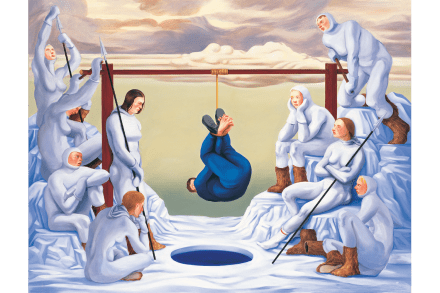
There’s a photograph in Nicole Eisenman’s Whitechapel exhibition of the 28-year-old artist, in 1993, sitting at her easel with a big bow in her hair and a bevy of studio assistants – a feminist piss-take of the trope of the heroic male artist surrounded by adoring acolytes. Her resemblance in the photo to stand-up comic Sarah Silverman is not entirely coincidental; Eisenman is Jewish-American and funny. At the time she was producing the bawdy satires on downtown New York lesbian life – battles of the sexes redrawing Michelangelo’s ‘Battle of Cascina’ in the style of Where’s Wally? – which plaster the wall facing the exhibition entrance. She could have been a cartoonist, but she chose art.

Embarrassment of riches: South Asian Miniature Painting, at MK Gallery, reviewed

In 1633, British merchants travelling east were issued with a royal command from Charles I: ‘As the king has considered that there is a great deal of learning fit to be known written in Arabic, and great scarcity of Arabic and Persian books in this country… every ship… at every voyage shall bring home an Arabic or Persian manuscript book, to be delivered to… the Archbishop of Canterbury, who shall dispose of them as the King shall think fit.’ One suspects that a hunger for learning wasn’t the whole story, and that the sight of the exquisite illustrations adorning books sent from India as diplomatic gifts had whetted Charles I’s collector’s appetite. He wasn’t alone.

‘You cannot begin by calling me France’s most famous living artist!’: Sophie Calle interviewed

‘You cannot begin by calling me France’s most famous living artist!’ Thus Sophie Calle objected to the first line of the obituary I wrote for her, commissioned for the enormous exhibition, À toi de faire, ma mignonne (‘Over to you, sweetie’), that currently occupies the whole Musée National Picasso-Paris. But modesty aside, it is a fact that no other French artist alive today is so celebrated, loved, debated, denounced and, indeed, imitated, around the world as Calle. Having long mined her own life for her work, Calle now happily mines her death This year is the 50th anniversary of Picasso’s death and that his most important museum should officially mark this by inviting Calle to take over its institution, replacing all his work with her own, is a brilliant provocation.

The importance of lesbianism to British modernism: Double Weave, at Ditchling Museum, reviewed

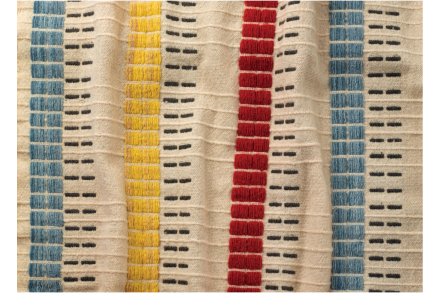
The name of Ditchling used to be synonymous with Eric Gill, but since he was outed as an abuser of his own daughters the association has become an embarrassment. Obliged to quietly drop its most famous name, Ditchling Museum of Art + Craft has been exploring less controversial connections. Its latest show, about Bourne and Allen, is a tribute to a forgotten creative partnership that casts a fascinating sidelight on the contribution of women’s traditional crafts – and lesbianism – to British modernism. After the Festival Hall put them on the map, they were approached to weave the fabrics for Ben-Hur Hilary Bourne was a Ditchling girl.

Why did this brilliant Irish artist fall off the radar? 

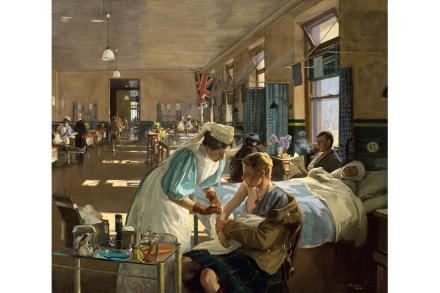
Sir John Lavery has always had a place in Irish affections. His depiction of his wife, Hazel, as the mythical figure of Cathleen ni Houlihan, which appeared on the old ten shilling and subsequently on the watermark of the Irish pound notes, meant, as the joke went, that every Irishman kept her close to his heart. He was indeed Irish – born in Belfast – but was at home in Scotland, and was the best known of the spirited group of painters called the Glasgow Boys. Yet he lived most of his life in London, was friends with Winston Churchill (they took a painting trip together) and also with Michael Collins, the Irish Nationalist, with whom Hazel was, ahem, close. If ever there were a man who embodied the interconnectedness of Britain and Ireland, it was Lavery.

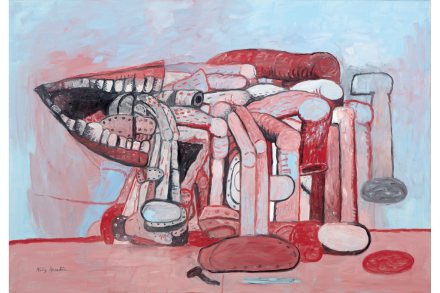
How Philip Guston became a hero to a new generation of figurative painters

Why do painters represent things? There was a time when the answers seemed obvious. Art glorified power, earthly and divine, and provided moral exemplars of how to behave – in the case of sacred paintings – or how not to in the case of profane ones. When modernism threw all that into doubt, the picture frame remained. The question for modern artists was, what to put in it? Fifteen years of non-representational painting prompted Guston to question its usefulness For the first decade of his career, Philip Guston had an old-fashioned answer: the murals he painted in the style of Italian Renaissance frescoes in the US and Mexico during the 1930s promoted ideals of social justice.

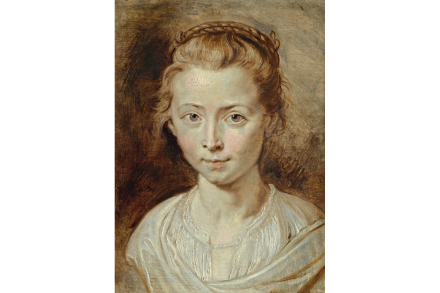
Proof that Rubens really was a champion of the female sex: Rubens & Women, at the Dulwich Picture Gallery reviewed

‘She is a princess endowed with all the virtues of sex; long experience has taught her how to govern these people… I think that if Her Highness could govern in her own way, everything would turn out very happily.’ The ‘princess’ in question was Isabel Clara Eugenia, Infanta of Spain and regent of the Spanish Netherlands; ‘these people’ were the pesky, ungovernable Flemings and the author of the glowing testimonial was Peter Paul Rubens who, since the death of Isabel’s husband the Archduke Albert in 1621, had become her trusted diplomatic adviser. It was quite a step up for a mere court painter, especially one with a skeleton in the family closet.