Drink

In turbulent times, there’s sherry

I sometimes wander through Trafalgar Square in the small hours when the traffic has abated and children are no longer scrambling over Landseer’s lions. Hard by his own Whitehall, there is Charles I, a symbol of the constitutional agonies of that era. To most high Tories, he is Charles, King and martyr, Anglicanism’s only saint. Even Marvell saw the romance. -Others’ -responses blend tribute with exasperation. Raison d’état can require ruthlessness and Charles I was not the first failed monarch to meet a premature death. If only Cromwell had arranged for an accidental discharge, rather than a judicial murder. Moving on and looking up, the eye can feast on unalloyed romance: that most glorious of heroes, Admiral Lord Nelson, on his column.

The wine that made me change my mind about Valpolicella

There was a marvellous general of yesteryear called George Burns. He had a good war and a splendid peace. He also held senior posts for longer than would be permitted in these diminished times. Colonel of the Coldstream for 32 years, he was Lord-Lieutenant of Hertfordshire for a quarter of a century. Many stories are told about him. Connoisseurs of equestrianism say that he was much the worst rider ever to appear at the Queen’s Birthday Parade, always looking like a magnificently attired and bemedalled sack of potatoes. He also had a set diet: a game bird at every meal. Once, he collapsed, was rushed to hospital and opened up. The medics expected to find terminal stomach cancer. Instead, they encountered what looked like the overflowing harvest from an enormous tin of caviar.

The beauty of wine from the Rhine

In an apparently benign — almost prelapsarian — setting, the Rhine is an epitome of the human condition. Scenery is rarely more beautiful or more glorious. Yet it can be equally hazardous. This is a river that arouses mysticism, and its temptations. By swimming in those waters, men seek to affirm their unity with the cosmos and their triumph over the natural world. But every year, a fair few swimmers end up in the mortuary. Their quest for mastery over nature ends with ashes to ashes, dust to dust. Almost as soon as men first emerged from caves, they began to beautify their dwellings near the Rhine, as well as exploiting its fertility.

The wine that made me change my mind about rosé

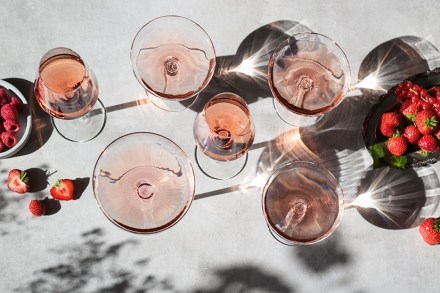
Some time ago, I wrote that rosé should only be drunk south of Lyon, but one could start on the first bottle around 10.30 while brushing away the last shards of breakfast croissant. Although I received appreciative comments, I am no longer sure that I agree with myself. I recently discovered Domaine de Triennes, which is a serious wine with length and structure — far better than the average supermarket rosé which would work perfectly well as an ice lolly. Domaine de Triennes ought to be good. It was founded by Aubert de Villaine of Romanée-Conti, an unsurpassable pedigree, and Jacques Seysses who had been with Dujac, a superb Burgundian producer. The Var has always produced lots of wine, almost all quaffable, almost none worthy of serious attention.

A new take on New Zealand wine

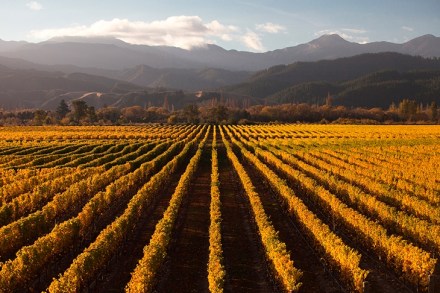
‘The doors clap to, the pane is bright with showers.’ With ‘summer’ determined to do its worst, there is one obvious question. How were the English able to invent cricket and tennis? Apropos tennis, there is another obvious question. How long will Wimbledon remain mired in sexism? It has now been established beyond peradventure that women are at least as good as men at everything. Anyone who claims that those who were born female — an increasingly irrelevant criterion — are not as strong as men is likely to encounter the wrath of the criminal law. Quite right too: supposed free speech must not be allowed to trump common sense.

How to drink in the delights of France (without leaving the country)

It is hard to decide which is more depressing, the extension of the lockdown or the public support for this latest instance of ministerial panic. The Royal Navy may still march to ‘Heart of Oak’. But among great swathes of the civilian population, there is precious little sign of stout-heartedness. As well as virus variants, there is another infection, from variants of Stockholm syndrome. Many Britons appear to be enjoying captivity: mask-wearing, restrictions, bossing people about. The trouble is that there is no vaccine to hold all that at bay. Boris promises relief after four weeks. He means it; he always does with his promises. But in BoJo speak, four weeks is a long time. Four days is a long time. We shall see.

The wine that links Thomas Jefferson, Charles II and Samuel Pepys

It seemed a suitable topic for a bank holiday. We were discussing Haut-Brion, a bank-breaking wine. There is a question that is often asked. Which is the greatest claret, Haut-Brion, Lafite or Latour? I find that easy to answer: the one I have drunk most recently — not that I have tasted nearly enough of any of them. (I have heard at least one expert claim that post-war, there has been no greater claret than Haut-Brion ’59.) Haut-Brion is a marvellous wine. Thomas Jefferson may have been the first to explain why. There is a good deal of gravel in the terroir, which seems to give the wine an intellectual depth: appropriate for Jefferson. Yet the initial impact on the nose is hardly an intellectual one.

A novel approach to New Zealand’s wine

The last Saturday of lockdown — inshallah — and we were discussing literature. Specifically, when does a detective story become a novel? T.S. Eliot edited the World’s Classics edition of The Moonstone and gave a copy to A.E. Housman, with the inscription: ‘The best detective story in English or any other language.’ Surely Eliot was right. The Moonstone and The Woman in White are superb detective fiction. But they are not novels. Poor Wilkie Collins did try to write novels. Nobody read them. Nobody was wise. We more or less agreed. Ian Rankin, Reginald Hill, P.D. James, Dorothy Sayers, James Lee Burke: all regularly cross the frontier into novelism. Perhaps we should adopt the French term: roman policier.

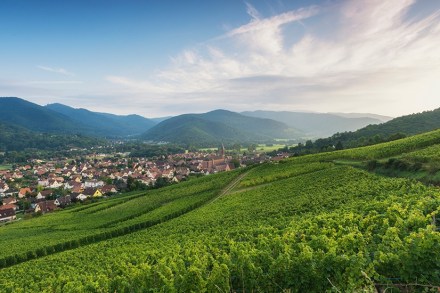
My post-lockdown resolution: drink more Alsace

Freedom approaches. Should we be humming ‘Va, Pensiero’ or ‘O Welche Lust’ — perhaps both. Thinking of Fidelio reminds me of a delicious comment made about Ted Heath by the late Sam Brittan in the FT, decades ago. On this occasion, Le Grand Epicier was being interviewed about music. He declared that Fidelio was one of his favourite operas and that every time he saw it, he was inspired anew by the ideals of freedom which it so powerfully expressed. Sam was unpersuaded. ‘Poor Mr Heath. He may be moved by Fidelio. Yet he does not realise that if the British public knew that noble work, they would immediately identify him not as Florestan, but as Pizarro.

Wine by the jug in Venetian Venice

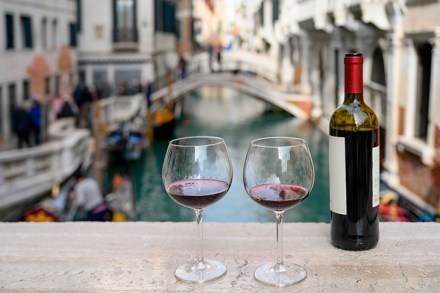
We were discussing travel, that forbidden delight now tantalisingly close. Where would be our first destination? Forswearing originality, I chose Venice. Among the world’s greatest paintings, one in particular does not merely come to mind. It fills the mind. I have never been in the Serenissima for the Feast of the Assumption of the Virgin, probably just as well. In mid-August, there are bound to be pedestrian traffic jams all the way from the Piazza to the Rialto. But it is possible to imagine the event. Go to Santa Maria Gloriosa dei Frari. Use your inner eye to fill the church with the entire nobility of Venice, festooned with gold and jewels. The choir and the censers are both in full cry.

Drowning the sorrows of Scotland’s virulent nationalism

There is a more depressing subject than the lockdown. The evening began with a bottle of 18-year-old Glenmorangie. It was subtle and relatively gentle, but also powerful. Alas, this true flower of Scotland lured our talk towards disaster. We started discussing contemporary Scottish politics. Instantly, we were transported to Macbeth: ‘Alas, poor country, almost afraid to know itself.’ My friend said that this was unfair. Nicola Sturgeon was not as bad as Macbeth (though she would make a good Lady Macbeth). I disagreed. She is worse. It was relatively easy for Scotland to recover from Macbeth. He just needed to be slain. There is no such simple cure for the curse of the SNP.

Finally la Vendée has a winemaker worthy of its traditions

A year of lockdowns has certainly passed slowly. But there are topics for thought. One disappointment has been the Church of England’s failure to take its opportunity. It could have tried to position itself at the centre of national life. Even unbelievers should agree that if its Church were stronger, so would England be. What about the occasional day of prayer? A surprising number of people would have taken part. Instead we had closed churches and teeth-grating literature, like brochures from a third-rate business school. Faith by platitude and Zoom call does not work. This is a better way. My friend Alexander Sherbrooke, the RC parish priest of St Patrick’s, Soho, believes that it would be blasphemous to close a church.

Nights – and wines – to remember in Paris

Some friends claim to be making marks on the wall to count the days until liberation. Ah, the forgotten delights of restaurants and foreign travel. In one long nostalgic phone call, we kept present discontents at bay by discussing Paris. Although I have partaken of three-rosette meals in the capital of gastronomy and was never disappointed, a different experience came to mind. This restaurant has never received Michelin’s highest accolade, not that it would care. It believes itself entitled to at least four rosettes. Its name is Chez l’Ami Louis, in the Troisième, not far from the Marais. I was introduced to it by Rémy and Mathilde, a couple who knew their Paris. The husband could explain every nuance in Proust and the wife was not far behind.

Memories of Stellenbosch and South Africa’s finest wines

Lockdown provides time to think, and to reminisce. A South African friend, trapped in Amsterdam, phoned the other day. Had I written about the David and Nadia wines from Swartland we had tasted at the end of last year? Not yet: I was awaiting further particulars, which may have been remiss of me. Justerini and Brooks is a major stockist and they are some of the best wines coming out of South Africa, which is saying a lot. Wines have been produced in South Africa since the Huguenots settled in vine-friendly lands not far from Cape Town. Stellenbosch, Paarl and the aptly named Franschhoek are well known. Swartland is catching up. The names take me back to so many evenings in the 1980s, drinking wine in Stellenbosch and discussing the future.

My palate and the plague

Later this week, on Spectator.co.uk, I will resolve a mystery that has featured in a lot of Zoom traffic around St James’s — plus a lesser--known puzzle. The first: why has Anderson been absent from The Spectator? The second: why has he been more or less off the grog for a month? The two are related. I have had the plague, and though I am recovering, my superb doctor thinks I should stay dry for a little longer. I have no wish to become a virus bore. Those who would like more information can read Coffee House; those who are already yawning with tedium will know what to avoid. But just before my little life may have been almost rounded by a sleep, there was an outstanding tasting: suitable for a condemned man’s last drop.

How Argentina conquered Malbec

When Napoleon III proclaimed himself Emperor of France in 1852, he unwittingly kickstarted quality wine production in Chile and Argentina. A mass exodus of republicans ensued, one of whom happened to be a skilled agronomist from Tours named Michel Aimé Pouget. Pouget carried with him a cache of French grape cuttings that were to change the course of wine history and formed the basis for Argentina’s wine industry today. Because of the phylloxera plague, French wine production fell by 75 per cent between 1875 and 1889. Today the vines of Europe are still grafted on to phylloxera-resistant American root stock. In Argentina and Chile, which have no phylloxera, old ungrafted European vines are flourishing.

Lockdown means it’s time to drink your most prized bottles of wine

Losing your sense of smell due to Covid is no joke when you make a living in food and wine. In April last year my taste buds shut down for three weeks. I began staring at my wine cellar like a recovering addict for whom the drugs no longer worked. Sure, I’d read posts from other sufferers who were concerned about whether or not their olfactory organs would ever get back to normal, but I’m fatalistic, and besides, my chances were good. But if my smell didn’t return, I’d rue having not lived in the moment more often. Pandemics, floods, wildfires, cyber-attacks, artificial intelligence, terrorism: we’re living in a boom time for disaster, so if you’re not opening your most prized bottles of wine now, when exactly do you plan on doing so?

The beauty and tragedy of Lebanon

I was thinking about tragedy. Could one use the term ‘chronically tragic’? My first instinct is against. Tragedy is the soul-ravaging final scene of Othello or King Lear, when hope is overpowered by implacable despair. In Kent’s words: ‘Break, heart; I prithee, break.’ Flesh and blood could not withstand such emotional intensity in chronic form. Then again, how else can we describe the modern history of Lebanon? I have just heard of the passing of a splendid old girl. Yvonne Sursock was caught up in the terrible explosion which shattered Beirut at the start of August. Being a tough old bird, she lived for more than two weeks. Being 98, she succumbed. Yvonne could claim kinship with most of the Christian great and good along the Mediterranean littoral.

Why you can’t trust supermarket cheese

We were celebrating the end of lockdown by talking about war and deer stalking — over a business lunch, naturally. My friend David Mathew, from a distinguished legal, military and political family, told a story about Churchill’s arrival in Athens at Christmas in 1944. David’s father, Robert, then a young officer, was sent to meet the great man, who was grumpy and preoccupied, with good reason. He had come to save Greece from communism, with little guarantee of help from the Americans, let alone left-wing opinion in Britain. The sucking-up to ‘Uncle Joe’ Stalin may have been necessary to win the war. It would not be helpful for winning the peace.

Lockdown might bring the Dickensian Christmas back into fashion

I feel like a prisoner, making daily marks on the cell wall to chart the approach of freedom. But will it be freedom, or will we be on parole, obliged to wear a tag and subject to re-incarceration at authority’s whim? Such thoughts do not encourage equanimity. On that subject, I remember a delightfully splenetic political column by the late — alas — Alan Watkins, published a generation ago. As Christmas approaches, even the most acerbic hack feels obliged to relent and sound a little more like Fezziwig, a little less like Scrooge. Perhaps because he was never given to excessive astringency, Alan did not relent. He was complaining about secretaries, who were then numerous in newspaper offices.