Diary

Why France hates Macron

One of the pleasures of spending the summer in France is that I can turn aside from our national problems and concentrate on those of our neighbour. They are similar but gratifyingly worse. You have to know someone quite well before they will open up about their own politics to a semi-outsider. I used to feel the same way when our own politics were chaotic in the aftermath of the EU referendum and French friends would approach me with that characteristic note of smug condescension to ask what on earth was going on. Emmanuel Macron is the ablest President of France since Charles de Gaulle. Yet he is hated across the political spectrum. The young are especially venomous. I once delivered a series of lectures in France on the global response to the Covid pandemic.

Don’t judge a book by its author

I am entombed, like Edgar Allan Poe’s prematurely buried man, listening through headphones to a contemporary Russian fugue for organ and bagpipes. I had asked for a soothing Schubert prelude, but the radiologist couldn’t lay hands on one. The headphones have no volume control I can locate – only on and off, and off will expose me to the diabolic clang of magnetic resonance. Hell will be an eternity inside an MRI machine, praying for deafness. There is a little sponge ball I can press if I can take it no longer. I give it 17 minutes, then press. Shame overwhelms me. I overhear the radiologists whisper: ‘So it works then.’ Which means that in the time they’ve had this machine I am the first person to beg to be released.

Don’t believe the doomsday talk about London

It is one of the joys of sport that friendships forged in changing rooms and on playing fields can be immediately rekindled decades later. Conversation flows like a tap turned back on. My old Westminster School team celebrated an anniversary recently. Players flew in from Dallas, Miami and Tallinn or tubed it from Hampstead and Wimbledon. We had a team photo taken in front of the altar in Westminster Abbey (after asking some tourists politely to move). We had a tour of the school, admired the investment in science and arts blocks and especially in the restored and extended pavilion fronting the pitches behind Tate Britain.

Welcome to the Age of Jerks

How screwed is Britain? I’ve checked with the Impartiality Police. They said stick to the facts. Like many ailing, ageing western democracies, we’ve had low growth, soaring debts and flat living standards for nearly two decades. Have our politicians met the moment? You tell me. Perhaps, as The Spectator has long advocated, we need some heretical and brave thinking to improve our prospects and make sense of the giant forces – of technology, ecology and demography – that are reshaping our world at a dizzying rate. For a decade, I have tried to rebalance the news, from events to trends. The result of all this: a new podcast from the Today franchise, called Radical. I’ve always had a soft spot for the word.

Roman Polanski ruined my hair

The Prom was Berlioz and Strauss, but the Albert Hall is always the star for me. It is a lover’s gift from Queen to Consort which completes a circle of passion for a Queen who loved music and sex in equal measure. Strauss was a music president of Hitler’s Reichsmusikkammer, but in a private letter to his Jewish lyricist, Stefan Zweig, he said the whole regime appalled him. His letter was intercepted and his job went down das Klosett. Afterwards I went for drinks with my friend Fraser, who was playing second clarinet. We were refused entry into the Polish Hearth Club, so we ended up shrieking over merlot and crisps in a nearby pub in front of the penalties which sealed the Lionesses’ victory. Oh the glorious girls! I couldn’t be happier.

The nostalgic joy of Frinton-on-Sea

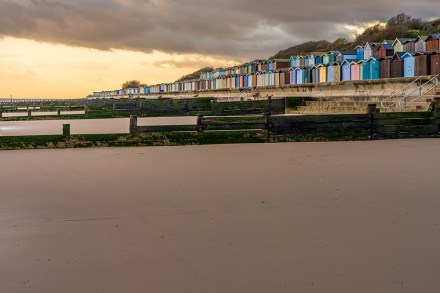
For the recent heatwave, it was my mission to escape our little Wiltshire cottage, where it hit 35°C. It has one of those very poor structural designs unique to Britain that, like plastic conservatories or the Tube, is useless in hot weather. First, we went to stay with friends in Frinton-on-Sea with our English bulldog, who was born in nearby Clacton and is shamelessly happy to be back among his people. Some years ago I lived in Colonial Williamsburg, Virginia, a living museum of America’s pre-revolutionary settler history. Frinton doesn’t go quite that far – there are no ersatz yeomen milking doleful cows – but to visit is to enter a time warp back to the mid-1930s. It’s the sort of place where Hercule Poirot might solve a crime while en vacances.

Save us from the Lime bike invasion

I’m a Londoner born and bred, and I love this city, even though it’s slowly being destroyed by the insidious antics of Sadiq Khan. Do his repeated failures explain why his hair is going prematurely white? Why are the roads closed all the time, for no apparent reason? Why are there endless roadworks, yet no men working on them? Why do we have filthy streets and graffiti everywhere? Visiting Majorca, I was impressed by the pristine streets and pavements of Palma. ‘How come you have no litter or graffiti?’ I asked the driver. ‘Everyone is very proud of our city, and we respect it,’ he replied. ‘No one is allowed to litter or paint graffiti – it is considered a crime – and our citizens shame anyone who does it.’ Are you listening, Sadiq?

My P.G. Wodehouse summer

Normally I model myself on one of the more retiring of the Desert Fathers, as much as a man living in England with six children can, so I rarely venture out. But this summer I could have given Galahad Threepwood a run for his money in the socialising stakes. Not that a Desert Father would have objected to my visit to Wimbledon to the papal nunciature, where the nuncio was celebrating the papacy of Leo XIV. It is reassuring to have a Pope who believes in the papal office and, with luck, the traditional liturgies will no longer be persecuted. The hatred for the Latin Mass is a peculiarity of a few ageing liberals. Fortunately, young Catholics, including my nephew David who is a seminarian, are flocking to the Old Rite. Wimbledon, as P.G. Wodehouse aficionados know, is Ukridge territory.

A book signing – or a mental breakdown?

The late John Updike once wrote an amusing article about signing books. This wasn’t at some literary event with a few dozen fans queueing – no, it was vastly more daunting. An American book club had taken one of Updike’s novels for its Book of the Month and asked him to sign 25,000 copies – guaranteed sales, of course, hard to refuse. They sweetened the pill by flying him to a Caribbean island for a couple of weeks and putting him up in a beachside bungalow. There, a team of assistants brought him 100 books at a time and he would sign away, three hours in the morning and three hours in the afternoon. Updike was very droll about the discombobulating effects of signing your own name thousands upon thousands of times. It became an almost existential crisis.

Who wants to read an unemotional memoir?

On the hottest day of the year, St Pancras station would not have been my first choice for lunch, but it turned out to be, quite literally, the coolest of venues. I was meeting my brother (not Jeremy, as is often assumed, but Ben), over from Spain to attend the launch of a book I’ve written, How Not to Be a Political Wife. Even Ben was struggling with the heat, and when London is hotter than Madrid, you know something’s up. Anyway, he was heading to Stansted, I to Corby, so it seemed like the logical place. We found a table at Booking Office 1869, cool and dark beneath huge, vaulted ceilings. The food was surprisingly good: light, whipped smoked cod roe, cured Loch Duart salmon, miso-glazed aubergine, hot salty chips.

Beware taking up running in your fifties

Over a hotel breakfast in Brisbane, I showed Sir Alan Hollinghurst my injuries. We’d met the previous week at the Auckland Writers’ Festival and would meet again, post-Brisbane, at the Sydney Writers’ Festival. A book tour of Australia and New Zealand is a bit like being in a David Lodge novel – writers are more likely to travel halfway round the world if a few potentially sizeable crowds are waiting for them. A.C. Grayling, who I broke bread with in Auckland and saw again in Sydney, seemed to have scored the most palpable hit by being invited to be philosopher-in-residence at a festival in Margaret River, centre of Australia’s most prestigious wine region.

In defence of Piers Morgan

‘What happened to Piers Morgan?’ asked a Spectator writer last weekend. The answer, according to slavishly pro-Israel commentator Jonathan Sacerdoti, is that I’m now ‘darker’, ‘degraded’, ‘dismal’ and ‘debase(d)’ – because I’ve become more critical of how Israel is prosecuting its war in Gaza. For a long time on my YouTube show Uncensored, I defended the country’s right to defend itself after 7 October attacks. But I now believe Benjamin Netanyahu’s government has crossed the ‘proportionality’ line with its recent food and aid blockade and relentless bombardment of civilians. Self-evidently, Israel is failing in its mission to eliminate Hamas and get the remaining hostages released.

Satire is nothing without contempt

On 30 April, the solicitors Mishcon de Reya asked me to join a panel commemorating the 25th anniversary of the High Court trial in which David Irving unsuccessfully sued Deborah Lipstadt for calling him a Holocaust denier. Deborah was there, alongside her lawyer, Anthony Julius. Irving’s anti-Semitism had a particular purpose. Postwar, the chief obstacle to restoring the ideas of Adolf Hitler was what happened to the Jews. If their genocide could be denied, fascism could be rehabilitated.

Should we give weight loss jabs to children?

I have seen the future of food. And some of you won’t like it. On a research trip to the Netherlands last week, along with the fellow partners of my firm, Bramble, I took a speedboat tour of the port of Rotterdam. One of the most awesome sights was the so-called ‘Innocent Blender’ – a vast smoothie-making fortress, box-shaped and silver – glinting over the water. This is where the British-based, Coca-Cola-owned company makes its ‘tasty little drinks’. The factory location makes sense: most of Europe’s imported fruit comes via Rotterdam. Massive tankers – 600ft long and filled with 40,000 tons of chilled orange juice from Brazil – move through constantly. The Blender is completely electric, runs on renewable energy and uses robots to purée, bottle and package.

The truth about my relationship with Phil Spencer

I never thought I would read a headline like ‘Kirstie Allsopp’s husband enables upskirting’. Regrettably, this type of nonsense has become a regular part of our life since Ben and his business partner Will decided to rescue an old pub on Latimer Road. There used to be a dozen pubs on this street, but they have nearly all gone. Ben and Will are romantics and are hugely attached to this part of west London, where they have worked together for 25 years. They thought that reviving the pub would be a fun project, but some locals are working night and day to ensure it never comes back to life, lodging dramatic objections to everything and anything.

Can the British film industry survive Trump’s tariffs?

On the road with a new book, I recently spoke at a literary luncheon hosted by the Cambridge Festival. What could be more civilised than food, wine and conversations about murder with a charming audience… but this is one of many festivals that lost its funding thanks to the organisers of Hay-on-Wye and Edinburgh pulling out of their sponsorship deal with Baillie Gifford, a unilateral decision that has endangered the entire landscape of literary festivals. Cambridge, Wigtown, Stratford and Henley all ended up losing their funding when Baillie Gifford, not surprisingly, decided to call it a day. And what exactly has been gained? The pressure group Fossil Free Books may be preening itself.

How silence makes music

‘What!? But they won’t let you in!’ and ‘What!? But they’ll detain you at the border!’ and ‘What!? But they’re all nuts over there!’ were just some of the responses from friends and colleagues at my announcement that I was heading to the US for three and a half weeks’ work. But my visa was valid and accepted at passport control, I wasn’t thrown in jail, and the people whom I met and worked with were perfectly sane, perfect hosts and a perfect delight. First up was the Minnesota Orchestra, where I conducted two concerts of my own music and more well-known works by Rachmaninov and Rimsky-Korsakov. Also on the programme was an excerpt from Wagner’s Parsifal.

Bring on the Trump protests

The coming week will see the last major commemoration of a second world war anniversary – 80 years since VE-Day – which a handful of surviving veterans will attend. It is unjust that VJ-Day in August will attract much less attention, but so did the Far East campaigns, much to the contemporary chagrin of the ‘Forgotten Army’ in Burma. One of Bill Slim’s soldiers was George MacDonald Fraser, whom I knew and adored, as did millions of fans of his Flashman books. In his fine memoir Quartered Safe Out Here, George described how one May day in 1945, as his company lined out to attack a Japanese-held village, a green young officer ran out in front of them and cried ecstatically: ‘Men! The war in Europe is over!

Men are allowed to fail, too

The weather in Bath has been preposterously good, with the Royal Crescent glowing in a soft, lemony light. I’m here for my How to Fail live podcast tour. I launched the podcast back in 2018, which, by podcasting standards, makes me practically geriatric. At the time, I felt like a failure (divorce, infertility, that kind of thing) and I wanted to know how others coped. So I started asking them. I could never have imagined that How to Fail would, ironically, become the most successful thing I have done. Nor could I have anticipated the growth in podcasting as an industry. An intimate audio medium has turned into a cultural behemoth, spawning books, tours and branded merchandise. Podcasters are now being encouraged to film everything.

Spare us from performative piety

Lent did not, I confess, start well. Cheltenham fell in its first week, and the Gold Cup is hardly the place for the rigours of Lenten discipline to begin. Some might say it is hardly the place for a clergyman at all. Peter Hitchens once commented on my clerical collar – stiff, crisp, linen – and said that if he saw a man wearing such a get-up at a racecourse he would assume he was an illegal bookmaker in disguise. Still, I recall that one of the most successful owner-breeders of all time was a clergyman. The vicar of Ashby de la Launde, the Revd J.W. King, won the Oaks, 1,000 Guineas and St Leger with his horse, Apology. There were, as the Bible tells us, giants in the earth in those days.