Columns

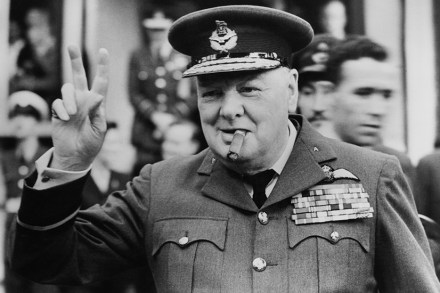
Would Churchill have worn a face mask?

The problem with face masks is cutting an opening of the right size to accommodate a cigarette, without the hole compromising the safety of the mask itself. A tiresome procedure, especially for someone like me who is not terribly dexterous. I assume that very soon we will all be enjoined to wear face masks everywhere we go. At the outset these contrivances were derided a little for two reasons; first they actually offered no protection to the user, only to people who came into contact with the user, and second they seemed to be not a terribly British way of going about things. Even now I would be embarrassed to wear a face mask — there is something smug and averse about the people who use them when nipping out to the shops. But better smug and averse than dead, I suppose.
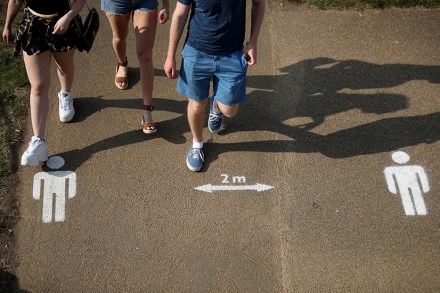
I have herd immunity

I am a type. I don’t like groups. I maintain few memberships. I question and resist authority, especially enforcement of rules for the rules’ sake. I’m leery of orthodoxy. I hold back from shared cultural enthusiasms. Everyone’s met such obstreperous specimens — the original self-isolators — and some readers out there are just like me. We’re irksome in emergencies, when the police want the crowd to evacuate and we insist on knowing why. We sometimes spite our own faces; many of us still haven’t seen Hamilton (and now we can’t). We don’t joyously belt out national anthems, and recently, to popular disgust, many of us curmudgeons don’t lean out our windows every Thursday at 8 p.m. to clap for the NHS.

The joy of short stories in these taxing times

From time to time, usually when things are quiet, the government brings on the dancing girls. David Cameron made Carol Vorderman the celebrity Head of Maths, Prue Leith was wheeled out to revolutionise hospital catering (again), and Mary Portas was to breathe life, excitement and renewed prosperity into our dying high streets. Nothing ever happens, of course, but perhaps Covid-19 does present a real opportunity. In the past 20 years I have watched several small towns change radically. Shops selling things people actually needed — meat, fish, fruit and veg, bread and butter, ironmongery, postal and banking services — have closed.

There’s nothing equal about this virus

Filthy germ-laden townsfolk were out and about on the footpaths near my home on Easter Sunday, dragging with them their awful, mewling children. I got the dog to harass them and occasionally shouted out: ‘These are local paths for local people. Clear off.’ One youngish father — lightly bearded, self-satisfied smirk, probably a sticker on his car window saying ‘-Refugees welcome here’ — even had the nerve to ask me for directions to the nearest train station so that he might return to his squalid Remainer tenement. I directed him and his family through a field which was fecund with manure and full of restive bullocks. The child — four or five years old and already gobby and full of itself — was wearing a bright red T-shirt.

We’re all guilty of recruiting this virus to our cause

There must be a quote from Shakespeare for this, but so far I haven’t found it. It’s the way we all of us contrive to see in cosmic events the evidence, the signs and portents, for what we already believed even before the cataclysm had occurred. These are the days of miracle and wonder, sang Paul Simon… The way we look to a distant constellationThat’s dying in a corner of the skyThese are the days of miracle and wonderAnd don’t cry, baby, don’t cry, don’t cry… Somehow there never was a plague, earthquake, flood or epidemic that was not also a sign that the human race must mend its ways according to wisdom we had long recommended, even during less extraordinary times.

Monkeys, bats and our national trust

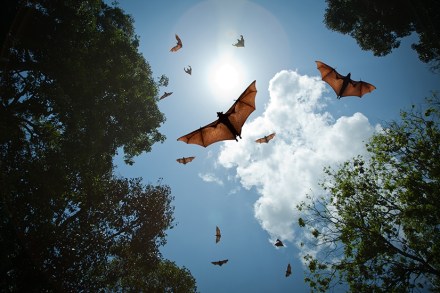
There was always one key flaw in our species. Which is that someone always shags a monkey. I have expressed this thought fairly regularly in private, often to friends who don’t get the reference about the likely origin of Aids and look at me strangely ever after. Still, I find it a useful rule. We humans are — perhaps always have been — as weak as our weakest member makes us. And if just one of us chooses of an evening to force themselves on one of our simian cousins, then before long people across the planet start dropping dead. I suppose the monkey-shagger rule will now have to be updated to take into account the fact that someone will always blend a bat.

Coronavirus has made amateur mathematicians of us all

‘What is the point of learning maths? When do you ever actually need it? How does it ever affect your life?’ That’s the frequent complaint of my school-age children, labouring over their times tables and number bonds. It was my complaint as I struggled to tell median from mean, or sine from cosine. Well. Now we have a nation and a world bewitched and terrified in equal measure by a ground-level demonstration of what an exponential function does. Our entire society is being shaped for a generation by that elegant, predictable, horrifyingly steepening curve. One shred of comfort in this catastrophe is the thought that no journalist will ever again write ‘increasing exponentially’ as a fancy-sounding way of saying ‘increasing a lot’.

If anything is ‘essential’ right now, it’s cigarettes

The owners of my local grocery shop, a mile or so from my house, very kindly sell me cigarettes in blocks of 200 at a time — and they have also delivered them to my house during this lockdown. This is useful for several reasons. Most importantly it aids my self-isolation programme. But it also minimises the risk of me being caught in the shop by a lurking Matt Hancock or perhaps a chief constable of the police, anxious to punish people who may be purchasing goods which they do not consider ‘essential’. If anything is essential during this time of compulsory boredom, it is cigarettes and alcohol.

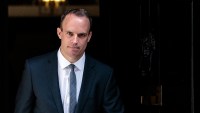
Dominic Raab is the constitutional choice, but a complicated one

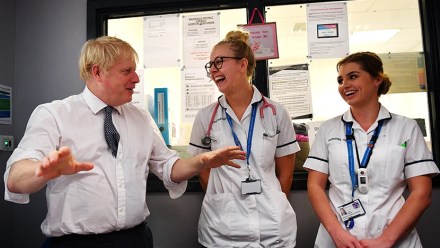
We have never had a moment like this before in our history: a time when the Prime Minister is, in the most personal way possible, fighting the very problem his government is trying to tackle. After Boris Johnson tested positive for coronavirus, he insisted that he would keep leading the government from self-isolation in Downing Street. His determination was influenced by the fact that No. 10 believed that parts of government needed pushing to make sure they delivered; there is frustration in Downing Street about the speed of progress in testing, for instance. But those in virtual meetings with him did worry that he was often coughing, and his performance was not up to his usual standard. When he was admitted to hospital on Sunday, some thought this would allow him to get some rest.

Keir Starmer may have a better chance of taking Labour to power than anyone expected

First impressions matter in politics. Once the public have made their mind up about a politician, they rarely change it. This is why the first 100 days in charge are so important for any new leader. Get off to a good start, and everything is possible. Stumble out of the gate and your race is run. Keir Starmer is widely expected to be announced as the new Labour leader on Saturday, but he faces the prospect of having to keep his distance from the electorate for the bulk of his first 100 days. The pandemic means that he won’t have the choices that normally come to the winner. There can be no victory rally, no tour of the country designed to show that there aren’t any ‘no-go areas’ for him — the whole country is a no-go area for anyone who isn’t local.

Don’t let anyone tell you there’s a war on

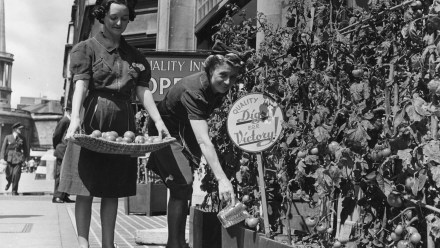
‘Shut up — don’t you know there’s a war on?’ Strong hints of that attitude have emerged in recent weeks, and the hints are getting stronger. The attitude is mistaken. The right answer to any enquiry about whether we know there’s a war on is that there isn’t a war on. Nobody with sensible questions to ask about the current strategy or its implementation should be abashed to ask them. Hitler’s spies are not listening, Lord Haw-Haw will not be broadcasting them, and a grown-up citizenry does not confuse intelligent questioning with unpatriotic breaking of the ranks.

My isolation reading list

A psychiatrist once told me that it takes one’s subconscious about three weeks to catch up with a significant life event, and that is certainly holding good now. We have gone through shock and disbelief while simultaneously accepting the situation. Mostly we have also accepted the rules and restrictions, and I wonder if many who flocked to holiday places on the first sunny days of school closures and went dozens abreast in parks and on beaches were not deliberately sticking up two fingers to the virus or the law, but simply in denial. It took more deaths, especially among the young and otherwise fit — plus the Prime Minister’s television address giving not advice but orders — for it to hit home. My own catch-up moment came early one morning.

The corona curtain-twitchers are watching

Welcome, then, to a country in which the police send drones to humiliate people taking a walk and dried pasta has replaced the pound as the national currency. ‘Gimme that pappardelle, mofo.’ ‘Not until you prise it from my cold dead hands, punk.’ A week is a long time in politics, but also a long time in pestilence. And the next time someone uses the phrase ‘the new normal’, I may well break my social distancing regimen and chin him. The lockdown has come as a great boon to the police, who seem to be enjoying it immensely, and indeed to Britain’s vibrant community of curtain-twitching, onanistic, meddlesome ratbags.

The power of children’s imaginations

Last summer, in the bc era, I took my then three-year-old to a new group play session: ‘Lottie’s Magic Box.’ Off we trooped in the usual north London fashion: child on scooter, imperious and unmoving, hauled along by mother in the role of husky. Micro, purveyor of scooters to the middle-classes, sell colour-coordinated leads especially for this purpose. It sometimes crosses my mind that they should also sell whips for the pre-schoolers to brandish. The map on the event website directed us to what looked like an office block in a park and as we opened the door, any wisps of hope that this might be an uplifting hour of bonding and fun evaporated.

Shakespeare knew a thing or two about self-isolation

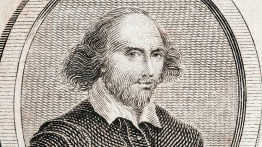
‘Now I am cabined, cribbed, confined, bound in To saucy doubts and fears.’ Shakespeare got there first, as ever, and he probably knew a thing or two about being in quarantine. The plague lurked darkly, and people were as aware of its dangers as we are of Covid-19. The theatres definitely closed, so it is likely that he wrote while self-isolating. Which is exactly what I am doing, with laptop on the kitchen sofa, tea at my elbow, spring sunshine pouring in. Four long-tailed tits, two robins and a bustle of hedge sparrows are busy shoving one another off the bird table outside. Our resident barn owl skimmed by earlier. Lucky that can I walk in the garden and meadow, or down our quiet lane of an evening, but otherwise, we are strictly quarantined. I am well, but 78.

How will the ‘war’ on coronavirus change Britain?

In the past ten days we have seen the greatest expansion of state power in British history. The state has shut down huge swaths of the economy, taken on paying the bulk of the wages of millions of private sector workers, and told citizens that they can leave their homes only for a very limited number of approved activities. Boris Johnson likes to say that Britain is ‘at war’ with Covid-19. The parallel is hardly exact, but this expansion in state power is what you would expect in a war of national survival. It is worth remembering, as A.J.P Taylor wrote, that before ‘August 1914 a sensible, law-abiding Englishman could pass through life and hardly notice the existence of the state, beyond the Post Office and the policeman’.

In this strange new world, where do we find purpose?

Perhaps we are at least past the beginning of this crisis. The phase where the hunt for multipacks of loo-rolls briefly became the national sport. Now we are into the second, perhaps even less glorious stage, in which we all have to sit in our solitude and hope that the storm blows over us. And if this passivity is the great demand of our generation — a demand that brings its own ironies — then now is a good time to ask the question: ‘How do we spend our time well?’ The question is one we ought to ask more throughout our lives. But the truth is that most of us tend to ask it only at moments of personal crisis: when a job or relationship suddenly ends, or a loved one dies. By asking ‘How do we spend our time well?