Columns

There is no justification for supporting the IRA

Roy Greenslade held a number of prominent positions in Fleet Street over the course of a long career. But he spent the largest part of it at the Guardian, where he berated other journalists for their writings. A similar stance was adopted by him from his position as professor of journalism at City, University of London, from where he lectured students on media ethics and gave evidence to the Leveson Inquiry. At the same time he became slightly notorious outside of Islington for his support of the IRA. Whenever Gerry Adams had something self-pitying or self--exculpating to say, Roy was there as his loyal mouthpiece. In 2000 this magazine ran a piece by Stephen Glover which identified ‘a pro-Republican cell within the Guardian’.

The war on cars is backfiring

For most London-based politicians, there’s a threat that’s worse than Covid. You’ll begin to notice it as we ease out of lockdown. It’s not the Brazilian variant that keeps them awake at night, or collapsing hospitals. Nope. What really worries them is the thought of cars. Watch them pale as they mutter the words ‘car-led recovery’ and marvel at the variety of tortuous schemes cooked up to thwart motorists. You’d have thought, given the teetering economy, that any recovery, car-led or otherwise, would be welcome — especially as pollution plummeted between 2017 and early 2020, and diesel’s the problem, not your average commuter ride. Volvo said on Tuesday that all its cars will be fully electric by 2030.

What Rishi Sunak could learn from the vaccine rollout

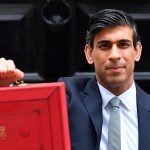
Barely a year has passed since Rishi Sunak’s first Budget. Its centrepiece was a £30 billion stimulus designed to calm nerves about Covid-19 even though barely 500 cases had been diagnosed in the country. The Commons chamber was packed, with not a mask in sight. Few that day would have thought that in a year’s time the country would be in its third national lockdown and the economy would have suffered its worst slump since the Great Frost of 1709. The pandemic has made a mockery of nearly every optimistic prediction. The government is now moving with extreme caution. Even though vaccines have a greater effect with every passing day, restrictions won’t finally be removed until 21 June.

Beware the linguistic Trojan horse

It’s the bane of many an author these days: those newspaper-filler Q&As. One I recently filled out included the question: ‘What’s the book you’re never without?’ Of course, there’s no book I lug about with me everywhere, but inanity comes with this territory. I responded: ‘A tattered, duct-taped blue hardcover of my Webster’s Seventh New Collegiate Dictionary (based on Webster’s Third) published in 1969.’ Lame? Actually, no. Access to older analogue dictionaries has become politically invaluable. Pre-internet, august dictionaries such as Webster’s and the OED functioned as linguistic anchors.

The 31 inventions that Britain really needs

‘Get Brexit done, then Arpa’ read Dominic Cummings’s WhatsApp profile. Arpa was what’s now the American Defense Advanced Research Projects Agency. Mr Cummings has departed, but our very own British Arpa has arrived. Downing Street has tweaked the Yankee acronym to ‘Aria’ — the Advanced Research and Invention Agency. Its aim? ‘High-risk, high-reward’ scientific research. The cost? £800 million over four years. Ludicrous, no doubt: one of those fast-forgotten ‘eye-catching initiatives’ beloved of our leaders. But it got me thinking. We’re responsible for so many of the world’s great technologies and inventions.

In defence of Piers Morgan

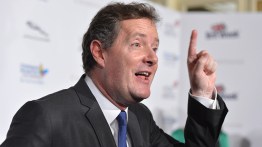
The Liberal Democrat party’s foreign affairs spokesgoblin, Velma from Scooby-Doo — or ‘Layla Moran’ as she is known to close friends and family —has decided that freedom of speech on university campuses is of absolutely no consequence. Indeed, she described the government’s initiative to preserve the rights of students to hear a diverse range of opinions as ‘divisive’ and quite unnecessary, while she was appearing on one of those BBC Question Time editions that nobody watches any more. Velma presumably thoroughly approved of her own party’s subsequent decision to remove the tweeted clip of her spouting this bilge so that the public couldn’t hear it.

What will life look like after 21 June?

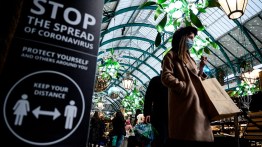
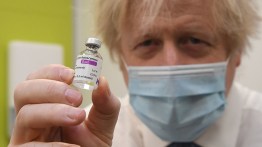
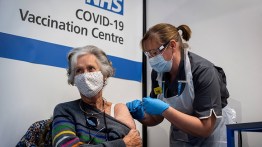
‘Alas’ is a word used many times by Boris Johnson during the pandemic. It is how he prefaces announcements that the data is getting worse and so the government has to impose further restrictions. In recent weeks, though, the numbers have been going in the right direction. The first stage of the vaccination programme was completed two days ahead of schedule. For the first time in this crisis, government targets are being moved forward, not back. Early results seem to show that the jabs are more effective than expected: a Public Health Scotland study suggests that the Oxford-Astra-Zeneca vaccine, the workhorse of the UK immunisation programme, cuts the risk of hospitalisation by 94 per cent. At the same time, take-up has been higher than predicted.

The case for immunity passports

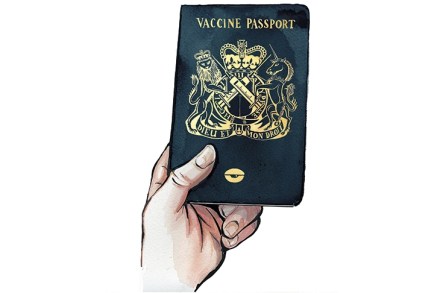
For more than 20 years, I’ve been raging away at pointless rules. When my blood’s up, there’s not a foam-flecked Tory backbencher that can hold a candle to me. My friends blanch when I start on again about risk aversion in the C of E, dogs banned from beaches, the pond-weed creep of health and safety. I can ruin dinner parties, easily. And yet the idea of vaccination passports, which has my freedom-loving friends fit to be tied, leaves me quite calm. Bring them on, I say, and quickly. I don’t for a moment believe that Covid immunity cards are the first step on the dismal path to a Chinese-style social credit system. I don’t even think they’re the first step to ID cards. And — what’s the alternative?

Will freedom always be just over the horizon?

We should talk about horizons, and the setting of desirable ones. A newspaper gave it a go the other day with the front-page news that it is possible pubs may reopen in April rather than May. Given that we read elsewhere that when pubs do reopen, they may not be allowed to serve alcohol, the thrill from this news was limited. This cannot be our best hope: that if everybody behaves themselves and everything goes according to plan then we might be allowed to drink an orange juice in public sometime after Easter. This horizon is not sufficiently motivating. And societies, like the people within them, need motivation. There can’t be a person who hasn’t spent at least part of the past year feeling listless or even hopeless.

It is time to make friends with the EU

On Monday morning, Clément Beaune, Emmanuel Macron’s Europe Minister, clipped out the section of his media interview criticising Britain’s vaccination strategy and posted it on Twitter. He declared: ‘What is happening in the UK is not something I envy. It is a strategy of massive acceleration which also means taking more risks because the Covid situation is much worse there.’ Such remarks are becoming something of a habit for Beaune. He fired off tweets lambasting Brexit in the days after the deal was done and grinned broadly in an interview this year when he was questioned about reports that British cabinet ministers had asked him to tone it down on his Twitter account. Macron has also been critical of the UK vaccination programme.

Where will vaccine passports take us?

Desperate to find someone to commemorate with a statue for having done great things, but who isn’t a white male, some people in Devon want to honour a couple of lesbian pirates. A statue of Anne Bonny and Mary Read has been proposed for the beauty spot of Burgh Island, to salute their important work in ‘breaking gender boundaries’ in the 18th century. Their long careers of psychotic violence and theft are easily eclipsed by the suggestion that they liked a spot of how’s your mother from time to time. A problem here is that there is no proof that they were actually lesbians.

I’m living in a country that won’t let me out

Anyone who’s been through customs Down Under isn’t surprised by the region’s OTT response to Covid. Having been X-rayed before boarding, one’s possessions are X-rayed off the plane. So shrill are the threatening posters, fine warnings and chiding announcements about importing bio-contaminants that on discovering an apple core in your pocket in the endless customs queue, you’re apt to throw up. The culture is obsessed with contagion. Yet Britain’s Labour leadership, who throughout this pandemic have interpreted ‘opposition party’ to mean ‘people who advocate government policy even more vehemently than the government itself’, now look wistfully to Down Under as a Valhalla where they really do Covid right.

Facts are now history

Your quiz for the week is to make the connection between the following people: fun-loving Greek hack Homer, veteran US centrist Democratic party politician Dianne Feinstein, dodgy-night-at-the-theatre president Abraham Lincoln and Middlesbrough-born peripatetic James Cook. The answer is that they are the latest individuals to have been ‘cancelled’ by the woke Taleban. Don’t worry, they’ll get around to you soon enough. Homer is being kicked off college curricula in the USA because his character, Odysseus, had a habit of mansplaining to thick Greek women.

The Northern Ireland protocol problem

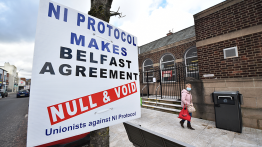
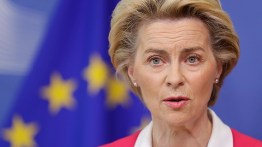
Ursula von der Leyen now admits that she overreacted in the EU’s vaccine row with the UK. She has spoken of her ‘regret’ that Article 16 of the Northern Ireland border protocol was triggered by the European Commission in a Friday night fit of pique at the end of last month. But there is a sense in Brussels that the British are still trying to exploit her misstep. This claim is not entirely baseless. The UK is getting increasingly worried about the protocol, and clearly does see a chance to push for concessions now that the Commission has surrendered the moral high ground. The Northern Ireland protocol was agreed by Boris Johnson as he struggled to get a Brexit deal in time for the 2019 general election. The bureaucracy it causes is already leading to problems.

The sticky truth about Navalny

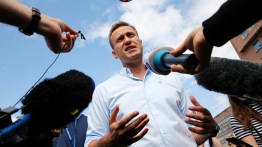
His courage is exhilarating. Even if you think his cause hopeless, Alexei Navalny, the Russian opposition leader and Putin-baiter, deserves our admiration. To return to Moscow after being poisoned, surely knowing arrest awaited him, is beyond brave. The chances are he will be crushed. But annihilation is not certain; and if one day he wins his battle with Putin, his return to Moscow this winter will become the stuff of legend. Navalny is not crazy: he has made a rational calculation, weighing the relative safety of a tedious future in grey and indefinite exile against a small possibility of making Russian history. With open eyes he has chosen risk. That sooner or later Vladimir Putin will be swept away is likely — but when? Might it be sooner?

The importance of daydreams

I miss daydreaming. It’s a small problem to have in a pandemic, but it nags at me. Laptop, cooker, home-school, broom. ‘Mum, Mum, Mumma, Mum… You’re not looking, Mum. You have to look!’ The gap between things seems to have disappeared. There’s no time to drift and wander. I look at my phone too much, and sometimes I have the strange feeling my brain is suffocating. And I might not have thought this worth mentioning were it not for a new book, When Brains Dream, by a pair of American sleep scientists, Antonio Zadra and Robert Stickgold. Bob and Tony, they call themselves throughout the book, and if they’re right, Bob and Tony have an answer to a problem that’s been puzzling people for 200 years: why do we dream?

The disconnect of Davos Man

You may have missed Ursula von der Leyen’s big speech at Davos last week. Most people did. Perhaps because Davos was a more low-key affair than normal this year. Ordinarily the annual summit of the World Economic Forum allows various world leaders to jet into the Swiss Alps in order to lecture the rest of us on the virtues of zero carbon. But this year the head of the Forum — Klaus Schwab — greeted his guests virtually and alone. Welcoming the President of the European Commission down the line, the two reminisced about last year’s summit and such pleasures as being lectured by Greta Thunberg. Although they tried to pretend that last year’s meeting in some way foresaw the era we are now in, of course it did no such thing. It never does.

What if Covid had struck in the 1970s?

We have reached Covid-19’s first anniversary in the UK — and I really think we should do something fitting to mark the occasion. The actual date is pretty much a moveable feast. The first patient in the UK known to have died of the disease was Peter Attwood, aged 84, on 30 January. But we didn’t know then that he had Covid, finding out only about six months later. On 4 February, the government instructed all Brits living in China to get the hell out and return to the UK sharpish and breathe all over us, as I believe the press statement had it. On 11 February, the little baby was actually christened Covid-19. Perhaps we should commemorate the anniversary of something more down-home and folksy.

Vaccine success is a boost for Boris – and the Union

Imagine for a minute what British politics would be like without a Covid vaccine. The cabinet would be deeply, and possibly irrevocably, split between those who favoured another year of lockdown on public health grounds and those who thought that the country had no alternative in the circumstances but to ease restrictions and learn to live with the virus. The 100,000 death toll would have been reached with no hope in sight and a public sense that, almost inevitably, things were going to get worse. The vaccine has changed so much. It has given people hope. There is a belief in the general public that this will be the last lockdown, which is bolstering morale and compliance.

Britain will prove more Biden-friendly than the EU

This is a crucial year for the UK’s two most important relationships. The Anglo-American alliance, our strongest diplomatic and security partnership, now needs to adjust to a new president in the White House. Meanwhile we are also starting our new relationship with the EU. The question is: can the two sides move on from the wrangling of the Brexit negotiation? To great relief in British diplomatic circles, the new US administration and the UK have got off to a good start. Joe Biden has shown that he is keen to move on from the Donald Trump era.