Columns

Is it your fault if you’re fat?

Sorry Santa, but there’s no sugar-coating this: you’re eating too much. And it’s nobody’s fault but your own. Human beings have agency. You have it within your power to cut down. An excellent book written by restaurateur and policy adviser Henry Dimbleby, with his wife Jemima Lewis, sets out the figures. They’re shocking. In Ravenous: How to Get Ourselves and Our Planet into Shape, Dimbleby shows that in some 70 years we’ve regressed from being a nation where almost nobody was obese and less than 4 per cent of people were overweight, to today’s Britain, where some two-thirds are either overweight or obese. The UK is shamefully high on the list of fatties, but the rest of the West faces similar problems. The consequences are dire.


No one wants to talk about Ukraine any more

Apologies for this seasonal downer. Had the website such a listing, this column would surely soar to number one in The Spectator’s ‘Least Popular’ roster. For just now, few topics are a bigger turn-off than Ukraine. Following Russia’s invasion, I got caught up in the same waves of emotion that washed over most western publics, and I say that with no regret. After relentlessly battling the prevailing cultural winds these past few years, I was relieved to feel a sense of solidarity for once. Most of us were revulsed by the gratuitous aggression, allied with an underdog whose bite proved surprisingly fierce, thrilled by a former comedian’s unexpected rise to his nation’s occasion and consumed by a weirdly addictive loathing for Vladimir Putin.

In search of deep England

I am wary of mentioning General de Gaulle in these pages, if for no other reason than remembering Auberon Waugh many years ago arguing against a statue of the leader of the Free French being erected in London. Waugh’s objections were based firstly on the fact that statues only worked with togas because statuary did not favour the trouser leg. His second objection was that this country had fought a long and costly war to get General de Gaulle and his friends out of London. That notwithstanding, I dare to mention de Gaulle here because he has been on my mind. Or at least one aspect of him has been on my mind. That is that glorious appeal he made to ‘La France profonde’. Anyone who has spent time in France – especially rural France – will know exactly what he was talking about.

Sunak is stuck in a migration minefield

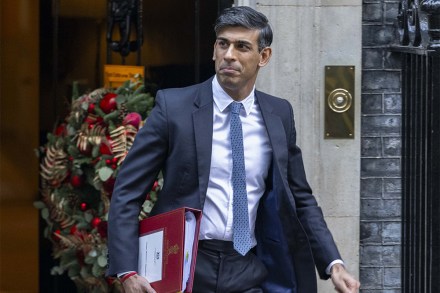
At last week’s Spectator Parliamentarian Awards, Suella Braverman was awarded ‘Disruptor of the Year’. In her speech, which seemed to preview her Commons statement on Wednesday, the former home secretary joked that the prize ought, instead, to go to the man responsible ‘for disrupting my plans to cut the [immigration] numbers and deliver our manifesto pledge – the Prime Minister’. Rishi Sunak’s assembled supporters didn’t laugh. On the issue of migration, battle lines have been drawn between the Tory tribes. The night before Braverman’s speech to the Commons, a trio of right-wing groups assembled to plot their strategy. Members were drawn from the European Research Group, the Common Sense Group and the New Conservatives.

Does no one want the Red Wall voters?

There was outrage in some sections of the Labour party today after its leader, Sir Keir Starmer, praised Satan. Writing in the Mephistophelian Clarion, a publication with a high proportion of readers who are lycanthropes, vampires, imps, goblins and daemons, Sir Keir said that the ‘Prince of Darkness’ had sometimes been ‘mis-understood’ by the left. ‘It seems to me only right that Lucifer should be credited with a very real dynamism and get-up-and-go, as well as for taking a diverse, vibrant and non-judgmental approach to the notion of sin.’ Sir Keir’s unexpected stance was defended by party moderates, one of whom commented: ‘There’s nothing wrong with what Keir wrote.

The UN vs Israel

There’s an old joke about the United Nations having a football team. ‘But who would they play?’ it goes. ‘Why, Israel of course.’ There may not be much humour in it, but there’s plenty of truth. Despite Israel being set up by UN vote, it has been the world’s premier forum for Israel-bashing, particularly since the country won wars of self-defence in 1967 and 1973. Perhaps the most notorious moment was the ‘Zionism is racism’ resolution in 1975, when the foundations of the Jewish state were suddenly under assault. On that occasion the late great Democrat Daniel Patrick Moynihan gave one of the best counter-blast speeches ever given on the floor of the UN. As did Chaim Herzog, the father of Israel’s current president.

Why can’t I pray in Westminster Abbey?

In the school chapel every morning, bored and tired, I’d rest my forehead on the back of the chair in front and try to doze. The chapel chairs were dignified and sturdy, each with its own wooden box for hymn books and a flat top, carved with the name of a generous old girl. As morning chapel progressed, that name would slowly etch itself into my forehead so that sometimes even at lunchtime I still had the name of a past and more perfect pupil stamped backwards above my eyebrows. This is very much how I feel now about the Church of England. When you’re brought up in an institution, however soporific, it leaves its mark on you. I converted to Catholicism nearly two decades ago but I’m still imprinted with the C of E.

What the Elgin Marbles row is really about 

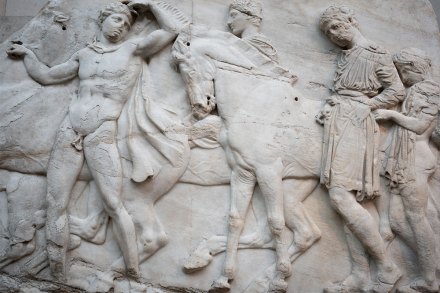
‘The Elgin Marbles should leave this northern whisky-drinking guilt-culture, and be displayed where they belong: in a country of bright sunshine and the landscape of Achilles.’ This view – articulated by Boris Johnson in 1986 when he was studying classics at Oxford – is not shared by Rishi Sunak. On Monday, the Prime Minister caused a diplomatic spat after he called off a meeting with Kyriakos Mitsotakis, his Greek counterpart, hours before it was scheduled to take place. The reason? Mitsotakis gave an interview to the BBC in which he said the Elgin Marbles must be returned to Greece. The current situation, he added, of having some artefacts in London and the rest in Athens was akin to ‘cutting the Mona Lisa in half’.

How Labour could lose

Occasionally I wake up in the morning with the rain pelting on the windows and the sky the colour of a gravestone and I think to myself that maybe it wouldn’t be a bad idea if we had a Labour government. Partly this is simply a sense of resignation and inevitability, because we are going to have a Labour government, given that the current administration is loathed by a wearied public and shows every inclination of breathing oxygen onto that loathing so that it develops into a fully fledged visceral inferno of hatred. Partly it is because the likes of Starmer, Reeves and Streeting do not seem, to me, noticeably less likeable or competent than what we have at the moment. Sir Keir, for example, is a man of principle, and I respect that.

The government could tackle immigration – if it really wanted to

I’m fascinated by the subject of immigration because I’m a sucker for moral complexity. For decades, too, I’ve been an immigrant myself, though I’ve played by the rules (at some cost), and I’ve never been a burden on the state (to the contrary). Besides, I am by nature territorial. Even having perfectly agreeable house-sitters in London during my summers in Brooklyn has been painful, and the first thing this Goldilocks has always done on returning home is expunge every reminder that bears have been sleeping in my bed and eating my porridge. That said, we’re all territorial. Hence the moral complexity. So I’ve developed an unhealthy addiction to reading comment threads after articles about immigration. I never comment myself; this is a spectator sport.

Lord Sumption is wrong: laws can change facts

It’s with triple reluctance that one disputes anything said or written by Jonathan Sumption. First, Lord Sumption is among the commentators I most admire, with an intellect against which it must be foolhardyto pit one’s own. Secondly, as a former Supreme Court justice, his legal expertise will be immense, whereas I only read law as an undergraduate, and that more than half a century ago. Thirdly, on the merits of the government’s proposal to declare Rwanda safe for asylum seekers in UK law, and perhaps ‘disapply’ any international convention that says otherwise, I actually agree with him: I, too, doubt the wisdom of the move.

The Tories are cutting it fine with their Autumn Statement

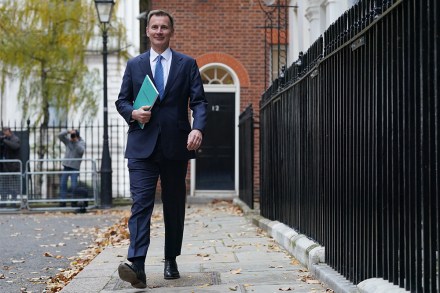
Just a year ago, Jeremy Hunt played Scrooge at the despatch box. In an attempt to regain market credibility following Liz Truss’s mini-Budget, Rishi Sunak’s new government announced £30 billion of spending cuts (largely pencilled in for after the election) and £25 billion of tax rises. It was a far cry from the summer leadership contest, when Truss and Sunak promised to lower the tax burden. Sunak’s argument has always been that he would cut tax – but only once some order had been restored to the public finances. Sunak’s reticence has been unpopular with his own side. Boris Johnson attacked him for lacking a ‘grand economic strategy for growth’.

The Covid Inquiry has unmasked the flaws in trusting ‘the science’

There is something therapeutic and healing in watching Professor Chris Whitty give evidence to the independent public inquiry into the Covid pandemic – the sense of calm emanating from the man, his occasionally Panglossian self-satisfaction, his refusal to become anything more than barely ruffled even when his interlocuters gently venture forth the suggestion: ‘Overreaction?’ The impression one gets, or perhaps is supposed to get, is of a very clever, terribly rational man in a world full of thicko scumbags. This lack of debate was exacerbated in the country at large by that curse of our age, political polarisation I watch a little daytime TV at the moment as part of my rest and recuperation programme following that car crash I mentioned a couple of weeks ago.

The real reason the civil service needs reform 

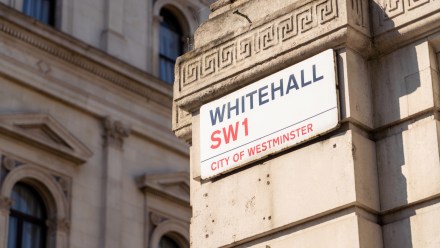
Just as Francis Maude was revealing his exciting plans for grand reform of the civil service, I received a message from a friend who once worked in Whitehall. In the subject field: ‘What fresh hell is this?’ Underneath, a screenshot of an email she’d just been sent by a civil servant. There was the name of the sender, Alex Smith, then underneath that another line: ‘SAY MY NAME: Aaa-Luhx Smeeth.’ My first thought was that Alex was taking the mick, making fun of people who couldn’t pronounce a simple name. Alex won’t be long in the job I thought. How wrong I was. It’s not just Alex.

When it comes to Palestine, the kids aren’t all right

Does anyone remember ‘Free Tibet’? Way back when, in the olden days of about the 1990s, if you knew nothing much about the world or politics but wanted to show you generally had the right outlook on things it was normal that you might have a sticker or a poster, or even go on a protest saying ‘Free Tibet’. It didn’t do any good, of course. Tibet remains doggedly unfree. For it turns out that the Chinese Communist party is not especially interested in the opinions of a few Devon-based sandal-wearers. The CCP occupies Tibet still, and continues to torture, repress and kill anyone there who stands against its brutal occupation.

The Rishification of the Tory party

When David Cameron arrived at the Foreign Office on Monday, he told staff he might be a bit rusty when it comes to modern politics. He joked that the only WhatsApp group he is in ‘is to do with my children’s school play’. Cameron may have been out of frontline politics for a while, but the rules stay the same. As Tory leader, he championed his favourites and promoted his supporters to the cabinet table, even at the expense of ignoring older colleagues’ claims. This week, his successor has done the same. A trio of thirtysomething former special advisers elected in 2019 now comprise the Prime Minister’s Praetorian Guard. Laura Trott, 38, the former pensions minister, is the chief secretary to the Treasury.

Progressives appeal to base emotions

In public events, I’ve sometimes given an unexpectedly appreciative nod to the hard left. It’s laudable, I allow, to stick up for the disadvantaged. Young people naturally hope to revamp the creaky, hypocritical institutions they inherit, just as my generation did in the 1960s. Fairness – a more complex concept than it first appears – is inherently appealing. Thus the initial impulse to embrace identity politics is often benign. This concession is calculated. Being charitable carves out space for me to rip this odious ideology to shreds thereafter. Yet given that when younger I was a fervent liberal American Democrat, my token peace offering has always been sincere. I take it back.

Why don’t celebrities care about the Israeli hostages?

My mind keeps going back almost ten years, to Nigeria in 2014. As some readers will remember, on the night of 14 April, 276 mainly Christian schoolgirls were abducted by terrorists from the Boko Haram group. It happened at a school in a town called Chibok in Borno State. In some ways it is obvious why there was such international outrage at the incident. After all, this was 276 schoolgirls, kidnapped by an Islamic terrorist group. Even a world that had seen the Beslan school siege in 2004 and was starting to see the workings of Isis still had the capacity to be shocked. The Chibok schoolgirls story caught on, and in short order almost every celebrity in the world got on board And yet the international reaction was also surprising.

You can’t trust the will of the people

Abraham Lincoln’s ringing declaration echoes down the years. His 1863 Gettysburg Address, delivered 160 years ago this Sunday, gave us ‘Government of the people, by the people, for the people’: a clear and simple formulation, it has come to be seen as the very definition of democracy. But Lincoln was wrong: wrong then and wrong now. Government of the people? Yes indeed, after a fashion. Government for the people? Of course. But government by the people? The advent of social media and almost hourly opinion polling reduces that argument to absurdity, throwing its flaws into sharp relief. For me, a curious incident in which I was involved at St Pancras station recently illustrated this.