Columns

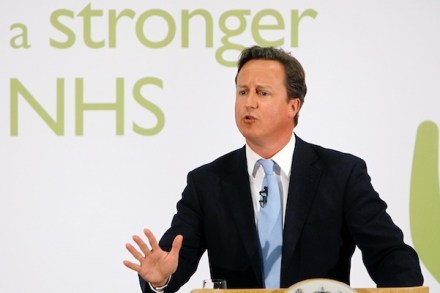
What will David Cameron be remembered for?

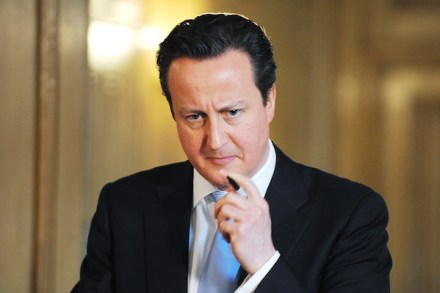
Ten Downing Street has been an odd place these past few days. The prime ministerial portraits that line the main staircase have been taken down and the furniture covered in dust sheets, as the authorities take advantage of David Cameron’s absence to spring clean. But the process has reminded those who work there of the transience of power, of how quickly they could be removed and the question of what legacy they might leave behind. What will future occupants say when they see the portrait of Cameron on the wall? Toward the end of his time in No. 10, Steve Hilton would sit in policy meetings and ask, ‘But is it transformative?’ These words, delivered with a flick of the hand to illustrate a thought coming out of his head, attracted much mockery from jaded civil servants.
Steerpike | 4 April 2013

Chat, chat, chat. Every member of the Cabinet enjoys a good old chin-wag with their ministerial driver. Except one. Dave appears to have taken a vow of silence. For three years the PM has stoutly refused to offer a syllable of conversation from the back of his bullet-proof limo. I’m told that a sweepstake has opened up in the car pool and the first government chauffeur to hear the Prime Minister break his oath stands to win about 1,000 smackers. Not for personal gain, of course. If the PM’s elective aphasia ever comes to an end, the winner will donate the cash to a charity helping children with speech difficulties.   Has Tony Hall, who took over at the BBC this week, been aided in his starry career by his ability to cultivate political contacts?

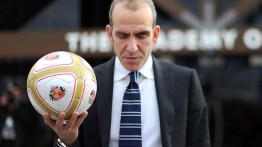
If Paolo Di Canio is a fascist, he should recognise the totalitarianism of his hysterical critics

I’ve often thought that British football needed a good dose of fascism — and now at last it has exactly this, in the form of the combative and somewhat eccentric Italian chap Paolo Di Canio. He has been installed as the manager of Sunderland, and all hell has broken loose. Di Canio has described himself as a fascist — but definitely not a racist, which shows that he is at least au fait with the current dictum that there is but one crime and one crime alone that matters. He has a couple of fascisty tatts on his muscular shoulders, one of which seems to be invoking the late, controversial politician Benito Mussolini, whom Paolo has previously described as ‘much misunderstood’.

Frontline Tories to Cameron: ‘We don’t want to look nasty and we don’t want to look mad.’

Just before Easter, writing for the Times, I talked to 30 of the 40 Conservative MPs with the most marginal constituencies. My aim was to get a sense of how they think their party should position itself. I explored their opinions on a range of vexed policy areas. Finally I asked whether David Cameron’s leadership was a help or hindrance. The broad conclusion was that most marginal MPs took a decidedly and sometimes passionately ‘softline’ position on most controversial issues, European ‘interference’ in domestic human rights questions offering the nearest thing to a hardline consensus. And all considered Mr Cameron a plus, though more weakly in the Midlands and North. I wrote up my results in some detail, my focus being to make a factual report.

Would Ukip win a battle for Portsmouth South?

Downing Street aides nervously run through the symptoms: a flat economy, poor press, leadership mutterings. Then they say, ‘It’s just mid-term blues, isn’t it?’ A second later, they add nervously, ‘It’s nothing more serious than that, is it?’ The truth is, nobody can be certain. There’s no reliable way of distinguishing mid-term blues from something politically fatal. Part of the problem is that few Tories have anything to compare their current mood with. After 13 years in opposition, only a handful of them have been in government before, let alone in the mid-term doldrums. When I put this argument to one veteran of the Thatcher years, he delighted in pointing out that there was at least one person in No.

Yes, Boris Johnson has fibbed and philandered. But what has he actually done wrong?

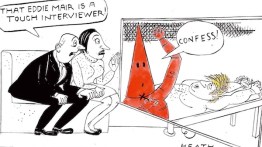
I’m trying to imagine the BBC’s Eddie Mair interviewing Nelson Mandela, the elderly African squirming uncomfortably in his seat as Mair, like one of the late Eugene Terre’Blanche’s famous Dobermans, snarls ever more menacingly, foam dripping from his bared gums. ‘So, in 1961, with several others, you founded a vicious terrorist movement, Spear of the Nation, carried out bombing after bombing and pledged that if these tactics failed you would resort to guerrilla warfare and terrorism…’ Mandela looks askance: ‘Excuse me, I thought this was that programme where you choose records and a book…’ Mair shakes his head, face wreathed in disgust. ‘Pretty nasty piece of work, aren’t you?

UKIP is patriotic, fiscally conservative and socially libertarian – what’s not to like?

‘A conduit for pissed-off protest voters.’ ‘Farage’s Falange.’ ‘Fascists in blazers.’ These are some of the things friends have said about Ukip recently and I don’t want to embarrass them by naming names, for the last thing I’d wish on a mate is the queasy feeling I had this morning after a particularly bizarre anxiety dream. I dreamt that I’d agreed to let a (male) autograph hunter photograph my penis and that, rather than keep it to himself — as I’d trusted him to do — he sold it to all the newspapers. No, I don’t understand the dream either.

How Bitcoin could destroy the state (and perhaps make me a bit of money)

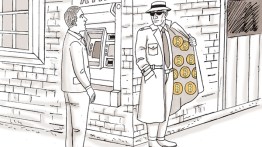
Last time I was here (two weeks ago; how’ve you been?) I briefly mentioned Bitcoin, an emerging internet currency I didn’t understand at all but via which I had nonetheless made a bit of money (£57). Since then, I’ve been reading up and the whole thing has gone supernova, largely thanks to the extent that the EU is dicking around with real money in Cyprus. God, but I’m just bang on trend, aren’t I? Good old me. So. The first thing you need to know about Bitcoin is that it’s a peer-to-peer, digitised crypto-currency. No, please, don’t stop reading. Just hold that one in your mind while we talk about the second and third things you need to know about Bitcoin, which are far more exciting. For example, you can buy drugs with it!

For once, Osborne will be glad not to be the story

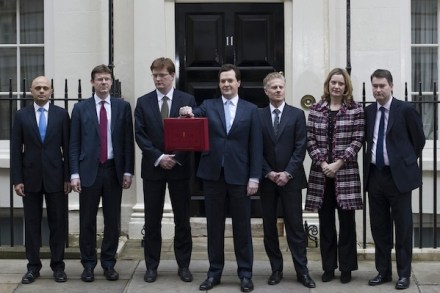
A few years ago George Osborne would have bristled at the idea that one of his budgets wouldn’t be the biggest event of the political week. His ability to conjure rabbits out of hats had already prevented electoral defeat for the Tories once (his 2007 inheritance tax pledge, now consigned to history, scared Gordon Brown out of calling an election he would have won). But this week a low-key Budget was just what Osborne wanted — and delivered. One imagines, though, that he can’t be happy with the careless way that Downing Street managed to alienate almost the entire press just 72 hours before he got up to deliver it. I understand that an inquest is now under way at No.

Steerpike | 21 March 2013

Westminster’s top amateur prize-fighter, Eric Joyce, may face assault charges after his latest unscheduled bout in the House of Commons. The Falkirk MP had to be restrained last week after an alleged unseemly set-to at the Sports and Social Club. Ex-soldier Joyce first revealed his flair for pugilism in February 2012 when he ‘went berserk’ in the Strangers’ Bar after declaring it ‘full of fucking Tories’. ‘He won’t have that problem in the nick,’ says a Conservative friend. ‘It’s full of Lib Dems.’   Panic in Whitehall! Jeremy Hunt’s decision to dump health officials in hospital wards in order to give them ‘first-hand experience’ on the front-line has caused alarm among civil servants.

So the Cypriots cop it for having fallen for the honeyed promises of the EU

I had forgotten about Cyprus. I suppose it was lodged somewhere near the back of my mind as a cheap British Mediterranean satrapy usefully divided into two: a southern bit, where our chavs went on holiday, and a northern bit where our criminals hide out from the filth. I was dimly aware that we had allowed them, some time ago, to go their own merry way and that since had followed a predictable descent into barbarism, yet another Ottoman invasion and some sort of coup effected by the useless Greeks. And that’s it, really.

Why do amateur performers still flourish?

Chesterfield is a medium-sized town just off the M1, near what were once the coalfields of north-eastern Derbyshire. Not without history (and a lovely old market square) and not without character (a church with a splendidly warped spire, positively Van Goghian, is its most famous feature), the town is nevertheless an unassuming, formerly industrial north Midlands community which earned its living until recently from a steelmaking and coal-mining regional economy.

David Cameron’s secret Budget plan

It was the night that the Conservatives’ dream of a majority died. The first televised election debate in British history was meant to be the moment that David Cameron moved decisively ahead in the polls. Cameron and his camp had arrived at the Granada Studios in confident mood on 15 April 2010. But the evening didn’t go according to plan. Only 26 per cent of those who watched thought Cameron had won, compared to 43 per cent for Nick Clegg. When those numbers flashed up on the screen in the media centre after the debate, the room drained of Conservatives. The politicians and spin doctors, who had been busy briefing away, beat a retreat. But George Osborne came back and kept on going until the last laptop was powered down.

The Chinese water torture of everyday sexism

So I’m outside Finsbury Park tube station, the other morning. There’s a girl in front of me, white, twentysomething, rosy-cheeked, long and ruddy hair bouncing in the brisk spring air. Not that I’m, like, noticing. From behind me, overtaking, comes a tall, handsome black guy, smartly dressed. ‘You’re so lovely,’ he booms, as he draws level. With her, that is. Not with me. Alas. ‘You’ve made my day,’ he says. ‘It’s wonderful just to see you.’ ‘Oh,’ she says, blushing red. ‘Thank you.’ Then he pulls out one — but only one — of his earphones and for a few paces they chat before off he strides.

If Iran can sue Hollywood over Argo, should we all sue Jeremy Hardy?

I think we should all support the Iranian government in its legal action against the Hollywood actor and director Ben Affleck, for misrepresenting their lovely country in the film Argo. They have a serious legal team lined up to counter the suggestion raised in Argo that Iran is full of half-witted, bearded, brutal Islamist maniacs, all spying on each other and shouting very loudly in the streets and markets etc. It always occurred to me that this was precisely what Iran was like but, having never been to the place, one should keep an open mind. The Iranians insist that it is a perfectly pleasant country and that Affleck’s film, which is a fictionalised account of the CIA operation to free a bunch of US hostages from Tehran back in 1980, is simply American propaganda.

What I learned from teaching at Malvern College

If those who can do and those who can’t teach, then that must make me a totally useless git for I’ve just had a go at being a schoolmaster and I loved it more than any job I’ve ever done. I did it at my alma mater Malvern College, where I spent most of last week being a ‘writer in residence’, taking everything from a geography class on (what else?) climate change to an English class at the Downs prep school on ‘How to write the next Harry -Potter’ to a history class in which we tripped merrily from the Cuban missile crisis to the battle of Salamis to the crapness of the service in former East German restaurants in the years following reunification. Obviously, had I been a full-time teacher I wouldn’t have been able to range so freely.

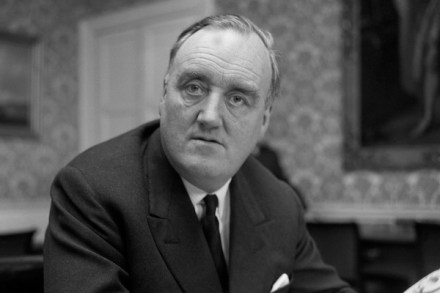
David Cameron needs Willie Whitelaw. He has Nick Clegg

David Cameron needs a Willie. So say the ministers who work most closely with No. 10. It is not a call for shock-and-awe radicalism, but for someone who can help the Prime Minister as the late Willie Whitelaw helped Margaret Thatcher — gliding around Whitehall, pushing forward the Cameron agenda, smoothing over difficulties and ensuring that Downing Street’s writ runs in every department. Whitelaw did the job superbly for eight years; it is no coincidence that things started to go wrong for Lady Thatcher after a stroke forced him to give up his role. But Cameron doesn’t have a Willie. He has the opposite of a Willie: a Deputy Prime Minister who has his own interests to look after, his own policies to pursue and his own party to lead.

Isn’t Germany’s attitude towards Romania a little at odds with the EU project?

‘Can you imagine anything worse,’ a Hungarian once said to me, ‘than a Slav who thinks he’s Latin?’ He was referring to the Romanians, of course. There is a certain degree of tension in Romania between the ethnic Romanians, who run the place, and the ethnic Hungarians, who feel that they have been press-ganged into a chaotic and useless country and, worse, forced to learn a stupid language. The Hungarians hole up in the beautiful wilderness of Transylvania, yearning for the old empire and metaphorically spitting upon their political masters. But the enmity dissolves entirely when a third racial group is brought into the equation: the gypsies.

Bloomberg will buy the Financial Times — but only if it jettisons The Economist

How much would you stump up for the Economist? Most of us would draw the line at a fiver, but I’m told that Mike Bloomberg, mayor of New York, is drawing the line at £300 million. Bloomberg is busy relocating to London and he’s poised to snap up the Financial Times later this year. But the Pink ’Un comes with a 50 per cent share in the Economist. And the small print conceals a pesky restrictive covenant that prevents the owner from replacing the editor. This is proving a drag for Bloomberg, who admires the Economist’s boss, John Micklethwait, but who sees little sense in buying a ship if he can’t appoint the captain. Enter minority shareholder Lynn Forester, Lady de Rothschild.

Gay sympathy for Cardinal Keith O’Brien

Were you to try to identify the sort of journalist least likely to feel sympathy for Keith O’Brien, I suppose you’d place near the top of your list a columnist who was (a) an atheist, (b) especially allergic to the totalitarian mumbo-jumbo of the Roman Catholic church, (c) gay, and (d) a strong supporter of the coalition government’s plans for same-sex marriage. If so, this columnist regrets to disappoint. The downfall of the former Archbishop of St Andrew’s and Edinburgh has come to pass at least in part because he did not mince his words. I admire such people. As to O’Brien’s homosexual behaviour and the charge of hypocrisy… well, to that in a moment. Keith O’Brien’s career has been distinguished by simplicity of expression.