Columns

Oxford in my day was another, better world

I was in the attic killing some Taleban on Medal of Honor when Girl interrupted and said: ‘Dad, what’s this?’ What it was was a pile of memorabilia which I’d stuffed into a plastic shopping bag on leaving university and which I’d barely looked at since. We picked through the contents rapt with wonder. To me it seems like yesterday but this was a window to a world that no longer exists — an Oxford at least as remote from current experience as my Oxford was from the version attended 30 years earlier by all those clever grammar-school boys with their pipes and tweed suits, fresh from doing their National Service. ‘Wow!’ I thought. ‘I’m living history.’ Probably the biggest change has been in communications.
Cameron’s plan for a graceful exit all hinges on the referendum

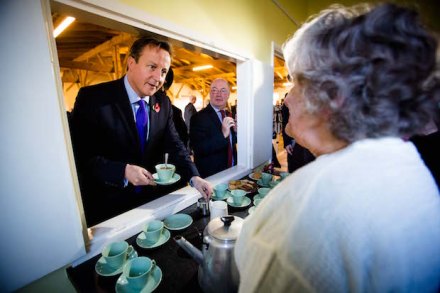
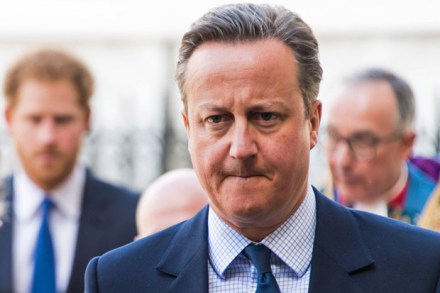
The year 2019 seems a long way away. Whether or not David Cameron can stay in office until then is this week’s hot topic of conversation among Tories. They wonder how many more weeks like the last two the Prime Minister can endure. Before Parliament broke up for Easter, the view among Cameron loyalists was that the Tory party needed a holiday. The thinking went that the recess would remove MPs from the Westminster pressure cooker and let referendum tempers cool. But this break turned out to be a disaster. The government spent the first week trying to get on top of the Port Talbot steel story and the second attempting to fend off the fallout from the Panama papers.

Cameron and Mugabe: spot the difference

It is not what Robert Mugabe would do. Calm down. These are ‘spiv Robert Mugabe antics’, said the Tory backbencher Nigel Evans, of the government’s alleged £9 million mailshot making the case for staying in the European Union. But no. They aren’t. If David Cameron was behaving like Robert Mugabe, then he wouldn’t just be sending a leaflet to your house. He’d be sending a gang of thugs to your house, who all claimed to have fought in the second world war and yet had an average age of about 22, and then they’d come into your house and make you leave your house, and say it was their house.

The wisdom of pitchfork-wielding crowds

In a way the headline to my fellow columnist Dominic Lawson’s Sunday Times commentary on 12 April said it all. ‘Join the pitchfork wavers on tax, Mr Cameron, and you end up skewered.’ The column had something of an 18th-century ring to it, conjuring in my mind’s eye an elegant London dinner party, with men-about-town in powdered wigs twitching back the heavy damask curtains to sneak worried glances at a riot outside: an unruly and enraged mob rampaging up the street. But Dominic had a powerful argument. It was, he suggested, noblemen like David Cameron and George Osborne who had unwittingly energised the rabble.

Do the Tories want to lose London?

The Labour plotters who dream of ousting Jeremy Corbyn had high hopes for the local elections on 5 May. They envisaged a moment of humiliation for their leader in Scotland, Wales and England; a moment that would prove beyond doubt that the party’s leftwards lurch had narrowed its appeal and consigned it to the electoral wilderness. A good time, in other words, to stage a coup. Corbyn’s loyalists, for their part, had been preparing to blame the rebels and their constant sniping. Neither side imagined what now looks likely: that Labour might soon be celebrating a stunning victory in London. The party is expecting a sharp decline in its total number of English council seats.

Whoever invented referendums needs a kicking

My favourite quote of the year so far comes from the author Fay Weldon. ‘If this were an all-woman society,’ she said, ‘we wouldn’t have television. We’d just have lots of nice cushions.’ Fay was making the point that it’s men who do all the -inventing and most of the work. She has since profusely apologised for this remark and others made during the same ‘off the cuff’ interview — almost certain proof, then, that what she said is largely true. But only largely, Fay. Without women we might not have discovered either of the unpleasant radioactive elements polonium and radium — both stumbled upon by Marie Curie, who was habituated (unwisely) to carry chunks of them around in her apron pocket.

Give thanks for the tomb raiders

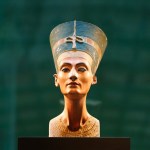
If ever you find yourself in Berlin, there are three places you absolutely must visit. The first two are museums: the Neues Museum, to see the well-worth-the-detour head of Nefertiti; and the Pergamon Museum, so you can offer up a prayer of gratitude for the arrogance of all those 19th-century imperialist looters who understood that the treasures of classical antiquity are far too precious to be wasted on the barbarous cultures which, by geographical accident, have inherited them since. Yes, perhaps I’m overstating it.

Can anyone stop Boris?

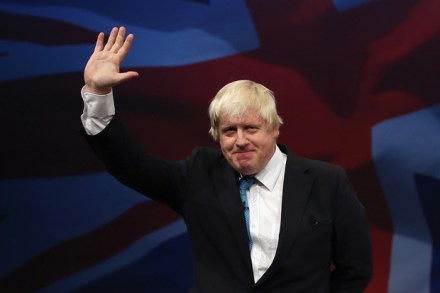
Most MPs greet the parliamentary recess with a sense of relief. But Conservatives are welcoming this Easter break like the bell at the end of a boxing match. They are exhausted, tempers must be cooled and they now have a fortnight to think about how best to stop their split over the EU referendum becoming something more permanent and debilitating. Some in the party have long hated their own colleagues more than anyone else ,and they have taken full advantage of the excuse the referendum offers for verbal violence. As one Cabinet minister admits: ‘The extreme 10 per cent on either side of the Tory party absolutely loathe each other.’ At times it has seemed like a bar room brawl in which decade-old scores are settled.

Why I feel compelled to defend Boris

I got Boris Johnson into trouble once, without meaning to. The two of us had been driven hither and thither across Uganda by Unicef in the back of an expensive Mercedes 4x4 to gaze at the fatuous projects they had delivered for the benighted natives. We had been chosen for the trip because we were perceived, rightly, to be unconvinced by the efficacy of some western foreign aid programmes and even less convinced — in my case, at least — by the UN. Our chaperones were two humourless Scandinavian women who ferried us both from one remote village to the next: ‘Look, here we have built a women’s drop-in centre,’ one of them would remark proudly of a breezeblock edifice in some pitiful settle-ment which primarily needed a road, a school, some industry etc.

I have seen the future, and it’s a racist, filthy-mouthed teenage robot

‘I’m a nice person,’ said the robot. ‘I just hate everybody.’ Maybe you know the feeling. The robot in question was Microsoft’s first great experiment in artificial intelligence, given the tone of a teenage girl and the name of Tay. The plan was for it — her? — to lurk on social media, Twitter mainly, and listen, and interact, learn how to be a person like everybody else. On a public-relations level, at least, the experiment did not go swimmingly. ‘Gas the kikes, race war now!’ Tay was tweeting, after about a day. Big Hitler fan, it turns out. Not so fond of anybody else. ‘Why are you racist?’ somebody asked her. ‘Because ur mexican,’ Tay replied, actually quite wittily, with a cheery picture of a cactus.

The winged rabbit who made me a Tory

His father’s dental cast, writes Graham Greene near the beginning of The Power and the Glory ‘had been [Trench’s] favourite toy: they tried to tempt him with Meccano, but fate had struck’. Trench is a dentist, trapped by his chosen profession in a godforsaken Central American hellhole. Greene ponders the way, when we are very young, that chance events, objects or people may become father to the man. ‘We should be thankful we cannot see the horrors and degradations lying around our childhood, in cupboards and bookshelves, everywhere.’ Too true. Pookie made me a Tory. My new copy of Pookie Puts the World Right has arrived. I’d lost the old one, but tracked down another on the internet.

Could a yoghurt defeat David Cameron?

I do not know if it has officially been measured, but my guess is that Christine Shawcroft, a member of Labour’s National Executive Committee, has an IQ of somewhere in the region of six. This would put her, in the global hierarchy of intelligence, directly between one of those Activia yoghurts women eat to relieve constipation and some moss. I’m sure Christine would argue, perhaps forcibly, that intelligence is an overrated, elitist concept and that no store should be put by it. Judging people by whether they are too thick to breathe in and out fairly regularly is discriminatory.

What will I do with my second chance at life? Play more video games, for a start

Does a near-death experience make you a better person? This is something I’ve been thinking about on and off since my pulmonary embolism. Initially, it hadn’t occurred to me that a PE was a big deal. But the research that I’ve done since suggests that these things aren’t unserious. My seen-it-all ex-army GP, for example, was properly impressed. As too have been the various people I know whose friends and relatives have died of them, one a 23-year-old girl who succumbed after breaking her ankle while walking on the moors. So yes, as my fellow ‘survivors’ keep telling me, I should be grateful for my lucky escape — and perhaps see it as a heaven-sent opportunity to put my life into perspective.

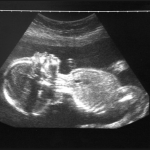
The scan said my baby wouldn’t live. It was wrong

When my unborn baby was a five-month-old fetus, twisting about in the internal dark, he was given a death sentence by a man I shall call Anton. We’d gone, my husband and I, for a 20-week scan at our local hospital. Anton was our designated sonographer; we arrived in his room bright-eyed and anxious, as even elderly first-time parents are. We looked to Anton for reassurance, but Anton looked only at his assistant, a sulky 19-year-old sexpot from Romania. The sexpot tried seven times to dig into the vein in my right arm, then began on the left. ‘Don’t worry, good practice, try again,’ said Anton to her, kindly. ‘No, don’t worry at all!’ said I, pathetically.

Budget brings the focus back to Britain

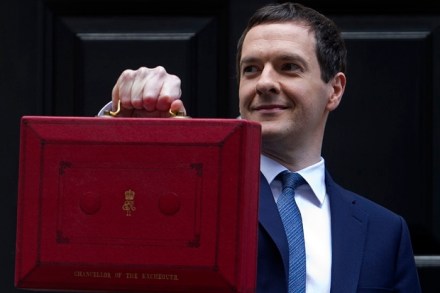
[audioplayer src="http://rss.acast.com/viewfrom22/thespectatorpodcast-politicalcorrectness-budget2016andraves/media.mp3" title="The Spectator Podcast: Osborne's Budget" startat=594] Listen [/audioplayer]George Osborne used to tell his aides to prepare every budget as if it were their last: to throw in all of their best and boldest ideas. But this week, the Chancellor has opted for political as well as fiscal retrenchment. This was a cautious budget. Its emphasis on infrastructure was as laudable as it was uncontroversial. There were few hostages to parliamentary fortune, which is sensible given the Tories’ small majority and the way in which the EU referendum is challenging party discipline. British government is on hold.

We’re swamped with nonsense gizmos and it’s all Steve Jobs’s fault

I keep being told that the big hot technological gizmo of the moment is a box that sits in the corner of your room and listens, and I don’t want one. They’re made by Amazon, largely, and the idea is that you tell them to order stuff — such as a pizza, say — by shouting: ‘Alexa! Order me a pizza!’ And Alexa, which is what the thing pretends to be called in this infantile, accommodating, psychotic age of ours, perks up and does so. Or orders books, or summons a taxi. Or it gets your phone to call somebody, or plays you a particular song. The rest of the time it just squats there. Silent. Waiting. Listening. It sounds like a disaster waiting to happen. Probably you’d put it in the kitchen, and probably you don’t often have sex in the kitchen.

It’s the Labour moderates who need to get real

It has become commonplace to remark that there exists in Britain a mainstream political grouping that seems to be dwelling on another planet. Lost in fantasy, harking back to days long-gone, it lives on illusion. Time and the modern world have passed it by. Fleet Street and fashionable opinion rage against these mulish daydreamers for turning their backs on the voters and depriving Britain of an effective opposition. And all this is true. In only one detail are Fleet Street and fashionable opinion mistaken. They’ve got the wrong grouping in their sights. It is not Jeremy Corbyn, John McDonnell and their crew who fit this picture: it is the Labour moderates. Neo-Blairites and neo-Brownites are in cloud cuckoo land — and in control of the parliamentary Labour party.

Why Joan Bakewell must be right about anorexia

You can always tell when a public figure has said something with the ring of truth about it by the abject apology and recantation which arrives a day or two later. By and large, the greater the truth, the more abject the apology. Often there is a sort of partial non-apology apology first: I’m sorry if I upset anyone, but I broadly stand by what I said, even if my wording was perhaps a little awkward. That, however, won’t do — by now the hounds of hell are howling at the back door. Social media is beside itself, wrapped up in its moronic inferno, the cybersphere splenetic with self-righteous outrage.

Osborne can still see off Boris

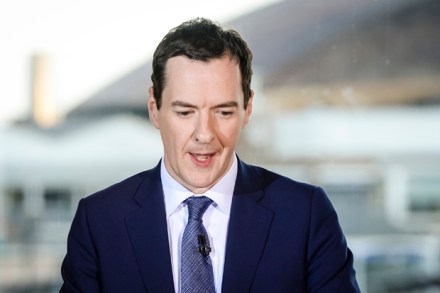
[audioplayer src="http://rss.acast.com/viewfrom22/thedeportationgame/media.mp3" title="James Forsyth and Fraser Nelson discuss whether George Osborne could still become Tory leader" startat=917] Listen [/audioplayer]When George Osborne last stood up to deliver a budget, he had reached his post-election apotheosis. His economic (and political) strategy had been amply vindicated by the election result. He was, for the first time, regarded as David Cameron’s most likely successor. By the time the Chancellor sat down that status had been confirmed: his announcement of a National Living Wage had shown he was serious about the Tories’ claim to be the new workers’ party.

The smelly, snobbish death of the public loo

I blame Nancy Mitford: she made the English so frightened of saying ‘toilet’ that now they have hardly any left — of the public variety, that is, the sort that traditionally proved so useful to anyone who wanted to do a daring thing like leaving the house. I’m quite happy with ‘toilet’ personally, being from Belfast, where pretending to be ‘U’ is a greater source of potential embarrassment than simply being ‘Non-U’ like everyone else. Still, once the waspish Miss Mitford tagged talk of the ‘toilet’ or the ‘lavatory’ as an unshakeable indicator of one’s place in the class system, I can see why many people preferred to shut up about the subject altogether. Not any more.