Columns

Want to leave the EU? You must be an oik like me

If you need to know how properly posh you are there’s a very simple test: are you pro- or anti-Brexit? Until the European referendum campaign got going, I thought it was a no--brainer which side all smart friends would take. They’d be for ‘out’, obviously, for a number of reasons: healthy suspicion of foreigners, ingrained national pride, unwillingness to be ruled by Germans having so recently won family DSOs defeating them, and so on. What I also factored in is that these people aren’t stupid. I’m not talking about Tim Nice-But-Dims here. I mean distinguished parliamentarians, captains of industry, City whiz-kids, high-level professionals: the kind of people who read the small print, sift the evidence and take a considered view.
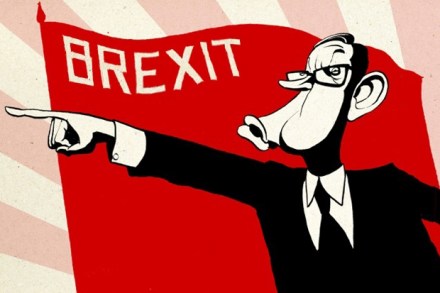
Will Cameron pull his punches to help the Tories reunite?

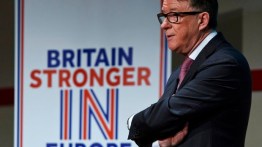
[audioplayer src="http://rss.acast.com/viewfrom22/donaldtrumpsangryamerica/media.mp3" title="James Forsyth, Fraser Nelson & Isabel Hardman discuss the opening skirmishes of the EU referendum campaign" startat=540] Listen [/audioplayer] If Downing Street’s calculations are correct, next week will see politics begin to return to normal. We’ll all move on from talking about Boris Johnson and Brexit and instead start fretting about the budget and pensions: the first phase of this four-month referendum campaign will be over. The two sides will regroup and try to work out what they can take from these initial skirmishes. One lesson from the first weeks of the campaign is that the ‘in’ side have the advantage when the debate is on the economy.

What do all these evil maniacs have in common?

More bad publicity for the Islamic State’s ‘Kafir Tiny Tots and Babycare Service’. A burka-clad madwoman wandering through the streets of Moscow swinging a decapitated toddler’s head while shouting ‘Allahu akbar’ is just the kind of image the company wished to dispel. You begin to doubt its vetting procedures for potential nannies, and also whether or not it has a valid Investors In People certificate. The less than conscientious nanny was from Samarkand in Uzbekistan (which last had a half-decent government in about 1990). ‘I want your death,’ she screamed at the Muscovites, waving the poor child’s head about.

Of course the old Tory hatreds are back. That’s referendums for you

Of course it’s vicious. It was always going to be. Sure, they’ve spent decades living peacefully side by side, but so did the Hutu and Tutsi. So did the Alawites and Sunnis, and so did every manner of former Yugoslavian. In politics, old hatreds do not die. They merely keep mum, so as to get selected and maybe become a junior minister. You will not find me dwelling upon the row in cabinet, this week, about whether pro-Brexit ministers are allowed to see government papers related to the EU referendum. Personally, I’d pay good money not to see government papers related to the EU referendum. I consider it a very real sign of sickness to want to. Although it was good to see Lord Mandelson weighing in, wasn’t it? Made me properly nostalgic.

Are we ready for virtual-reality news?

John Humphrys staggering around in a piece of ‘virtual reality’ headgear that looked like binoculars and made him feel sick was as attention-grabbing as radio can be. So I listened in last week as the intrepid Today presenter tried out infotech’s latest gimmick. The Oculus Rift began life on a crowdfunding website, heralded as an exciting new tool in virtual reality: a tool that computer-games boffins had long been trying to crack. Facebook bought it, and Rift should hit the market this month. I experienced a forerunner years ago when sampling for my newspaper a day in the life of a bus driver.

Meet the ‘out’ campaign’s secret weapon: Jeremy Corbyn

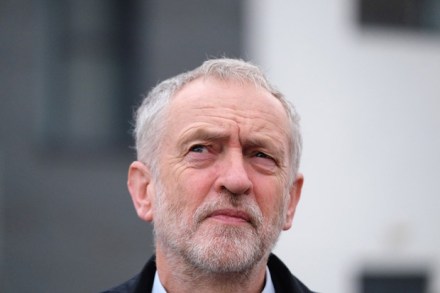
Europe has opened up an unbridgeable chasm in the Conservative party. Labour remains, near as dammit, united. On the EU referendum, an opposition accustomed to defeat has a rare chance of victory. Yet when Jeremy Corbyn makes the case for staying in he speaks without conviction. Like a man called into work on his day off, his weary expression and dispirited voice tell you he would rather be somewhere else. Tory MPs, so divided that it is hard to see how they can stay in the same party, unite in laughing at him. The Labour leadership and most of the unions seem unaware that this is a fight over the future of Britain. Their strange indifference may help the opponents of the EU prevail.

Whatever happened to ‘Snog first, talk later’?

Sometimes I sit my nieces down and treat them to tales of dating in the dark ages, before iPhones arrived to save teenkind. Poor nieces. Though they scuff their Uggs on the carpet and stare longingly at the door, I carry on. When I was your age, I say, we had no access to boys. Those of us at mixed schools had a few limp options, and the rest relied on miracles: a hottie met by chance on holiday; a friend’s brother’s friend. There was no social media, no looking someone up, so unless you bagged your hottie sharpish he vanished. Boys surfaced like rare sea-mammals for single sightings before sinking back into the fathomless unknown. No googling! Can you believe it, nieces? They can’t. They’re the Snapchat generation, born as the century turned.

Why are children in Guernsey extolling Islam to their parents?

I have never been to the island of Guernsey. This is a large world and we have a finite amount of time on it and must make our decisions about where we visit based on necessarily limited information. We cannot know everything. I have never been to Japan, for example, because I do not wish to be crushed to death by a mass of jabbering humanity, nor take part in unpleasant sadomasochistic sex acts, nor watch people disembowelling themselves in order to affirm their masculinity. I realise that this is not all that Japan has to offer. There is also sushi, for example, and buttock-clenched politeness. I could get both of those things in Harrogate. So that’s Japan off my itinerary.

What was this bed-blocker doing on my ward?

There’s some journalistic research you’d really never do by choice. Spending four days in an NHS hospital with a life-threatening pulmonary embolism, for example. Unfortunately it was out of my hands. I fell off a horse, one thing led to another, and suddenly there I was, lying in what I imagine is a reasonably typical NHS ward being tended by all those multi-ethnic nurses and hard-pressed doctors you read about in the newspapers but rarely encounter yourself because in order to do so you have to be quite seriously ill. So: what have I learned? First, that it’s not as bad as you’ve long feared, especially not for anyone hardened by the experience of the military, prison or — in my own case — being at an English prep school in the 1970s.

Cameron’s first EU referendum battle: shutting up his own MPs

[audioplayer src="http://rss.acast.com/viewfrom22/putinsendgameinsyria/media.mp3" title="James Forsyth and Charles Grant from the Centre for European Reform discuss the EU referendum battle" startat=743] Listen [/audioplayer] On the day that David Cameron delivered his Bloomberg speech, the 2013 address in which he committed himself to a referendum on Britain’s EU membership, I asked a close ally of his how he would avoid splitting the Tory party over the issue, given that even quiet ‘outers’ might feel obliged to vote to leave. The ally paused before replying: ‘That would be a good problem to have, as it would mean we had won the election.’ That ‘good problem’ is now here.

South Africa’s promise now lives in a cage

I went back to see my old house in Cape Town last week, and they’d put a cage around it. Otherwise it was unchanged; broad, plantationish and oddly ill-suited to the slim, cluttered suburban street on which it sat. Yet the whole thing, from the eaves where our little flat was to the porch where we all used to sit and smoke, had been wedged into a box of bars. As though it were about to go diving with sharks. This was where I lived for the best part of a year, about a decade and a half ago, and not really for any good reason. Ostensibly I was following my girlfriend, now my wife, as she kick-started a travel journalism career by writing guidebooks.

From Rhexit to Brexit

We are all of us to some degree prisoners of our own experience. Experience may teach, of course — may counsel or illuminate. But it is also capable of trapping us. We make connections in our imagination between what we saw then and what we see now, and when these memories are of a personal kind and unavailable to others, we’re inclined to treat them as something special: our private mentors. Sometimes that mentoring will be inspired, sometimes mistaken. I once (in the months before last year’s general election) decided to block my ears to opinion pollsters warning that the Tories were hopelessly bogged down, and instead followed my own hunch.

Farty, smelly and in love with Putin? You must be getting middle-aged

There are things that happen when you grow older — bad things, harbingers of death and decay. Past the age of 55, I mean. For example, a friend and fellow columnist confessed recently that upon rising from a sitting position he almost always unintentionally farts. A delicate little ‘glip!’ from his bottom, every time he stands up. I am a little older than him and have yet to experience this demeaning imposition, this additional whiff of misery as we trundle downhill, via the unctuous and grimly cheerful hospice attendants, to the crematorium. But I am so terrified of it happening that nowadays, when I stand up, I rise very slowly and clench my buttocks tightly together just in case. It will happen sooner or later I’m sure.

Lies, damned lies and the EU

[audioplayer src="http://rss.acast.com/viewfrom22/thenextrefugeecrisis/media.mp3" title="James Forsyth and Fraser Nelson discuss the PM's argument for staying in" startat=763] Listen [/audioplayer]It is normally in the final, frantic days of a campaign that a multitude of dubious claims are made. But when it comes to the EU referendum, this has begun before the date of the vote has even been set. We’re told that anti-terrorism measures would be damaged by a British exit from the European Union, that migrant camps would sprout up in the garden of England and Six Nations rugby would never be the same again.

Beyoncé? I prefer the anti-racists of Millwall

My most thrilling moment of 2016 so far — aside from watching a smug-looking woman carrying a copy of the Guardian get the heel of one shoe stuck in the escalator at Canary Wharf station (boy did she howl) — was having a Facebook friend request accepted by Trevor Lee. Trevor is a hero of mine. He was a very fast and skilful winger for my team, Millwall, and played a crucial role in our 1975/76 promotion season. He went on to play 108 times for the Lions and was adored by supporters. His name is still spoken of with a certain reverence down The Den, much as fanatical Tories will come over all breathless if you mention Sir Keith Joseph.

The Donald isn’t dead yet

[audioplayer src="http://rss.acast.com/viewfrom22/fightingovercrumbs-euroscepticsandtheeudeal/media.mp3" title="Freddy Gray and the Republican Party Overseas' Kate Andrews discuss what's next for the GOP" startat=695] Listen [/audioplayer]If Donald Trump had won in Iowa on Monday night, everybody would still be saying what a brilliant candidate he is. His decision to shun that Fox News debate, just four days before the caucuses, would be seen as a tactical masterstroke. Looking at his poll lead ahead of the New Hampshire primary next week, journalists would be saying that he had effectively secured the Republican party nomination. He didn’t win, though. He came second, almost third, and now the narrative about the Trump phenomenon can be turned upside down.

What fun it will be if Trump becomes president

I suppose spite and schadenfreude are thinnish reasons, intellectually, for wishing Donald Trump to become the next American president (and preferably with Sarah Palin, or someone similarly doolally, as veep). But they are also atavistically compelling reasons nonetheless. Think of the awful, awful people who would be outraged and offended. If you recall, 8 May last year was awash with the bitter tears of lefties who couldn’t believe the British people had been so stupid as to elect a Conservative government. There were the usual hilarious temper tantrums and hissy fits.

The London mayoral election will be a battle between whatsisface and whatsisname

London, 2012. It’s Olympic year, and east London is sprouting anew, and our city feels like the capital of the world. And on this mighty, epoch-making canvas, two political heavyweights do battle. In the blue corner, Boris Johnson, the incumbent, and perhaps the most recognisable politician in the land. In the red, Ken Livingstone, his predecessor and opposite in almost every way, except for the reputation for shagging. He’s a little tarnished by now, Ken, true, a little old, a little Jew-hatey and yesterday-ish, but he still stands for something that Boris does not. His is a fiercely multicultural London, a little dirty, perhaps, but vibrant and arty, too; a bubbling pot of culture and faux-socialism (fauxialism?

Why I now believe in positive discrimination

The Prime Minister no doubt knew he would be fanning the flames when he waded into the argument about the admission of black undergraduates to universities like Oxford and Cambridge. We should do him the courtesy of trusting he means it when he says he feels strongly about discrimination in the awarding of university places – and I think he does. In this week’s issue Toby Young marks David Cameron’s essay with tutorial authority, and finds his case wanting. Particularly valuable among Toby’s marginal notes is his point that you can’t accept applicants if they haven’t applied – and black and working-class students disproportionately don’t. But we enter a vicious circle here.

Stay or leave, Europe is sinking anyway

[audioplayer src="http://rss.acast.com/viewfrom22/whysexmatters-thedeathofsportandistheeusinkingwhetherbrexithappensornot-/media.mp3" title="Isabel Hardman, James Forsyth and Fraser Nelson discuss whether the European project is in grave danger – regardless of Brexit happening or not" startat=1420] Listen [/audioplayer]As Tory ministers wrestle with their consciences before the EU referendum, an intriguing new argument for voting to stay has emerged. Rather conveniently, it resolves the conflict between principle and personal loyalty to David Cameron that several members of the Cabinet are wrestling with. It goes like this: the European Union is going to collapse in the next ten to 15 years.