Columns

This referendum has shown us the real Cameron

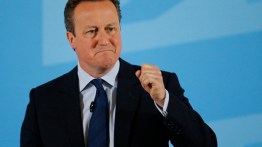
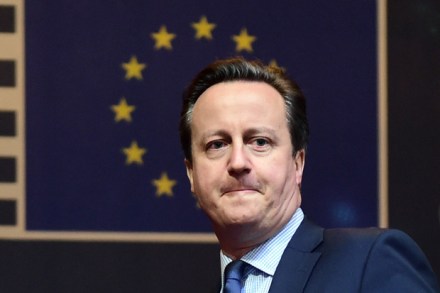
Westminster has a tendency to get ahead of itself. MPs want to discuss the aftermath of an event long before it has happened. They play never-ending games of ‘What if?’ At the moment, the political class cannot stop discussing, in great detail, what the post-EU referendum political landscape will look like. The speculation is, in and of itself, part of the political process. Much of the talk of the post-vote challenges facing David Cameron is intended to persuade him to pull his punches in the final weeks of the campaign. What no one disputes is that the Prime Minister will find governing even harder after 23 June. His majority is already thin and he has had to U-turn on a host of policies since the election.
My six months of madness

I once went mad in Africa and it was no fun at all. I was snorkelling off the coast of Zanzibar and I dived a little too deep, and something in the middle of my head went click. And then I came up and fell on to a boat that took me back to the paradise sands, and when I got there I couldn’t walk straight and everything started to fall apart. In fairness, that might not have been madness. That might have just been a problem with my inner ear. At the time, though, it was all bundled together. I’d been sub-Saharan for about nine months by this point, living cheap in the Cape and writing a novel. Three weeks earlier, we had packed up our belongings and caught a flight to Dar es Salaam, with a plan to drift back south over the next few months on buses filled with chickens.

If I were in charge of Leave, here’s what I’d say…

It may be too late. But with only about three weeks before our referendum on EU membership I am itching to take the leadership of the Leave campaign. I could do them a power of good. Two serious objections may be raised to my bid. First, I couldn’t chair a parish meeting, let alone a snakepit of warring Leave enthusiasts. Secondly, I certainly don’t think Britain should leave the European Union. Setting these disqualifications aside, however, as a former speechwriter and politician I see so clearly the strategic direction the Leave campaign should set if they are to stand an outside chance of winning — and a much greater chance of losing with honour. I find myself barking advice at the radio whenever one of them is on.

Obama’s last great battle is in the bathroom

Who’d have thought that one of Obama’s last great battles would be over toilets? Last week he issued a strict warning to schools saying that transgender pupils must be allowed to use whichever loo they choose. Girls or boys who feel they’re trapped in the wrong body have, in some states, been required to widdle according to their biological sex. No more, said the President. No child left behind in the wrong restroom. This was an arrow aimed straight at the heart of the conservative South. Back in March, North Carolina passed a law requiring people in schools and government buildings to use the loo matching the sex recorded on their birth certificate. ‘Bigotry!’ cried central government, ‘A violation of the Civil Rights Act!

What’s making Remain campaigners so tetchy?

Like a lot of keen games-players I’m a stickler for the rules. This is not because I’m an especially honourable person; merely a recognition that without a rigorous structure and a sense of fair play, a game can be no fun and winning can afford no satisfaction. I feel much the same way about politics. Take Hilary Benn’s recent contribution to the Brexit debate, wherein he professed to have taken grievous offence at Boris Johnson’s use of the word ‘Hitler’ in an article about Europe. As was perfectly clear from the context, the reference was dropped in lightly and unhysterically in the service of an unexceptionable point. So the game Benn was playing there definitely wasn’t cricket.

Don’t rule out a second referendum

As the Queen read out her government’s agenda on Wednesday morning, David Cameron could have been forgiven for thinking about his place in history. What will he be remembered for, other than having held the office? The so-called ‘life chances’ strategy is intended to be a central plank of his legacy. He wants to be able to say that he made Britain more ‘socially just’. Indeed, this is his principal reason for wanting to stay in No. 10 for a few more years. Cameron loyalists hope he’ll be remembered as the leader who made the Tories the natural party of government again. The man who moved them on from Thatcherism to a modern version of one-nation politics; who confronted the deficit in a fair (if leisurely) manner.

Will Labour convict me of thought crime?

I got an email this week, from a chap called Harry, which began as follows: ‘I am writing to inform you that I will be carrying out the investigation on behalf of the Labour party into the circumstances that resulted in your suspension from the party.’ Harry went on to say that he will be ‘conducting interviews with witnesses’ and added: ‘I will also need a time when you are available for an interview.’ This last presumably as an afterthought: I suppose we need to hear from him. Anyway, at this interview (to be conducted in London, natch) I am allowed to bring along a ‘silent witness’ —someone who is not permitted to intervene on my behalf but can sit beside me with a consolatory expression on their face and perhaps hold my hand.

Will Labour never learn?

By now, Labour should be rather good at post-defeat inquests. Plenty have been conducted over the years and the drill has become familiar. The party goes into an election promising a certain vision of the future only to find out that it leaves the voters cold. A senior figure is then commissioned to state the obvious, and the report is sent back to the leader’s office, where it is filed and ignored. Then the party embarks upon a fresh misadventure — and the cycle of defeat begins again. This week Labour is digesting its worst result in Scotland since 1918, having lost not only to the nationalists but to the Tories.

RIP Gussie, my plainspoken llama

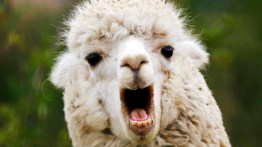
Gussie is the name of a grumpy and ill-natured llama, her coat largely white and somewhat unkempt, and much given to aggressive expectoration. When there’s corn in a bucket, it has been her habit greedily to spit other llamas away, not because she wants corn but to stop them getting any. And Gussie is also the name of an entirely imaginary creature — another llama, but who can make phone calls, surf the internet, and send emails and texts. This Gussie has been a keen if censorious student of human nature, a particular student of the faults and foibles of my partner, Julian, and me. The fictional Gussie grew from the real one, taking such distinct shape over many years that by the end there has been virtually no connection between them.

Vaping’s appeal isn’t about the nicotine. It’s about the gadgets

Probably you never visited the flats of middle-class student drug dealers in the 1990s, because crikey, neither did I, and look, let’s just move along. Even so, were there ever to be found a Platonic form of such a place, or, as the beer adverts might put it, If Heineken Did the Flats of 1990s Middle-Class Student Drug Dealers, then I now know precisely what such a place would look like. It would look like a vape shop. To be more specific, it would look like the vape shop I visited a few weeks ago in north London. It was perfect down to the last detail. Paraphernalia all over the place. The main wallah — the dealer, I suppose — had dreadlocks and bohemian clothes, and the bearing of an alpha male, and almost no vocabulary whatsoever.

Write a leftie column and win a doctorate

I see that law students at Oxford University were told that if they found the contents of a lecture on rape and sexual assault ‘distressing’, they would be permitted to absent themselves. This is an interesting approach for future lawyers and barristers. Perhaps, further down the line, they will excuse themselves in court when the evidence is a bit gamey and go to a safe space for a good cry. Or should we be more concerned about those students who remained in the lecture theatre because they did not find the contents remotely distressing, but actually ‘a bit of a hoot’ or ‘bloody hilarious — especially that bit with the Rohypnol!

Enter Boris, eyes on the prize

[audioplayer src="http://feeds.soundcloud.com/stream/262486539-the-spectator-podcast-erdogans-europe.mp3" title="James Forsyth, Fraser Nelson and Isabel Hardman discuss Boris" startat=552] Listen [/audioplayer] After an eight-year detour into municipal government, Boris Johnson has now returned to national politics. The former mayor of London will mark this moment by going on the stump for the Leave campaign. He has some catching up to do: while never far from the public eye, he was absent from the Commons for seven years. Even when back in Parliament after the general election, Boris felt he could not take the cabinet job that was offered to him. But his time at City Hall hasn’t dented his ambitions; quite the opposite.

In praise of doctors’ handwriting

My baby and I excel at blood tests. He (tiny, jaundiced) stretches out naked under the hospital’s hot cot-lamps like a Saint-Tropez lothario. The nurse rubs his foot to bring blood to his veins, and I lean over the cot to feed the greedy midget, who squawks just once as he’s stabbed. I watch the drops bulge and drip and I puzzle over the NHS and its mysteries. Why do nurses collect baby blood in glass straws with an opening no wider than a pin? It’s like an impossible task set by a whimsical tyrant. Even more surreal is the way the NHS handles patient records. Because the midget and I have visited so many parts of the NHS — maternity wards, A&E, GP surgeries, neonatal units — we’ve become a crack two-man investigative team.

The slow death of environmentalism

Would you describe yourself as an ‘environmentalist’? I would, mainly to annoy greenies, but also because it’s true. If your definition of an environmentalist is someone who loves immersing himself in the natural world, makes a study of its ways and cares deeply about its future, I’m at least as much of one as David Attenborough. But I can see why many fellow nature lovers might balk at the term, especially now that it has become so grievously politicised. That would explain the recent Gallup poll — it was taken in the US but I suspect it applies to Britain too — showing how dramatically this label has plunged in popularity. In 1991 the majority of Americans self-identified as environmentalists — 78 per cent of them.

Let’s make assisted dying legal for Brightonians

I am having terrible trouble with my hair at the moment. It is lank, flat and lifeless. There are split ends. Also, it doesn’t smell too good. What’s that appalling stench, my wife asked recently while sitting next to me on the sofa as we watched a rerun of the old racist editions of Midsomer Murders starring the excellent John Nettles. ‘Probably the dog, again,’ I replied — but I knew that was a lie. I knew it was my hair. It smelt like that rotten cheese Italians eat. I don’t know why, because I wash it frequently enough. Maybe, to adapt Orwell’s mordant observation, at the age of 56 everyone has hair which smells exactly as they deserve. In my case, Gorgonzola, with a subtle undertone of raw sewage.

Elections? What elections?

[audioplayer src="http://feeds.soundcloud.com/stream/261189280-the-spectator-podcast-the-wrong-right.mp3" title="James Forsyth and Fraser Nelson discuss May's elections" startat=555] Listen [/audioplayer] Britain goes to the polls next week. Yet this has barely registered on the media radar. These aren’t the forgotten elections; they are the ones nobody’s bloody heard of. This is surprising, because they have real political significance. North of the border, the Scottish parliamentary elections will almost certainly result in another overall majority for the SNP. But we might also see something no one would have predicted even two years ago: the Tories beating Labour into second place.

The politically correct way to do racism

Exactly a year ago this week I was at a dinner party when a famous opinion pollster leaned over to me and said: ‘You know, the best thing about this election is that within two years Chuka Umunna will be the leader of the Labour party and Sajid Javid the leader of the Conservatives.’ He was referring to the last general election — the dinner party had been convened a week before it took place. I think the chap had been invited to tell us all what would happen at the polls — and indeed he delivered a lengthy and earnest peroration on this subject, utilising all the expertise and political nous he had built up over the years.

Brexit Tories are feeling disrespected. How awful

There are moments when one wonders whether one is seeing and hearing the same things as others. For me such a moment occurred a fortnight ago when reading The Spectator’s weekly column by our political editor, James Forsyth. James is exceptionally well plugged in to the world of Westminster, but — beyond that — a person of cool and sensitive judgment, so I read what he writes with attention. He said this: ‘[The Prime Minister] is campaigning with no thought for the feelings of those in the party who disagree with him. It is one thing for a leader to disagree with close to half of his MPs and most of his activists, but quite another not to do it respectfully.’ And for the first time in my life I had literally no idea what James was on about.

Cameron’s heading for a hollow victory

[audioplayer src="http://feeds.soundcloud.com/stream/260046943-the-spectator-podcast-obamas-eu-intervention-the-pms.mp3" title="Isabel Hardman, Fraser Nelson and James Forsyth discuss the PM's hollow victory" startat=511] Listen [/audioplayer]‘Nothing except a battle lost can be half as melancholy as a battle won,’ wrote the Duke of Wellington after Waterloo. David Cameron may well feel the same about referendums on 24 June. The EU debate is already taking a toll on the Tory party and his premiership. While defeat would be disastrous for him, even victory will come at a heavy political cost. Victory is, for now, still the most likely outcome.

Moderate Muslims are not particularly moderate

‘What’s in the news this week?’ I asked my wife as she browsed the first newspaper we had seen for a whole week, having hitherto been blissfully disconnected from the rest of the country, without phones or the internet. ‘Muslims, largely,’ she replied, flicking from page to page, ‘a bit on in-and-out, but mainly it’s the Muslims.’ Oh, good. A perpetual optimist, I had rather hoped that during our week away the frequently promised Islamic Reformation might have taken place and peace and enlightenment spread all those many miles from the jungles of Banda Aceh to the dilapidated terraces of Kirklees. But nope, apparently not. They were still up to their stuff, a good few of them.