Cinema

Fine for the kiddies, given they’re clueless: Chicken Run: Dawn of the Nugget reviewed

The original Chicken Run (2000), which is generally considered the best riff on The Great Escape ever made starring stop-motion poultry, did not require a sequel – but here it is anyway. Now you’ll probably expect me to say that Chicken Run: Dawn of the Nugget isn’t a patch on the original so I will: it isn’t. It’s not bad-bad. It’s definitely something you can stick the kids in front of, given they don’t know any better. But it’s not nearly as inventive or funny or affecting and, while Aardman films have always looked and sounded like no other, this has a generic rather than a quirky, handmade feel. Chances are you’ve had bigger disappointments in life, but it is a disappointment all the same.

A marvel – how did Bradley Cooper pull it off? Maestro reviewed

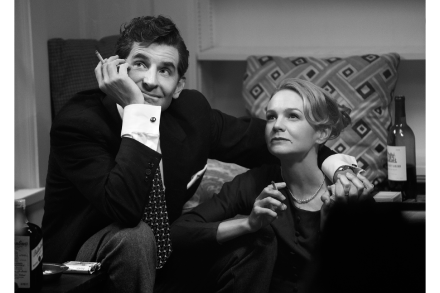
As the overture to Candide blazed away during the ovation for Maestro at the Venice Film Festival, three members of the audience flung their arms around in an imitation of Leonard Bernstein’s conducting style. They were his children, Jamie, Alexander and Nina, and their reaction said it all. Bradley Cooper, the film’s star and director, had pulled off a piece of cinematic chutzpah worthy of Lenny himself. His secret? The last quality you associate with the most embarrassingly flamboyant genius in American musical history: understatement. It’s easy to imagine the ghastly three-hour biopic Cooper didn’t make. West Side Story goes from near-catastrophe to wild triumph.

Kaurismaki is the business: Fallen Leaves reviewed

Even though Aki Kaurismaki has won every award going and is a household name in his native Finland, where he is treated like a god, it may be that you’ve never heard of him. He is the business. He specialises in understated dramas about deadpan losers whose hopes are often crushed, but who somehow find comfort. If that doesn’t sell it, try this: he is so briskly clear-eyed that his films never outstay their welcome and his latest, Fallen Leaves, runs to just 81 minutes. Could we love him more? Might he not be our favourite auteur of all time?

A bit too short: Napoleon reviewed

Ridley Scott’s Napoleon, starring Joaquin Phoenix, has a running time of two hours and 40 minutes, which is scant by today’s standards, but don’t worry: a four hour-plus director’s cut is on its way. So this is Scott’s Napoleon Abridged, you could say, and it does have the feel of a film that’s been scissored to death. The battle sequences are spectacular but the jackhammer cutting-style – hang on, how did he get from there to here? – means the storytelling is hurried and confusing. I’m not too sure about this Napoleon either. Did you know one of the greatest military leaders in world history was essentially a man-child? Phoenix, always a strong, intense screen presence, plays Napoleon as petulant rather than as a brilliant strategist.

Fearless and intoxicating: Saltburn reviewed

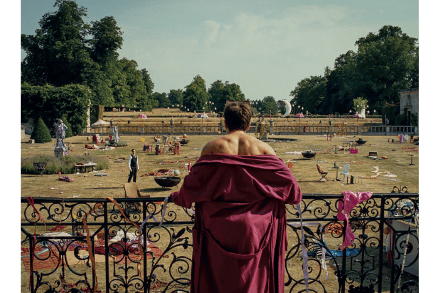
Even if you are suffering from eat-the-rich fatigue (see The Menu, Triangle of Sadness, The Lesson, Parasite, Bait, The White Lotus, Succession etc.) and can no longer work up much of an appetite for wealthy folk being dreadful you must make an exception for the psychological thriller Saltburn. It’s by Emerald Fennell and it’s not so much the story that will blow you away as her audacity. ‘Emerald, you’ve gone too far’ isn’t something she would ever be willing to hear. Her first film, Promising Young Woman, was unafraid, perverse and thrilling and it’s the same with Saltburn. It’s Brideshead gone evil, some have said, with Tom Ripley vibes, and it is that – but Fennell is more daring than even Waugh or Highsmith.

Entertaining. Mostly: Dream Scenario reviewed

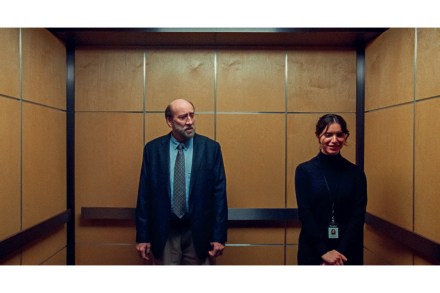
Dream Scenario is a high-concept dark comedy about celebrity and cancel culture. It stars our old pal Nicolas Cage who, blame it on what you will – tax bills, divorce bills, the price of butter – has appeared in some abominable dreck down the years but has never turned in a boring performance. Mad, yes. Reckless, yes. Maximalist, always. But boring? Never. And he is wonderfully not-boring here. It’s certainly the most Nicolas Cage film since the last Nicolas Cage film, whenever that was. Plus it is entertaining. Mostly. The film is directed by Kristoffer Borgli (Sick of Myself, also a satire on social-media fame) and stars Cage as Paul Matthews even if, when I first glanced at the poster, I thought it starred Paul Giamatti.

Outstanding and eye-opening doc about North Korea: Beyond Utopia review

The documentary Beyond Utopia follows various families as they attempt to flee North Korea. It is eye-opening and outstanding. In essence, it is a life-or-death thriller told in real time where the stakes could not be higher. I watched at home, via a screening link, with a twenty-something who did not look at her phone once. Could there be a higher recommendation? The film has been assembled by the American director Madeleine Gavin who employed  a camera crew when it was safe to do so but otherwise made use of secret smuggled footage. Her way in is via Kim Seungeun, a South Korean minister who has bravely devoted himself – for reasons that become apparent – to helping North Koreans escape.

Basic, plodding and lacking any actual horror: Doctor Jekyll reviewed

Tis the season of horror, as it’s Halloween, which we celebrate in this house by turning off all the lights and pretending not to be in. (We look forward to it every year. It’s nice occasionally to go bed at around 5 p.m. and pretend not to be in.) But I thought I’d show willing by at least reviewing a horror film so it’s Doctor Jekyll, starring Eddie Izzard. It’s the latest from Hammer, which you didn’t know was still around, but is. I have a fondness for these films as they were always on TV during my teenage years, with Peter Cushing creeping around some crypt, hammy and campy – ‘Good heavens, man! The lady you saw has been dead for 300 years!’ – rather than terrifying.

Epic, immersive and tiresomely long: Killers of the Flower Moon reviewed

Martin Scorsese’s Killers of the Flower Moon is a Western crime drama that runs to three-and-a-half hours. (Sit on that, Oppenheimer!) But which is it: an epic masterpiece? Or just very, very tiresomely long? There are certainly pacing issues, and things that needed further explanation – there is no hand-holding. That said, the running time does allow for world-building, and it builds a world so engrossing that when I came out of the cinema onto the high street it was weird to see a Superdrug and Costa Coffee rather than dusty tracks and horses and vast landscapes beset by oil derricks. So I guess it’s epic and also tiresomely long. Does that help? This isn’t a thriller.

The miracle of The Miracle Club is that it does, I promise, end

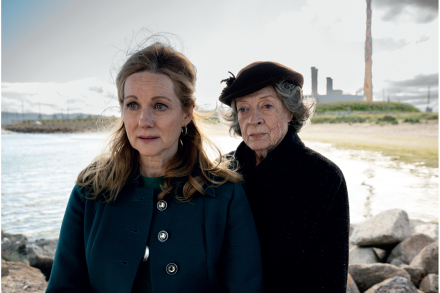
The Miracle Club, which is about a group of Irish women who travel to Lourdes, has a magnificent cast – Maggie Smith, Kathy Bates, Laura Linney – and it inspired me to pray. ‘Dear God,’ I found myself praying mid-way through, ‘let this be over soon.’ The film’s stars make it just about watchable but it’s still a disappointingly trite and shopworn affair. It’s as if three thoroughbreds have been entered in the local donkey derby. It inspired me to pray. ‘Dear God,’ I found myself praying, ‘let this be over soon.’ It is written by Jimmy Smallhorne, Timothy Prager and Joshua D. Maurer, and directed by Thaddeus O’Sullivan.

A great subject squandered: Golda reviewed

Born in Tsarist Kyiv in 1898, Golda Meir grew up with what she called a ‘pogrom complex’. That perhaps explained why later, as Israeli prime minister, she had such harsh words for Palestinians and Arabs. But then she had harsh words for a lot of people. Moses, she complained, ‘took us 40 years through the desert in order to bring us to the one spot in the Middle East that has no oil’. Women’s Lib, she averred, was ‘foolishness’, since the real discrimination was that men were unable to bear children.

Soapy and sentimental: Ken Loach’s The Old Oak reviewed

Ken Loach has said The Old Oak will be his last film – he’s 87; the golf course probably beckons. It’s not one of the ones he’ll be remembered for. At least, however, it is starkly different from the others as it’s a cheerful, sunny romcom set in Paris in the spring. I’m joshing you. It’s set in the deprived north-east where the skies are permanently grim and tensions rise due to the arrival of Syrian refugees. As you’d expect, it is a compassionate film that is respectful all round but it is also heavy-handed, soapy and sentimental, with a redemptive ending that is unearned. I wish him joy on the golf course and can only hope he has better luck keeping his eye on the ball there.

Menacingly entertaining thriller, despite the clichés: A Lesson reviewed

The Lesson is a literary thriller that is occasionally heavy-handed but also menacingly entertaining, plus you get Richard E. Grant in his full pomp. That said, when do you not get Richard E. Grant in his full pomp? Has anyone ever seen him at 50 per cent pomp? Has anyone ever come out of the cinema thinking: ‘I wish Richard E. Grant had given it more?’ The monstrous character is his speciality and he is deliciously, marvellously, full-on monstrous here.  Written by Alex MacKeith and directed by Alice Troughton, The Lesson is very self-aware, always delivering little winks to the audience. It is divided into chapters. It is particularly interested in endings. ‘What makes an ending?’ someone will ask, and by the end you will know.

Someone stop Kenneth Branagh: A Haunting in Venice reviewed

A Haunting in Venice is Kenneth Branagh’s third Poirot film (after Murder on the Orient Express and Death on the Nile) and as each one is worse than the last you could say he’s on a losing streak. Why someone with Branagh’s CV would persist, I don’t know. Why someone who has his dignity at heart hasn’t yet rugby tackled him to the ground while shouting ‘STOP!’, I also don’t know. That is the biggest mystery here. The film is directed by Branagh, who yet again casts himself as Poirot even if we all know what Poirot looks like and that’s David Suchet. The first problem is that Hallowe’en Party, the Agatha Christie novel on which this is based, is set in an English village and goes nowhere.

The best drama without any drama that you’ll see: Past Lives reviewed

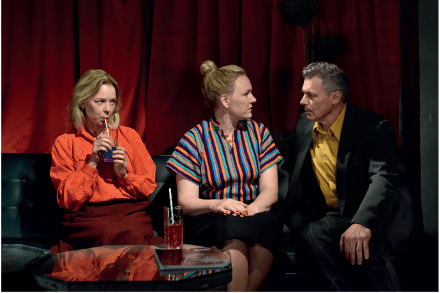
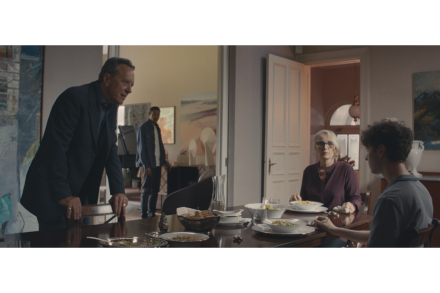
Past Lives is an exquisite film made with great precision and care about what could have been, even if what could have been does not mean it should have been. Forgive me; it’s a hard film to pin down. That it’s exquisitely affecting and made with great precision and care is enough for now. No need to make a song and dance about it. Indeed, as Past Lives so deftly shows, you can have an excellent drama without any of the drama. I think that I may be in love with Greta Lee myself This is a first film from Celine Song, who is Canadian-Korean and otherwise a playwright. It opens with a scene in New York where three people are sitting at a bar and an unseen pair are trying to guess what their stories are, as you do. (‘Is the white guy her husband?

Depardieu’s Maigret is the best yet: Maigret reviewed

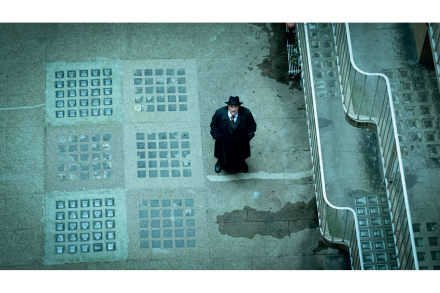
Georges Simenon’s lugubrious detective Maigret has appeared in umpteen screen adaptations and dozens of actors have played him. Now it’s Gérard Depardieu’s turn. Depardieu’s Maigret isn’t, in fact, quite how I imagined Maigret. He’s bulkier than the one in my head; moves more cumbersomely, like a sad circus bear. And I never saw him with that nose – but then who would? Yet he may be the best so far, despite the likes of Jean Gabin, Charles Laughton, Richard Harris and Michael Gambon having had a go. This is adapted from Maigret and the Dead Girl (1954) and is directed by Patrice Leconte. It is minimal and melancholic, beset by the gloominess (I don’t think any lightbulb runs to more than five watts) that also has the great detective in its hold.

Colourful, tender and sweet, grounded in magical rather than social realism: Scrapper reviewed

Scrapper is a film about a working-class kid who, after her mother dies, has to look after herself. I know what you’re expecting. It isn’t that. It’s not an earnestly grim wrist-slitter. It’s not an indictment of modern Britain with no shred of hope. It’s not Ken Loach. It’s not even desaturated and grimy. Instead, it’s colourful, tender and sweet with quirky moments that are grounded in magical rather than social realism. And it’s just 84 minutes long, which is a boon. (‘A boon,’ confirms bladders everywhere.

You’ll be pleasantly surprised at how unpleasant this is: Strays reviewed

Based on the poster showing two cute dogs – a border terrier and a Boston terrier – I had assumed Strays was a (probably lame) kiddie film with a remit to amuse the aforementioned kiddies during the long, long, very long summer holidays, so here’s what I was saying to myself during the opening moments: ‘Christ on a bike, what the hell is this?’ I can now tell you that Strays is vulgar, rude, offensive and disgusting. But the biggest, weirdest shock? At a certain point I realised it was funny, and rather touching, and that I was having fun. In other words, I was pleasantly surprised. Or, given its frequent scatological content, pleasantly surprised, unpleasantly. Here’s what I was saying to myself during the opening moments: ‘Christ on a bike, what the hell is this?

As art it was terrible but the pre-teens loved it: Teenage Mutant Ninja Turtles, reviewed  

Teenage Mutant Ninja Turtles (TMNT) began as a joke in 1984, a parody of the superhero culture of the time. It was originally a comic book but the stories have since expanded into toys, TV series and films, both animations and acted. The films have grossed more than a billion dollars and are likely to go on grossing down the generations of pre- and early teens. I am telling you all this because I have only just found out and I have never before seen any other TMNT products. The latest – Mutant Mayhem – is an animated film. It is drawn in a style that suggests the animators were angry as they worked, perhaps because it is set, like all the stories, in an extremely dangerous New York City.

Dense and spectacular – and not pink: Oppenheimer reviewed

Oppenheimer is Christopher Nolan’s biopic of J. Robert Oppenheimer, the brilliant quantum physicist and ‘father of the atomic bomb’ who was later haunted by what he’d created. Starring Cillian Murphy, and his cheekbones, the film is dense, ambitious, complex, so very long (three hours) and impressive, even if it does drag by the end. (When a film is so very long, that’s the price you pay.) I could go on and on but, for many, the main selling point will be this: it isn’t Barbie and it isn’t pink. If that’s all the thanks you get for developing the next generation of weapon, I’m glad I never bothered It’s a Nolan film so, of course, it’s not chronological storytelling. I pity his wife.